If you have stood in front of a pharmacy shelf in Kuala Lumpur holding two bottles that both read “Bilberry”, you already know the problem. One label says Bilberry 1000 mg; the next says Bilberry extract 160 mg. Neither tells you what dose the eye research actually used. The short answer is that the human trials behind bilberry and eye health almost never worked in “1000 mg” figures. They used a standardised extract, typically 160 mg to 480 mg of extract a day, standardised to 25% anthocyanins — which works out to roughly 40 to 120 mg of anthocyanins daily.
The distance between what a label says and what the studies used is where most of the confusion lives. This guide sets out the milligram amounts the trials reported, explains why two capsules with the same headline number can deliver very different amounts of the active fraction, and shows how to compare two products in a shop without a biochemistry degree.
What “bilberry dosage” actually measures
Bilberry (Vaccinium myrtillus) is a small dark-blue fruit, and the fraction most studied for eye health is its anthocyanins — the pigments that make the berry blue-purple. A bilberry product can put three completely different numbers on the front of the box, and they are not interchangeable:
- Whole-fruit powder, in milligrams. “Bilberry 1000 mg” usually means 1000 mg of dried berry powder. Fresh bilberries contain only a few hundred milligrams of anthocyanins per 100 g of fruit, so a gram of plain powder carries a modest anthocyanin load — and much of that gram is fibre, sugar and water-soluble plant material.
- Extract, in milligrams. “Bilberry extract 160 mg” means 160 mg of a concentrated extract. This is the number the clinical literature reports.
- Standardisation, as a percentage. “Standardised to 25% anthocyanins” is the key phrase. It promises that each 160 mg of extract carries about 40 mg of anthocyanins. Without it, the extract strength is unknown.
To turn a label into an anthocyanin dose, multiply the extract weight by the standardisation percentage. A 160 mg capsule of a 25% extract gives you 40 mg of anthocyanins. Two of those a day gives 80 mg. A 500 mg capsule of a 36% extract gives 180 mg of anthocyanins in a single capsule — more than four times as much.
The milligram amounts used in human eye trials
Across the published human research on bilberry and eye function, the doses cluster in a fairly narrow band rather than at the top of the shelf.
The best-known night-vision work used 160 mg of a 25% anthocyanin extract, taken twice a day — 320 mg of extract daily, or about 80 mg of anthocyanins — over several weeks, with contrast sensitivity as the measured endpoint. Trials in people doing long stretches of screen work have used 480 mg of extract a day (roughly 120 mg of anthocyanins) for eight weeks, with self-reported eye fatigue as the outcome. Smaller studies have sat between 85 mg and 320 mg of extract a day. Doses above 500 mg of extract are unusual in the literature, and there is no trial evidence that going higher adds anything.
It is worth being honest about the quality of that evidence. Most of these trials are small — often a few dozen participants — and several rely on subjective endpoints such as how tired the eyes feel. A Cochrane systematic review of bilberry extract for night vision found no reliable evidence of benefit in people with normal vision, and European regulators have not authorised a health claim linking bilberry to eyesight. The doses above are the doses that were tested; they are not a guaranteed effect size.
Why two “bilberry 500 mg” bottles can differ by a factor of ten
Four variables explain almost all of the variation you will see between products on the same shelf.
- Extract ratio. A 100:1 extract means 100 g of dried fruit went into 1 g of extract. A 4:1 extract is far weaker. Labels sometimes print this as “4:1” or “100:1”; often they print nothing at all.
- Standardisation target. 25% anthocyanins is the classic European standard; 36% is common in some extracts; many products state a percentage without saying what it refers to.
- Serving size versus capsule count. “Two capsules per serving” doubles the label number only if you actually take two. A bottle that looks cheaper per capsule can be more expensive per day.
- Fruit versus leaf, and fruit versus other berries. Bilberry leaf is a different material with a different safety profile, and some “bilberry” products are largely blackcurrant or grape skin — cheaper anthocyanin sources that were never the subject of the eye trials.
How to compare two bilberry capsules in a Malaysian pharmacy
Work through these seven checks in order. The first three will usually settle the comparison on their own.
- Look for a standardisation percentage. If the label says only “Bilberry 1000 mg” with no percentage, treat it as whole-fruit powder and assume a low anthocyanin dose.
- Convert to anthocyanin milligrams. Extract mg multiplied by percentage. Write both numbers down: extract mg per day, anthocyanin mg per day.
- Compare per day, not per capsule. Multiply by the number of capsules in the recommended serving, then divide the bottle price by the number of days it lasts.
- Check the species and part. You want Vaccinium myrtillus, fruit — ideally described as European bilberry. “Bilberry leaf” or a generic “berry extract blend” is not the same ingredient.
- Check registration and seller. In Malaysia, look for an NPRA registration number (the MAL number) on the label, and buy from a licensed pharmacy or an established brand’s own store rather than an unverified marketplace listing.
- Read the rest of the formula. If the product also carries lutein and zeaxanthin, check those doses against the amounts used in the major macular trials — around 10 mg of lutein with 2 mg of zeaxanthin daily. A well-dosed carotenoid pair has a stronger evidence base for the macula than bilberry does.
- Ignore “high potency” as a claim. Potency is a number you can calculate from the label, not an adjective printed above it.
What bilberry can and cannot do for your eyes
Bilberry anthocyanins are antioxidants, and small trials suggest they may support contrast sensitivity and reduce subjectively rated eye fatigue during sustained screen work. That is the honest extent of the positive case.
What the evidence does not support is the marketing. Bilberry does not lower intraocular pressure, does not treat or prevent glaucoma, does not reverse or prevent cataracts, does not “restore” vision, and is not a substitute for prescribed eye drops, regular screening, or an optometrist’s examination. Anyone with a diagnosed eye condition — glaucoma, diabetic retinopathy, macular degeneration — should treat supplements as an addition to their care, never as a replacement for it.
Safety, interactions and sensible limits
Standardised bilberry extract is generally well tolerated at the doses used in trials. The most commonly reported effects are mild digestive upset. A few practical cautions are worth knowing:
- Blood thinners. Anthocyanins can affect platelet function in laboratory studies, so high-dose extracts carry a theoretical additive effect with warfarin, aspirin or clopidogrel. Tell your doctor if you take any of these.
- Surgery. Standard practice with any product that may affect clotting is to stop about two weeks before a planned operation.
- Blood sugar. There are case reports of bilberry affecting glucose control; if you take medication for diabetes, monitor and mention the supplement to your prescriber.
- Pregnancy and breastfeeding. There is no established dose, so treat it as one to discuss with a clinician rather than a default.
- No established upper limit. More is not better: the trials used 160 to 480 mg of extract a day, and there is no evidence that gram-level extract doses do more.
Where a formula like OptiVue fits
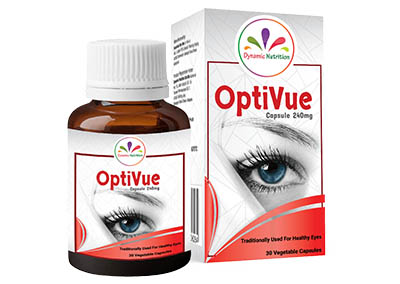
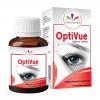
The alternative to chasing a single high-dose berry capsule is a formula built around the nutrients with the most eye research behind them. OptiVue pairs European bilberry with lutein, zeaxanthin and French pine bark extract — the carotenoids that concentrate in the macula alongside the anthocyanins that make up the bilberry fraction. If your goal is general nutritional support for eye health rather than one ingredient at a megadose, a combined formula is the more sensible place to start.
Either way, the dose question stays the same: read the extract milligram and the standardisation percentage, convert to anthocyanins, and compare that number with the 40 to 120 mg a day the trials actually used.
The short answer
Human trials on bilberry and eye function used 160 to 480 mg of extract per day, standardised to 25% anthocyanins — about 40 to 120 mg of anthocyanins daily. A bottle labelled “Bilberry 1000 mg” of whole-fruit powder is not delivering that. Compare products on extract milligrams, standardisation percentage and cost per day, not on the biggest number on the front of the box, and treat every vision claim beyond antioxidant support and possible relief of screen fatigue as unsupported.
Product you may be interested in