If you have ever stood in the supplement aisle comparing eye-health labels, you have probably noticed the same three ingredients showing up again and again: lutein, zeaxanthin, and bilberry. They are often sold as a stack, often dosed at very different amounts, and often marketed with overlapping claims like “supports vision” and “protects the macula”. It is fair to ask: are these three doing the same job, or are they actually doing three different jobs?
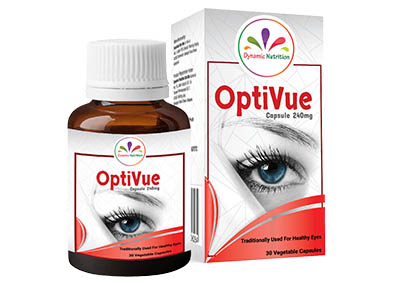
The short answer is that they are doing three different jobs. Lutein and zeaxanthin are macular carotenoids — they accumulate directly in the centre of the retina and filter high-energy blue light at the photoreceptor level. Bilberry anthocyanins do not deposit in the macula at all; they support the retinal blood vessels, night-vision contrast, and rhodopsin regeneration. That is why a lot of modern eye-health formulations (including OptiVue) combine all three instead of picking one. This article walks through what each one actually does, where the published research is strongest, and how to read an eye-supplement label without getting lost in the marketing.
Lutein: The Dominant Macular Pigment
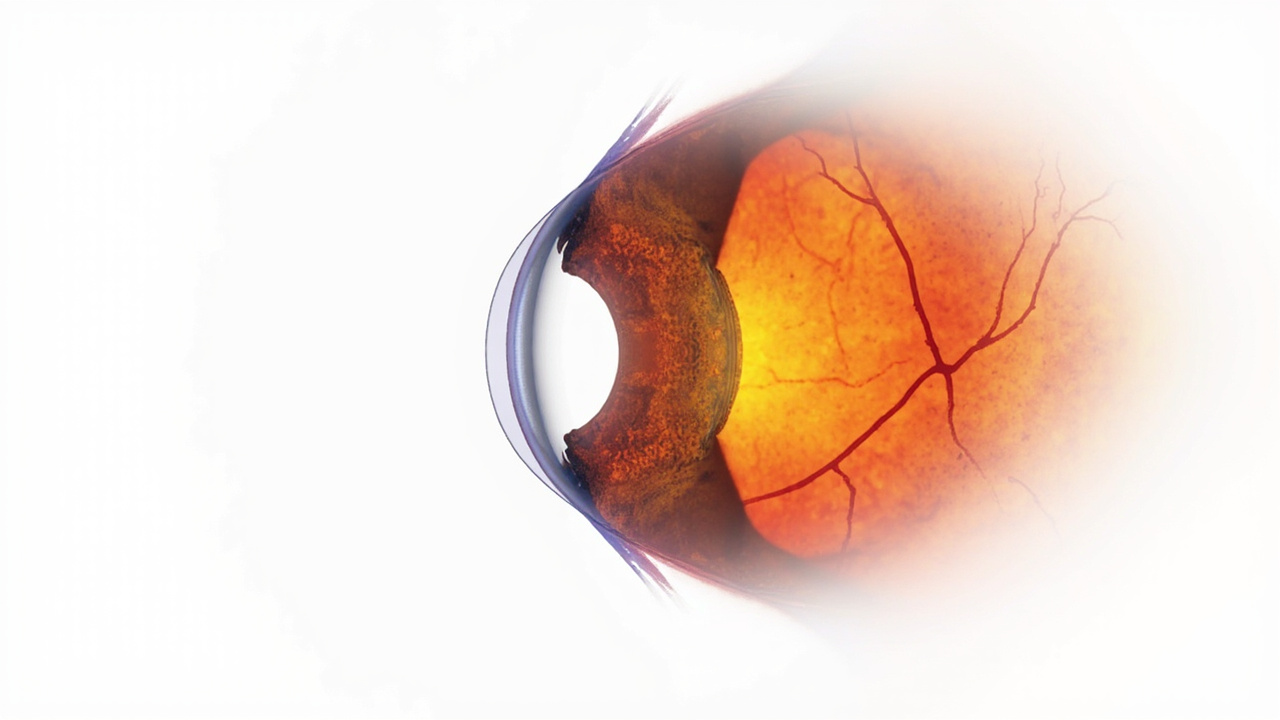
Lutein is a yellow carotenoid pigment found in dark leafy greens (spinach, kale), egg yolks, and certain marigold cultivars. Of the three ingredients discussed here, lutein is the one that physically deposits in your eye: roughly 60% of the macular pigment optical density (MPOD) comes from lutein, and it concentrates in the outer macula — the ring of tissue that surrounds the fovea.
What does that deposition actually do? Two things, both measurable in published clinical trials:
Blue-light filtration. Lutein absorbs high-energy visible light at wavelengths between roughly 400 and 500 nm — the same band emitted heavily by LED screens and modern overhead lighting. By sitting in the outer macula, lutein acts as a kind of internal sunglasses, reducing the oxidative load on the photoreceptors underneath.
Antioxidant activity. Once blue light is absorbed, lutein quenches the resulting reactive oxygen species before they can damage the surrounding lipid-rich photoreceptor membranes. This is the second mechanism behind lutein’s long-term protective role in age-related eye health.
Where the research is strongest
The strongest lutein data come from the LUTEMAX 2020 clinical program (Stringham 2017, 2019 and follow-ups), which used a patented marigold extract delivering 12 mg lutein + 2.4 mg zeaxanthin per capsule. Across multiple RCTs, daily supplementation at this dose increased MPOD within 3–6 months, improved visual performance under glare conditions, and reduced symptoms of eye fatigue in screen-heavy populations. Generic marigold extract (often standardised to 5–10% lutein with no specified zeaxanthin content) does not have the same published clinical track record at the same dose.
Zeaxanthin: The Central Macula Carotenoid
Zeaxanthin is lutein’s chemical sibling — also a yellow xanthophyll carotenoid — but where it deposits in the retina is what matters. Zeaxanthin concentrates at the central macula / fovea, the tiny pit of densely packed cone photoreceptors responsible for your sharpest central vision. About 25% of total MPOD comes from zeaxanthin, and the central-foveal ratio of zeaxanthin to lutein is the specific biomarker associated with visual acuity and glare recovery in published studies.
The naturally occurring form in foods is mostly RR-zeaxanthin (also called meso-zeaxanthin in some literature). Lutemax 2020 contains all three macular carotenoids — lutein, zeaxanthin, and the RR-zeaxanthin isomer — at the ratios used in the clinical trials. Cheaper “lutein-only” or generic lutein formulations usually do not specify which isomers are present or at what ratio.
Where the research is strongest
The zeaxanthin-specific data sit inside the same LUTEMAX 2020 programme as the lutein data — they are dosed together because that is how the human retina stores them. Separating zeaxanthin from lutein in a trial is unusual. The practical takeaway: if you are taking a macular carotenoid supplement for blue-light filtration or long-term macular support, the dose that matters is the combined lutein + zeaxanthin dose, not either one alone.
Bilberry: The Retinal Circulation and Night-Vision Story
Bilberry (Vaccinium myrtillus) is a small dark-purple European berry closely related to the North American blueberry. Its active compounds are anthocyanins — the same pigment family that gives blueberries, blackberries, and purple grapes their colour. Anthocyanins are not carotenoids and do not deposit in the macula. Instead, they work on a different part of the eye:
Retinal microcirculation. Anthocyanins support the integrity of capillary walls and improve blood flow through the tiny vessels that feed the retina. This is the mechanism behind bilberry’s traditional use for eye fatigue and for supporting healthy intraocular pressure alongside clinical care.
Rhodopsin regeneration. Rhodopsin is the light-sensitive pigment in rod photoreceptors (the cells responsible for low-light and peripheral vision). Bilberry anthocyanins accelerate rhodopsin’s regeneration after bleaching by light, which is the mechanism behind the night-vision claims. The effect is modest and mainly relevant if you do a lot of low-light or nighttime driving.
Where the research is strongest
Bilberry has a longer folk-history than RCT-grade evidence, but a few clinical trials support specific claims. The strongest bilberry-specific data use standardised extracts at 25–36% anthocyanins, dosed at 80–160 mg per day, and the effects on visual fatigue and contrast sensitivity have been replicated in healthy adult populations. Products that use whole bilberry powder (no standardised anthocyanin content) are not directly comparable.
The Three Work on Different Parts of the Eye
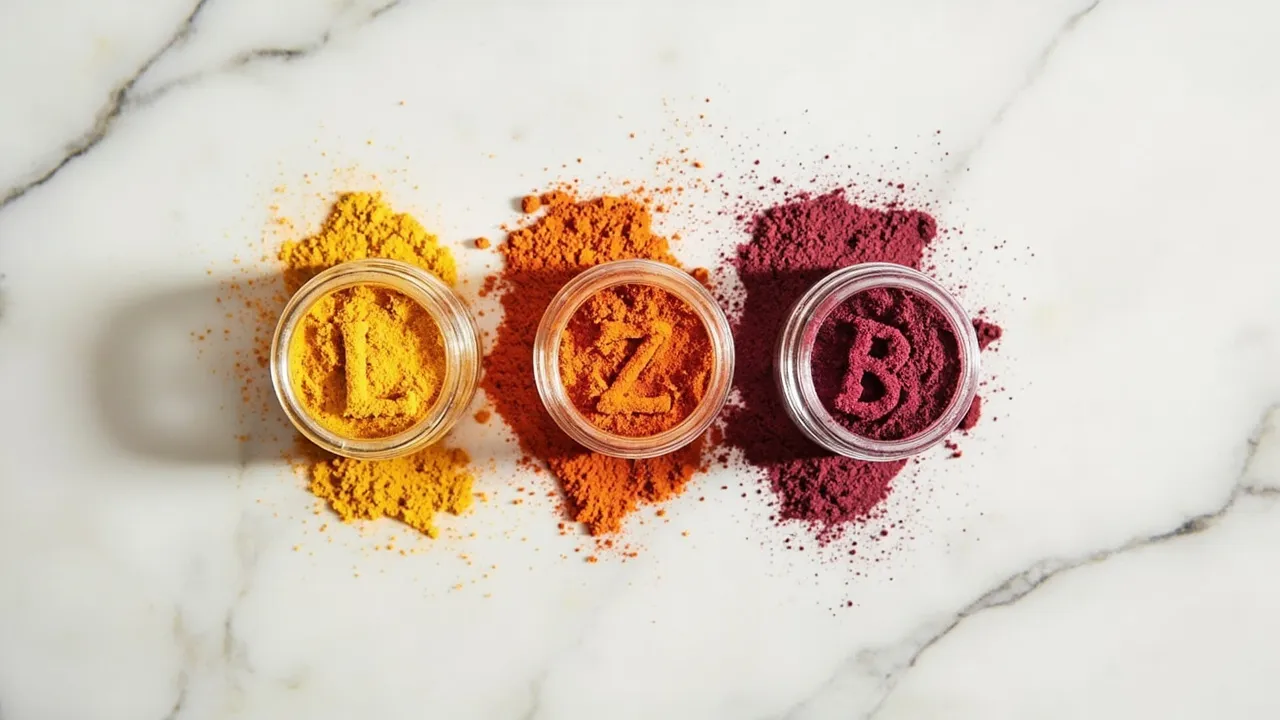
Pulling the three mechanisms together, the picture looks like this:
Lutein — outer macula, blue-light filtration, photoreceptor antioxidant support. Dosed at 10–20 mg/day in the published trials.
Zeaxanthin — central macula / fovea, sharp central-vision support, glare recovery. Dosed at 2–4 mg/day alongside lutein (the 5:1 lutein-to-zeaxanthin ratio used in Lutemax 2020 matches the natural retinal ratio).
Bilberry anthocyanins — retinal blood-vessel integrity, rhodopsin regeneration, contrast sensitivity. Dosed at 80–160 mg/day of a standardised 25% anthocyanin extract.
None of the three is a substitute for the other two. The macular carotenoids (lutein + zeaxanthin) protect the photoreceptors from the inside; the bilberry anthocyanins keep the blood supply and night-vision machinery working. Combining all three at clinically studied doses is the architecture used in modern full-stack eye-health formulations — and is what you are paying for when the label says “Lutemax 2020 + bilberry + French pine bark” rather than just “lutein 20mg”.
How to Read an Eye-Supplement Label
Three things to check before you buy:
1. Is the lutein source specified? “Lutein 20mg” alone tells you nothing about the source or isomer profile. Look for Lutemax 2020 or another branded marigold extract with a specified lutein + zeaxanthin ratio. Generic “marigold extract” without a brand name and a published clinical trial behind it is not directly comparable to the patented forms.
2. Is the lutein + zeaxanthin dose in the clinical range? The published RCTs use 10–20 mg lutein paired with 2–4 mg zeaxanthin per day. Anything substantially below that is unlikely to move MPOD in a measurable way over 3–6 months.
3. If bilberry is on the label, is it standardised? Look for a specific anthocyanin percentage (typically 25% or 36%) and a daily dose in the 80–160 mg range. “Bilberry extract” without a percentage is not the same product.
Where OptiVue Fits
OptiVue is the formulation this article keeps coming back to, because it is one of the few that combines all three of the mechanisms above at the doses used in published research:
Lutein + zeaxanthin — 12 mg lutein + 2.4 mg zeaxanthin from Lutemax 2020 (the patented marigold extract used in the Stringham MPOD RCTs), at the 5:1 ratio that matches the natural retinal ratio.
Bilberry anthocyanins — 120 mg European bilberry extract standardised to 25% anthocyanins, in the 80–160 mg daily range used in the contrast-sensitivity and visual-fatigue trials.
The point of this article is not to pitch OptiVue specifically — the framework holds whether you end up taking OptiVue, another full-stack formulation, or three separate single-ingredient products at the right doses. The point is that lutein, zeaxanthin, and bilberry are doing three different jobs, and the modern eye-health stack reflects that.
Frequently Asked Questions
Can I just take lutein alone?
You can, and lutein alone will increase MPOD at clinical doses. You will be getting the macular-carotenoid half of the eye-health picture but not the retinal-circulation / rhodopsin half that bilberry covers. Whether that matters depends on your specific concerns.
How long does it take for lutein to build up in the macula?
Published trials show measurable MPOD increases within 3–6 months of daily supplementation at clinical doses (10–20 mg/day). The build-up is gradual because carotenoid incorporation into the retina is a slow tissue-level process, not a quick blood-level spike.
Is bilberry just a folk remedy?
It started as one, but standardised bilberry extracts at 25–36% anthocyanins have replicated clinical data on contrast sensitivity and visual fatigue. The key qualifier is standardised — whole bilberry powder without a specified anthocyanin percentage is not the same product.
Is there a downside to combining all three?
At the doses used in published trials (10–20 mg lutein, 2–4 mg zeaxanthin, 80–160 mg bilberry anthocyanins), the combination has a good safety profile and no known drug interactions at normal supplement doses. If you are on anticoagulant medication, talk to your doctor before starting any high-antioxidant regimen.
Should I take these with food?
Yes — lutein and zeaxanthin are fat-soluble carotenoids and are absorbed more efficiently when taken with a meal containing some fat. Bilberry anthocyanins are water-soluble and absorb fine on an empty stomach, but taking the whole stack with a meal is the simplest approach.
Related Topics
Lutein vs Zeaxanthin vs Bilberry: Which One Actually Does More for Your Eyes?
How to Support Healthy Eye Pressure: 3 Nutrients with Clinical Evidence
How Lutein and Zeaxanthin Protect Against Blue Light
The Role Of French Pine Bark in Eye Health
5 Causes of Ocular Hypertension
Can Good Nutrition Prevent Cataracts?
Product you may be interested in