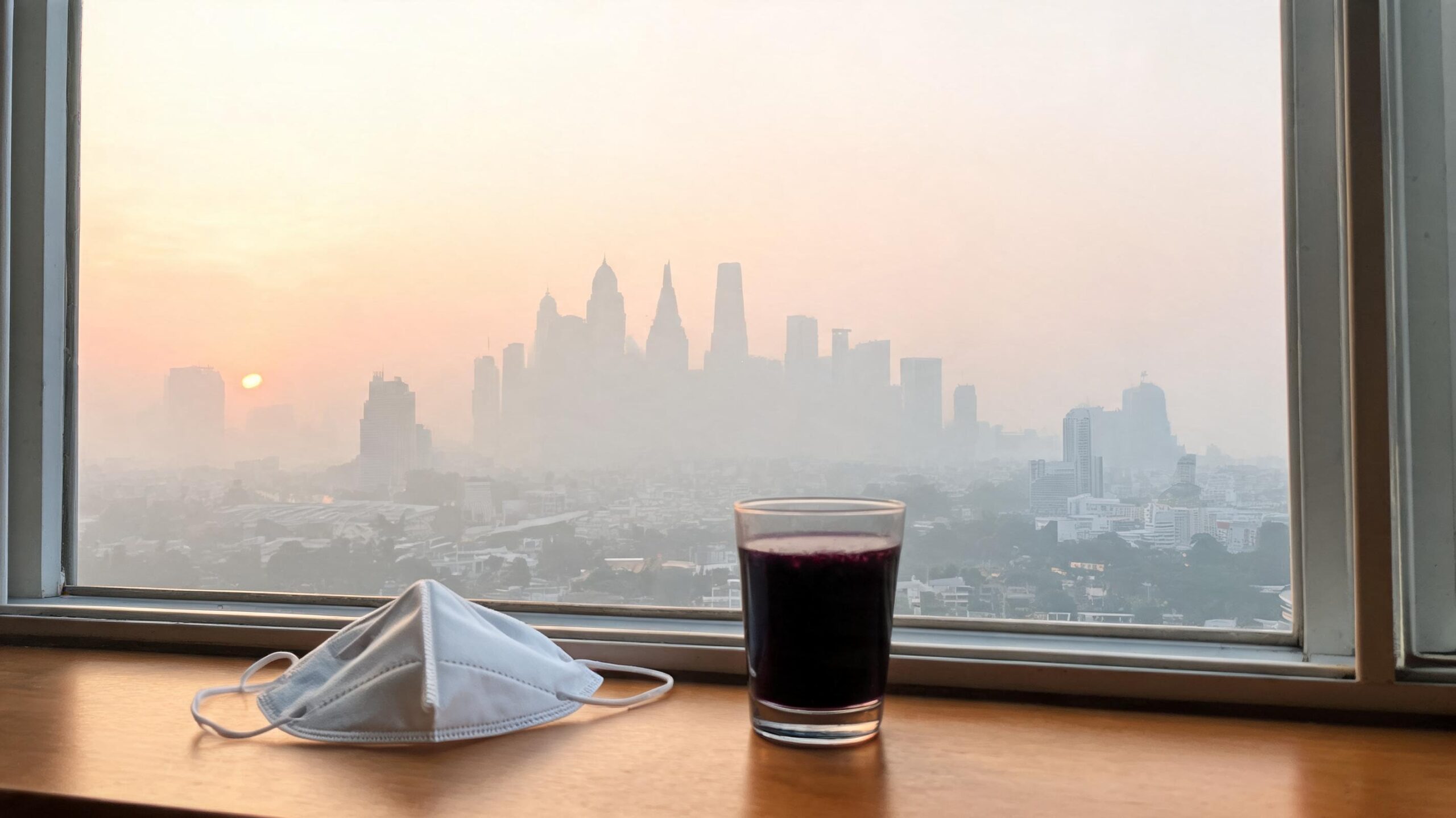
When the API crosses 150 and the sky turns a flat milky white, an N95 mask and an air purifier feel like the only defences most of us reach for. They are not wrong choices — they are essential. But on the other side of the lungs, a quieter layer of protection is at work all day: the polyphenol-rich plant foods that get into your blood and steady the oxidative load that PM2.5 puts on lung tissue1. Pieces in The New Straits Times2 this October flagged exactly that link, and the wider clinical literature on polyphenols as therapeutics in respiratory disease3 is what makes the dietary side of haze protection worth taking seriously.
Haze season is not one bad day. It is weeks of cumulative exposure, with PM2.5 fine particles slipping past the nose and upper airways and settling deep in the alveoli. There, they generate reactive oxygen species — the same free radicals the body is already trying to mop up after a day of commuting, screen time, and a less-than-perfect lunch. The result, over a season, is the slow oxidative damage behind the long-term effects that respiratory specialists keep warning about2. Whole-berry antioxidants do not stop PM2.5 from getting in. They shore up the substrate the body uses to clear the oxidative load once it does.
Why Whole Berries, and Why a Polyphenol Matrix
Most “antioxidant” marketing collapses to a single number — ORAC, or vitamin C content, or “superfruit” branding. That framing misses the actual biology. The lung-protective effect in the respiratory-disease literature comes from a matrix of polyphenols acting together: anthocyanins from deeply pigmented berries, proanthocyanidins, flavonols, ellagitannins, and resveratrol-style stilbenes. Each one has a different binding profile against free radicals; together they cover a wider oxidative spectrum than any single-berry powder does.
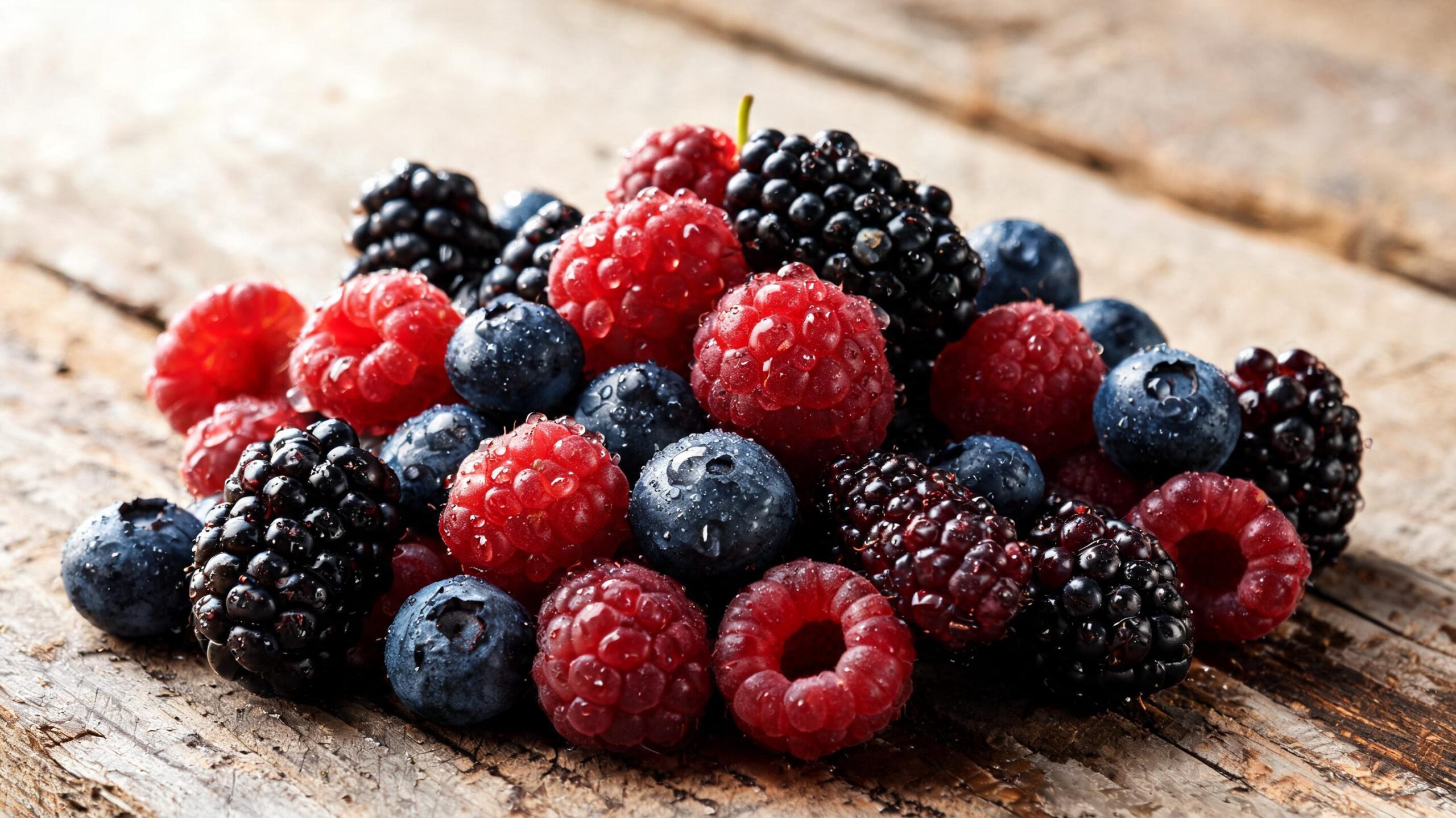
Blackberries and black raspberries carry the densest anthocyanin load per gram. Blueberries contribute pterostilbene and flavonols. Cranberries bring the A-type proanthocyanidins that distinguish them from the B-type proanthocyanidins in grapes. Raspberries carry ellagic acid. Mulberries round it out with resveratrol. A 9-berry blend stacks all of these into one substrate; a blueberry-only powder, however well-marketed, leaves the ellagic acid and the A-type proanthocyanidins on the table.
5 Whole-Berry Antioxidants That Quietly Work in the Background
The five below are the ones the haze-season evidence points to most consistently. None of them is a “treatment” for PM2.5 exposure. They are dietary substrates that make the body better at clearing the oxidative waste that exposure produces.
1. Anthocyanins — the deep purple backbone
Anthocyanins are the red, purple, and blue pigments in blackberries, blueberries, black raspberries, and elderberries. They are the most studied polyphenol class in lung-tissue research3, and they show consistent effects in models of acute lung inflammation. A 9-berry blend where anthocyanin-rich fruits make up most of the matrix gives the body a much wider anthocyanin profile than any single-fruit powder does.
2. Ellagic acid and ellagitannins — raspberries and mulberries
Ellagic acid (released from ellagitannins during digestion) is the substrate behind the antioxidant and anti-inflammatory activity of raspberries and mulberries. It is rarely the headline nutrient in a marketing claim, but the clinical-evidence base for ellagic acid in lung-tissue models is solid enough that any serious berry blend should include it.
3. Proanthocyanidins — cranberry’s distinguishing edge
Most berries contain B-type proanthocyanidins. Cranberries uniquely contain A-type proanthocyanidins, which behave differently in the body. They are the substrate behind cranberry’s research on urinary tract and mucosal health, and they round out the polyphenol matrix in a 9-berry blend in a way a blueberry-only powder cannot.
4. Resveratrol and stilbenes — the mulberry contribution
Mulberries are one of the more accessible dietary sources of resveratrol and related stilbenes, the same compound class behind the red-wine-resveratrol literature. In the context of a haze-season antioxidant stack, stilbenes contribute a different radical-quenching profile from anthocyanins or proanthocyanidins, and the combination is what makes the matrix work.
5. Vitamin C and quercetin — the supporting cast
Vitamin C is the most familiar antioxidant in the diet, but it is the partner of choice for the polyphenol matrix because it regenerates oxidised anthocyanins and flavonols in the body. Quercetin (concentrated in apples, onions, and several dark berries) is the flavonol that gives the matrix its free-radical buffering depth. Both round out the 9-berry blend’s spectrum.
How to Read an ORAC Number Without Overpaying for It
ORAC (Oxygen Radical Absorbance Capacity) is a real laboratory test. Brunswick Labs, an independent third-party lab, is one of the more reputable providers of the test, and an 8000 ORAC per-serving claim verified by Brunswick is meaningful as a relative measure of free-radical-scavenging capacity in vitro. What ORAC does not measure is how that number translates, gram-for-gram, into a clinical benefit in your lungs on a high-PM2.5 day. The translation is a research story, not a marketing one.
The right way to read an ORAC number, then, is as a quality signal: a Brunswick-verified 8000 ORAC is meaningfully higher than the 1000–2000 ORAC of a typical berry juice, and it tells you the product was formulated with the matrix in mind, not as a marketing rounding-up. A 50000 ORAC claim that is not Brunswick-verified is a marketing rounding-up.
The Office-Worker Lens: Why This Is Not Just an Athlete Question
Endurance athletes and HYROX finishers tend to get the lion’s share of the “polyphenol for recovery” conversation, and rightly so — post-exercise oxidative load is real and well-studied. But the office worker who sits in a sealed, recirculated-air office for ten hours a day, with the windows closed against the haze, accumulates a similar oxidative load at a slower pace. Over a haze season, that slow accumulation is the bigger variable for most adults in Malaysia and Singapore.
For the office worker, the right frame is not “recovery” but “substrate.” A daily polyphenol matrix is the substrate the body uses to keep up with PM2.5 exposure, screen-time oxidative stress, and the under-vegetable dietary pattern that most office lunches still represent. Athletes get the headline; office workers are the larger affected population.
Where the LiveBerries 9-Berry Blend Sits in This Picture
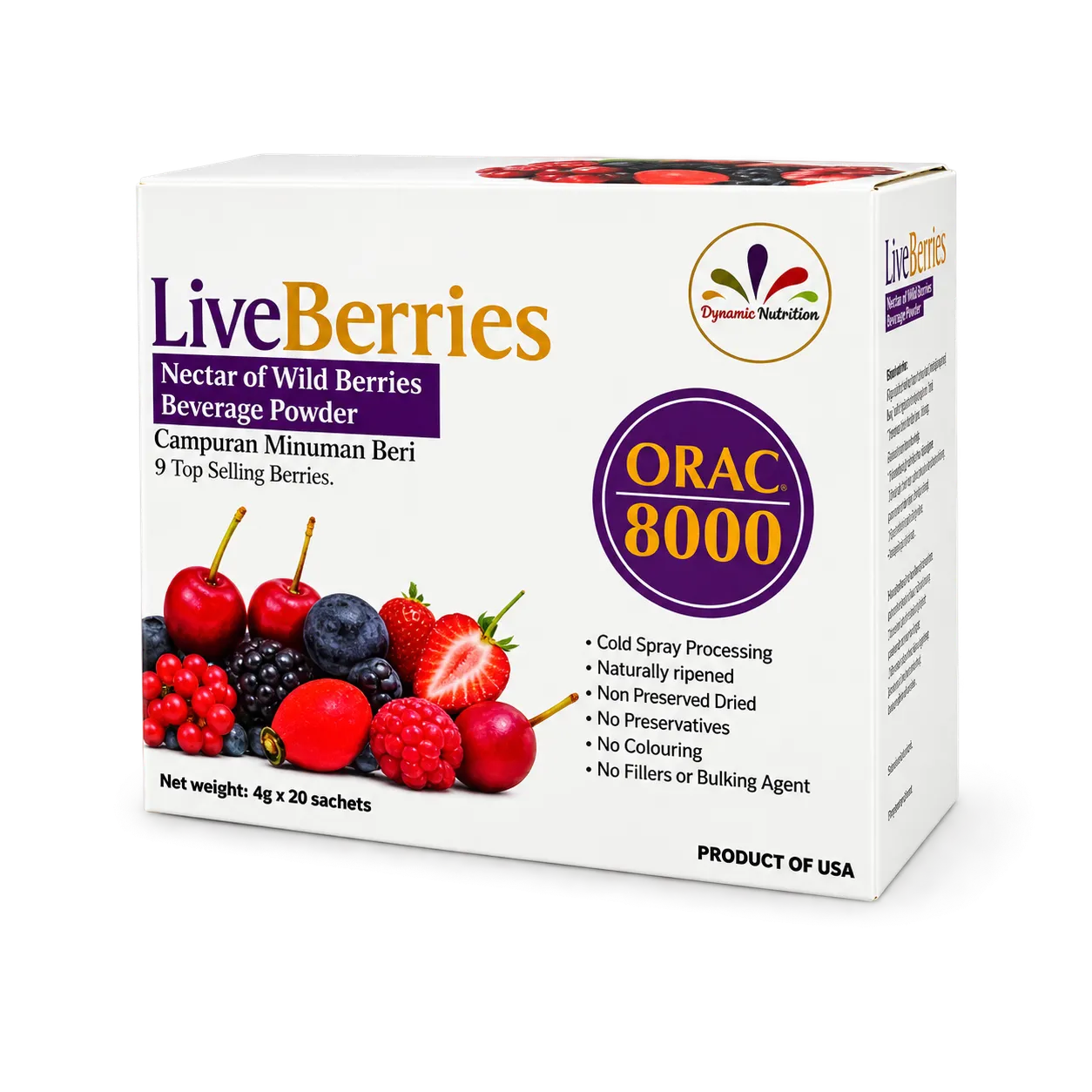
LiveBerries is a 9-berry blend (blackberry, strawberry, red and black raspberry, boysenberry, cherry, blueberry, cranberry, and mulberry) formulated to ORAC 8000 per serving and independently verified by Brunswick Labs. The matrix is the point: anthocyanins from the blackberry and raspberry, ellagitannins from the mulberry and raspberry, A-type proanthocyanidins from the cranberry, stilbenes from the mulberry, vitamin C and quercetin as the supporting cast. The result is the polyphenol matrix above, in a daily sachet form, with the verification to back the ORAC claim.
It is not a magic pill. It does not replace an N95 mask on a high-API day or a HEPA filter in your bedroom. It is the dietary substrate the body uses to clear the oxidative load that the other defences cannot fully prevent. For office workers, parents of schoolchildren, and the lung-vulnerable groups that the haze-season headlines keep flagging, it is the part of the haze-protection plan that does not make the news.
References
- Centers for Disease Control and Prevention, “Particle Pollution.” https://www.cdc.gov/air/particulate_matter.html
- New Straits Times, “Experts warn PM2.5 fine particles pose health risks to vulnerable groups.” https://www.nst.com.my/news/nation/2026/10/1545900/experts-warn-pm25-fine-particles-pose-health-risks-vulnerable-groups
- PMC (Nutrients, 2024), “Polyphenols as Therapeutics in Respiratory Diseases: Moving from Preclinical Evidence to Potential Clinical Applications.” https://pmc.ncbi.nlm.nih.gov/articles/PMC11186353/
Also available in Bahasa Malaysia and 中文.
Related Topics
Free Radicals Affects Office Workers’ Health
Protection From The Effects of Haze
Why Shift Workers Need More Antioxidants than Normal Working Hour Workers?
How do you combat free radicals?
Eye Strain and Computer Vision Syndrome
Haze season is virus season too: what elderberry actually does for your lungs (and what it doesn’t)
Product you may be interested in