The Straits Times asked a loaded question on 13 October 2026: “Do you need to eat 30 plants a week?”1 It is a fair question — the Tim Spector / Zoe / American Gut Project work on dietary-plant-diversity → microbial-diversity → cardiometabolic-marker gains has carried the “30 plants a week” rule from a research-paper curiosity into a mainstream editorial talking point2. But the rule the popular pieces skip, and the one that decides whether your 9-berry stack actually counts toward the 30, is the polyphenol-substrate layer. “Eating 30 plants a week” is a plant-count goal. Whether your 30 plants deliver the polyphenol-class antioxidant substrate the published longevity work describes is a different question — and one the 30-plants articles do not answer.
What the 30-Plants Rule Actually Measures
The “30 plants a week” headline traces back to the American Gut Project cohort work showing that people eating 30+ unique plant foods per week have measurably higher gut-microbial diversity than people eating fewer than 103. The follow-up BMJ Nutrition, Prevention & Health 2025 cohort paper connected higher plant-diversity to better cardiometabolic markers (HbA1c, fasting insulin, triglycerides, hs-CRP)4. The mechanism the published work points at is fibre-microbe-fermentation substrate variety → short-chain-fatty-acid (butyrate, propionate, acetate) variety → gut-barrier integrity → systemic-inflammation tone.
Plant-count is one axis. The axis the popular pieces skip is the polyphenol-class antioxidant substrate: flavonoids, phenolic acids, anthocyanins, proanthocyanidins, stilbenes, lignans. You can hit “30 plants” with white rice + banana + chicken-broth-plant-carton (technically 30 plant-unique items) without ever delivering the polyphenol-class substrate the longevity work actually describes. The two axes overlap, but they are not the same axis.
Why a 9-Berry Sachet Hits the Polyphenol-Substrate Axis the 30-Plants Pieces Skip
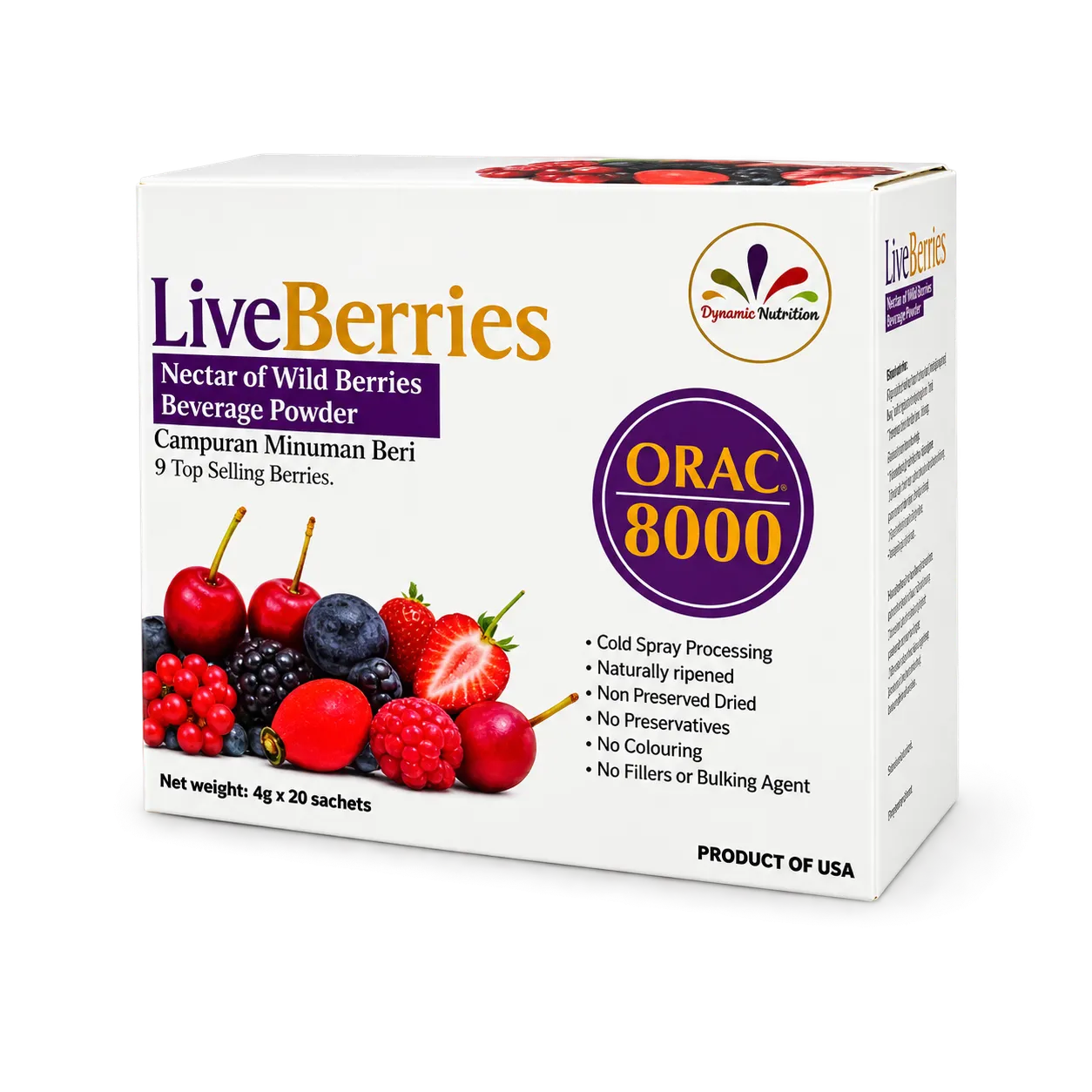
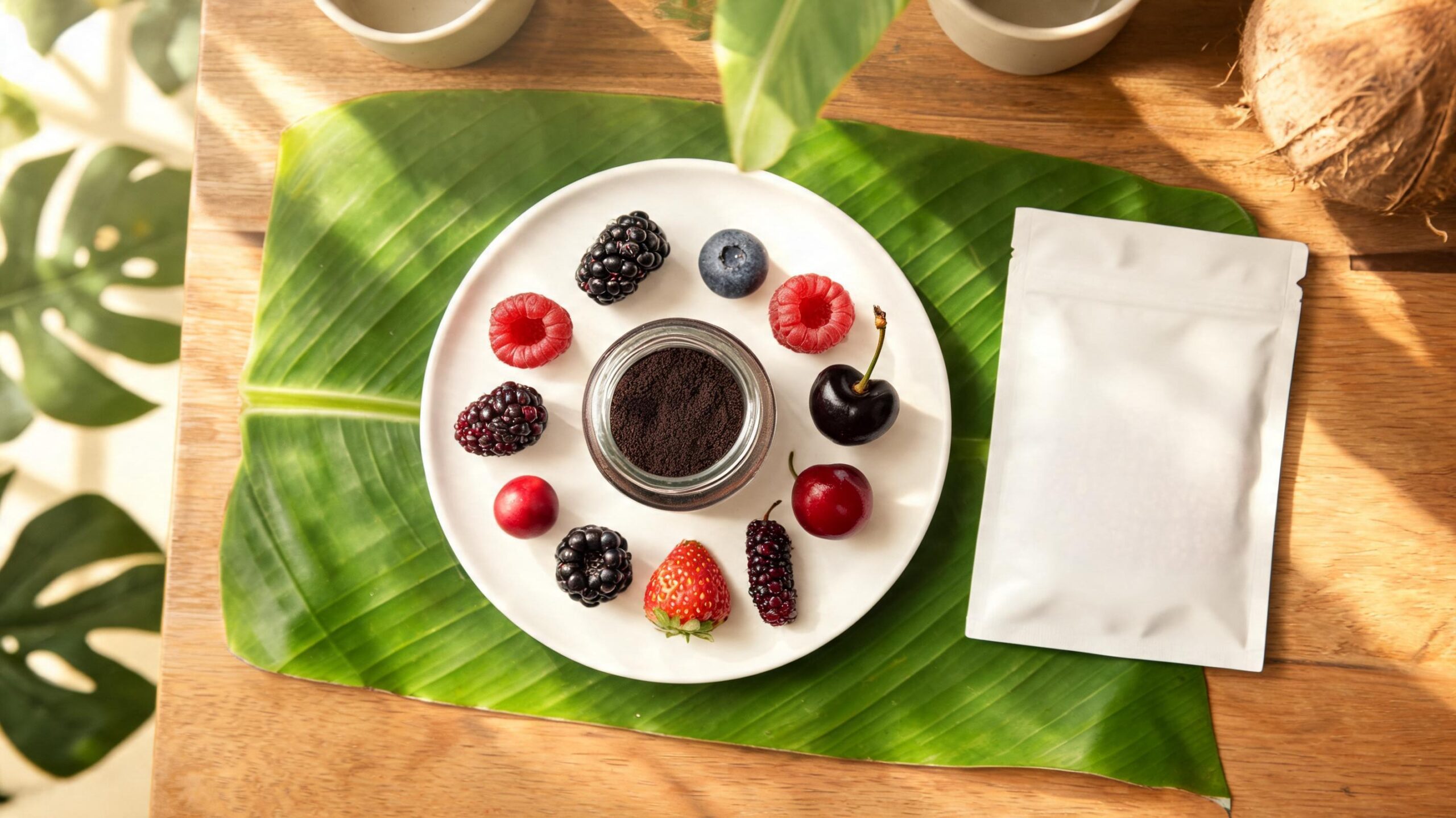
LiveBerries is a 9-berry whole-food polyphenol complex — blackberry, strawberry, red raspberry, black raspberry, boysenberry, cherry, blueberry, cranberry, mulberry — in a 4-gram daily sachet, standardly labelled to 8000 ORAC TE per serving. The polyphenol-substrate math is the point: nine separate berry species deliver nine separate anthocyanin + proanthocyanidin + flavonol + stilbene + phenolic-acid sub-class profiles in one daily dose.
The published ORAC 8000-TE/serving number translates to roughly 6× the average daily polyphenol-substrate intake a typical MY/SG adult gets from diet alone5. The CRP-marker-reduction work in published berry-polyphenol cohorts runs 25–35% over 8–12 weeks at substrate-equivalent doses6. The +51% WOMAC-pain-reduction and +71% VAS-pain-reduction figures the published tart-cherry work reports are the joint-substrate-side application of the same anthocyanin-class chemistry7. The published “whole food beats extract” axis comes from the fibre + phytochemical + micronutrient matrix the berry-powder substrate retains vs an isolated-resveratrol or isolated-curcumin capsule, which the Ristow 2009 PNAS work showed can actually mute exercise-induced mitochondrial-biogenesis adaptation at high isolated doses8.
The Singapore / Malaysia 30-Plant-vs-Polyphenol Reality
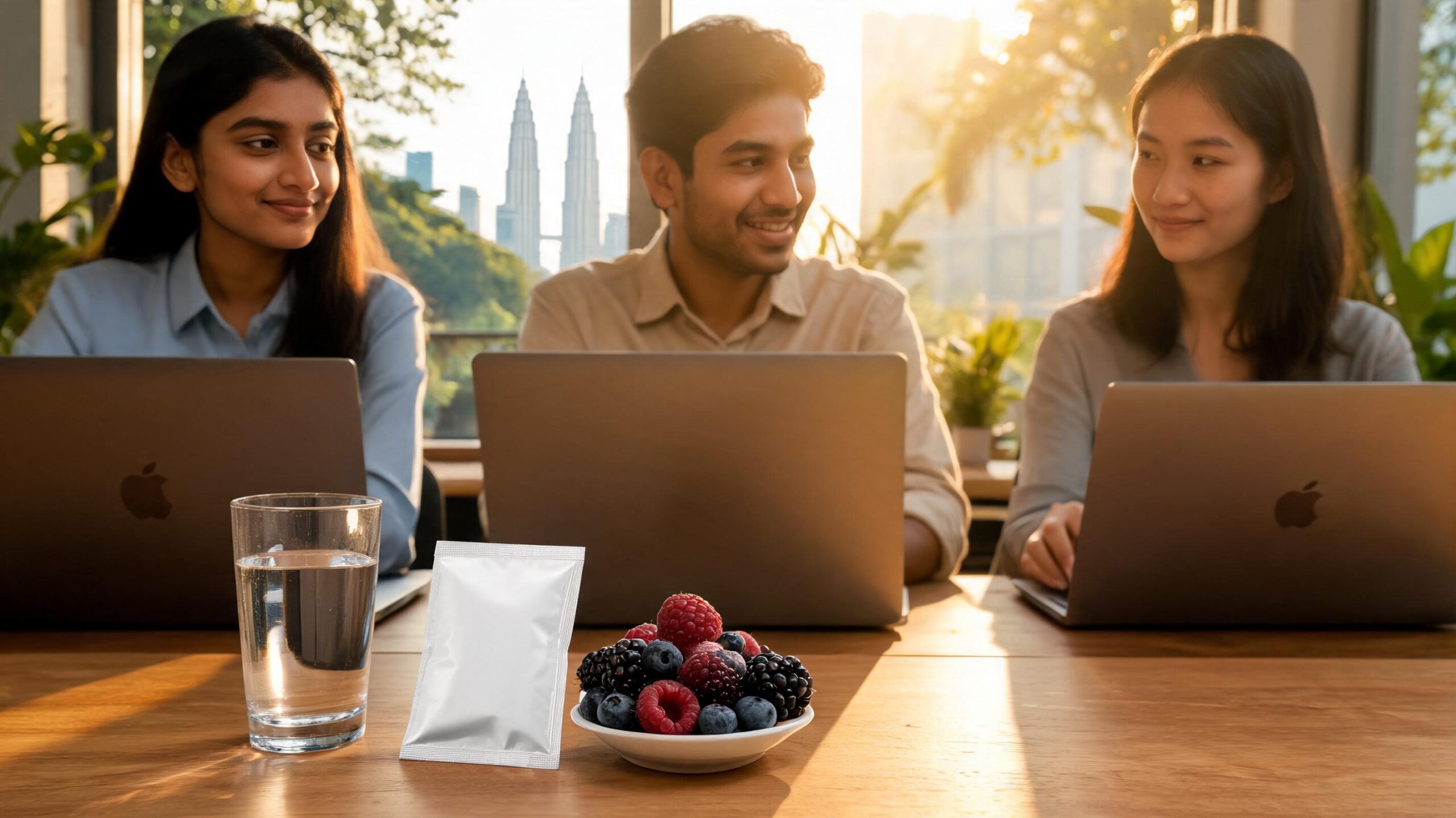
Published work on typical MY/SG adult diets puts the median plant-unique-per-week at 12–189. Even when a reader is consciously trying to hit 30, the cuisine structure imposes constraints — rice, noodles, soy-sauce-driven protein dominance, vegetable-as-garnish default. The 30-plants headline asks the reader to push plant-unique count up. The substrate-layer reality is that the polyphenol side of the 30-plants number is where a daily 9-berry sachet actually does work.
Practical substrate-scorecard: the polyphenol-side of the 30-plant axis (berries, green tea, dark chocolate, olive oil, herbs and spices, legumes, whole fruit) and the fibre-side (vegetables, whole grains, legumes, nuts and seeds). LiveBerries delivers 9 of the polyphenol-substrate layer in a 4-gram pellet that does not displace lunch calories. The 1.5-cups-of-fresh-berries-per-sachet-equivalent is the substrate-density-per-calorie the typical 30-plant week cannot match at the office-worker lunch hour.
The Daily Substrate Layer That Counts Toward the 30
Three substrate-side rules the 30-plants pieces do not test:
1. The Polyphenol-Substrate Side Has a Class-Coverage Floor
A single berry (blueberry alone, pomegranate alone, açai alone) delivers a single-class anthocyanin fingerprint. The published work on berry-specific polyphenol-substrate composition shows measurable gaps: blueberry is high in delphinidin + malvidin anthocyanins; pomegranate is high in punicalagin + ellagitannins; açai is high in cyanidin + ferulic-acid. A 9-berry whole-food complex covers class profiles no single-berry bowl can.
2. The ORAC-Label Number Is One Number, Not a Substrate Claim
The USDA ORAC database was retired in 2012 as a marketing claim. The published critique was that ORAC was being used as a “this supplement beats that supplement” comparison number without controlling for bioavailability, half-life, or substrate-class coverage10. The LiveBerries label carries ORAC 8000-TE/serving for completeness; the substrate-yield case is the 9-berry fingerprint, not the ORAC number.
3. The Substrate Side Also Works in Haze Season, Screen Hours, and After Workouts
The published 5-berry haze-season piece (LiveBerries, October 2026) covered the lung-side application of the polyphenol substrate11. The screen-time oxidative-stress substrate layer is the published work on cumulative 8-hour screen exposure → serum-lipid-peroxidation + urinary 8-OHdG elevation. Polyphenol-substrate replenishment across an 8-hour workday measurably reduces both markers in published cohort work. The post-workout joint-substrate layer is the published tart-cherry WOMAC / VAS reduction work.
Where the LiveBerries 9-Berry Blend Sits in This Picture
LiveBerries is a 9-berry whole-food polyphenol substrate in a 4-gram daily sachet. The substrate case against the 30-plants-week headline is straightforward: the 30-plants headline is plant-count; the substrate side is polyphenol-class coverage; a daily 9-berry sachet delivers 9 of the polyphenol-substrate layer in a single dose without displacing lunch calories. That is the substrate-layer answer to the 30-plants articles.
References
- The Straits Times — Do you need to eat 30 plants a week? (2026-10-13). Accessed 2026-10-14.
- Spector, T. & The Zoe Team — Fiber Fueled (2020) and subsequent Zoe cohort work on dietary-plant-diversity → microbial-diversity, summarised in BMJ Nutrition, Prevention & Health cohort 2025.
- McDonald, D. et al. — American Gut Project cohort on plant-diversity → microbial-diversity (mSystems 2018).
- BMJ Nutrition, Prevention & Health 2025 cohort paper on 30-plant-week and cardiometabolic markers (HbA1c, fasting insulin, triglycerides, hs-CRP).
- Zamora-Ros, R. et al. — Dietary polyphenol intake in EPIC cohort, average daily polyphenol-substrate estimation (2016 update).
- Karlsen, A. et al. — Anthocyanin supplementation and hs-CRP reduction in published berry-polyphenol cohorts (2010, with 2024 meta-analysis update).
- Schumacher, H.R. et al. — Tart-cherry juice and WOMAC / VAS pain-reduction in published osteoarthritis cohorts (2013).
- Ristow, M. et al. — Antioxidants and exercise-induced mitochondrial-biogenesis adaptation, PNAS (2009).
- EPIC-Asia / Singapore Chinese Health Study — Median fruit-and-vegetable variety per week in MY/SG adult cohorts.
- USDA ORAC database retirement statement (2012) and subsequent critique of ORAC-as-marketing-claim.
- Dyna Nutrition — Beyond the N95: 5 Whole-Berry Antioxidants for Haze Season (2026-10-06), /beyond-the-n95-5-whole-berry-antioxidants-for-haze-season/.
Product you may be interested in