Working out tongkat ali dosage is mostly arithmetic wearing a supplement-bottle disguise. A label can tell you how many milligrams of Tongkat Ali root extract sit in a capsule, how much of that extract is standardised to eurycomanone, how many capsules the label counts as one serving, and how many servings the bottle holds. Those four numbers answer the only question a label is able to answer. Almost everything else printed on the bottle is packaging, not information.
This is a label-literacy guide, not a product review and not a treatment plan. It sets out what each figure on a Tongkat Ali label actually means, how to turn root-extract weight into standardised eurycomanone, what the small number of human trials that have used standardised Tongkat Ali actually dosed, and how to compare two labels fairly. It does not claim that any product produces any particular result, and it asks you to read the figures on your own pack before you scale anything.
Two Numbers, Not One: What A Tongkat Ali Label Actually Tells You
Most Tongkat Ali labels print two different weights, and running them together is the single most common misreading on the shelf. The first is the weight of the root extract itself — the dried, extracted powder inside the capsule, printed in milligrams or grams. The second is the standardised active content, eurycomanone, printed either as a percentage of that extract ("standardised to 2% eurycomanone", or a floor such as "minimum 1%") or as a flat milligram amount per capsule.
Those two numbers are not interchangeable. A 500 mg root extract standardised to 2% carries roughly 10 mg of eurycomanone, because 2% of 500 mg is 10 mg; the same 500 mg extract at 4% carries roughly 20 mg. A product that prints only the extract weight, with no standardisation figure at all, is telling you how much powder is in the capsule and nothing whatsoever about what has been quantified inside that powder.
Raw root powder and a standardised extract are not the same material either. Our own product page puts it plainly: an extract made from high-quality raw material with a modern extraction method can carry more of the active component than a lesser material processed with a suboptimal method, which is why the active content is the figure worth reading. It is the only number on the panel that describes something measured rather than something weighed, and our page notes that the compound can be quantified by a laboratory technique called HPLC, with high-quality Tongkat Ali extract described as carrying 0.8% to 1.5% eurycomanone.
How To Work Out Eurycomanone Per Serving
Reading a Tongkat Ali label for eurycomanone per serving takes four steps, and none of them require a laboratory or a spreadsheet.
1. Find the extract weight per capsule. It sits on the "each capsule contains" or supplement-facts panel, printed as something like "Tongkat Ali Extract 100 mg".
2. Find the standardisation figure on the same line. It may read "standardised to 2% eurycomanone", "minimum 1% eurycomanone", or an eurycomanone amount in milligrams.
3. Multiply the two. 100 mg at 1% gives 1 mg of eurycomanone per capsule; 500 mg at 2% gives 10 mg; 200 mg at 4% gives 8 mg. If the panel states a flat milligram amount instead of a percentage, skip the arithmetic and use that number directly.
4. Multiply by the serving size. If the label calls two capsules one serving, a capsule carrying 1 mg of standardised eurycomanone gives 2 mg per serving and one carrying 10 mg gives 20 mg per serving. If the label says "per daily serving" without saying how many capsules that is, ask the manufacturer rather than guessing.
One last piece of arithmetic settles the rest: divide the number of capsules in the bottle by the capsules per serving. A 60-capsule bottle at two capsules per serving is 30 servings; the same bottle at one capsule per serving is 60. That number, multiplied by the price, is your cost per serving — the only unit in which two products can be compared honestly.
What The Human Studies Actually Used
Only a small number of human clinical trials have used standardised Tongkat Ali, and their dosing is worth knowing because it is the only reference point that exists for reading a label against published work.
The first, published in Phytotherapy Research in 2016, gave 200 mg per day of a standardised root water extract of Eurycoma longifolia to a middle-aged Japanese population, with immune markers as the measured outcomes and 83 participants completing the study. The second, published in Food & Nutrition Research in 2018, ran 93 participants aged 25 to 65 for 24 weeks on a Tongkat Ali extract combined with multivitamins or on placebo, with quality of life, mood and stress as the outcomes. The third, in Maturitas in 2021, ran a six-month double-blind trial in men with androgen deficiency of aging males, using a 200 mg supplement of Eurycoma longifolia alongside concurrent training, with erectile function and testosterone as the measured outcomes.
Two things follow from that list, and neither is a dose recommendation. First, the human work has used standardised root extracts at roughly 200 mg per day, over periods of 12 to 24 weeks, with other ingredients alongside in some trials — which means the published work tested a standardised extract at a stated weight, not "raw root powder, as much as you like". Second, none of these papers sets out a dose-response curve, and the abstracts do not restate a per-capsule eurycomanone percentage, so the extract weight and the standardised content you need have to come from the product specification rather than from the paper.
That is the honest use of the literature for a label reader: it tells you what has actually been tested in people, and it tells you that the tested material was a standardised extract of a stated weight. It does not tell you what your capsule should contain, and no trial result here converts into a promise about energy, libido, strength, sleep or fertility.
How To Compare Two Tongkat Ali Labels Fairly
When two products sit side by side, compare them in this order.
1. The active content and its form. Eurycomanone, quantified, is worth more than a label that only weighs root powder, because only one of the two tells you what is in the capsule rather than what was used to fill it.
2. The standardised marker and its percentage. "Minimum 1% eurycomanone" and "standardised to 2%" are not interchangeable statements, and a floor is weaker than a target.
3. The dose per serving and the serving size, expressed in milligrams of standardised eurycomanone rather than milligrams of capsule. A capsule count on its own is close to meaningless.
4. The verification. A stated HPLC assay is the difference between a number that was measured in a laboratory and a number that was typed onto a label. If a supplier cannot tell you how the eurycomanone content was determined, treat the percentage as a marketing figure.
5. The rest of the formula. A multi-ingredient capsule has to be read ingredient by ingredient, because the Tongkat Ali figure shares the capsule with everything else in it.
Then compare what the label does not say. Two products can print identical eurycomanone figures and still differ in extract ratio, raw-material source, batch-to-batch consistency, excipients, and price per serving. A label cannot settle those questions for you, but it can stop you from comparing a number against a number that means something else entirely.
Where Our Own Label Sits
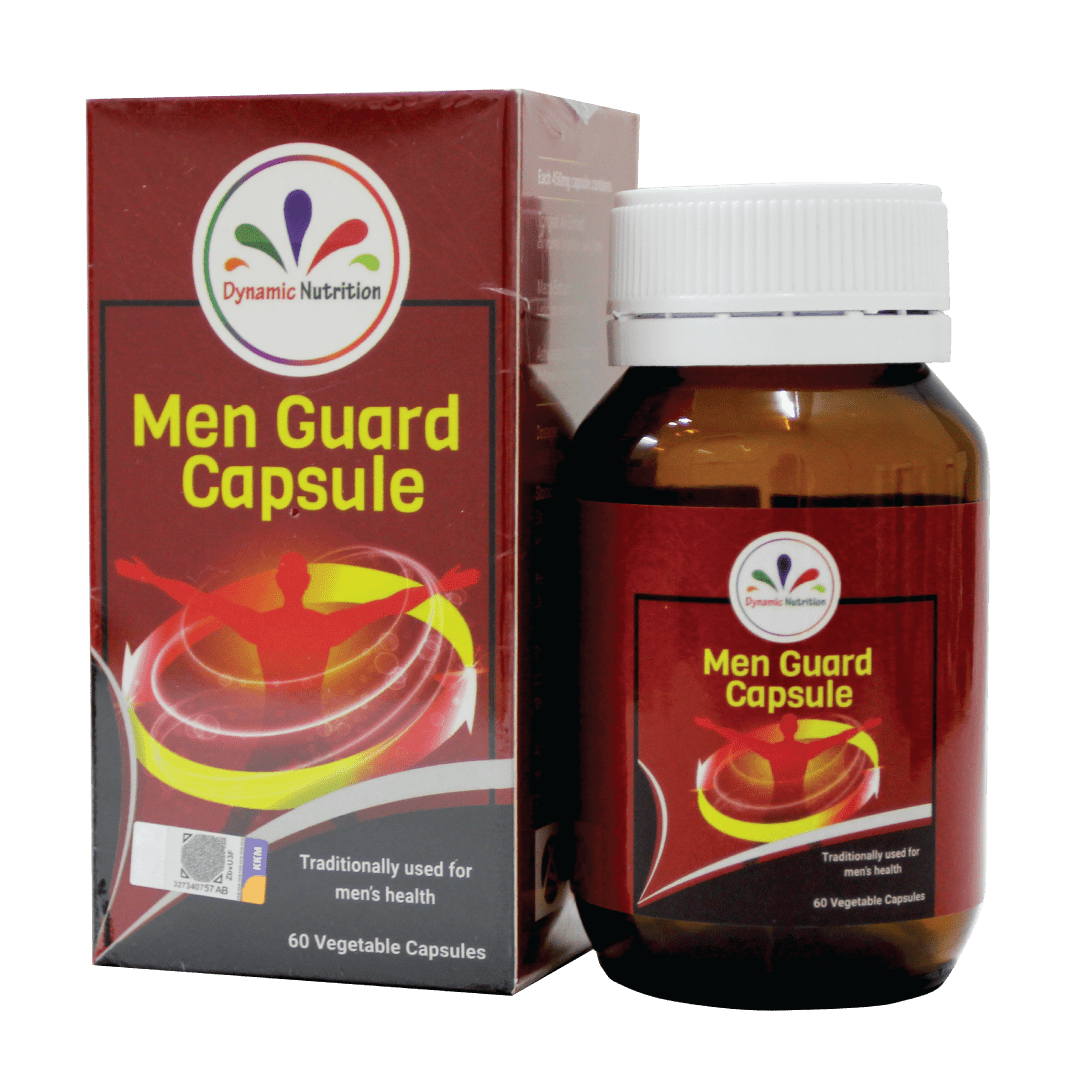
Applying the same arithmetic to Men Guard Capsule: each 450 mg capsule contains Tongkat Ali Extract 100 mg standardised to a minimum of 1% eurycomanone, alongside 300 mg of KSM-66 organic ashwagandha extract and 50 mg of maca extract, with 60 vegetable capsules in each bottle.
So 100 mg at 1% is at least 1 mg of eurycomanone per capsule, which makes it at least 2 mg per two-capsule serving and 30 servings per bottle. That standardised figure sits at the lower end of the 0.8% to 1.5% range our own product page describes for high-quality Tongkat Ali extract measured by HPLC, and below the standardised extracts used in some of the published human work described above. Both of those statements are simply true, and neither settles the question for you: the label tells you what is in the pack in front of you, and the studies tell you what was tested in a trial. They are different facts and a label cannot make them the same fact.
The Tongkat Ali in this capsule is one of three ingredients rather than the whole product, so the capsule is not trying to carry a high standardised load on its own, and it is not presented here as doing anything a label cannot show. What matters for anyone reading the panel is that the arithmetic is available to you: minimum 1% eurycomanone, 100 mg of extract per capsule, two capsules a serving, 30 servings a bottle. If the pack in your hand and the specification on the product page ever disagree, the pack and the manufacturer are what count.
What A Label Cannot Tell You
Three limits are worth stating plainly. First, a standardised percentage is a floor or a target, not a measurement of the capsule in your hand; batches vary, and only a certificate of analysis for that batch settles it. Second, none of these numbers predicts an outcome — no energy, libido, strength, sleep or fertility result can be read off a percentage, and any product that implies otherwise is selling you something that is not on the panel. Third, dose is only one variable in the whole picture; age, medications, other supplements and existing health conditions belong in the same conversation, which is a conversation to have with a doctor or a pharmacist rather than with a label.
A Note On Scope
This is label literacy and nothing more. It exists because most of the confusion around Tongkat Ali products is arithmetic confusion: grams of root powder read as grams of active compound, or a capsule count read as a daily dose. Nothing here promises a result and nothing here is medical advice. If you are managing a health condition, taking prescription medication, or pregnant or breastfeeding, speak with your doctor before adding any supplement to your routine, including one whose label looks entirely unremarkable.
References
- George A, Suzuki N, Abas AB, Mohri K, Utsuyama M, Hirokawa K, Takara T. Immunomodulation in middle-aged humans via the ingestion of a standardised root water extract of Eurycoma longifolia Jack — a randomized, double-blind, placebo-controlled, parallel study. Phytotherapy Research. 2016;30(4):627-635 — https://doi.org/10.1002/ptr.5571
- George A, Udani J, Abidin NZ, Yusof A. Efficacy and safety of Eurycoma longifolia water extract plus multivitamins on quality of life, mood and stress: a randomized placebo-controlled parallel study. Food & Nutrition Research. 2018;62:1374 — https://doi.org/10.29219/fnr.v62.1374
- Leitão AE, Vieira MCS, Pelegrini A, da Silva EL, Guimarães ACA. A 6-month, double-blind, placebo-controlled, randomized trial to evaluate the effect of Eurycoma longifolia (Tongkat Ali) and concurrent training on erectile function and testosterone levels in androgen deficiency of aging males (ADAM). Maturitas. 2021;145:78-85 — https://doi.org/10.1016/j.maturitas.2020.12.002
Product you may be interested in