Type “tongkat ali benefits” into any search engine and you will find hundreds of pages promising everything from instant energy to pharmacy-grade hormonal support. Tongkat Ali (Eurycoma longifolia) — the rainforest root Malaysians call tongkat ali and the world calls “Malaysian ginseng” — is one of Southeast Asia’s most studied traditional botanicals. But like every popular herb, it has picked up a layer of marketing that runs ahead of the evidence. This article separates what published research actually supports from what the supplement aisle would like you to believe.
What Is Tongkat Ali?
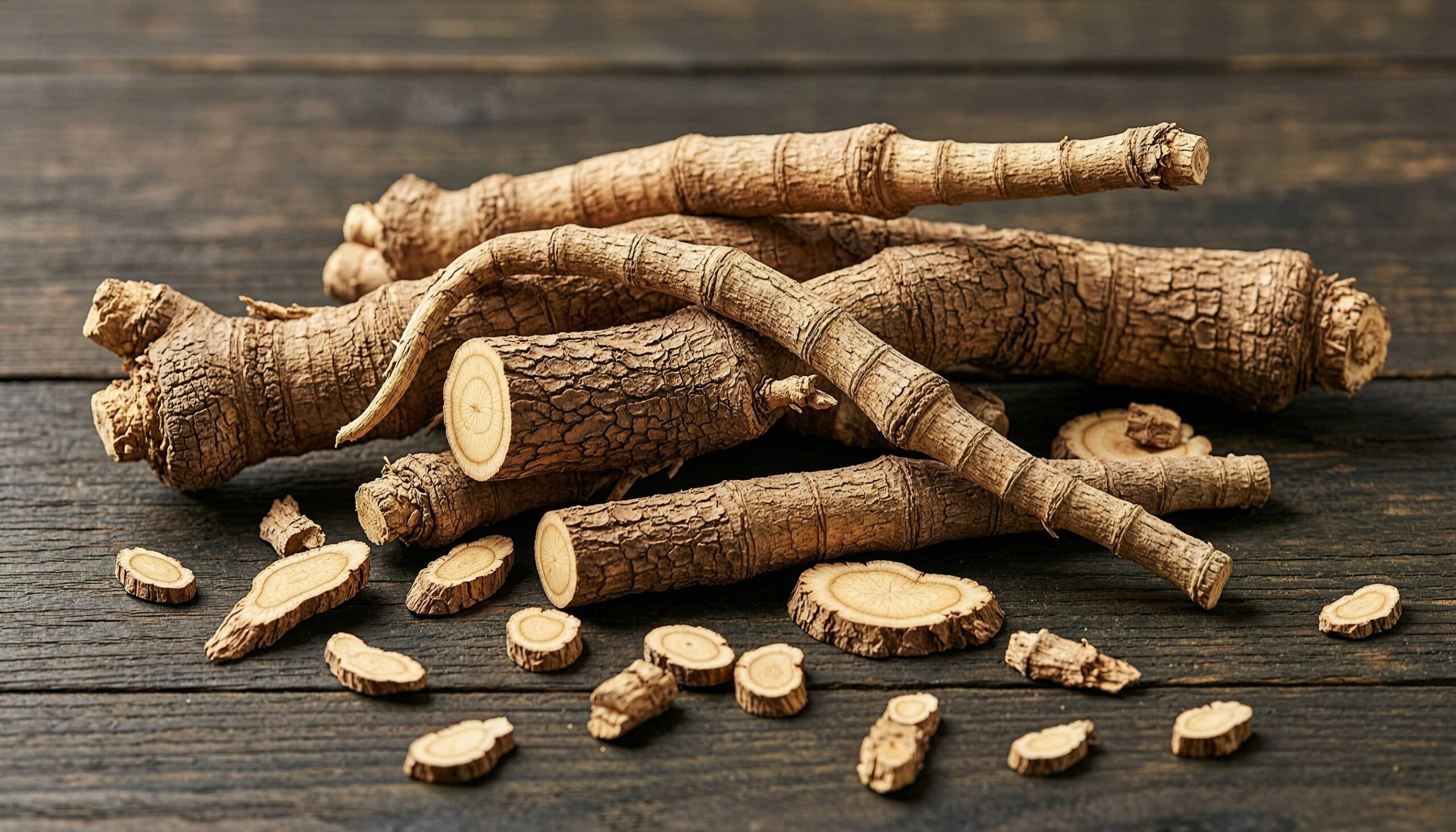
Tongkat Ali is a tree native to the rainforests of Malaysia, Indonesia and Thailand. Its root — not its leaves or fruit — is the part used traditionally, brewed as a decoction for energy, stamina and overall male vitality. That traditional use is exactly what modern research set out to test, and it is also what gave the herb its Western nickname: “Malaysian ginseng”.
Like ginseng, tongkat ali is an adaptogenic tonic rather than a single-molecule drug. Its signature compounds are called eurycomanones, quassinoid compounds found almost exclusively in this plant. The presence and quantity of those compounds is the single most important thing to look for on a label — more on that below.
What the Research Actually Supports
When reviewers look at the tongkat ali literature, the findings split into three clear evidence tiers. Knowing which tier a claim comes from is the difference between buying a well-made botanical and overpaying for folklore.
Testosterone and sexual health — the strongest evidence
The best-documented effect of tongkat ali is on testosterone and male sexual-health parameters. The most cited trial is a 2012 randomised, placebo-controlled study in which men with late-onset hypogonadism (the age-related decline in testosterone, sometimes called andropause) took a standardised extract for 12 weeks; the treatment group showed meaningful increases in testosterone and improvements in sexual-health scores compared with placebo. Follow-up work, including pooled analyses published in recent years, has largely repeated that pattern: standardised extracts, used for several weeks in men with lower testosterone, tend to move the needle more reliably than in young, healthy men with normal baseline levels.
The honest takeaway: tongkat ali has the strongest evidence base of the popular “male tonic” herbs for the testosterone axis — but the benefits are most consistent in men who actually have low testosterone, not as a “supercharge” for healthy young men.
Muscle strength, stress and quality of life — moderately supported
A second body of research looks at strength, body composition and well-being. Small trials of standardised extracts have reported gains in upper-body strength, lean-mass indicators, and reduced perceived fatigue and stress in active older men. The word to watch here is “small” — these studies are generally shorter and involve fewer participants than the testosterone trials, so the evidence is promising but not yet at the level of, say, a large multi-centre drug trial. What the pattern suggests is a real but modest adaptogenic effect: better recovery, steadier mood, less day-to-day fatigue.
What Marketing Overstates
Now the tier that sells the most bottles: claims that tongkat ali is “natural testosterone replacement therapy” or that it produces pharmacy-strength hormonal changes. The research does not support this framing. Tongkat ali is not TRT — it does not deliver exogenous hormones, and its effect size, where it appears, is a fraction of what prescribed therapy achieves. Red flags include “feel it in three days”, “clinically proven to replace TRT”, or any promise of dramatic muscle gain without training. A well-made tongkat ali product makes none of those claims, because the evidence doesn’t back them.

How to Judge a Tongkat Ali Product
Because the root, the extraction method and the raw material all vary enormously, two products both labelled “tongkat ali 200:1” can be worlds apart. Three checks separate a serious product from a label exercise:
1. Quantified eurycomanones, not just a ratio. The 200:1 or 100:1 number tells you how much root went into the extract — not how many active compounds survived. What matters is a stated eurycomanone content (for example, a percentage or a milligram figure) on the label. Without it, the ratio is just math.
2. Root, not just “plant”. The root carries the active quassinoids. Extracts made from the whole plant, or from young trees, contain far less. Mature roots — traditionally 10 to 25 years old — are the reference standard.
3. Standardisation and third-party testing. A standardised extract is tested batch to batch for a consistent level of active compounds. Third-party testing for heavy metals and contamination is the baseline for anything you plan to take daily.
The three checks above, as a quick reference:
| What to check | Why it matters | What good looks like |
|---|---|---|
| Quantified eurycomanone content | Eurycomanone is the compound most closely linked to tongkat ali’s measured effects. An extract ratio only says how much raw root went in, not how much active compound survived extraction. | A stated eurycomanone figure on the label — typically 0.8% to 1.5% for a quality extract. |
| Milligrams per capsule, not just the ratio | A high ratio built on a very small dose still delivers very little. The label should let you work out what you actually take each day. | The milligram amount of extract per capsule stated clearly. |
| Root from mature plants | The active quassinoids concentrate in the root, and mature roots carry far more than young ones or whole-plant material. | Sourced from mature root, ideally Malaysian. |
| Standardisation and third-party testing | A standardised extract is tested batch to batch so the active content stays consistent. Heavy-metal and contamination testing is the baseline for anything taken daily. | A certificate of analysis available on request or published. |
| Registration with the Ministry of Health | Registration confirms the product has been notified and reviewed for safety and labelling. It is not evidence of effectiveness. | A MAL registration number printed on the pack. |
| Claims that match the evidence | Tongkat ali is not a drug and does not replace prescribed therapy. Promises of pharmacy-strength hormonal change are a warning sign, not a feature. | Claims that stay inside what the research actually supports. |
How Men Guard Capsule measures up
For transparency, here is how our own tongkat ali product is formulated against those checks.
| Tongkat ali | 100 mg per capsule, standardised to a minimum of 1% eurycomanone |
| Ashwagandha | 300 mg KSM-66 organic ashwagandha, full-spectrum extract |
| Maca | 50 mg extract |
| Serving | 450 mg capsule, 60 vegetable capsules per bottle |
| Registration | Ministry of Health Malaysia MAL20066108TC |
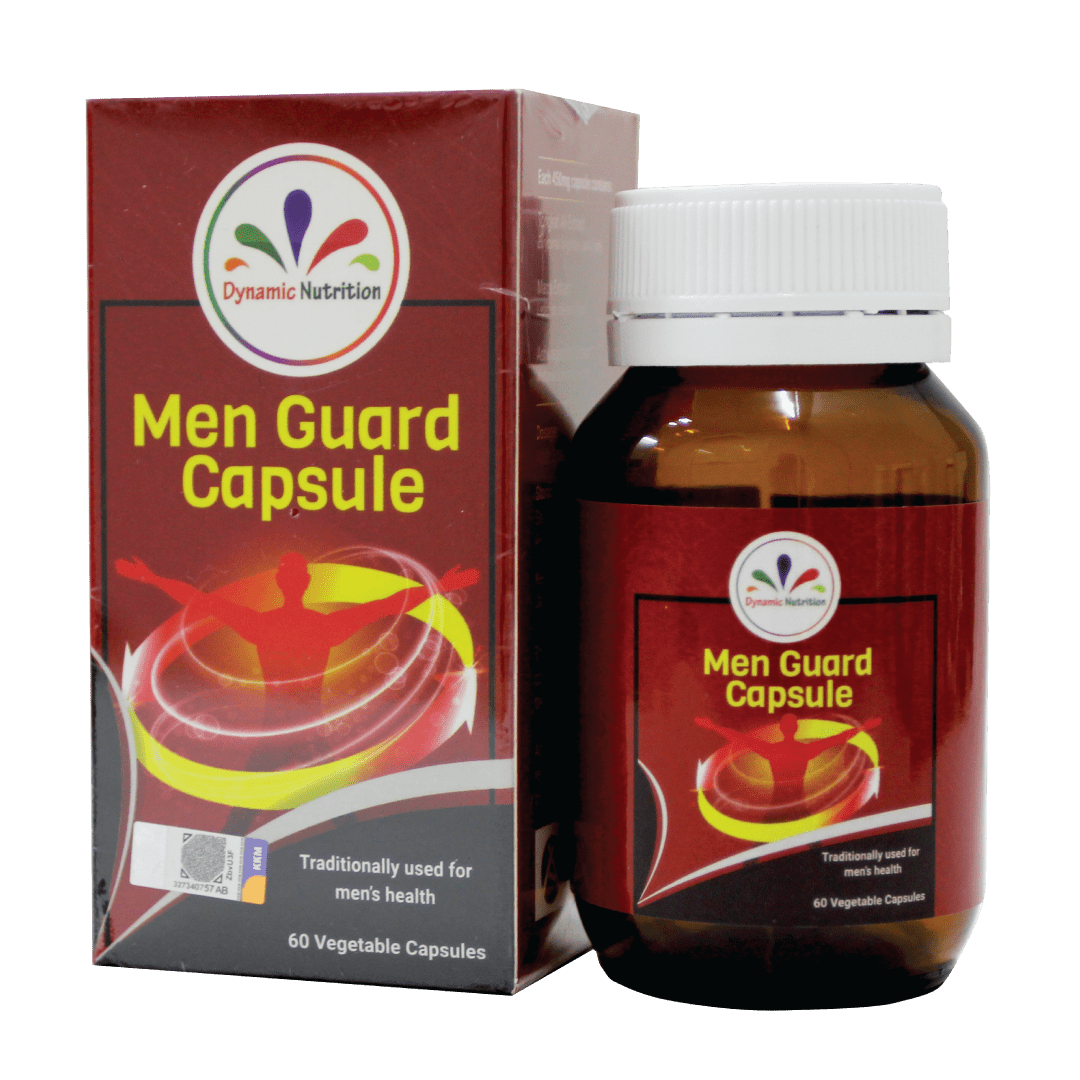
Our pick: Men Guard Capsule, our standardised tongkat ali supplement, is our own product, and it is the one we formulate to the standard above. If you would rather buy from another brand, run the checks above against their label before you buy.
Common questions about choosing tongkat ali
Is a higher extract ratio always better? No. The ratio describes how much raw root went into the extract, not how much eurycomanone is in the finished capsule. A well-extracted 50:1 can outperform a poorly extracted 200:1.
What percentage of eurycomanone should I look for? Quality extracts are typically standardised to between 0.8% and 1.5%. If a label states no eurycomanone figure at all, treat that as a gap.
Does Ministry of Health registration mean it works? No. MAL registration confirms the product has been notified and reviewed for safety and labelling. It is not evidence that it works.
The Bottom Line
Read as a whole, the evidence supports tongkat ali as a well-studied traditional tonic with genuine but modest effects — most consistent for testosterone and sexual-health parameters in men with low baseline levels, and for strength, stress and recovery in active older men. It is not a pharmaceutical, it should not be sold as one, and the quality of the extract matters more than the size of the ratio on the front of the bottle. That is why brands that take the ingredient seriously — like MenGuard Capsule, which pairs eurycomanone-standardised Tongkat Ali with full-spectrum Ashwagandha and Maca — lead with the standardisation story rather than the hype.
Product you may be interested in