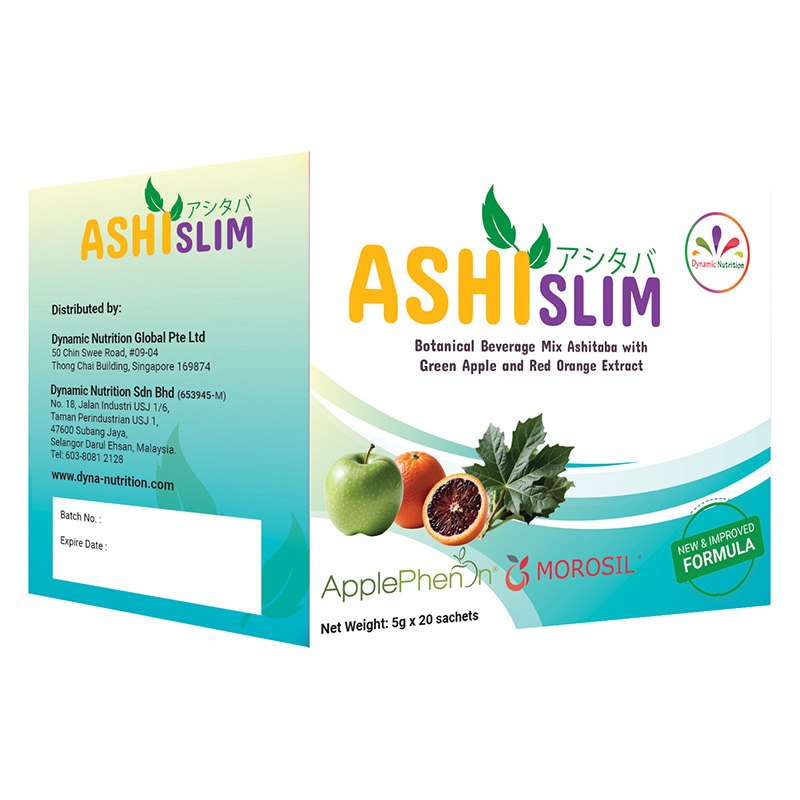
If you search “morosil side effects,” a large share of what comes back is about a different ingredient entirely. Much of the caution you will read online concerns bitter orange (Citrus aurantium) and its protoalkaloid p-synephrine — a stimulant-adjacent compound with its own history of cardiac adverse-event reports, its own sporting bans and its own regulatory action.4 Morosil is not that. It is a standardised extract of the juice of the “Moro” blood orange (Citrus sinensis (L.) Osbeck), the deep-red Sicilian cultivar grown on the southern slopes of Etna under a Protected Geographical Indication, and it is one of the three actives in AshiSlim Plus alongside ApplePhenon® and Ashitaba.
This article does two things. First, it separates what the published human trials of Morosil actually recorded from the much larger pile of warnings that belong to other citrus extracts. Second, it is deliberately precise about the gap between those two things — because the honest answer to “what are the side effects of Morosil” is not “none.” It is “in the small number of human trials that have been run, nothing of consequence was recorded; here is exactly how small that body of evidence is, and here is the one published case that sits outside it.”
What Morosil actually is — and why “side effects” results keep going off-topic
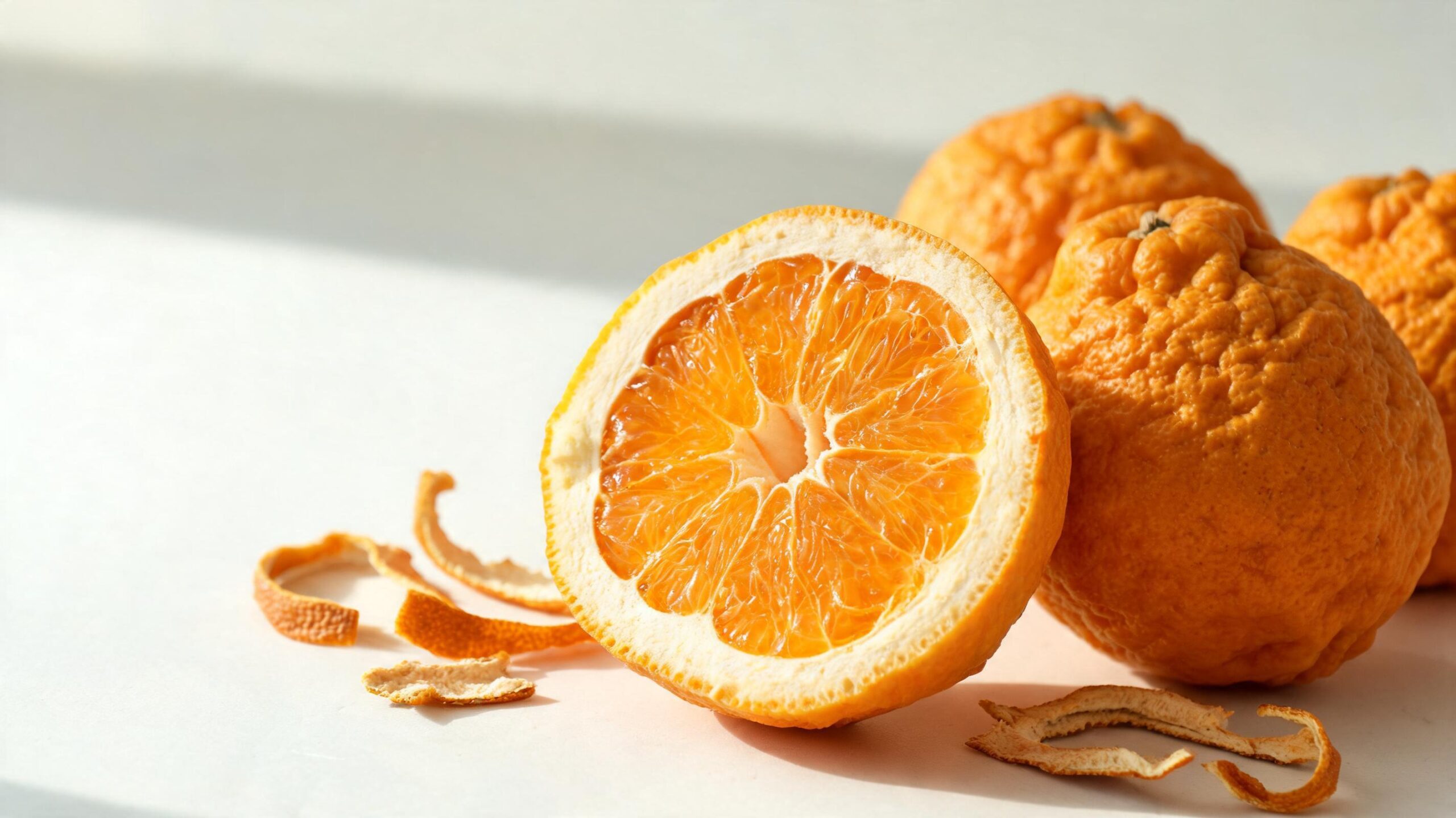
Morosil is a lyophilised (freeze-dried) powder extract standardised from Moro blood-orange juice, manufactured by Bionap S.r.l. in Belpasso, near Catania in eastern Sicily. The batch used in the most recent human trial was chemically characterised as cyanidin 3-O-glucoside 0.635% w/w, cyanidin-3-O-glucoside and derivatives above 0.699%, hesperidin 2.13%, narirutin 0.07%, ferulic acid 1% and ascorbic acid 4.5%, with total polyphenols around 4% w/w.2 Every trial of Morosil in the published literature has used 400 mg per day of that standardised extract — that number is the anchor for everything below, because a dose is the unit in which safety data actually exists.
Here is the identification problem, stated plainly. Morosil (Moro blood orange, Citrus sinensis) is not bitter orange (Citrus aurantium). Bitter orange is the source of p-synephrine, and p-synephrine is the compound with the cardiovascular story. A 2022 systematic review and meta-analysis of bitter orange extracts and p-synephrine concluded that p-synephrine alone, or with caffeine, “does not appear to produce significant adverse cardiovascular effects or pose a risk to human health at doses commonly ingested orally,” while also noting that the two ingredients are constantly conflated in the supplement literature.5 The US National Center for Complementary and Integrative Health reaches a similar conclusion for bitter orange — not clearly shown to be helpful for any health-related purpose, cardiovascular evidence inconclusive, and the serious adverse events in the literature largely involving products that stacked bitter orange with other stimulants.4
So if you have read a list of citrus-extract side effects and mentally filed it under “Morosil,” that filing is wrong. Anything derived from p-synephrine, from Citrus aurantium, or from an ephedra-style stimulant stack tells you nothing about Moro blood orange anthocyanins. The two ingredients share a fruit family and nothing else that matters for safety.
What the human trials actually recorded
There are two randomised, double-blind, placebo-controlled trials of Morosil in humans. Neither is large, and it is worth knowing their actual shape before reading their results.
The first — Cardile et al., 2015. Sixty healthy volunteers with a BMI of 25–35 were randomised to 400 mg/day of Morosil or placebo for 12 weeks.1 BMI fell significantly in the Morosil group from week four onward, and body weight, BMI, waist and hip circumference all diverged significantly from placebo by the end. On safety, the paper records that all other vital signs, including blood pressure, were monitored throughout and that no side effects were reported in either group.
The second — Briskey et al., 2022. This is the larger and more informative trial: 180 participants (90 per arm) randomised to 400 mg/day of Morosil or placebo for six months, with 136 completing baseline and entering the intention-to-treat analysis.2 The authors report the trial had a 30% withdrawal rate in the first three months, which matters for how you read every number that follows.
On efficacy, the six-month trial found weight loss of 4.2% in the Morosil group against 2.2% on placebo (p = 0.015), waist circumference down 3.9 cm against 1.7 cm (p = 0.017), and reductions in fat mass, visceral fat and subcutaneous fat on the same pattern.
On safety, three things are worth pulling out of that paper, and they point in different directions:
- Liver markers stayed normal. Every safety marker of liver toxicity was within the normal range at baseline, at month three and at month six, in both the Morosil and placebo arms.
- Symptoms were few, and were not more common on the extract. Monthly adverse-symptom questionnaires recorded five participants in the placebo group reporting symptoms — heartburn, diarrhoea, constipation, headache, nausea — of whom two withdrew, and two participants in the Morosil group reporting constipation, nausea, vomiting and headache, with one withdrawing. The authors’ own summary puts gastrointestinal symptoms at placebo n = 5 against active n = 1.
- The trial was funded by the ingredient manufacturer. Bionap supplied the extract, funded the research, and acknowledged it in the paper. The trial itself was run by RDC Clinical in Brisbane. That is normal for ingredient research and does not invalidate the results, but it is a fact a reader is entitled to have.
Set against that: the 2015 and 2022 trials together enrol 196 participants for a combined exposure of roughly 128 person-years. That is the entire published human safety database for this ingredient.
The one published case of liver injury
In 2023, a case report appeared in Transplantation Proceedings describing a 37-year-old woman admitted with grade 4 hepatic encephalopathy and acute liver failure confirmed by both Clichy and King’s College criteria.3 Morosil use had been started 30 days before admission; two weeks in, the picture evolved with jaundice and diarrhoea interspersed with constipation, and the medication was discontinued. Her MELD score was 41. She was listed for liver transplantation as a priority and underwent orthotopic transplantation using the piggy-back technique.
Three things about that report matter more than the headline.
It is a single case, and a single case cannot establish causation. The authors said so themselves, and they noted that at the time of writing they had found no earlier case reports of acute liver failure related to Morosil — this was the first. Idiosyncratic drug-induced liver injury is by nature a diagnosis of exclusion: it is what is left after other causes are ruled out, and it does not come with a package insert explaining the mechanism.
It involves Morosil specifically, not “an orange extract.” That matters because the single most useful thing this case does is establish that the failure mode is possible. Everything else about the extract’s safety record is consistent with a benign profile. One transplant-level liver injury does not overturn that, but it does mean “no side effects are known” is a sentence that was true before May 2023 and is not a sentence you can repeat now.
It is a report from outside the trial programme. A trial that monitors liver enzymes at baseline, month three and month six will not see an idiosyncratic reaction that appears at day 30 and does not recur. That is not a criticism of the trial; it is a structural limit of trial-based safety detection, and it is the reason the case-report literature exists alongside it.
What “no known side effects” actually means
Supplement marketing has a well-worn move: take the absence of evidence and print it as the presence of safety. “No known side effects.” “Zero side effects.” “Completely safe.” These read as equivalent sentences, and they are not.
What the trials actually support is narrower and more useful. Across 196 participants on 400 mg/day for 12 weeks and six months, with liver function tracked throughout, the recorded adverse-event profile was mild and gastrointestinal — constipation, nausea, vomiting, diarrhoea, heartburn — and it did not run higher on the extract than on placebo. That is a genuinely reassuring result and it is worth saying plainly. What it is not is a finding of safety in the general population.
Here is the arithmetic that makes the distinction concrete. Over the whole published human exposure to Morosil — about 128 person-years — the expected number of events at a true adverse-event rate of 1 in 1,000 is about 0.13, and at a rate of 1 in 10,000 it is about 0.01. To expect to observe a single event at 1 in 10,000, you need roughly 10,000 person-years of exposure. These trials have about 128. They are roughly 80 times too small to detect a rare adverse event. That is not an argument against Morosil; it is an argument for reading the size of the evidence base before reading the verdict in the evidence base.
The same arithmetic explains why one published transplant case and 196 trial participants are not in tension. A rare event needs thousands of person-years to show up in a controlled setting. In the wild, where exposure is not randomised and not monitored, it surfaces as a case report. Both records are seeing the same small pool of exposure; they are just seeing it through different instruments.
What has not been tested
For a reader deciding whether to take an ingredient, the untested list is often more actionable than the tested list. For Morosil specifically:
- Longer than six months. No published human study of Morosil runs beyond six months. Effects of continuous use, of weight regain after stopping, and of cumulative exposure are unknown.
- Drug interactions. There is no interaction study of Morosil with any medicine. Grapefruit’s well-known effect on CYP3A4 substrates is not transferable here — sweet orange is a different fruit with a different furanocoumarin profile, and Morosil’s own chemistry is anthocyanin- and hesperidin-led — but “not grapefruit” is a theoretical argument, not a clinical test. If you take regular medication, especially anything with a narrow therapeutic index, that question has not been answered for this ingredient.
- Pregnancy and breastfeeding. No data.
- Children and adolescents. No data. Both trials enrolled adults aged 20–65.
- People with existing liver disease. No data — a meaningful gap given the case report above.
- Doses above 400 mg/day. The entire human safety dataset sits at one dose.
- The ingredient inside a finished blend. AshiSlim Plus combines Morosil with ApplePhenon® and Ashitaba. The trials tested Morosil as a single active. A blend’s safety profile is a separate question from one ingredient’s, and it is one that has to be answered for the blend.
Two further label-reading points, both grounded in the composition data rather than in marketing copy. First, standardisation is the whole ballgame: the trial material was a characterised extract with declared anthocyanin, hesperidin and polyphenol percentages, and an unstandardised “orange extract” with no declared composition is not the same thing by any measure. Second, the extract in the 2022 trial was a single identified batch, and batch-to-batch variation in a botanical extract is a real variable that published safety data does not automatically cover.
How to read a safety claim on a label
None of this is a verdict on Morosil. It is a set of questions that separate a supportable safety claim from an unsupported one — and they apply to every ingredient, not just this one.
- What was actually studied, in humans or in animals? Animal toxicology establishes a dose ceiling. It does not establish a human tolerability profile, and it is routinely presented as if it does.
- How many people, for how long, at what dose? “Clinically studied” is a phrase with no fixed meaning. The number that matters is participant-years, not participant count.
- Which molecule is it? Citrus sinensis and Citrus aurantium are different ingredients with different safety records, and the ingredient name on a label is the only place that gets checked.
- Is “no known side effects” doing the work it claims? The sentence is about the state of published knowledge, not about your body. A compound with one published case of acute liver failure does have a known side effect — a very rare one, in an unknown number of people, seen once.
- What else is in the packet? A safety dataset for a single active says nothing about the blend it is sold in.
Bottom line
The published human evidence on Morosil is small, short, and on its own terms reasonably good: 400 mg/day, no liver-enzyme signal across 12 weeks and six months, and an adverse-event profile that was mild, mostly gastrointestinal, and not distinguishable from placebo. That is a better record than most ingredients in this category have.
It is also 196 people and about 128 person-years — a dataset roughly 80 times too small to see a 1-in-10,000 event, with nothing known about long-term use, interactions, pregnancy, children, or liver disease. And it sits alongside one published case of acute liver failure requiring a transplant, four weeks after starting the extract, in a single patient, with causation not established.
So the sentence to walk away with is this: no adverse effect of Morosil has been demonstrated in controlled human testing, and one severe case has been published that the testing was not designed to catch. That is a materially different claim from “no side effects,” and if you are deciding whether to take it — particularly alongside other supplements, or on a medication, or with any liver history — it is the claim that matches the evidence.
References
- Cardile V, Graziano AC, Venditti A. Clinical evaluation of Moro (Citrus sinensis (L.) Osbeck) orange juice supplementation for the weight management. Nat Prod Res. 2015;29(23):2256-2260. https://doi.org/10.1080/14786419.2014.1000897
- Briskey B, Malfa GA, Rao A. Effectiveness of “Moro” Blood Orange Citrus sinensis Osbeck (Rutaceae) Standardized Extract on Weight Loss in Overweight but Otherwise Healthy Men and Women—A Randomized Double-Blind Placebo-Controlled Study. Nutrients. 2022;14(3):427. https://pmc.ncbi.nlm.nih.gov/articles/PMC8838101/
- Puzzi Fernandes D, et al. Acute Liver Failure Secondary to Anthocyanidin Use—A Case Report. Transplant Proc. 2023;55(6):1454-1456. https://doi.org/10.1016/j.transproceed.2023.04.014
- National Center for Complementary and Integrative Health. Bitter Orange: Usefulness and Safety. NCCIH. https://www.nccih.nih.gov/health/bitter-orange
- Koncz D, Tóth B, Bahar MA, Roza O, Csupor D. The Safety and Efficacy of Citrus aurantium (Bitter Orange) Extracts and p-Synephrine: A Systematic Review and Meta-Analysis. Nutrients. 2022;14(19):4019. https://pmc.ncbi.nlm.nih.gov/articles/PMC9572433/
Also available in Bahasa Malaysia and 中文.
Related Topics
Morosil® Moro Orange Extract: The Citrus Secret to Support Healthy Weight Management
ApplePhenon® for Visceral Fat: What the 12-Week RCT Shows
How ApplePhenon™ Targets Stubborn Visceral Fat
AshiSlim: Increase GLP‑1 Naturally for Easier Weight Management
The Silent Threat: Understanding the Dangers of Visceral Fat
Product you may be interested in