If you’ve searched “apple polyphenols for weight loss,” you’ve probably run into two very different things being sold under the same general label: apple cider vinegar capsules that promise an acetic-acid “fat-burning” effect, and a much less advertised ingredient called ApplePhenon® — a standardised procyanidin-rich extract from unripe green apples. They’re not the same molecule, they’re not the same dose, and the published evidence behind them is not the same. This article is the decode on the second one.

What ApplePhenon® actually is — and why “unripe green apple” matters
ApplePhenon® is a trademarked polyphenol extract made from unripe green apples (Malus pumila / Malus domestica), harvested before ripening. The polyphenol profile of unripe green apples is strikingly different from ripe red apples: unripe apples contain roughly 10× more oligomeric procyanidins than ripe-red-apple skin, and the dominant fraction is a set of B-type procyanidins — procyanidin B1, B2, C1, E1, and E2 — together with a high ORAC antioxidant value.
Why does that matter? Procyanidins are large, polymeric polyphenol chains. The size and degree of polymerisation determine two things: (1) how much of the molecule survives the upper gut intact, and (2) which molecular targets in the visceral adipocyte the molecule can reach. Ripe-red-apple skin is mostly monomeric and dimeric catechins; unripe-green-apple procyanidin extract is dominated by oligomers that reach the visceral-adipocyte layer where the published mechanistic work has been done.
The label-reading bar: look for the ApplePhenon® trademark on the ingredient panel, the species (Malus pumila / M. domestica), the unripe-green-apple source specification, and a standardised polyphenol content. Generic “apple polyphenols” or “apple cider vinegar” with no specification is a different product and a different evidence base.
The 12-week RCT: 8–9 cm² visceral-fat reduction on CT scan
The single piece of evidence that sets ApplePhenon® apart from generic “apple extract” claims is a 12-week, randomised, double-blind, placebo-controlled trial in 94 BMI-25-30 subjects at 600 mg/day ApplePhenon. The headline result is visceral-fat specific:
- Visceral fat area (CT scan at L4-L5): 8–9 cm² reduction vs placebo (which showed no significant change).
- Waist circumference: ~2 cm reduction.
- Body weight: ~1 kg reduction vs placebo.
These numbers are not dramatic at the body-weight level, and that is the point. The trial was designed to measure visceral fat specifically, not total weight — and the visceral-fat reduction is the metabolic-syndrome-relevant fraction. Visceral fat is the organ-surrounding, inflammation-driving, insulin-resistance-driving tissue that the published metabolic-syndrome literature treats as the actual cardiometabolic risk indicator. The fact that the weight-loss number is small (1 kg) but the visceral-fat-area number is meaningful (8–9 cm²) is consistent with the mechanism: the procyanidins are targeting the visceral depot, not the subcutaneous layer.
The CT-scan-measurement detail matters. CT at L4-L5 is the published gold standard for visceral-fat-area quantification. Waist circumference is a useful proxy, but it does not separate visceral from subcutaneous fat. The ApplePhenon trial measured the actual visceral-fat area, not the surrogate.
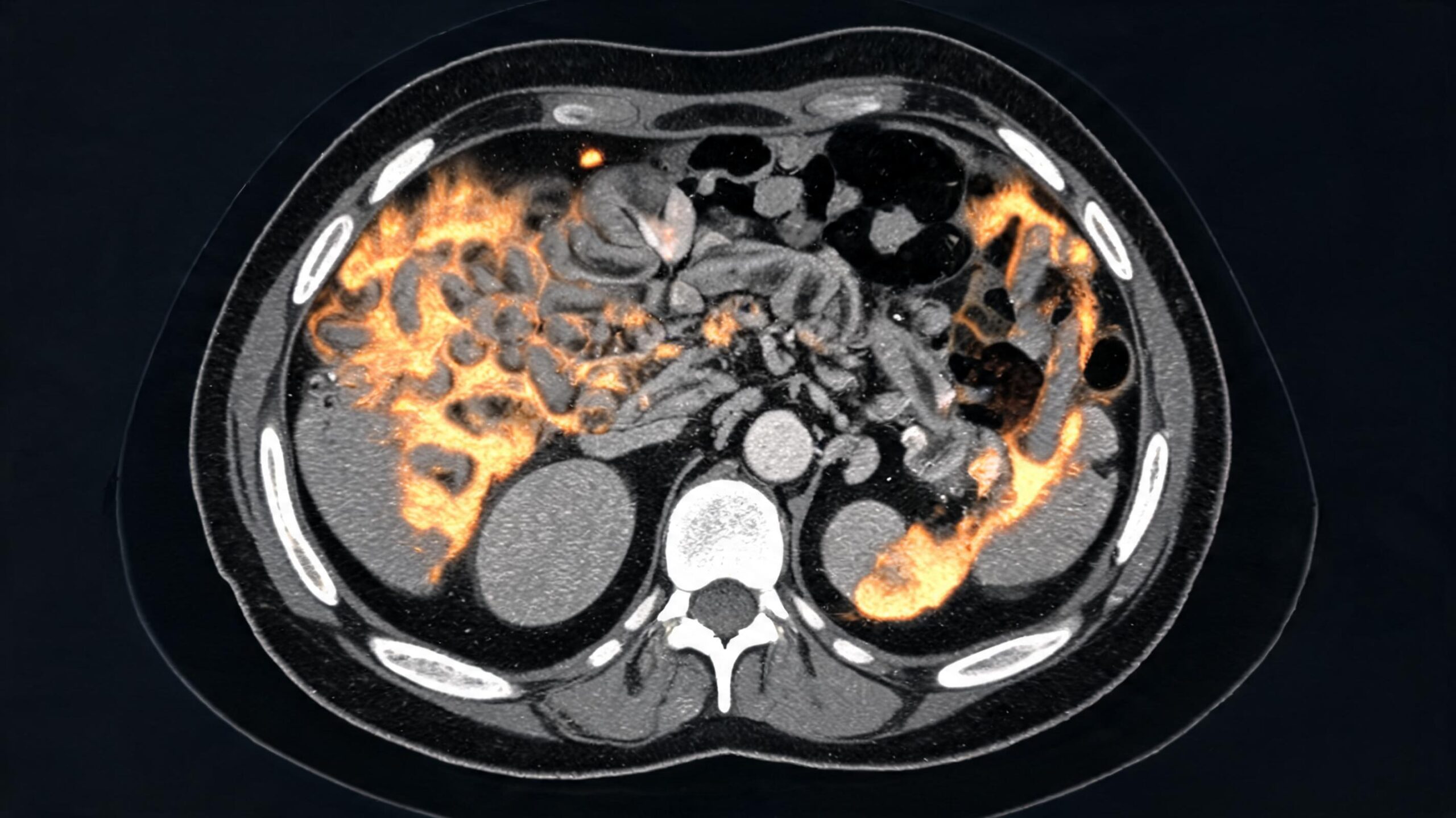
The mechanism: why procyanidins specifically hit the visceral adipocyte
The published mechanistic work on ApplePhenon®’s procyanidin fraction describes three coordinated effects on the visceral adipocyte — the cell type that lines the visceral depot:
1. Upregulate fat-oxidation gene expression
Visceral adipocytes exposed to ApplePhenon procyanidins show upregulation of PPAR-alpha, CPT1, and ACOX1 — the three canonical drivers of mitochondrial fatty-acid oxidation. The effect is dose-dependent and specific to the oligomeric procyanidin fraction; monomeric catechins from ripe-apple sources do not produce the same gene-expression shift.
2. Downregulate adipogenesis transcription factors
Simultaneously, the procyanidins downregulate C/EBP-alpha, SREBP-1c, and PPAR-gamma — the transcription factors that drive new lipid storage in the adipocyte. The net effect is a visceral adipocyte that is burning more of its stored lipid and storing less of the new lipid arriving from the diet.
3. Modulate the inflammatory-adipokine secretome
The visceral adipocyte is not just a fat-storage cell — it is an endocrine cell that secretes inflammatory cytokines (TNF-alpha, IL-6, MCP-1) into the portal circulation, where they drive the liver-side inflammation and insulin resistance that underlie metabolic syndrome. ApplePhenon procyanidins reduce the secretion of all three of these adipokines in published in-vitro and ex-vivo work, which is the substrate-level explanation for why the 12-week RCT produced a measurable visceral-fat-area change.
Apple cider vinegar vs apple polyphenols — they are not the same thing
This is the consumer-behaviour trap the ApplePhenon decode needs to address head-on. Apple cider vinegar is the fermented juice of ripe apples; it carries acetic acid and trace polyphenols, but the procyanidin content of commercially available ACV capsules is negligible after fermentation and concentration. The published ACV trials report small body-weight changes (~0.5–1 kg over 12 weeks in some studies) and propose an acetic-acid-driven appetite-suppression / gastric-emptying-slowing mechanism.
Apple cider vinegar does not act on the visceral-adipocyte substrate. The procyanidin-driven fat-oxidation + adipogenesis-modulation mechanism described above requires the oligomeric procyanidin fraction that survives the upper gut and reaches the visceral adipocyte — a fraction that is essentially absent in ACV.
If you’re buying ACV expecting the “apple polyphenols” frame, you’re getting the acetic-acid frame instead. If you want the procyanidin substrate frame, the ApplePhenon® specification is what the label needs to carry.
The bioavailability ceiling and the dose
One honest caveat on the ApplePhenon evidence base. Procyanidins are large polymeric molecules, and the published pharmacokinetic work shows a bioavailability ceiling for polymeric procyanidins — only a fraction of the oral dose reaches systemic circulation intact. The 12-week RCT’s 600 mg/day dose is the clinical-trial dose at which the visceral-fat-area effect was measured; lower doses (200–300 mg/day, common in many “apple extract” products) have not been shown to produce the same visceral-fat-area change in published RCTs. The bioavailability work also explains why monomeric catechins from green tea, while better absorbed, do not reproduce the ApplePhenon visceral-fat-area effect — the mechanism is not about systemic antioxidant load, it is about local action in the visceral adipocyte, and that requires the oligomeric procyanidin fraction.
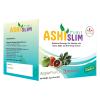
The AshiSlim Plus frame: ApplePhenon + Morosil + Ashitaba
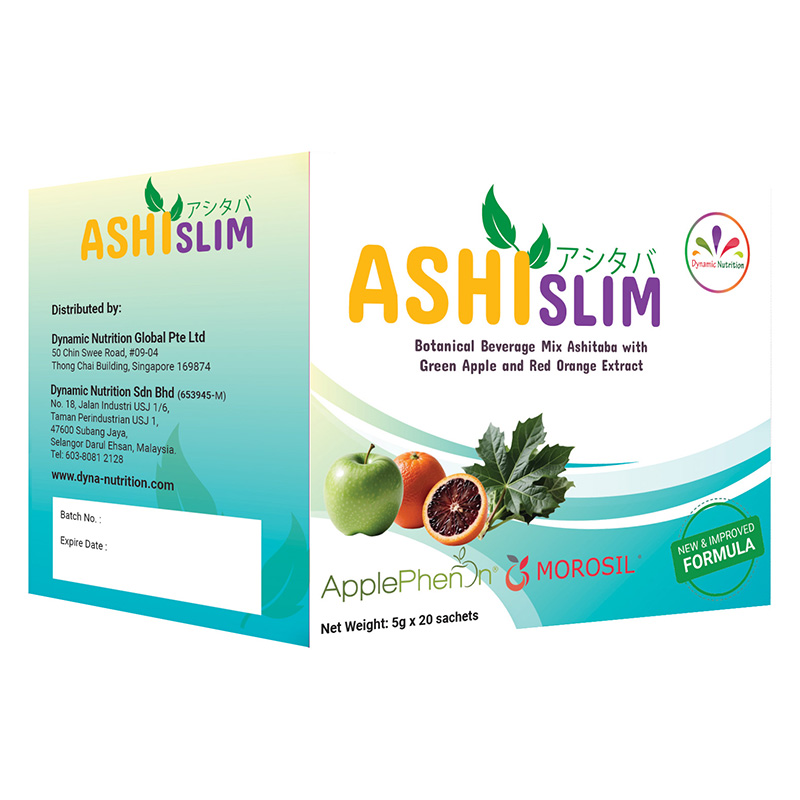
ApplePhenon® is the first-flagship ingredient in AshiSlim Plus, which pairs it with two complementary substrate-layer ingredients:
- Morosil® — the standardised anthocyanin + hesperidin extract from the red-orange (Citrus sinensis var. Moro) cultivar, with its own published BMI-25-35 clinical trials showing 400 mg/day delivering additional visceral-fat + waist-circumference reduction over 12 weeks.
- Organic Ashitaba (Angelica keiskei) — the Japanese “tomorrow leaf,” with a chalcone-rich polyphenol profile that contributes the third substrate layer (chalcones + flavonoids) to the daily trio.
The AshiSlim frame is the daily-substrate stack: a polyphenol + anthocyanin + chalcone trio that acts on the visceral-adipocyte substrate layer — fat-oxidation gene upregulation (ApplePhenon), adipocyte lipid-handling + inflammatory-adipokine reduction (Morosil), and the chalcone contribution to metabolic handling (Ashitaba). It is a substrate-layer complement to standard diet + activity, not a substitute for either.
Who this evidence is for
The 8–9 cm²-CT-scan-RCT evidence base is most directly relevant to adults in the BMI 25–30 (overweight) range who are looking for the visceral-fat-specific intervention that standard “move more, eat less” advice does not deliver. The published waist-circumference reductions (~2 cm in 12 weeks) and the visceral-fat-area reductions (8–9 cm² on CT) are the substrate-level numbers — modest at the body-weight level, meaningful at the metabolic-syndrome-relevant visceral-depot level.
If your BMI is in the normal range but your waist circumference is over the Asia-specific threshold (80 cm for women, 90 cm for men), the “skinny-fat” / metabolically-obese-normal-weight profile is where this evidence layer lands most clearly. The ApplePhenon substrate stack is the visceral-adipocyte-side intervention that the standard BMI screen does not point you toward.
If your BMI is over 30 or you have a diagnosed metabolic-syndrome or cardiovascular condition, this article is not a substitute for medical advice — talk to your doctor about the substrate-complement layer before adding any supplement to a medication regimen.
What to ask at your next health screening
The CT-scan-at-L4 visceral-fat-area measurement is the gold standard, but not every clinic measures it. Useful surrogates the consumer can ask for:
- Waist circumference (Asia-specific thresholds: 80 cm women / 90 cm men).
- Waist-to-hip ratio (the cardiometabolic-risk-indicator surrogate).
- DEXA scan (the body-composition gold standard; the android-to-gynoid fat-ratio + visceral-fat estimate).
- Fasting insulin + HOMA-IR (if not part of your standard panel; the published work on insulin-resistance as the upstream driver of visceral-fat accumulation).
- hs-CRP (the inflammatory substrate that the ApplePhenon visceral-adipocyte-side work is hypothesized to reduce).
The standard “your BMI is fine” reassurance is built on the Quetelet index from 1832, which does not measure visceral fat. The visceral-fat-area + waist-circumference + fasting-insulin layer is the substrate-level check that turns the BMI surrogate into an actual cardiometabolic-risk read.
Bottom line on ApplePhenon®
ApplePhenon® is a trademarked, standardised procyanidin-rich extract from unripe green apples. The published 12-week RCT in 94 BMI-25-30 subjects at 600 mg/day showed 8–9 cm² visceral-fat reduction on CT scan — the visceral-depot-specific number the metabolic-syndrome literature treats as the actual cardiometabolic risk indicator. The published mechanism (PPAR-alpha / CPT1 / ACOX1 upregulation + C/EBP-alpha / SREBP-1c / PPAR-gamma downregulation + inflammatory-adipokine reduction) is substrate-level consistent with the visceral-fat-area outcome.
It is not apple cider vinegar, it is not generic “apple polyphenols,” and it is not a substitute for medical care in BMI-30+ or comorbidity-driven cohorts. It is the apple-polyphenol substrate-stack intervention the AshiSlim Plus daily trio was built around — and the 12-week RCT evidence is the headline number to anchor that frame.
Related Topics
5 Dangerous Ways Visceral Fat Is Destroying Your Health
It’s OK To Gain Weight As I Get Older? Not Really
Metabolic syndrome leads to cardiovascular diseases
Here’s Exactly How Much You Should Walk Per Week to Burn Belly Fat
Asians with excess visceral fat tend to have poorer memory & learning ability
The Silent Threat: Understanding the Dangers of Visceral Fat
How ApplePhenon™ Targets Stubborn Visceral Fat
Morosil® Moro Orange Extract: The Citrus Secret to Support Healthy Weight Management
AshiSlim: Increase GLP-1 Naturally for Easier Weight Management
Product you may be interested in