If you search “visceral fat supplement” in Malaysia or Singapore, the results split into two very different kinds of page. One kind is a lab-tested clinical trial write-up: a named extract, a dose in milligrams, a participant count, and an outcome measured on a CT scanner. The other kind is a product page that promises to “melt belly fat” and shows a smiling person pointing at their own midriff. Both pages use the same search term. Only one of them tells you anything you can act on.
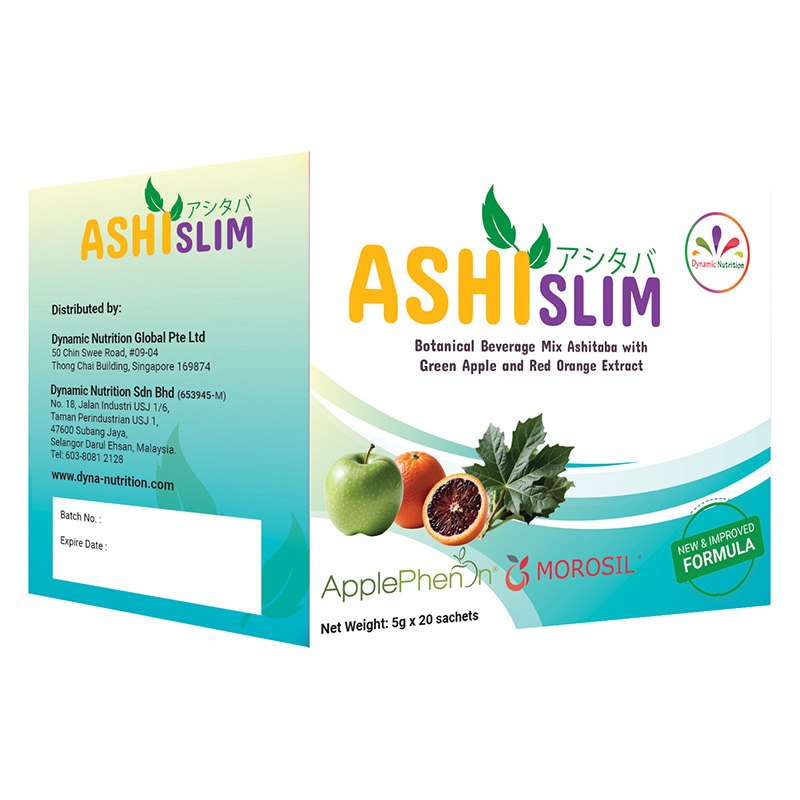
This guide does something deliberately unglamorous. It takes the three ingredient classes that a shopper in this region actually encounters in a visceral-fat supplement — ashitaba (Angelica keiskei, the Japanese “tomorrow leaf”), apple procyanidins (the oligomeric fraction from unripe green apples), and morosil (a standardised anthocyanin and hesperidin extract from the deep-red Moro blood orange) — and holds each one against the human literature that actually exists for it. Not the marketing copy. Not the ingredient’s traditional use. The trials.
Then it covers the part that decides whether any of it applies to you: how to read a label. A “standardised to X%” statement, a “per serving” line, and a dose in grams versus milligrams are three different things, and most shoppers cannot tell them apart. We will walk through all three, and we will finish with the claims that are worth treating as marketing — including several that are technically true and completely useless.
One framing note before we start. Everything below reports what trials measured. Nothing here promises that any supplement will shrink your waist. The trial populations were narrow, the durations were short, and visceral fat is a tissue that responds to energy balance, training and sleep far more than to any powder in a sachet.
What a “visceral fat supplement” actually is on a shelf
Start with the category, because the name does more work than it should. Visceral fat is the fat that sits around the abdominal organs — between the muscle wall and the organs themselves. It is metabolically and hormonally a different tissue from the fat under your skin, which is why the metabolic-syndrome literature treats visceral fat area as its own measured outcome rather than folding it into body weight.
So when a product calls itself a visceral fat supplement, it is claiming to move a specific tissue, usually via a specific measurable. If it cannot tell you which measurable and what the number was, it is not making a claim you can check. Three active ingredient classes dominate what is sold under this label today, and all three of them have human trial data behind them — of very different sizes and very different quality. Here is what each one actually rests on.
What the human trials measured for each active
Apple procyanidins: the trial that measured visceral fat directly
Apple polyphenols have the largest and most direct human evidence base of the three. The key study is a 12-week randomised, double-blind, placebo-controlled trial in 94 subjects with a BMI of 25–30, published in the Journal of Oleo Science in 2010. Participants drank a beverage containing 600 mg of apple polyphenols daily; a parallel group drank the same beverage without them.1
Two findings from that trial matter for anyone choosing a product. First, the outcome was visceral fat area measured by CT — not body weight, not a bathroom scale, not a tape measure. Second, the effect was concentrated: subjects whose baseline visceral fat area was 100 cm² or higher saw a significant reduction at both week 8 and week 12, while subjects starting below that threshold showed no significant change. That is a real, useful finding and it is also a narrow one — the trial supports a claim about people who already have a high visceral fat reading, not about everybody.
An earlier trial in the same programme, published in 2007, ran 71 subjects with a BMI of 23–30 for 12 weeks at 600 mg/day and found significant reductions in total and LDL cholesterol, with visceral fat area and adiponectin improving relative to the control group.2
The same 2010 paper also ran a second, shorter arm in 30 subjects taking three times the standard dose for four weeks, and recorded no adverse reaction. The practical takeaway from all of it is a dose point, which we return to below: the number attached to the evidence is 600 mg/day of a procyanidin-rich extract. Products carrying 100–200 mg of “apple extract” are not the same intervention.
Morosil: a six-month RCT on body composition
Morosil is a standardised extract from the juice of the Moro blood orange (Citrus sinensis (L.) Osbeck), standardised for anthocyanins and hesperidin. Its principal human trial, published in Nutrients in 2022, was a randomised, double-blind, placebo-controlled study in overweight but otherwise healthy adults aged 20–65, run for six months.3
After six months the extract group recorded a body-mass change of −4.2% against −2.2% for placebo (p = 0.015), a waist-circumference change of −3.9 cm against −1.7 cm (p = 0.017), and a significant difference in fat distribution, with visceral fat (p = 0.018) and subcutaneous fat (p = 0.006) both separating from placebo. Liver-toxicity markers stayed within normal range for both groups. A smaller clinical evaluation of Moro orange juice supplementation for weight management was published a few years earlier.4
Two honest caveats. First, six months is longer than most trials in this category, which is a point in its favour — but it is still a single trial in one extract at one dose. Second, Morosil is not the same thing as bitter orange. A large share of cautionary writing about “citrus fat burners” is about Citrus aurantium and its protoalkaloid p-synephrine, which has its own cardiac adverse-event history and its own sporting bans.5 6 The name on the label is what separates them.
Ashitaba: three small trials, three different doses
Ashitaba is the ingredient with the most visible marketing and the thinnest human evidence base of the three. There is no large RCT behind it. There are, instead, a set of small trials at strikingly different doses — which is precisely why the label-reading section below matters so much for this ingredient.
A 2024 randomised, double-blind, parallel-group trial in the International Journal of Food Sciences and Nutrition gave 42 adults with a BMI of 25 to under 30 either 16 mg of encapsulated ashitaba chalcone (10.1 mg 4-hydroxyderricin and 5.9 mg xanthoangelol) or a placebo daily for 12 weeks. The primary endpoint was abdominal visceral fat area measured by CT at baseline, week 8 and week 12, and it was significantly reduced in the chalcone group against placebo at week 12.7
Earlier work used different forms at different doses. A Japanese open-label pilot in nine adults with metabolic syndrome gave ashitaba green juice equivalent to 6.2 g per day of granulated powder containing 12.3 mg of chalcones for eight weeks — with no control group and nine participants.8 A two-part pilot gave healthy men and then slightly overweight adults 200 mg per day of ashitaba chalcone powder containing at least 8% chalcones for eight weeks.9
For regulatory context, the European Food Safety Authority’s 2024 novel-food opinion on ashitaba sap records chalcones at 1%–2.25% of the sap and furanocoumarins below 0.01%, and the applicant proposed a maximum use level of 780 mg per day in food supplements.10 The U.S. FDA’s GRAS Notice GRN 1012 covers powdered sap from Angelica keiskei standardised to 8% chalcones.11
None of this is nothing. A CT-measured visceral-fat endpoint at week 12 in a randomised trial is a better signal than a testimonial. But it is 42 people, it is 16 mg of a specific encapsulated chalcone fraction, and it is one trial. Any product page that leads with “ashitaba burns belly fat” is running several steps ahead of its own evidence.
How to read the label: standardised percentage and per-serving dose
This is the section that decides whether a product matches the evidence at all. Four items on any label matter, and they are easy to read in the wrong order.
What “standardised to X%” actually standardises
A standardised percentage tells you what proportion of the extract is the compound the manufacturer says is active — anthocyanins for morosil, procyanidins for apple, chalcones for ashitaba. It tells you nothing about how much of that active compound a single serving delivers. For that you need the second number.
Per serving is not per day
Labels routinely state a serving size and a servings-per-day figure. Multiply them before comparing anything to a trial. A product that delivers 200 mg of standardised extract per serving, at two servings a day, is delivering 400 mg a day — and it is worth asking whether the published trial used one serving or two. The Health Sciences Authority’s consumer guidance on reading supplement labels 12 is the reference for this on the Singapore side, and the U.S. National Institutes of Health guidance on vitamins and minerals is the equivalent baseline.13
Grams, milligrams, and three different forms
This is where ashitaba labels get genuinely confusing, because the same ingredient arrives in three forms that are not interchangeable on a label:
- Leaf-and-stem powder. Measured in grams or teaspoons. The closest published number for this form is the 6.2 g per day of green juice powder used in the Japanese pilot — which came from an uncontrolled nine-person study, and is a reason for caution rather than a reason for confidence.
- Standardised sap powder or extract. Measured in milligrams, with the chalcone percentage on the label. The EFSA safety opinion for this form and the 200 mg per day pilot sit in the same range.
- Encapsulated chalcone. Measured in single-digit or low-double-digit milligrams. The 2024 randomised trial used 16 mg per day, and 42 people is the entire human evidence base at that dose.
Six grams of powder and 16 mg of encapsulated chalcone are not competing products. They are different interventions that happen to share an ingredient name, and a label can move between them without changing the dose figure enough to catch anyone out. For apple polyphenols the same trap is simpler: the trial dose was 600 mg/day, and a lower number on the label means a different intervention from the one that was studied.
Which claims to treat as marketing
Several of the claims below are not literally false. They are constructed to sound like findings while carrying none of the information a finding would.
- “Clinically proven to target belly fat.” Ask which tissue was measured, on what instrument, in how many people, for how long, and against what control. If the page cannot answer all five, the claim is a marketing sentence wearing a lab coat.
- “Uses clinically studied ingredients.” This describes the ingredient list, not the product. Most of the trials cited in this article tested a single standardised extract at a specific dose — not a blend, and not a sachet containing a fraction of that dose.
- “Reduces visceral fat” with a body-weight number attached. Visceral fat area and body weight are different outcomes measured on different instruments. A 1 kg body-weight change says nothing about what happened to the tissue around your organs.
- “Made from apples” / “contains apple polyphenols.” The supporting trial measured oligomeric procyanidins from unripe green apples. Apple cider vinegar is not that, and ripe red apple skin is not that either. This is the single most common substitution on this category of shelf.
- “Boosts metabolism” and “balances hormones.” These are statements no visceral-fat trial in this article measured, and they are vague enough to be true of anything.
- Proprietary blend amounts withheld. If the total is disclosed but the individual amounts are not, you cannot check whether any active reached the studied dose.
- Before-and-after photographs. A photograph has no control group, no blinding and no instrument. Every genuine trial in this article used CT.
What is not a red flag
Fairness cuts both ways, and some shoppers are now sceptical of perfectly honest products. A specific extract name with a patent or a standardisation figure is good practice, not a warning sign. A dose stated in milligrams per serving is a good sign. A published safety assessment — an EFSA opinion, a GRAS notice — is a good sign. A product that lists the trials it relies on, with the population and the outcome, is doing you a favour even when those trials are small. Being specific is not the same as being aggressive.
Bottom line
Of the three actives, the honest ranking by strength of human evidence is: apple procyanidins first, with a 12-week randomised trial in 94 people and a CT measured visceral-fat endpoint, and a clear dose anchor at 600 mg/day; morosil second, with a six-month randomised trial showing real waist and fat-distribution differences against placebo; ashitaba third, with one 12-week randomised trial in 42 people at 16 mg of encapsulated chalcone, plus smaller pilots at other doses.
Three questions will tell you more than any label claim. What exactly is in the product, at what dose per day, and which trial used that dose. If the label answers all three and the answer matches a published protocol, you are reading a product whose claims can be checked. If it does not, the amount of confidence you should place in the rest of the label is close to zero — regardless of how good the photograph is.
And whatever the label says, no supplement replaces the unglamorous inputs that move visceral fat: what you eat, how you train, how you sleep, and whether the trials were run on people who resemble you.
References
- Akazome Y, Kametani N, Kanda T, Shimasaki H and Kobayashi S — Evaluation of Safety of Excessive Intake and Efficacy of Long-term Intake of Beverages Containing Apple Polyphenols (Journal of Oleo Science, 2010) — https://pubmed.ncbi.nlm.nih.gov/20484838/
- Akazome Y, Kanda T, Ohtake Y, Shimasaki H and Kobayashi T — Apple Polyphenols Influence Cholesterol Metabolism in Healthy Subjects with Relatively High Body Mass Index (Journal of Oleo Science, 2007) — https://pubmed.ncbi.nlm.nih.gov/17898508/
- Briskey D, Malfa GA and Rao A — Effectiveness of “Moro” Blood Orange Citrus sinensis Osbeck (Rutaceae) Standardized Extract on Weight Loss in Overweight but Otherwise Healthy Men and Women — A Randomized Double-Blind Placebo-Controlled Study (Nutrients, 2022;14(3):427) — https://pmc.ncbi.nlm.nih.gov/articles/PMC8838101/
- Cardile V, Graziano AC and Venditti A — Clinical evaluation of Moro (Citrus sinensis (L.) Osbeck) orange juice supplementation for the weight management (Natural Product Research, 2015;29(23):2355-2361) — https://doi.org/10.1080/14786419.2014.1000897
- Koncz D, Tóth B, Bahar MA, Roza O and Csupor D — The Safety and Efficacy of Citrus aurantium (Bitter Orange) Extracts and p-Synephrine: A Systematic Review and Meta-Analysis (Nutrients, 2022;14(19):4019) — https://pmc.ncbi.nlm.nih.gov/articles/PMC9572433/
- National Center for Complementary and Integrative Health — Bitter Orange: Usefulness and Safety (NCCIH) — https://www.nccih.nih.gov/health/bitter-orange
- Watanabe N and colleagues — Randomised, double-blind, parallel group comparison of Ashitaba (Angelica Keiskei) chalcone effects on visceral fat areas and waist circumference of overweight persons (International Journal of Food Sciences and Nutrition, Vol. 75 No. 4, 2024) — https://www.tandfonline.com/doi/10.1080/09637486.2024.2334070
- Ohnogi H, Hayami S, Kudo Y and Enoki T — Efficacy and Safety of Ashitaba (Angelica keiskei) on the Patients and Candidates with Metabolic Syndrome: A Pilot Study (Journal of Clinical Medicine, Vol. 9 No. 1, 2012) — https://www.jstage.jst.go.jp/article/jcam/9/1/9_1_49/_article/-char/en
- Ohnishi K and Hackel V — A two part randomized, placebo controlled double blind pilot study to determine the effect of ashitaba (Angelica keiskei) chalcone powder (ChalCurbR) on body weight and visceral fat in slightly obese adults (Advances in Obesity Weight Management and Control, Vol. 7 No. 2, 2017) — https://medcraveonline.com/AOWMC/a-two-part-randomized-placebo-controlled-double-blind-pilot-study-to-determine-the-effect-of-ashitaba-angelica-keiskei-chalcone-powder-chalcurbr-on-body-weight-and-visceral-fat-in-slightly-obese-adults.html
- European Food Safety Authority, Panel on Nutrition, Novel Foods and Food Allergens (NDA) — Safety of ashitaba sap as a Novel food pursuant to Regulation (EU) 2015/2283 (EFSA Journal, Vol. 22 No. 3, 2024) — https://www.efsa.europa.eu/en/efsajournal/pub/8645
- US Food and Drug Administration — GRAS Notice GRN 1012: Powdered sap from Angelica keiskei containing 8% chalcones (closed 7 April 2022) — https://hfpappexternal.fda.gov/scripts/fdcc/index.cfm?set=GRASNotices&id=1012&sort=GRN_No&order=ASC&startrow=1&type=basic&search=22
- HealthHub, Ministry of Health (Singapore) — Understanding Health Supplements — https://www.healthhub.sg/well-being-and-lifestyle/personal-care/understandinghealthsupplements_hsa
- NHS — Vitamins and minerals — https://www.nhs.uk/conditions/vitamins-and-minerals/
Related Topics
Morosil® Side Effects: What the Research Actually Shows
ApplePhenon® for Visceral Fat: What the 12-Week RCT Shows
5 Dangerous Ways Visceral Fat Is Destroying Your Health
AshiSlim: Increase GLP‑1 Naturally for Easier Weight Management
Morosil® Moro Orange Extract: The Citrus Secret to Support Healthy Weight Management
Product you may be interested in