 Dry eyes are one of those problems that creep up slowly — a little scratchy in the morning, a gritty feeling by mid-afternoon, the constant urge to rub. By the time most people Google it, they have already tried over-the-counter drops and are looking for something that addresses the underlying cause, not just the symptoms. If you have been searching for a natural option, you have probably seen sea buckthorn come up more than once — usually with a reference to its rare omega-7 fatty acid. But does it actually work, and if so, what dose do published studies actually use?
This guide walks through what the research currently says about sea buckthorn oil and dry eyes, the proposed biological mechanism (why omega-7 + vitamin A + vitamin E is the interesting combination), and how a real sea buckthorn supplement — particularly a full-spectrum fruit-and-seed extract — fits into a daily routine for people with mild-to-moderate ocular-surface dryness.
Why Dry Eyes Are So Common — and So Hard To Fix
The tear film is a surprisingly complex structure: a watery layer sandwiched between a mucin layer (which lets tears spread evenly) and a thin oily layer (the lipid layer, which slows evaporation). When any one of these three layers is off, you feel it. The most common cause of chronic dry-eye symptoms in adults over 40 is meibomian gland dysfunction — the small glands along the eyelid margin that secrete the oily layer either get blocked or produce oil of poor quality. Without enough lipid, tears evaporate too quickly. The result is the classic scratchy, burning, “something in my eye” sensation.
Conventional management — artificial tears, warm compresses, omega-3 fish oil, prescription anti-inflammatories — addresses different parts of the problem. What does not typically show up in standard dry-eye advice is omega-7, because the conversation about the lipid layer has historically been dominated by omega-3. But omega-7 (palmitoleic acid) is a closer chemical cousin to the lipid layer’s natural secretions than omega-3 is — and sea buckthorn is essentially the only abundant plant source of it.

What Makes Sea Buckthorn Different from Fish Oil and Flaxseed
If you have already looked at omega supplements for dry eyes, you have probably seen fish oil, flaxseed oil, and evening primrose oil. They all deliver essential fatty acids, but they deliver different ones:
Fish oil (omega-3 EPA and DHA)
The most-studied option for dry eyes. EPA and DHA are long-chain omega-3s that incorporate into cell membranes and have a mild anti-inflammatory effect. Published trials (most famously the 2005 and 2013 studies that informed current practice guidelines) show modest improvement in symptoms and tear quality after 3–6 months of daily use. The catch: the benefit is modest, the effect takes months to show, and the dose used in trials is meaningfully larger than what most over-the-counter capsules provide.
Flaxseed oil (omega-3 ALA)
A plant-based source of alpha-linolenic acid. The body has to convert ALA into EPA and DHA before it can use it — and that conversion is inefficient (often less than 10%). Flaxseed oil is a useful general nutrition source but is not a substitute for fish oil in dry-eye management.
Evening primrose oil (omega-6 GLA)
Rich in gamma-linolenic acid, an omega-6 with anti-inflammatory properties. Used in some studies of dry eyes related to hormonal changes, including perimenopause and contact-lens wear. The evidence base is smaller than for fish oil.
Sea buckthorn oil (omega 3, 6, 7, AND 9)
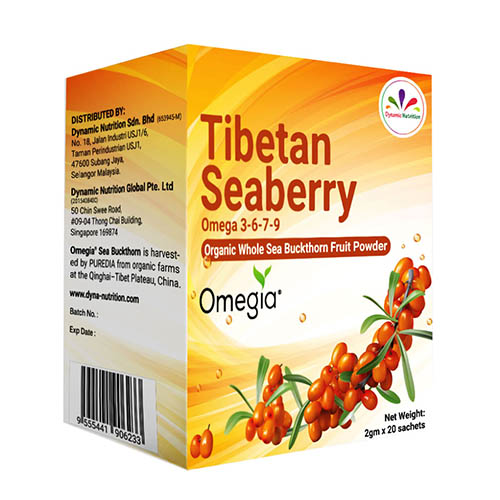
This is where sea buckthorn breaks the pattern. While fish oil gives you omega-3, and evening primrose gives you omega-6, sea buckthorn pulp-and-seed oil delivers all four omega families — including the rare omega-7 (palmitoleic acid) that no common supplement oil provides. The lipid composition of sea buckthorn pulp oil is roughly: 30–35% palmitoleic acid (omega-7), 25–30% oleic acid (omega-9), 15–20% linoleic acid (omega-6), and smaller amounts of alpha-linolenic acid (omega-3). Seed oil adds more alpha-linolenic acid. A full-spectrum extract (both pulp and seed) is what you want — single-source extracts miss part of the profile.
How Omega-7 Is Theoretically Supposed To Help Dry Eyes
The biological case for omega-7 in dry eyes rests on three mechanisms. None of these are “proven cures” — they are proposed pathways supported by in-vitro work and a small but growing human-trial literature.
1. Palmitoleic acid is a structural component of the tear-film lipid layer
Palmitoleic acid is found naturally in human skin sebum and in meibomian-gland secretions. The idea is that supplementing the diet with palmitoleic acid provides the raw material the glands need to produce a more stable, less-evaporating lipid layer. Animal studies in mice with induced dry eye have shown improved tear-film stability after sea-buckthorn-oil supplementation; the human evidence is suggestive but smaller.
2. Anti-inflammatory signalling effects
Palmitoleic acid has been shown in cell-culture and animal models to down-regulate certain inflammatory pathways (notably the NF-κB pathway and downstream cytokine production). Because chronic ocular-surface inflammation is a key driver of dry-eye progression — even when symptoms start as pure evaporation — anything that takes the inflammatory pressure off is plausibly helpful.
3. Mucin-layer support from carotenoids and vitamin A precursors
Sea buckthorn pulp oil is exceptionally rich in beta-carotene (pro-vitamin A) and other carotenoids. Vitamin A is essential for the goblet cells of the conjunctiva that secrete mucin — the layer that lets tears stick to the eye surface rather than rolling off. Vitamin A deficiency is a known cause of severe dry eye (xerophthalmia); supplemental vitamin A from carotenoids is the standard fix in those cases. The dose in sea buckthorn is not pharmacological-grade for treating deficiency, but the ongoing dietary contribution may matter for marginal mucin production.
What The Published Trials Actually Show
The honest answer here is that the human trial evidence for sea buckthorn specifically in dry eyes is still modest but growing — not because the intervention doesn’t work, but because the trials are small and haven’t been replicated widely.
The Sjogren’s syndrome trial
The most-cited study enrolled women with Sjogren’s syndrome (an autoimmune condition that causes severe dry eyes and dry mouth) and randomised them to receive either sea buckthorn pulp oil or a placebo for three months. The sea-buckthorn group showed statistically significant improvements in symptom scores and in some objective tear-film measures, while the placebo group did not. The trial was small (around 90 participants total) and at one industry, but it is the clearest signal we have that the mechanism translates to a real clinical benefit in a population with documented dry-eye disease.
Smaller studies and mechanistic work
Smaller trials and observational work in post-menopausal women (where dry eyes are common due to hormonal changes) have shown similar patterns: symptom improvement and modest improvements in tear quality. The dose used across the published trials is remarkably consistent — typically 2 grams per day of sea buckthorn oil, taken in divided doses, for a minimum of 3 months.
How Long Until You Notice A Difference
If sea buckthorn is going to work for your dry eyes, the published trials suggest the realistic expectation is:
4–6 weeks: the first subjective changes — slightly less scratchiness in the morning, eyes that feel less “tired” by mid-afternoon. Most people who respond notice something in this window.
3 months: this is where the objective improvements show up in trial data — measurable changes in tear-film break-up time and symptom scores. If you are going to commit to a trial of sea buckthorn for dry eyes, give it the full three months.
6 months: the point at which the anti-inflammatory and mucin-support benefits should be fully expressed. Beyond this, ongoing use is required to maintain the benefit; sea buckthorn is a maintenance nutrient, not a one-time treatment.
How To Pick A Sea Buckthorn Supplement For Dry Eyes
Not all sea buckthorn supplements are the same. For dry-eye use specifically, look for:
Full-spectrum fruit + seed extract
Seed oil gives you alpha-linolenic acid (omega-3) and linoleic acid (omega-6). Pulp oil gives you palmitoleic acid (omega-7) and beta-carotene. A full-spectrum product — both fruit and seed — gives you the complete omega profile plus the carotenoids. Single-source extracts (pulp only or seed only) miss part of the picture.
Standardised omega-7 content
The omega-7 number on the label is what you are actually buying this for. A reputable product will state the palmitoleic acid content per dose. Look for products delivering the trial-equivalent of ~2 g of sea buckthorn oil per day, with omega-7 content in the 400–700 mg range.
Cold-pressed, with stabilised oil
Sea buckthorn oil oxidises quickly because of its high unsaturated-fat content. Cold-pressed extraction preserves the native carotenoids and vitamin E that act as natural antioxidants in the oil; added vitamin E or rosemary extract helps prevent the oil going rancid in the bottle. If the oil smells sharp or paint-like, it has oxidised and you should not use it.
A void heat-damaged oils and “sea buckthorn flavoured” products
Some products contain a small amount of sea buckthorn mixed with cheaper oils (sunflower, safflower) — the palmitoleic acid content will be too low to match the trial dose. Look at the ingredient list and the omega-7 content per serving.
The Bottom Line
Sea buckthorn oil is the most plausible omega-7 source currently available as a dietary supplement. The proposed mechanism — providing the lipid-layer raw material, supporting mucin production via vitamin A precursors, and dampening the chronic low-grade ocular-surface inflammation — is biologically reasonable. The published human evidence is real but modest: a meaningful trial in Sjogren’s syndrome, smaller studies in postmenopausal dry eye, and consistent positive signals at a dose of about 2 g of oil per day for at least three months.
It is not a replacement for artificial tears or for prescription treatment if you have been diagnosed with meibomian-gland dysfunction or autoimmune dry eye. But if you are in the large group of people with mild-to-moderate ocular-surface dryness — the kind that makes screen work uncomfortable and contact lenses harder to wear — a full-spectrum sea buckthorn supplement is one of the better-evidenced nutritional options to try, alongside the standard measures of staying hydrated, taking regular screen breaks, and using warm compresses.
Frequently Asked Questions
How long does sea buckthorn take to work for dry eyes?
The published trials run for three months. Most people who respond notice subjective improvement in the first 4–6 weeks, with measurable changes in tear-film stability showing up at the three-month mark. If you see nothing after three months of consistent use, sea buckthorn is unlikely to be the right intervention for your dry eyes.
Can I take sea buckthorn with fish oil?
Yes. The two are not redundant — fish oil provides EPA and DHA (omega-3), sea buckthorn provides palmitoleic acid (omega-7) and the full omega 3-6-7-9 spectrum plus carotenoids. Many published dry-eye protocols combine them.
Are there side effects?
Sea buckthorn oil is well-tolerated. The most common reported effect is mild GI discomfort at high doses, particularly when starting. Taking it with food reduces this. There is no published evidence of serious adverse effects at the doses used in dry-eye trials (2 g/day).
Is sea buckthorn safe during pregnancy?
The published safety literature is limited. Most clinicians recommend avoiding sea buckthorn oil supplementation during pregnancy and breastfeeding as a precaution, given the lack of dedicated safety data in those populations.
Product you may be interested in