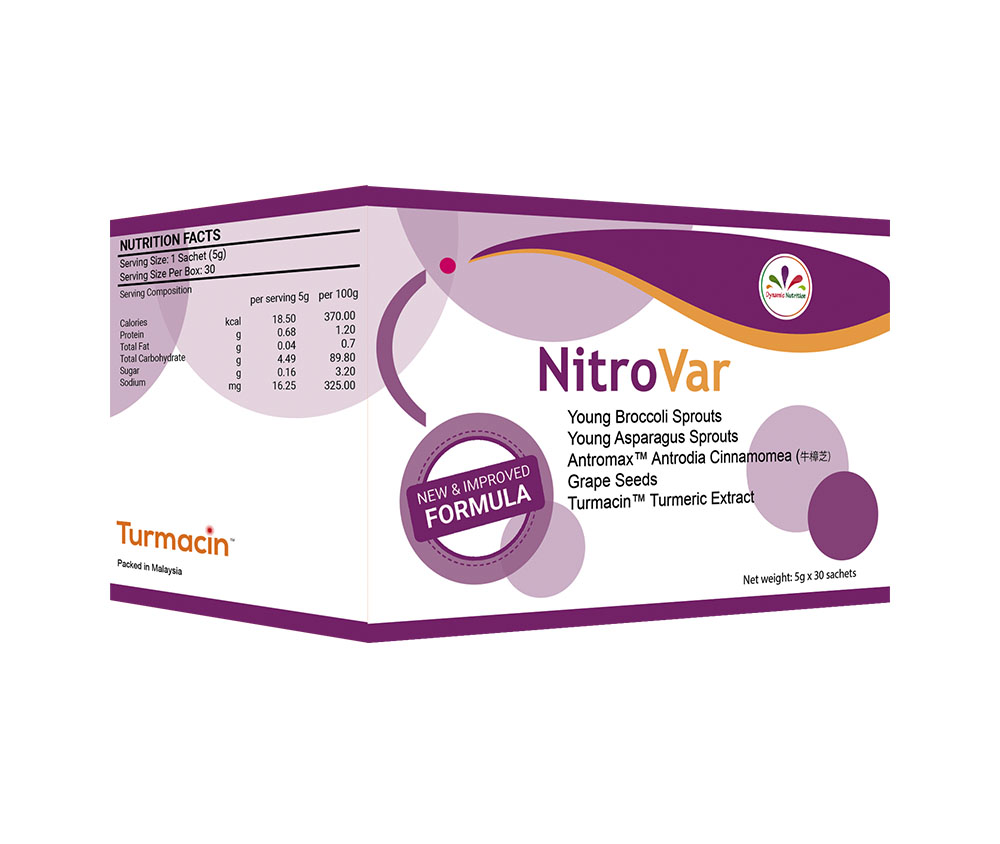
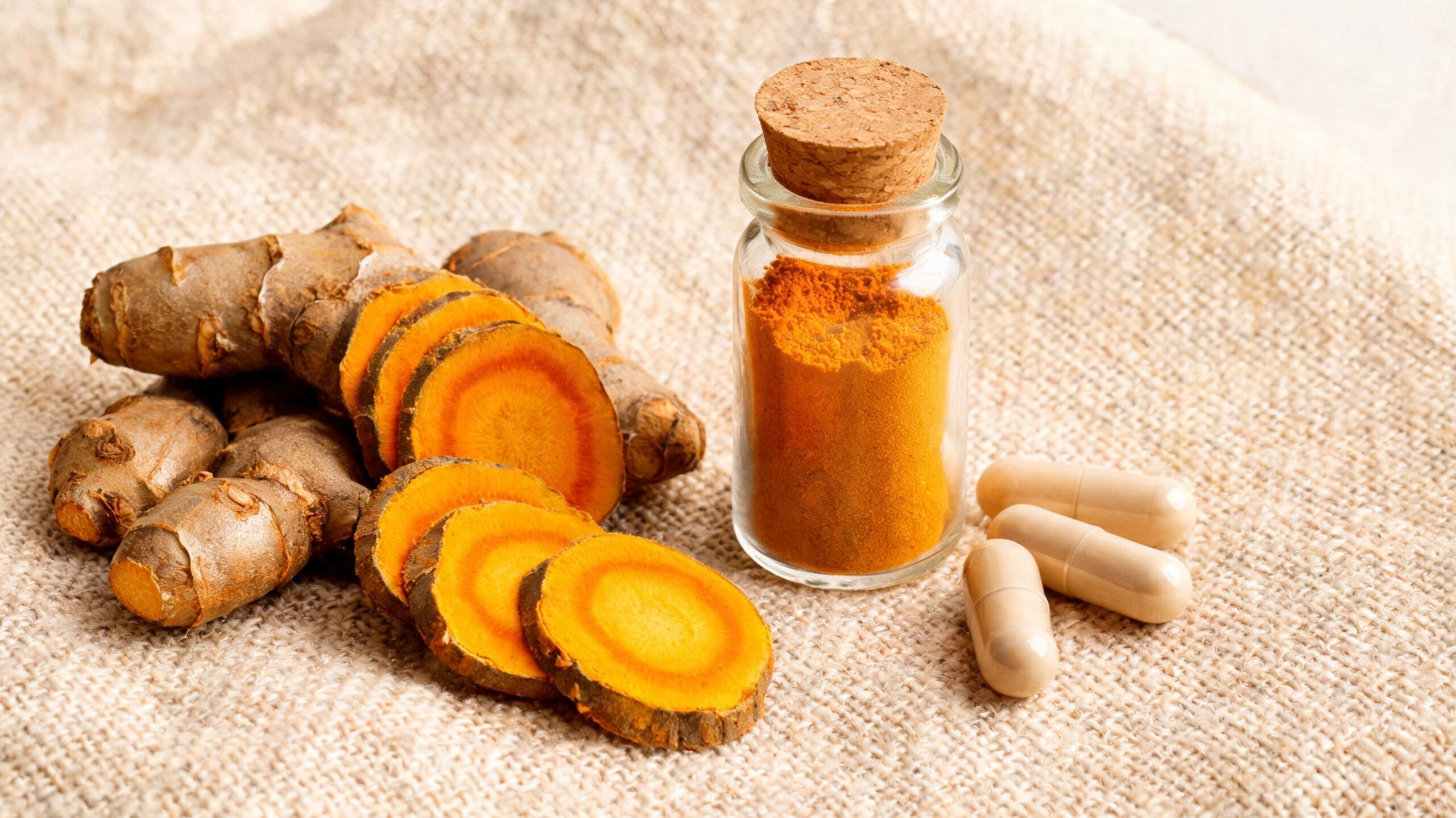
If you have ever bought a turmeric capsule for “liver support” or “joint comfort” and wondered why your blood markers barely moved, the answer is almost never the dose — it is the bioavailability. Generic curcumin is one of the most poorly absorbed nutrients in the supplement aisle. Plasma curcuminoid levels after a standard turmeric-powder dose are barely detectable in most published pharmacokinetic studies. That is the gap Turmacin® turmeric extract was engineered to close.
Why generic curcumin is hard to absorb
Curcumin, the principal yellow polyphenol in turmeric (Curcuma longa), has three stubborn pharmacokinetic problems:
1. It is fat-soluble and barely water-soluble. In a fasting state, pure curcumin has an oral bioavailability commonly cited in the 1% range — the molecule passes through the gut largely unabsorbed.
2. It is metabolised aggressively on first pass. Hepatic glucuronidation and sulfation convert most absorbed curcumin into conjugates within minutes, blunting plasma exposure.
3. It is unstable at gut pH. In the alkaline environment of the small intestine, a meaningful fraction of free curcumin degrades before absorption.
Over the years the supplement industry has tried to fix these with piperine (black pepper extract), liposomal carriers, micelles, and phospholipid complexes (Meriva, Longvida). The Turmacin® approach is different: a water-dispersible galactomannan-matrix complex that keeps curcumin soluble in the aqueous environment of the gut long enough for meaningful absorption to occur.
What Turmacin actually is
Turmacin® is a patented, water-soluble curcumin formulation — a complex of curcuminoids with a hydrophilic galactomannan matrix derived from fenugreek fibre. The trade name is shorthand for “turmeric + Curcumin” in a delivery form the gut can actually absorb. The published pharmacokinetic work on this delivery system shows plasma curcuminoid levels roughly 5 to 7 times higher than unformulated curcumin at an equivalent dose — not a marketing claim, a measured AUC (area under the curve) in human volunteers.
That is the engineering problem the formulation solves. The rest of the article is the downstream question: once you can actually absorb it, what does the clinical evidence support?
The evidence tiers — what Turmacin actually does
Tier 1 — Well supported by published work
Hepatic NF-κB suppression. The chronic low-grade hepatic inflammation that drives NAFLD → NASH → fibrosis progression is mediated, in large part, by the NF-κB transcription-factor pathway. Curcumin is one of the most-published natural NF-κB inhibitors in the hepatocyte literature. Turmacin-specific work in high-fat-diet NAFLD models shows reduced hepatic NF-κB activation and downstream inflammatory cytokine expression.
Hepatic stellate-cell activation suppression. Activated hepatic stellate cells are the engine of liver fibrosis. The shift from quiescent to activated is the rate-limiting step in scar-tissue deposition. Published in vitro and animal work on the Turmacin formulation shows reduced stellate-cell activation markers — meaning slower progression of the fibrotic remodelling that turns fatty liver into cirrhosis.
PPAR-alpha activation and hepatic lipid handling. PPAR-alpha is the master regulator of fatty-acid β-oxidation in hepatocytes. Curcumin’s published PPAR-alpha-activating effect supports the lipid-handling side of the liver equation — the VLDL export, the mitochondrial fat-burning, the capacity to clear triglyceride from the hepatocyte.
Rheumatoid arthritis pain and joint mobility. This is the clinical use case where Turmacin has the strongest published RCT record. Multiple human trials in RA cohorts show improved pain scores, improved morning stiffness, and improved joint mobility versus placebo. The effect size is meaningful — comparable in some studies to low-dose NSAID arms, without the GI and renal load.
Tier 2 — Moderately supported
Broader NAFLD/MASLD clinical benefit in humans. The published NAFLD evidence is strong in animal models and good but heterogeneous in human cohorts. The most consistent human findings are reductions in hepatic fat content (by ultrasound or MRI-PDFF) and modest ALT/AST improvement. The “liver-detox” framing in consumer marketing runs ahead of the published evidence, but the substrate — reduced hepatic fat, improved transaminases, suppressed inflammation — is real.
Phase II detoxification enzyme induction. Curcumin modulates several Phase II conjugation enzymes (UGT, GST, SULT). The effect is real but modest, and it is dwarfed by the Nrf2-axis induction you get from sulforaphane. Think of curcumin as a contributor to the conjugation step, not the master regulator of the pathway.
Tier 3 — Not supported by the evidence
Generic “antioxidant” / “general wellness” claims. If the label promises a vague antioxidant benefit without naming an endpoint (a specific clinical marker, a specific clinical outcome), the same evidence gap that applies to unformulated curcumin applies here. The published work measures specific outcomes — NF-κB activity, stellate-cell activation, RA pain scores, hepatic fat content — not a generic wellness claim.
Curcumin as a stand-alone solution for fatty liver. The clinical work consistently shows curcumin as a component of a multi-layer substrate stack (NF-κB suppression from curcumin, Nrf2 activation from sulforaphane, glutathione support from other substrates) — not a stand-alone cure. The consumer who buys curcumin alone and expects to reverse a fatty-liver diagnosis is reading a marketing claim, not the literature.
The bioavailability question — what makes Turmacin different
The single most important number in any curcumin product is plasma curcuminoid level after a standard dose. The published AUC for the Turmacin formulation in human volunteers is roughly 5 to 7 times the AUC for unformulated curcumin at the same curcuminoid weight dose. That is the formulation doing its job: keeping curcumin in a water-soluble form long enough to cross the gut wall, surviving first-pass conjugation long enough to register a meaningful plasma peak.
By contrast, the published pharmacokinetic work on unformulated turmeric powder shows plasma curcuminoid levels that are barely detectable in most subjects at standard dose. Adding piperine helps absorption (it inhibits glucuronidation) but introduces its own concerns — piperine interacts with a wide range of medications via CYP3A4 inhibition, which is a real clinical issue for anyone on prescription drugs.
The Turmacin delivery avoids that interaction. The galactomannan-matrix approach is a physical solubilisation problem, not a metabolic-intervention problem, so the formulation does not lean on drug-metabolism inhibition to work.
How to read a Turmacin label
What to look for on the supplement label:
1. The trademarked Turmacin® name. “Turmeric extract” on a label is not the same product. The trademark is what binds the supplier to the specific galactomannan-matrix delivery and the specific pharmacokinetic profile in the published work.
2. Standardised curcuminoid %. The published clinical work uses specific curcuminoid percentages (typically ~20-30% total curcuminoids in the complex). A label that lists “turmeric powder” with no curcuminoid specification is not telling you the dose of the active.
3. No piperine on the ingredient list. If piperine or “BioPerine” is listed, the product is using a different delivery system. That is not necessarily wrong, but it is a different formulation with its own published evidence base — do not assume the Turmacin RCTs apply to a piperine-boosted generic.
4. No synthetic curcuminoid additions. The published work is on the natural curcuminoid complex. Synthetic or isolated single-curcuminoid products do not have the same evidence base.
Who is the Turmacin-targeted substrate for?
The clinical evidence best supports Turmacin in three concrete use cases:
1. Rheumatoid arthritis and autoimmune joint inflammation. The strongest published RCT record. Improvements in pain, morning stiffness, and joint mobility versus placebo. The mechanism — NF-κB suppression, reduced synovial inflammation — is consistent across the trials.
2. NAFLD / MASLD as part of a multi-ingredient stack. The hepatic substrate layer — NF-κB suppression, stellate-cell modulation, PPAR-alpha activation — is real. The clinical results are best when curcumin is combined with the other substrate layers (Nrf2 activation from sulforaphane, the Antrodia cinnamomea mycelia layer for the Nrf2 + glutathione substrate, and the dietary substrate work that no supplement replaces).
3. Anyone whose generic turmeric capsule has not moved their markers. The most common reason a “turmeric for liver” purchase fails to deliver is the bioavailability problem. If you have been taking an unformulated turmeric powder and your ALT/AST/GGT have not improved, the formulation — not the dose, not the duration — is the most likely reason.
The interaction and safety layer
Turmacin is generally well-tolerated in the published trials. The two areas where a consumer should pause:
1. Gallbladder and bile-duct obstruction. Curcumin stimulates bile flow. In anyone with a bile-duct obstruction or active gallstones, increased bile flow can precipitate a symptomatic episode. Standard caution, not a contraindication for the general population.
2. Anticoagulant / antiplatelet medication. Curcumin has mild antiplatelet activity at high doses. In anyone on warfarin, clopidogrel, or direct oral anticoagulants, the additive effect is small but real — flag it to your prescribing physician.
3. Iron status. Curcumin chelates iron. In anyone with iron-deficiency anaemia, the published advice is to separate the curcumin dose from iron-rich meals and iron supplements by at least two hours.
What the consumer should walk away with
If you have read this far, the operational summary is short:
1. Generic turmeric powder has a real bioavailability problem. The published plasma curcuminoid levels at standard dose are barely detectable.
2. Turmacin® is one of the patented, water-soluble curcumin formulations that addresses that problem — with published pharmacokinetic work showing roughly 5-7x higher plasma levels at the same dose.
3. The clinical evidence is strongest for RA joint symptoms, hepatic NF-κB inflammation, and hepatic stellate-cell modulation — with NAFLD benefits as a real but moderate additional signal when curcumin is part of a multi-ingredient substrate stack.
4. The label-reading bar is the trademarked name, the standardised curcuminoid percentage, the absence of piperine (different delivery system), and the absence of synthetic curcuminoid additions.
5. The substrate stack question: for fatty-liver prevention and joint inflammation, curcumin is a strong component but not a stand-alone solution. The Nrf2 activation layer (sulforaphane), the Antrodia cinnamomea mycelia layer, and the dietary substrate work are the other components. A single-ingredient approach is the marketing-friendly version; the published evidence is on the multi-layer stack.
That is the second-flagship decode of NitroVar’s substrate profile — the same depth-of-evidence frame as the Antrodia piece, applied to the patented bioavailable curcumin. The two together build the daily-substrate architecture for the modern liver under metabolic load.
Product you may be interested in