Walk into any pharmacy and you’ll see a wall of “cranberry” products. Juice. Juice cocktails. Capsules. Sachets. Effervescent tablets. Each one shouts some version of the same promise — better urinary tract health — but the labels don’t tell you the same story. Some list “cranberry juice concentrate” with a vague percentage. Some show “proanthocyanidins” or “PAC” with a specific milligram number. Some show both. And one number changes the entire clinical picture: the PAC.
For women looking at cranberry for UTI prevention — whether it’s a recurring bladder infection after antibiotics, the post-period cycle of discomfort, or the recurring yeast infection that pairs with every round of antibiotics — the difference between “drink cranberry juice” and “take a 48mg PAC sachet” is the difference between folklore and the dose used in clinical trials. Here’s what the PAC number actually measures, why it matters, and what to look for on the label.
What is PAC, and why do urologists care about the number?
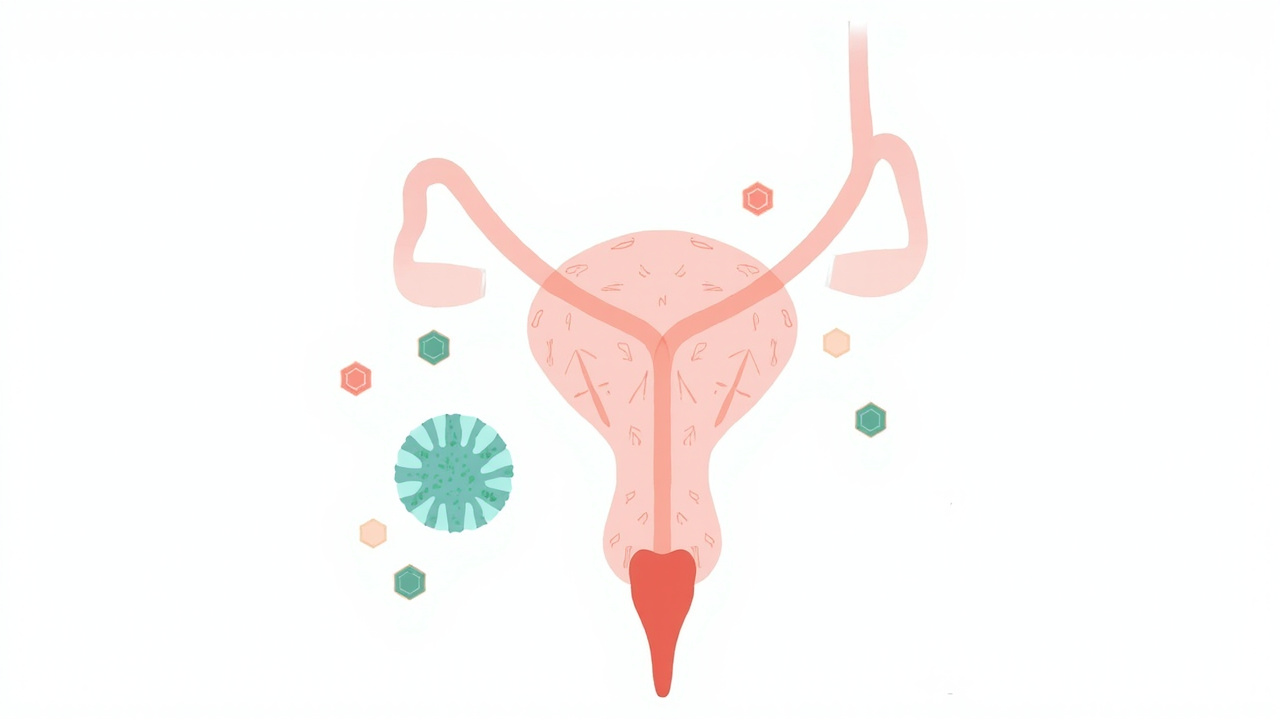
PAC stands for proanthocyanidins — a specific class of tannins found in cranberries (and grapes, cocoa, and cinnamon, but cranberries have a uniquely high concentration). They’re the molecules that stop E. coli, the bacterium behind about 80–85% of uncomplicated UTIs, from sticking to the wall of the bladder. No adhesion means no infection taking hold.
That anti-adhesion mechanism has been studied since the 1990s. But the studies that produced the clearest results — the ones urologists and gynaecologists actually point to when recommending a cranberry supplement — used specific, standardized doses. And the dose that keeps showing up in positive trials is 36 to 48 mg of PAC per day.
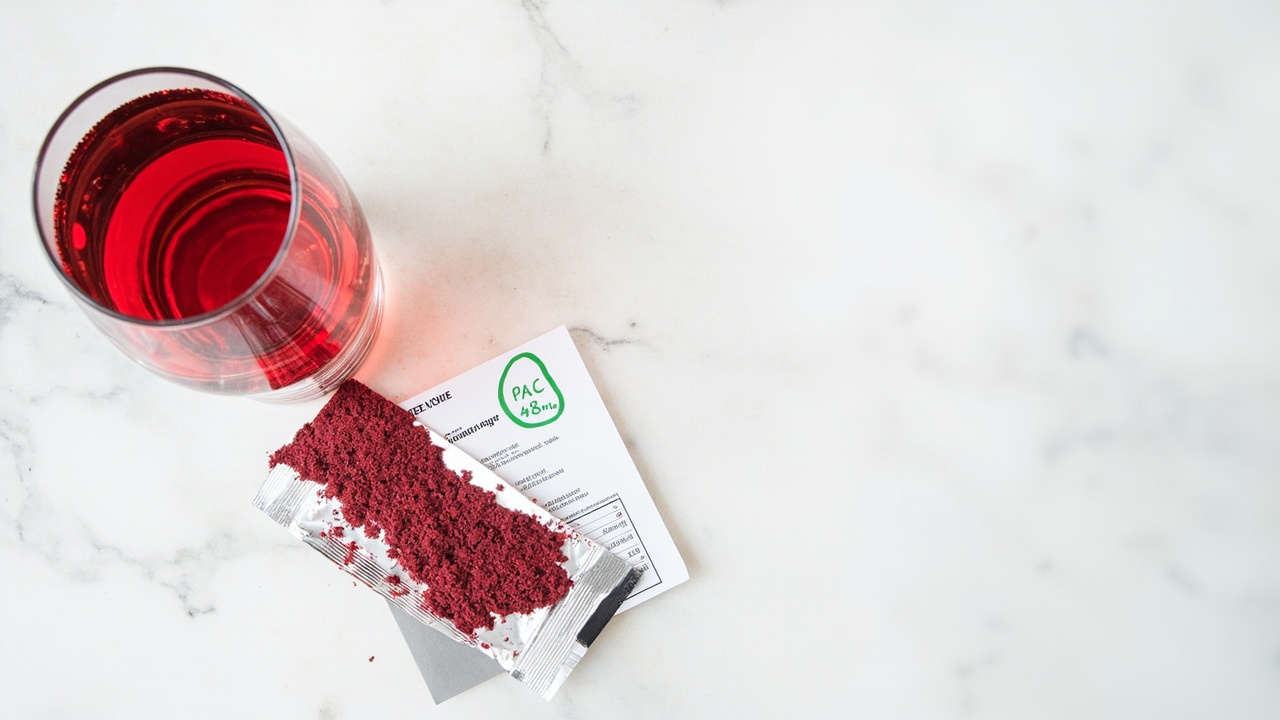
Here’s the catch: the PAC content of cranberry juice varies wildly. A glass of supermarket cranberry juice cocktail delivers somewhere between 1 and 4 mg of PAC, depending on the brand, dilution, and how the juice was processed. You’d need to drink roughly 10 glasses a day to match what one 48mg-PAC sachet delivers.
The label cheat code
When a label says “100% cranberry juice” or “27% cranberry concentrate,” that’s a volume claim, not a clinical claim. It tells you how much cranberry is in the bottle, not how much of the active molecule is in your bloodstream. Two products can have the same “cranberry percentage” and radically different PAC contents — one processed to preserve the proanthocyanidins, one processed in a way that destroys them.
A PAC number on the label — typically expressed in milligrams, often alongside the word “standardized” — tells you the dose was verified by independent lab testing (usually by the BL-DMAC method, which is the gold-standard assay for cranberry PAC). That number is the one to compare across products.
Juice: why the glass on the table doesn’t move the needle
Cranberry juice has three problems as a clinical intervention for UTI prevention.
Sugar load. Most “cranberry juice” you can buy is a cocktail — sweetened to mask the natural tartness. A 250ml glass can contain 25-30g of added sugar, which is more than a can of soda. Sugar feeds the bacteria you’re trying to flush out, and excess sugar drives systemic inflammation that works against the immune response. This is also why women with recurring yeast infections — Candida thrives on sugar — sometimes notice their symptoms worsen when they “drink more cranberry juice.”
PAC density. Even pure, unsweetened cranberry juice (which most people find unpalatable) delivers only about 4mg PAC per 250ml glass. At one glass per day, you’re getting roughly 8% of the studied clinical dose. To hit 36mg PAC, you’d need roughly nine glasses of straight juice per day — and roughly 30 glasses of standard sweetened cocktail. The math doesn’t work.
Probiotic interaction. Recent research into the urinary microbiome shows that cranberry’s PAC work best when paired with specific Lactobacillus strains (particularly L. rhamnosus and L. reuteri) that re-populate the protective flora in the vagina and urethra. Sugar actively works against this — it shifts the vaginal pH and feeds competing organisms. So if you’re drinking sugary cranberry juice hoping to combine it with a probiotic, the two are working against each other.
Sachets and capsules: the dose that actually matters
This is where cranberry extracts — particularly the standardized forms used in clinical trials — earn their reputation. The most-studied branded extract is Cran-Max®, a whole-fruit cranberry extract developed specifically to deliver a consistent, verified PAC dose in a small capsule or sachet.
The published trials on Cran-Max® consistently use a dose of 500 mg of extract standardized to 48 mg of PAC per day. That’s the dose associated with the reductions in UTI recurrence rates you see cited in urology guidelines — typically a 30-50% reduction in recurrent infections over 6-12 months versus placebo.
Why 48mg? It’s the dose where the anti-adhesion effect reliably shows up across multiple trials. It’s also the dose where you start seeing meaningful shifts in urinary PAC concentrations within hours of ingestion — meaning the protection is active the same day, not after weeks of buildup.
How to compare cranberry sachets
Three things to check on the label:
1. The PAC number in milligrams. If a product doesn’t tell you the PAC content, it’s because the manufacturer either doesn’t test or doesn’t want you to compare. The clinical threshold is 36mg; the most-studied dose is 48mg. Anything below 18mg is unlikely to have a measurable effect.
2. The standardization method. Look for “standardized to X mg PAC” or “BL-DMAC method.” Random “cranberry extract” with no standardization claim has variable PAC content — sometimes 5mg per capsule, sometimes 40mg — depending on the harvest and processing.
3. The full-fruit claim. Some extracts use only the juice (which has lower PAC density). Whole-fruit extracts like Cran-Max® use the skins, seeds, and pulp — where most of the proanthocyanidins actually live. Whole-fruit extracts consistently deliver more PAC per gram of material.
PAC + probiotics: the combination that addresses both mechanisms
Here’s the part most “cranberry” labels don’t tell you: PACs and probiotics do different jobs, and you may need both.
PACs (cranberry): Block the initial adhesion step — E. coli literally can’t grab onto the bladder wall and gets flushed out with the next urination. This is the “prevention” half of the equation.
Probiotics (specifically Lactobacillus): Re-populate the protective flora in the vagina and peri-urethral area. After antibiotics, hormonal shifts, or high-sugar periods, the protective Lactobacillus populations collapse, leaving the area vulnerable to the next wave of bacteria. Specific strains — particularly L. rhamnosus GR-1 and L. reuteri RC-14 — have published clinical evidence for reducing recurrence.
A cranberry-only pill does the first half. A probiotic-only product does the second. The clinical evidence for the combination — PACs to block adhesion plus probiotics to re-populate flora — is stronger than either alone, particularly for women with recurring infections.
For women in the recurring-UTI category — three or more episodes a year, or two in six months — the combination is what the data supports, not cranberry alone.
What to look for in a combined cranberry + probiotic product
Three criteria:
1. Verified 48mg PAC per daily dose (or at minimum 36mg), standardized via the BL-DMAC method, with the standardization claim on the label.
2. Specific Lactobacillus strains with published clinical evidence — not generic “probiotic blend.” L. rhamnosus and L. reuteri are the two strains with the strongest urogenital data. A blend of 6 strains including these is more robust than a single strain.
3. No added sugar or unnecessary fillers — particularly relevant for the sachet vs. juice comparison. The whole point of the sachet is to deliver the clinical dose without the sugar load of juice.
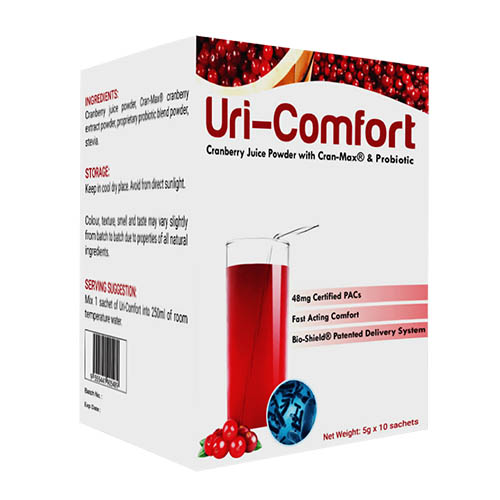
A daily sachet that combines all three — 48mg PAC from Cran-Max® plus a 6-strain Lactobacillus blend including L. rhamnosus and L. reuteri, with no sugar or unnecessary additives — is the closest match to what’s been studied in clinical trials. That’s the formula in Uri-Comfort: 48mg PAC + 6-strain probiotics in a once-daily sachet.
The bottom line on cranberry labels
If you’re looking at a cranberry product and trying to figure out if it will actually do anything for UTI prevention, ignore the juice percentage and the marketing copy. Look for the PAC number in milligrams.
Below 18mg PAC per dose: unlikely to have a clinical effect. Between 18mg and 36mg: in the “may help” range, but below the most-studied doses. At 48mg: the dose that consistently shows the anti-adhesion effect across multiple trials.
And if you’re in the recurring-UTI category — three or more episodes a year, post-antibiotic cycles, post-period flares — consider the combination: 48mg PAC for the adhesion blocking plus a multi-strain Lactobacillus probiotic for the flora re-population. The data on the combination is stronger than either alone.
The glass of cranberry juice on the breakfast table? It’s not the wrong thing to do, but it’s also not the clinical dose. If you’re looking for the studied effect, the label needs to tell you the PAC number.