If you’re a woman who’s ever experienced the burning, urgency, and discomfort of a urinary tract infection, you’re far from alone. In fact, the statistics are striking: about half of all women will experience a UTI during their lifetime, and up to 30% will suffer from recurrent infections within just six months. Women between 16 and 35 years old are about 35 times more likely to be affected by UTIs than men. Overall, women may get UTIs up to 30 times more often than men.
But why? The answer lies in a combination of anatomy, hormones, and lifestyle factors. Understanding these reasons is the first step toward effective prevention—and that’s where solutions like Uri-Comfort come in.

The Anatomy Factor: A Shorter Path for Bacteria
The most significant reason women are more prone to UTIs is anatomical. Here’s what sets the female body apart:
1. A Shorter Urethra
The urethra—the tube that carries urine from the bladder out of the body—is significantly shorter in women than in men. In women, it’s only about 1.5 inches (4 centimeters) long, compared to 8 to 9 inches (20 to 23 centimeters) in men. This shorter distance means bacteria have a much shorter path to travel to reach the bladder, making infection far more likely.
2. Proximity to the Anus and Vagina
In women, the urethral opening is located very close to both the anus and the vagina. Since E. coli bacteria—the most common cause of UTIs—naturally live in the bowel, this proximity makes it easier for bacteria to travel from the rectal area to the urinary tract. Simple habits like wiping from back to front can inadvertently push bacteria toward the urethra.
3. No Prostate Gland
Men have an additional line of defense: the prostate gland produces antibacterial secretions that may help reduce the risk of UTIs. Women don’t have this natural protection, leaving them more vulnerable.
The Hormonal Factor: Estrogen’s Protective Role
Beyond anatomy, hormones play a crucial role in urinary health—and hormonal changes throughout a woman’s life can significantly increase UTI risk.
Menopause and Declining Estrogen
After menopause, estrogen levels drop dramatically. This decline has several effects that increase UTI susceptibility:
- Thinning of vaginal and urethral tissues, making it easier for bacteria to enter the urinary tract
- Disruption of the healthy bacterial balance in the vaginal area, allowing harmful bacteria to thrive
- Increased vaginal pH, which creates an environment more favorable to pathogens
Postmenopausal women face a significantly augmented risk of UTIs due to estrogen deficiency and vaginal atrophy. In fact, genitourinary syndrome of menopause affects 50% to 70% of postmenopausal women.
Pregnancy
Pregnancy brings another wave of hormonal changes that increase UTI risk. Pregnancy hormones can relax the muscles in the ureters, slowing urine flow and giving bacteria more time to grow. Additionally, the growing uterus puts pressure on the bladder, making it harder to empty completely—allowing bacteria to multiply in leftover urine.
Other Risk Factors for Women
Several additional factors can increase a woman’s risk of developing a UTI:
- Sexual activity—bacteria can be pushed into the urethra during intercourse
- Certain birth control methods—spermicides can kill protective bacteria, and diaphragms may slow urine flow
- Not drinking enough fluids—concentrated urine allows bacteria to multiply more easily
- Holding urine for too long—giving bacteria more time to grow
- Diabetes—which can lower immune defenses
- Use of harsh soaps or scented feminine products—which can irritate the urethra and disturb the natural bacterial balance
Prevention: What Women Can Do
While women may be biologically predisposed to UTIs, there are many practical steps to reduce the risk:
Lifestyle Habits
- Stay hydrated—drink plenty of water daily to flush bacteria from the urinary tract
- Don’t hold urine—urinate when you feel the urge
- Urinate after sexual activity—this helps clear any bacteria that may have been introduced
- Wipe front to back—a simple but crucial hygiene practice
- Avoid harsh feminine products—skip douches, scented sprays, and bubble baths that can irritate
- Wear breathable cotton underwear
Natural Supplements: How Uri-Comfort Helps
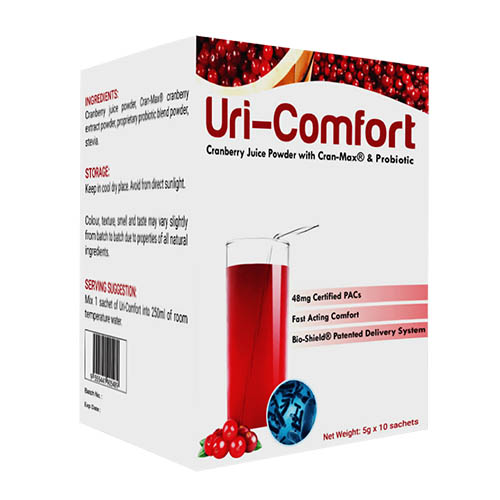
For women looking for additional, natural support, Uri-Comfort from Dyna Nutrition offers a clinically proven solution that addresses the root causes of UTIs.
Uri-Comfort combines two powerful approaches:
1. Clinically Proven Cranberry Extract (Cran-Max®)
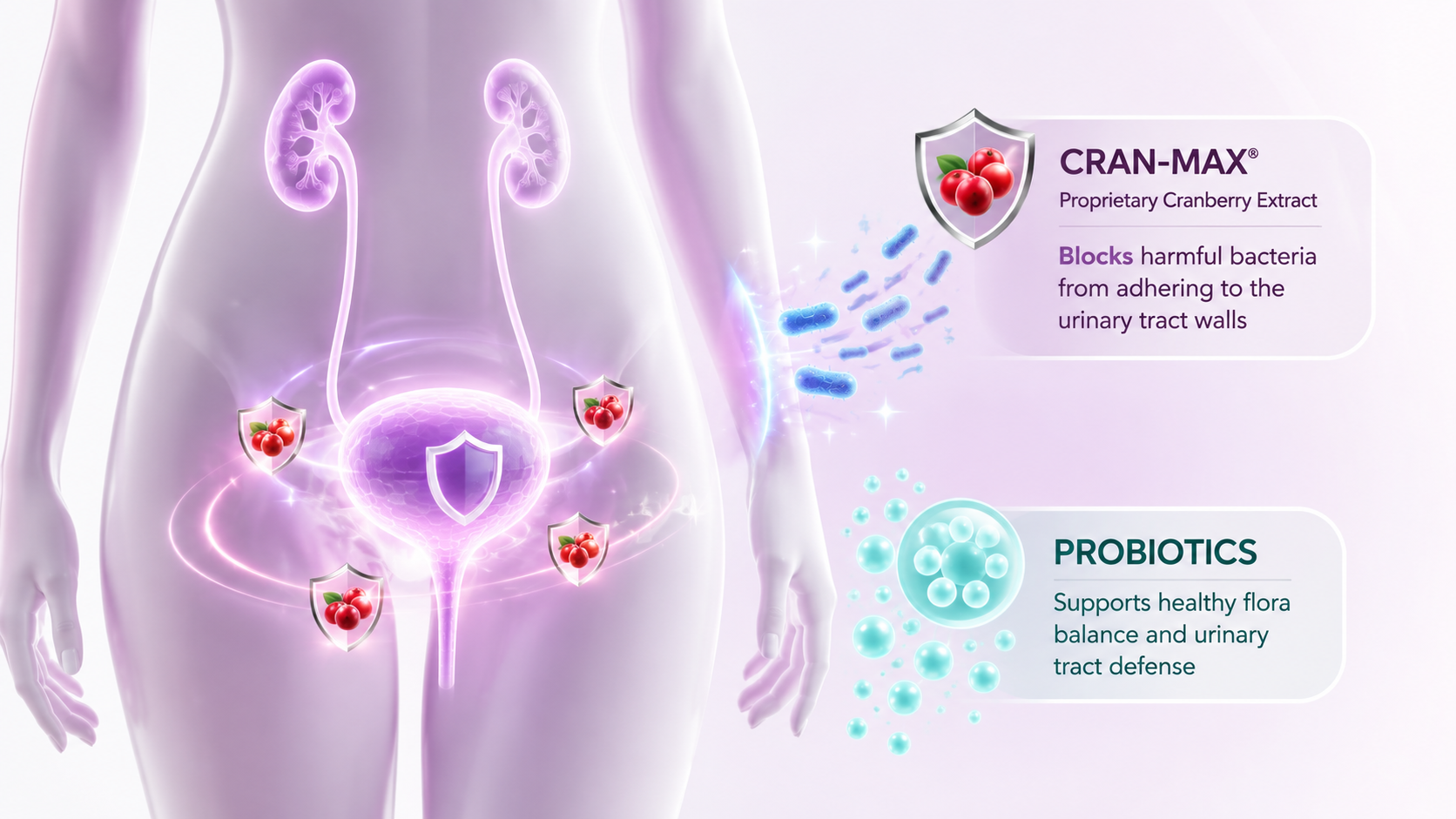
Cranberries contain A-type proanthocyanidins (PACs)—compounds that prevent E. coli bacteria from sticking to the walls of the urinary tract. Once bacteria can’t adhere, they can simply be flushed out of the body naturally.
Uri-Comfort features Cran-Max®, a patented whole-berry cranberry concentrate that provides 48mg of PACs per sachet—the amount backed by clinical research to help reduce UTI recurrence. What makes Cran-Max® special is its Bio-Shield® patented delivery system, which protects the active compounds as they pass through the digestive tract, ensuring they reach the urinary system where they’re needed most.
2. Six Strains of Probiotics
Uri-Comfort goes beyond cranberry by including six strains of probiotics that help maintain a healthy balance in the gut and vaginal microbiome. This supports the body’s natural defenses against harmful bacteria and creates an environment where pathogens struggle to thrive.
One Sachet a Day
With Uri-Comfort, prevention is simple: just mix one sachet in water and drink daily. It’s 100% natural, with no added sodium, sugar, or artificial sweeteners—and it works in days, not weeks.

The Bottom Line
Women are biologically more susceptible to UTIs due to shorter urethras, anatomical proximity to bacteria sources, and hormonal changes throughout life. But being more susceptible doesn’t mean being defenseless.
By combining smart lifestyle habits with scientifically backed natural support like Uri-Comfort—with its clinically proven Cran-Max® cranberry extract and six probiotic strains—women can take proactive control of their urinary health and break the cycle of recurrent infections.
Related Topics
Why UTIs Are More Common During Ramadan and How to Find Relief
Cran-Max – Effective Prevention Of UTI
Qualified Health Claim for Cranberry Juice and Supplements for Urinary Tract Infections
Urinary Tract Infections – The Most Common Infections
Which probiotics can help with vaginal yeast infection?
Bacterial Vaginosis – Tips for Prevention and Treatment
Top 7 Natural Remedies For UTI
Antibiotics vs. Natural UTI Prevention: What’s the Difference?
Why Drinking Cranberry Juice Alone Is Not Enough for UTI Prevention
Cranberry juice vs cranberry sachets: what the ‘PAC’ number on the label actually changes