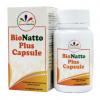
Ask five supplement brands whether their probiotics prevent urinary tract infections and you will get five different answers — all of them confident, none of them the same. The reason is simple, and it is the single most useful thing to understand about this topic: the published recurrent-UTI trials did not test “probiotics”. They tested specific, numbered probiotic strains — Lactobacillus rhamnosus GR-1, Lactobacillus reuteri RC-14, Lactobacillus crispatus CTV-05, L. rhamnosus PL1 with L. plantarum PM1 — at specific doses, by specific routes, against specific endpoints, over months of follow-up. A capsule that merely says “billions of CFU, multi-strain probiotics” on the front of the label is not one of those interventions.
This matters because strains are not interchangeable. When a trial used GR-1 and RC-14 and measured a change in recurrence, that result belongs to GR-1 and RC-14. It does not transfer to a different rhamnosus strain, it does not transfer to a blend containing four unnamed lactobacilli alongside two Bifidobacterium species, and it certainly does not transfer to a product whose blend is disclosed only as “proprietary probiotic blend powder”. A six-strain blend and a two-strain trial arm are two different interventions wearing the same category label.
None of this means probiotic supplements are useless for urinary tract health. It means the honest version of the claim is narrower and more specific than the shelf version — and considerably more useful, because you can act on it.

What the recurrent-UTI trials actually measured
Before naming strains, it is worth being blunt about the endpoint, because that is where most consumer claims quietly break. Recurrent-UTI trials measure symptomatic urinary tract infection events over a defined follow-up window — typically at least six months, often twelve — in women with a documented history of recurrent infection. The conventional definition of recurrent UTI is three episodes in the last 12 months, or two episodes within the last six months.1 These studies do not measure “urinary comfort”, “bladder support”, or a general sense of being “protected”. A product can legitimately improve how someone feels day to day and still have no trial evidence behind it for preventing infection, because no trial measured that.
Two further features of the design matter. First, the populations are narrower than the marketing category “women with UTIs”: the best-designed studies enrolled women with confirmed recurrent infection, and the largest recent trial enrolled 174 premenopausal women with a documented history of recurrent UTI.2 Second, several of the better-designed studies delivered the organisms intravaginally rather than in a swallowed capsule. That is not a trivial difference: it is a different intervention with a different mechanism, and oral-route evidence should not be read as if it were intravaginal evidence.3
The strains that carry the actual trial evidence
Four strain combinations dominate the published recurrent-UTI literature, and it is worth knowing each one — because each corresponds to a specific measured result rather than a general “probiotics work” narrative.
L. rhamnosus GR-1 plus L. reuteri RC-14, oral. This is the most-cited probiotic pair in recurrent UTI, and the one with the largest head-to-head trial against an antibiotic. In a double-blind non-inferiority trial in postmenopausal women with recurrent UTI, 12 months of prophylaxis with oral GR-1 plus RC-14 was compared against trimethoprim-sulfamethoxazole 480 mg daily. Mean symptomatic UTIs over the year were 2.9 on trimethoprim-sulfamethoxazole versus 3.3 on the lactobacilli, and the difference of 0.4 UTIs per year (95% CI −0.4 to 1.5) fell outside the pre-set non-inferiority margin — so on recurrence alone, the lactobacilli did not match the antibiotic.4 The finding that matters as much is the one about harm. During antibiotic prophylaxis, resistance to trimethoprim, trimethoprim-sulfamethoxazole and amoxicillin in E. coli rose from roughly 20–40% to roughly 80–95%. Resistance did not increase during lactobacilli prophylaxis.4
L. crispatus CTV-05, intravaginal. A randomised placebo-controlled phase 2 trial gave intravaginal L. crispatus CTV-05 to women with recurrent UTI, and it remains the strain with the cleanest positive signal in this field.3 In a review of the published trials, the ovules containing L. crispatus CTV-05 or L. rhamnosus GR-1 with L. fermentum B-54 were the most effective of the formulations compared.1
L. rhamnosus PL1 with L. plantarum PM1, oral. A 2024 double-blind randomised controlled trial in children with recurrent UTI or recurrent pyelonephritis found that 26% of the probiotic group had UTI episodes during the 90-day intervention — not significantly fewer than placebo, although UTI episodes fell by almost 50% in the probiotic group relative to placebo across the study.5 This is a useful corrective: a plausible mechanism and a favourable trend are not the same as a statistically significant result, and the trial says so itself.
L. rhamnosus GG, oral. L. rhamnosus GG is widely sold for gut and urinary tract health, but the trial-level read-across is weak. In the review of the evidence, an oral L. rhamnosus GG drink in 324 premenopausal patients returned a relative risk of 1.11 (95% CI 0.70–1.76, p = 0.83) for UTI risk — a null result that is routinely quoted as supportive and is not.1

What the systematic reviews actually conclude
Because the individual trials are small and heterogeneous, the reviews matter more than any single study. A Cochrane review of probiotics for preventing urinary tract infections in adults and children included nine randomised trials with 735 participants and found that no significant benefit was demonstrated for probiotics compared with placebo or no treatment — while stating explicitly that a benefit cannot be ruled out, because the data were few and came from small studies with poor methodological reporting. There was insufficient evidence from the one trial that compared probiotics against antibiotics to comment on that comparison at all.6
A separate meta-analysis of the recurrent-UTI literature, which reviewed nine clinical trials with 726 patients, found a pooled risk ratio of 0.684 (95% CI 0.438 to 0.929) for at least one recurrent UTI episode over the study duration on a per-protocol analysis — a result that leans toward benefit, while noting that L. rhamnosus GR-1 and L. reuteri RC-14 were the most commonly studied strains, and that further randomised trials with standardised strains and formulations are required for confirmation.7 Read together, the two reviews describe the same field honestly: the signal is real enough to keep testing and not yet strong enough to promise.
Why “any probiotic” is not an answer
Three things are routinely conflated in this marketing, and each has a specific published answer.
Strain specificity. Probiotic effects are strain-specific, not species-specific and certainly not genus-specific. The review of the potential of lactobacilli in recurrent UTI prevention puts it plainly: there are significant strain-level differences in probiotic potential.8 A label reading “Lactobacillus blend” without strain designations cannot be mapped onto any trial arm described above.
Route. Much of the strongest recurring-UTI signal comes from intravaginal administration of Lactobacillus species. An oral sachet is a different delivery route to a different mucosal surface, and evidence from one route is not evidence for the other. This is exactly what a 2024 randomised trial of prophylactic oral and/or vaginal probiotic supplementation showed: across four groups (placebo, oral probiotic, vaginal probiotic, and both routes combined) the UTI incidence at four months was 70.4% with placebo, 61.3% with oral probiotic, 40.9% with vaginal probiotic and 31.8% with the combination, and the mean number of symptomatic recurrences was 2.1, 1.63, 1.06 and 1.07 respectively. Time to the first symptomatic UTI was 69.3 days on placebo, 71.9 on oral probiotic, 123.8 on vaginal probiotic and 141.8 on the combination.2 The route was doing much of the work, and the supplements were well tolerated with no serious adverse events. That is one trial in 174 women — a genuinely encouraging result, and not yet a general promise.
Dose and viability at the point of use. Trials specify both, and a label does not always. Review work on the field notes that the correct formulation in terms of bacterial amount, viability and associated growth factors is exactly what is still missing, and that without those details results cannot be standardised or compared across studies.1 “Billions of CFU” printed on a front panel, with no end-of-shelf-life count, is not a dose.
What this means for reading a product label
The honest way to read any probiotic product against this literature is to ask five questions — and to be willing to walk away when the answers are vague:
1. Are the strains named down to the strain designation? “Lactobacillus rhamnosus GR-1 and Lactobacillus reuteri RC-14” is a trialable intervention. “Proprietary probiotic blend” is not. If the blend cannot be named, no trial result can honestly be attached to it.
2. Is the combination itself the studied combination? A six-strain blend containing two of the studied strains is not the same intervention as the two-strain trial arm that produced the data. The multi-strain product is a hypothesis, not a replication.
3. What is the CFU at end of shelf life, not at manufacture? This is the number the trials used, and it is the number a label should print.
4. What route, and what endpoint? Intravaginal or oral — and what was actually measured: confirmed UTI events, or “urinary tract health”?
5. What is the honest claim? No probiotic can promise to prevent a UTI. The defensible claim is narrower and still worth acting on: a product containing specific studied strains, at a specified dose, used as one part of a prevention approach for a woman who already has a culture-confirmed recurrent-UTI pattern, alongside the behavioural and clinician-directed measures that carry the stronger evidence.
For context, the same question applies to the other options in this category. The published evidence tiers for recurrent-UTI prevention — antibiotic prophylaxis, topical oestrogen in postmenopausal women, cranberry A-type PAC at 36–48 mg, D-mannose, methenamine hippurate — are compared in detail in our recurrent-UTI options comparison, which places probiotics alongside the interventions that do have randomised-trial support.
When a supplement is the wrong answer
Probiotic evidence is relevant to one specific situation: a woman with recurrent UTIs whose urine cultures confirm the pattern, who is already doing the behavioural and clinician-directed things that matter, and who wants to add a non-antibiotic option. It is not the right answer in several other situations, and there the difference is clinical rather than commercial.
Recurrent UTI that has never had a urine culture. Recurrent infection needs a culture to distinguish a relapsing infection from a reinfection and to identify the organism, because the organism determines what the prophylaxis should target. Antibiotic and antiseptic decisions are made on culture, not on symptoms.
Symptoms that are not a UTI. Recurrent urinary urgency, pain and frequency without a positive culture have a different differential, and treating them as recurrent UTI — with antibiotics or with supplements — is how delayed diagnoses happen. The NICE antimicrobial-prescribing guidance for recurrent UTI (NG112) sets out the assessment and the antibiotic options for confirmed recurrent UTI, along with the alternatives and the stewardship considerations.9
UTI in pregnancy, in a man, or in a child. Each has a different workup, and each is a clinical decision rather than a self-directed one. Recurrent UTI in men under 60 in particular signals a structural cause that no supplement will address.
Postmenopausal women. Vaginal oestrogen has direct evidence for recurrent UTI in this group and is worth discussing with a clinician before any supplement — and a supplement cannot substitute for it. The European Association of Urology guideline on recurrent UTI sets out the prevention options for women, including the non-antibiotic ones.10
Fever, flank pain, vomiting or confusion. That is pyelonephritis or sepsis until proven otherwise, and it needs same-day clinical care. No supplement is an appropriate response.
References
- Akgül T, et al. The role of probiotics in women with recurrent urinary tract infections. Turkish Journal of Urology 2018;44(5):377–383. https://pmc.ncbi.nlm.nih.gov/articles/PMC6134985/
- Gupta V, Mastromarino P, Garg R. Effectiveness of prophylactic oral and/or vaginal probiotic supplementation in the prevention of recurrent urinary tract infections: a randomized, double-blind, placebo-controlled trial. Clinical Infectious Diseases 2024;78(5):1154–1161. https://doi.org/10.1093/cid/ciad766
- Stapleton AE, Au-Yeung M, Hooton TM, et al. Randomized, placebo-controlled phase 2 trial of a Lactobacillus crispatus probiotic given intravaginally for prevention of recurrent urinary tract infection. Clinical Infectious Diseases 2011;52(9):1212–1217. https://pmc.ncbi.nlm.nih.gov/articles/PMC3079401/
- Beerepoot MA, ter Riet G, Nys S, et al. Lactobacilli vs antibiotics to prevent urinary tract infections: a randomized, double-blind, noninferiority trial in postmenopausal women. Archives of Internal Medicine 2012;172(9):704–712. https://cris.maastrichtuniversity.nl/en/publications/a44cae0b-83f4-4999-a035-2caa685e2a8e
- Daniel M, et al. Lactobacillus rhamnosus PL1 and Lactobacillus plantarum PM1 versus placebo as prophylaxis for recurrence of urinary tract infections in children. Microorganisms 2024;12(6):1037. https://pmc.ncbi.nlm.nih.gov/articles/PMC11205481/
- Schwenger EM, et al. Probiotics for preventing urinary tract infections in adults and children. Cochrane Database of Systematic Reviews 2015;12:CD008772. https://pmc.ncbi.nlm.nih.gov/articles/PMC8720415/
- Ng QX, Peters C, Venkatanarayanan N, et al. Use of Lactobacillus spp. to prevent recurrent urinary tract infections in females. Medical Hypotheses 2018;114:49–54. https://doi.org/10.1016/j.mehy.2018.03.001
- Vagios S, Hesham H, Mitchell C. Understanding the potential of lactobacilli in recurrent UTI prevention. Microbial Pathogenesis 2020;148:104544. https://doi.org/10.1016/j.micpath.2020.104544
- National Institute for Health and Care Excellence. Urinary tract infection (recurrent): antimicrobial prescribing. NICE guideline NG112. https://www.nice.org.uk/guidance/ng112
- European Association of Urology. EAU Guidelines on Urological Infections — recurrent UTI in women. https://uroweb.org/guidelines/urological-infections/chapter/recurrent-uti
Also available in Bahasa Malaysia and 中文.
Product you may be interested in