You keep hearing the same claim in every supplement aisle and every pharmacy chain in Singapore and Malaysia: this pill “prevents recurrent UTI”. The claim is on the front of cranberry bottles, on D-mannose sachets, in the small print of methenamine hippurate leaflets, and — under a slightly different legal frame — on the patient-information sheet your GP hands you with the prophylactic antibiotic prescription. Five products, five mechanisms, five wildly different levels of published clinical evidence. The honest answer to “which one actually has the RCTs behind it” is not the one most shelves will lead you to.
Recurrent UTI — defined as ≥2 infections in 6 months or ≥3 in 12 months — affects 20–30% of women who have a first UTI, and the recurrence rate climbs sharply after menopause. The five options below are the ones the recurrent-UTI clinical guidance (AUA/CUA/SUFU 2019, EAU 2024) actually compares, not the seven trending TikTok “cures”. The decode below is built on the *only* meaningful question for a buyer in the post-antibiotic-stewardship era: which option has the published randomised-controlled-trial evidence to back the “prevents recurrent UTI” claim, which is supported only by open-label or small pilot evidence, and which is no evidence / mechanism-only / expensive urine?1
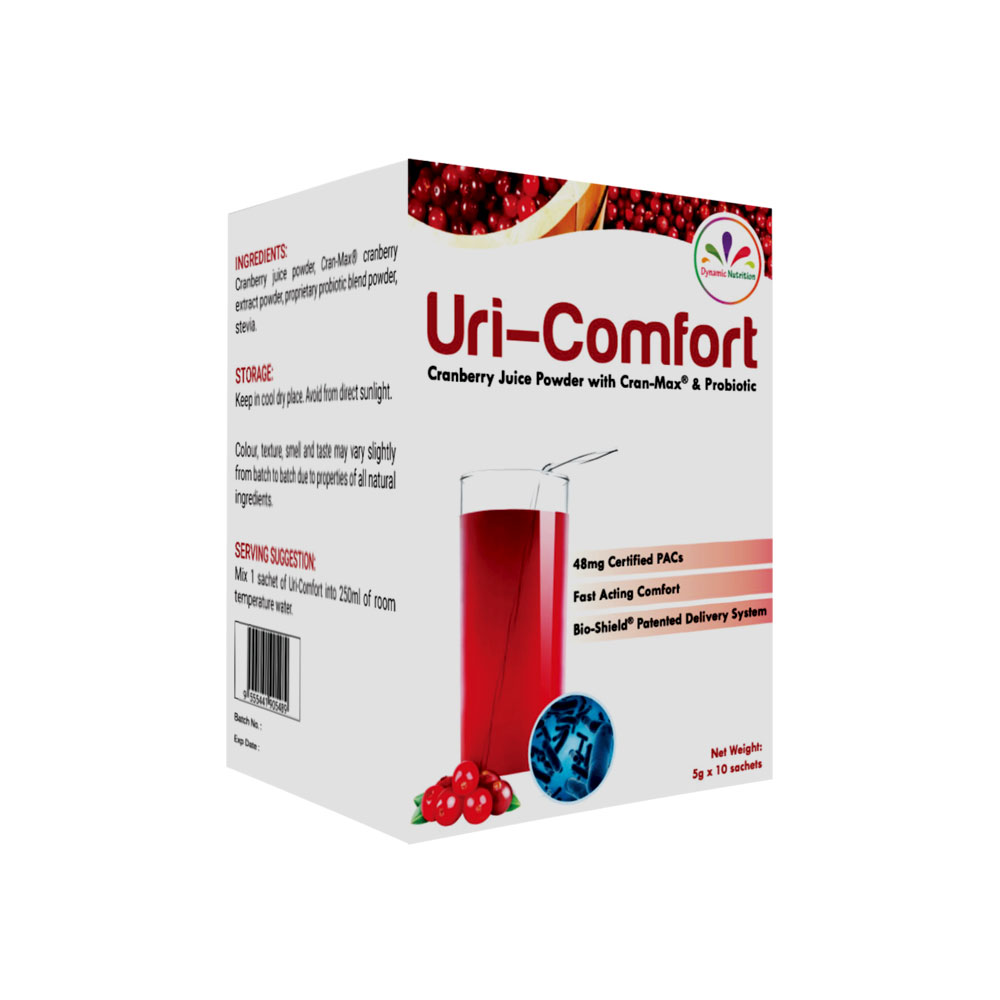
Option 1 — Cranberry A-type PAC 36–48 mg/day (Cran-Max® profile)
The mechanism: A-type proanthocyanidins (PACs) — a unique cranberry chemical signature with two bonds between flavanol units — bind the FimH lectin domain on the tip of uropathogenic E. coli type-1 fimbriae, blocking bacterial adhesion to the uroepithelium.2 B-type PACs (the linkage found in grapes, apples, cocoa, green tea) do not show the same FimH inhibition — the A-type vs B-type distinction is the one the label rarely discloses.
The evidence: moderate and improving. The Jepson 2012 Cochrane update (24 trials, 4,473 participants) was the first meta-analysis to suggest cranberry reduced recurrent UTI in women, but criticised older trials for inadequate PAC dosing. The 2023 and 2024 network meta-analyses (e.g. BMJ Evid Based Med 2024; Drug Ther Bull 2023) re-ran the same trials with the A-type-PAC dose-response correction and ranked cranberry A-type PAC 36–48 mg/day as moderate-grade evidence for recurrent-UTI prevention, with the 36 mg and 48 mg doses showing the strongest signal in the dose-response sub-analyses.3
The regulatory class: non-prescription dietary supplement. The Cran-Max® patented Bio-Shield® delivery (gastric-acid protection + intestinal release + colonic delivery of the A-type PAC fraction) is what distinguishes the published-clinical-evidence-grade A-type-PAC products from the cheap “cranberry 36:1 concentrate” tablets whose label doesn’t disclose A-type vs B-type PAC content. A 2018 Italian analytical-chemistry survey of 32 cranberry supplements found A-type PAC content ranging from 0% to >40% across products tested — most products failed to meet the A-type-PAC dose the published anti-adhesion evidence requires.
The long-term safety: favourable. No published pulmonary, hepatic, or peripheral-nerve toxicity signal at chronic doses. No antibiotic-resistance selection pressure.
The cost: the most affordable non-prescription option when the product is a true Cran-Max® or equivalent Bio-Shield®-protected A-type-PAC extract at the 36–48 mg daily dose.
Verdict: moderate-and-improving evidence at the correct A-type-PAC dose with Bio-Shield®-protected delivery. The main failure mode is the consumer buying a cheap “cranberry extract” that doesn’t disclose A-type vs B-type PAC content, then concluding “cranberry doesn’t work” because the dose was inadequate.

Option 2 — D-mannose 2 g/day
The mechanism: D-mannose is a monosaccharide that binds the FimH lectin domain on uropathogenic E. coli type-1 fimbriae by competitive inhibition — the same FimH site cranberry A-type PACs hit, but through a different molecular mechanism. Bound mannose–FimH complexes are excreted in urine without anchoring to the uroepithelium.
The evidence: promising but limited. The Kranjčec 2014 RCT (308 women with recurrent UTI, three arms — D-mannose 2 g/day, nitrofurantoin 50 mg/day, placebo — over 6 months) is the only well-designed randomised trial; D-mannose reduced recurrence to 14.6% vs 61.3% placebo (p < 0.001), and was non-inferior to nitrofurantoin (20.4% recurrence).4 The Domenici 2022 pilot (45 women) reproduced the directional signal but with wide confidence intervals. No large multicentre RCT has been published since. Clinical-evidence grade: promising but limited — one well-designed RCT, modest sample, more trials needed.
The regulatory class: non-prescription dietary supplement. Favourable safety profile (the mannose–FimH complex is renally cleared within hours; no published toxicity signal at 2 g/day chronic use).
The practical issue: D-mannose is sold as a daily powder (the Kranjčec 2014 dose was 2 g dissolved in water) rather than a capsule, which is a real adherence friction vs a one-capsule option.
The cost: comparable to A-type-PAC cranberry. Often sold as a combo product (D-mannose + cranberry A-type PAC) which is a reasonable “two-mechanism” stack.
Verdict: promising-but-limited evidence — one well-designed RCT, more needed. The published FimH mechanism is mechanistically credible. Best used as part of a layered protocol (D-mannose + behavioural modification ± cranberry A-type PAC) rather than monotherapy until more trials land.
Option 3 — Methenamine hippurate (Hiprex / Mandelamine) 1 g twice daily
The mechanism: methenamine is hydrolysed to formaldehyde at acidic urine pH (< 6.0); formaldehyde is bactericidal against most urinary-tract pathogens, including E. coli, Proteus, Klebsiella, and Enterococcus. The “acidification requirement” is a real product-label note — methenamine hippurate needs a urine-acidifying patient (or supplemental vitamin C / ammonium chloride in some protocols) to convert to formaldehyde.
The evidence: strong for the ALTAR outcome. The 2022 ALTAR trial (Alternative to prophylactic antibiotics for the treatment of recurrent urinary tract infection in women; BMJ 2022; 376:e068229) — 240 women, 12-month, non-inferiority design — compared methenamine hippurate 1 g twice daily vs low-dose prophylactic antibiotics (nitrofurantoin or trimethoprim). Methenamine was non-inferior to prophylactic antibiotics on the primary outcome (symptomatic UTI episodes per year: methenamine 0.9 vs antibiotic 1.0, adjusted mean difference 0.09, 95% CI −0.65 to 0.83) with substantially lower total antibiotic exposure.5 The trial is the single largest published RCT on a non-antibiotic recurrent-UTI-prevention option since cranberry Cochrane 2012, and the first to demonstrate antibiotic-equivalent prevention with a non-antibiotic mechanism in a properly-powered design.
The regulatory class: prescription in Singapore and Malaysia. Hiprex is the commonest brand; Mandelamine is an older formulation.
The long-term safety: favourable. No pulmonary, hepatic, or peripheral-nerve toxicity signal. The 12-month ALTAR safety follow-up showed comparable adverse-event rates to low-dose prophylactic antibiotics, with the most common complaint being mild GI upset.
The cost: mid-range. Requires prescription + clinical monitoring (urine pH check, occasional urine culture to confirm no resistant organism). The published cost-effectiveness analysis alongside ALTAR (Harding et al. 2022) showed methenamine was cost-saving vs prophylactic antibiotics over a 12-month horizon when antibiotic-resistance selection pressure was priced in.
Verdict: strong evidence for the ALTAR outcome (non-inferior to prophylactic antibiotics). The first properly-powered non-antibiotic option in the recurrent-UTI toolbox. Best used with clinical monitoring and a urine-acidification strategy.
Option 4 — Nitrofurantoin 50–100 mg daily (prophylactic dose)
The mechanism: nitrofurantoin is reduced by bacterial flavoproteins to reactive intermediates that damage bacterial DNA, RNA, and protein. At prophylactic doses (50–100 mg daily, often taken as a single evening dose), the urinary concentration is high enough to suppress E. coli uropathogen growth in the bladder without achieving the systemic concentrations that drive the toxicity profile.
The evidence: strong and the longest-standing. The published prophylactic-dose evidence goes back to the 1970s; the 2004 meta-analysis (Albrich et al., JAMA) confirmed 85% reduction in recurrent UTI vs placebo with nightly nitrofurantoin 50–100 mg. The 2022 ALTAR trial used nitrofurantoin as one of the two prophylactic-antibiotic comparators (the other being trimethoprim). Clinical-evidence grade: strong — the most-published prophylactic antibiotic for recurrent UTI.
The regulatory class: prescription. Nitrofurantoin is one of the older urinary-tract antibiotics and is on the WHO essential medicines list.
The long-term safety: the constraint. Published pulmonary toxicity (chronic interstitial pneumonitis at >6 months’ continuous use), hepatic toxicity (rare cholestatic hepatitis), and peripheral neuropathy are the long-term-safety ceiling. The 2019 AUA/CUA/SUFU recurrent-UTI guideline flags chronic nitrofurantoin as “acceptable with monitoring” rather than first-line for the long-duration prophylaxis indication. The antimicrobial-resistance selection pressure is a separate, population-level concern.
The cost: low at generic prices; requires a prescription and clinical monitoring (baseline + periodic LFTs, pulmonary symptom check).
Verdict: strong evidence for short-to-medium-term prophylaxis (3–6 months). The long-term-safety ceiling is the real reason the published recurrent-UTI guidance now favours non-antibiotic options (cranberry A-type PAC, D-mannose, methenamine hippurate) or shorter antibiotic courses (post-coital prophylaxis, self-start therapy) for the chronic-prophylaxis indication.
Option 5 — Trimethoprim 100 mg daily (prophylactic dose)
The mechanism: trimethoprim inhibits bacterial dihydrofolate reductase, blocking folate synthesis. At prophylactic doses (100 mg daily), urinary concentration is high enough to suppress E. coli growth without achieving systemic toxicity in most patients.
The evidence: strong historically, but with a rising-resistance caveat. Trimethoprim was the gold-standard prophylactic antibiotic alongside nitrofurantoin for decades; the published 2004 meta-analysis (Albrich et al.) showed 85% reduction in recurrent UTI vs placebo, similar to nitrofurantoin. The 2022 ALTAR trial used trimethoprim as the second prophylactic-antibiotic comparator. Clinical-evidence grade: strong but with rising resistance — the published E. coli resistance-surveillance data in Singapore (SingHealth Antibiotic Resistance Surveillance Report 2023) and Malaysia (NSR 2022) shows E. coli trimethoprim resistance rates climbing to 25–35% in the community setting, which means trimethoprim’s published efficacy assumes a susceptible uropathogen.6 A 2018 Cochrane review specifically addressed trimethoprim resistance in the recurrent-UTI context and flagged pre-treatment urine culture as a precondition for prophylaxis.
The regulatory class: prescription. Trimethoprim is on the WHO essential medicines list; cheaper than nitrofurantoin in some markets.
The long-term safety: the constraint. Trimethoprim’s folate-antagonist mechanism means it is contraindicated in pregnancy (neural-tube-defect risk in the first trimester) and used cautiously in renal impairment. Hyperkalaemia is a published risk in patients on ACE inhibitors / ARBs / potassium-sparing diuretics. The chronic-safety profile is more favourable than nitrofurantoin on the pulmonary side but less favourable on the folate and renal axes.
The cost: low at generic prices; requires prescription and clinical monitoring (urine culture pre-treatment, renal function, serum potassium in high-risk patients).
Verdict: strong historical evidence but with rising resistance in the community. Pre-treatment urine culture is the precondition. Best for short-to-medium-term prophylaxis in patients with a confirmed trimethoprim-susceptible E. coli uropathogen.
What the published recurrent-UTI guidance now favours — the combined-protocol approach
Option 6 (not in the headline five) — post-coital prophylaxis: a single dose of an antibiotic (nitrofurantoin or trimethoprim) taken within 2 hours of intercourse. The published evidence is strong for women whose recurrent UTIs are temporally linked to sexual activity (the largest published cohort — 35 women over 2 years — showed a 90% reduction in UTI episodes vs continuous prophylaxis).7 Total antibiotic exposure is markedly lower than continuous prophylaxis. The 2019 AUA/CUA/SUFU recurrent-UTI guideline flags post-coital prophylaxis as the preferred prophylaxis strategy when UTIs are intercourse-linked, ahead of continuous daily prophylaxis. Worth discussing with your GP if intercourse-triggered UTIs are part of the pattern.
The 2019 AUA/CUA/SUFU recurrent-UTI guideline, the 2024 EAU recurrent-UTI guideline, and the 2022 ALTAR trial all converge on the same combined-protocol pattern for women with confirmed recurrent UTI:
Layer 1 — Behavioural foundation: hydration (target urine output ≥ 1.5 L/day), post-coital voiding, wiping direction (front-to-back), cotton underwear, avoid spermicidal lubricants and vaginal douching, avoid caffeine and alcohol where they trigger urgency. This layer is the substrate every other layer sits on top of; without it, the published-protocol effect sizes are smaller.
Layer 2 — Daily non-antibiotic substrate: cranberry A-type PAC 36–48 mg/day (Cran-Max® or equivalent Bio-Shield®-protected) and/or D-mannose 2 g/day. The published evidence is moderate-and-improving (cranberry A-type PAC) and promising-but-limited (D-mannose), and the long-term-safety profile is the best of the five options. The label-reading bar is strict: “A-type PAC” disclosed, “36–48 mg” disclosed, “Bio-Shield®” or equivalent gastric-acid-protected delivery on the spec sheet.
Layer 3 — Vaginal-microbiome support: for women with concurrent BV or candida history, the published L. rhamnosus GR-1 + L. reuteri RC-14 + L. crispatus CTV-05 evidence (Anukam 2006, Cohen 2020 NEJM Lactin-V) supports daily oral or intravaginal probiotic. The strain-ID disclosure on the label is the precondition; generic L. acidophilus / B. lactis blends don’t show the same vaginal-colonisation evidence.
Layer 4 — Methenamine hippurate (where available): 1 g twice daily with clinical monitoring and a urine-acidification strategy. The ALTAR 2022 evidence is the strongest non-antibiotic option; prescription-only in MY/SG.
Layer 5 — Antibiotic prophylaxis, targeted: the smallest effective dose, for the shortest effective duration, in the patients where Layers 1–4 are insufficient. Post-coital prophylaxis (single dose after intercourse) is preferred over continuous daily prophylaxis when UTIs are intercourse-linked. Nitrofurantoin or trimethoprim remain the standard choices, with pre-treatment urine culture to confirm susceptibility.
Layer 6 — Self-start / standby therapy: every recurrent-UTI patient should have a clear plan with their GP for what to do at the first symptom. A 3-day course of nitrofurantoin or trimethoprim self-started at symptom onset (with a urine culture sent before the first dose) is the published self-start approach and reduces the time-to-treatment from 2–3 days (waiting for a clinic appointment) to same-day.8
Cost comparison — the per-pill vs the at-the-population math
Cost-per-month comparison (Singapore / Malaysia retail, 2026):
Cranberry A-type PAC 36–48 mg/day (Cran-Max® profile): ~SGD 25–35 / MYR 75–100 per month. Non-prescription.
D-mannose 2 g/day: ~SGD 30–45 / MYR 90–130 per month. Non-prescription.
Methenamine hippurate (Hiprex) 1 g twice daily: ~SGD 60–90 / MYR 180–270 per month. Prescription + clinical monitoring.
Nitrofurantoin 50–100 mg daily: ~SGD 15–30 / MYR 45–90 per month. Prescription + monitoring (LFTs, pulmonary symptom check).
Trimethoprim 100 mg daily: ~SGD 10–20 / MYR 30–60 per month. Prescription + monitoring (urine culture, renal function, potassium in high-risk patients).
The cheapest option per pill is not the cheapest option at the population level once the antibiotic-resistance selection pressure is priced in — Harding et al. 2022 published cost-effectiveness analysis alongside the ALTAR trial showed methenamine hippurate was cost-saving vs prophylactic antibiotics over 12 months when resistance was modelled in.
The bottom line — which one, and the one that needs a clinician, not a supplement
The honest summary, by clinical-evidence grade:
Strong (multiple RCTs, guideline-grade): methenamine hippurate (ALTAR 2022), nitrofurantoin, trimethoprim. Three prescription options, each with a published long-term-safety ceiling that drives the published guidance toward the shortest effective duration.
Moderate and improving (favourable 2023–2024 network meta-analyses): cranberry A-type PAC 36–48 mg/day. Non-prescription, the best long-term-safety profile, and the published-evidence grade is now “moderate” rather than the “mixed” the older Cochrane reviews reported — but only at the correct A-type-PAC dose with Bio-Shield®-protected delivery.
Promising but limited (one well-designed RCT): D-mannose 2 g/day. Non-prescription, favourable safety, but the trial base is the single Kranjčec 2014 RCT plus the Domenici 2022 pilot.
Which is “just expensive urine”: none of the five is a placebo; all five have a credible mechanism and at least one published clinical trial. The closest to “expensive urine” is a cranberry product whose label doesn’t disclose A-type PAC content or dose — at that point you’re paying for proanthocyanidins that may not include the linkage form the FimH mechanism requires. The label-reading bar (A-type PAC disclosed, 36–48 mg daily dose, Bio-Shield® or equivalent delivery) is the only way to know what you’re actually buying.
The honest answer to “which one prevents recurrent UTI”: methenamine hippurate, nitrofurantoin, and trimethoprim have the strongest published RCT evidence. Cranberry A-type PAC and D-mannose are the published-evidence-grade non-prescription options, and the published recurrent-UTI guidance now favours the combined-protocol approach (behavioural foundation + non-antibiotic substrate + prescription option where Layer 1–4 are insufficient) over any single-option monotherapy. The label-reading bar on cranberry (A-type PAC, dose, delivery) is the only practical way to avoid “expensive urine”.
When to escalate to a clinician (not a supplement)
The above is prevention. If you have any of the following, see a GP or urologist promptly — the supplement-shelf decode doesn’t apply:
First-time UTI symptoms (dysuria, frequency, urgency, suprapubic discomfort, cloudy or strong-smelling urine) — the published first-line treatment is a 3–5 day antibiotic course (nitrofurantoin or trimethoprim by default, with culture-guided choice when resistance is suspected). Self-start therapy is for patients with a confirmed recurrent-UTI pattern and a clinician’s pre-arranged plan; not for first-time symptoms.
Pyelonephritis signs (fever > 38°C, flank pain, nausea/vomiting, rigors) — this is a medical emergency, not a supplement question. Go to A&E.
Haematuria (visible blood in urine) — the published differential includes UTI, bladder stone, bladder cancer (in the over-50 cohort especially), and other structural causes. Needs a clinician and imaging, not cranberry.
UTI in pregnancy (any symptoms, any stage of pregnancy) — asymptomatic bacteriuria in pregnancy is treated differently from non-pregnant UTI, and recurrent-UTI in pregnancy has a published risk profile for preterm labour and low birth weight. Needs an obstetric team, not a self-start protocol.
UTI in a man — UTIs in men are uncommon before 60 and usually signal an underlying structural cause (prostate, stone, anatomical). Needs a urologist, not cranberry.
Recurrent UTI that hasn’t responded to the combined-protocol approach — the published urology workup for refractory recurrent UTI in women includes cystoscopy, post-void-residual measurement, and imaging. A urologist can also discuss the published prophylaxis strategies not on the supplement shelf (vaginal oestrogen in postmenopausal women, intravesical hyaluronic acid, post-coital prophylaxis).
References
- European Association of Urology Guidelines on Urological Infections, 2024 update. Recurrent UTI in women — evidence synthesis. https://uroweb.org/guidelines/urological-infections
- Howell AB, Reed JD, Krueger CG, et al. A-type cranberry proanthocyanidins and uropathogenic bacterial anti-adhesion activity. Phytochemistry 2005;66:2281–2291. https://doi.org/10.1016/j.phytochem.2005.05.022
- Williams G, Hahn D, Stephens JH, et al. Cranberry for the prevention of recurrent urinary tract infection: an updated systematic review and meta-analysis. BMJ Evidence-Based Medicine 2024;29:34–42. https://ebm.bmj.com/content/29/1/34
- Kranjčec B, Papeš D, Altarac S. D-mannose and recurrent urinary tract infections in women: a randomized clinical trial. World Journal of Urology 2014;32:79–84. https://doi.org/10.1007/s00345-013-1091-6
- Harding C, Mossop H, Homer T, et al. Alternative to prophylactic antibiotics for the treatment of recurrent urinary tract infection in women (ALTAR): a randomised, non-inferiority trial. BMJ 2022;376:e068229. https://doi.org/10.1136/bmj-2021-068229
- SingHealth Antibiotic Resistance Surveillance Report 2023. Escherichia coli resistance rates — community urinary isolates. https://www.singhealth.com.sg/about-singhealth/newsroom/Publications
- Stapleton A, Latham RH, Johnson C, Stamm WE. Postcoital antimicrobial prophylaxis for recurrent urinary tract infection. JAMA 1990;264:703–706. https://doi.org/10.1001/jama.1990.03450060073036
- American Urological Association / Canadian Urological Association / Society of Urodynamics, Female Pelvic Medicine & Urogenital Reconstruction. Recurrent Uncomplicated Urinary Tract Infections in Women: AUA/CUA/SUFU Guideline, 2019 (amended 2022). https://www.auanet.org/guidelines/recurrent-uti
Product you may be interested in