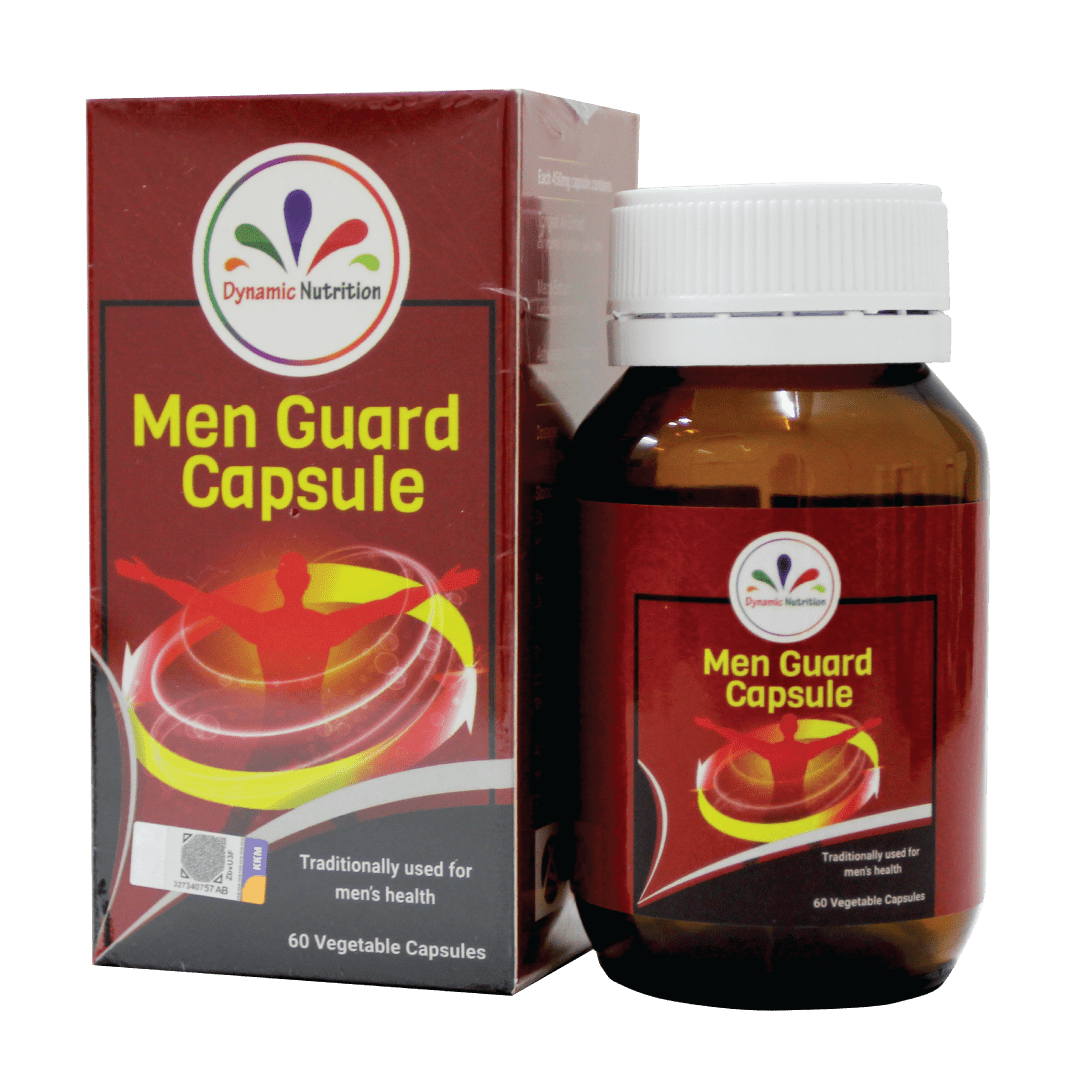
Searching for a men health supplement malaysia is easy. The hard part is knowing which of the bottles in front of you belongs in your routine at all, and which one is priced on a claim rather than on an ingredient. Malaysian pharmacy aisles, GNC-style shelves and marketplace listings all carry the same four categories of men’s supplement — energy and stress support, recovery, drive, and long-term health — but the categories are only half the story. The other half is the label, and the label is where the category decides whether a product is doing anything for you or simply saying it is.
This guide is a buying guide, not a product review and not a treatment plan. It walks through the four categories, gives you a label checklist you can run against any men’s health supplement in the Malaysian market, shows you how to compare two products fairly, and lists the four claims worth skipping when a label says them out loud. Nothing here evaluates any particular brand, and nothing here is a substitute for advice from your own doctor — particularly if you take medication, or if you have blood-pressure, liver, kidney or sleep conditions.
The Four Categories of Men’s Health Supplement
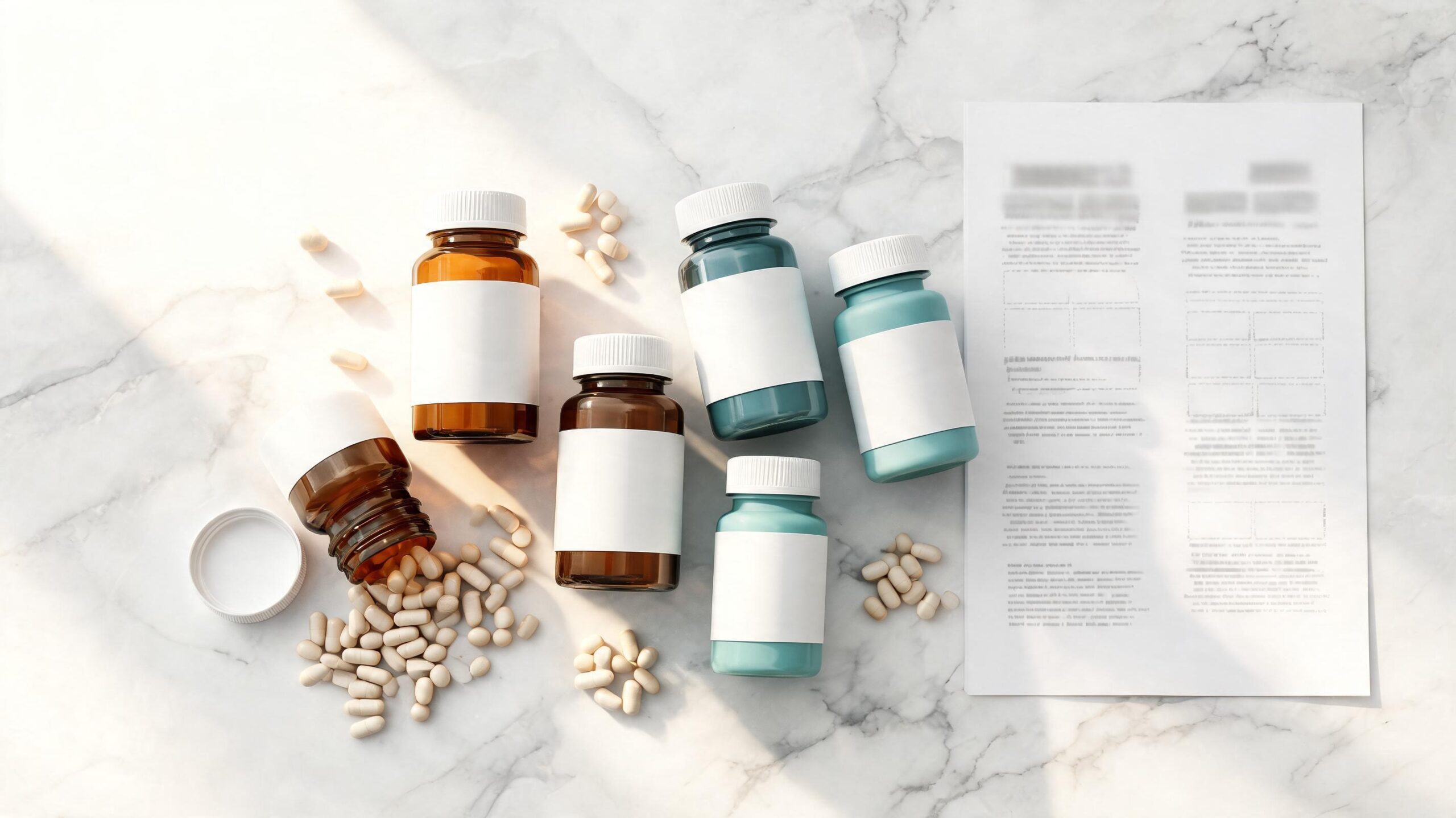
Before comparing labels, it helps to know what the categories actually cover — and, more importantly, what each one does not promise. Most disappointment in this aisle comes from buying a product for a category it was never designed to address.
Energy and stress support
This category covers adaptogens and calming botanicals — ashwagandha in standardised root-extract form being the most common one on the Malaysian shelf. The published research on ashwagandha is the most substantial in this category: a randomised, double-blind, placebo-controlled trial in 57 resistance-trained men over eight weeks found significant increases in muscle mass and strength, alongside a decrease in body fat, at a dose of 300 mg of root extract twice daily.1 The NIH Office of Dietary Supplements summarises the human evidence on stress and anxiety as promising but still limited by small and short studies.2
What this category does not promise is that it replaces sleep, treats a diagnosed anxiety disorder, or sharpens focus in the way a stimulant would. Read it as a supporting ingredient for a lifestyle, not as a substitute for one.
Recovery and training support
Recovery products sit closest to the research because the endpoints are objective — strength, muscle size, creatine kinase, body composition. The category overlaps heavily with the energy-and-stress category above, because the same adaptogen tends to appear in both. What separates a recovery product in practice is usually a second ingredient with a different mechanism rather than a larger dose of the first.
What this category does not promise is a faster recovery window than your training and nutrition already deliver. Recovery is a substrate problem — protein, carbohydrate, sleep, training load — and a supplement sits on top of that, never instead of it.
Drive and libido support
This is the category with the most marketing per gram of active ingredient, and the one where the evidence most often gets overstated in the other direction too. Tongkat Ali (Eurycoma longifolia) is the flagship botanical here; a pilot study in physically active seniors aged 57–72 given 400 mg of Tongkat Ali extract daily for five weeks found increased free testosterone in the male participants.3 Maca (Lepidium meyenii) is the other common one, and the honest reading of the maca literature is more mixed than its marketing: a 12-week randomised, double-blind, placebo-controlled trial in healthy men given 1.5 g or 3 g of maca daily found no effect on serum testosterone, luteinising hormone, or any other hormone measured.4 That is a useful result to hold on to: it is one of the cleanest examples of a widely-sold ingredient whose hormone claim did not survive a controlled trial.
What this category does not promise is a treatment for erectile dysfunction or low libido. Those are clinical presentations, and the honest category label is ‘support for sexual wellbeing’ rather than anything therapeutic.
Long-term health and foundational nutrition
The fourth category is the least glamorous and the most genuinely useful for most men over 35: the fundamentals. Testosterone declines with age independently of illness and medication, in a longitudinal study of 890 men from the Baltimore Longitudinal Study of Aging, with roughly 20% of men over 60, 30% over 70 and 50% over 80 showing levels consistent with hypogonadism by total-testosterone criteria.5 This is the context in which a daily foundational supplement makes the most sense, because the underlying gap is real and the intervention is low-risk.
What this category does not promise is to reverse that decline. Nothing sold over the counter reverses an age-related hormonal decline, and any label implying that it does is making a claim the evidence does not support.
The Label Checklist
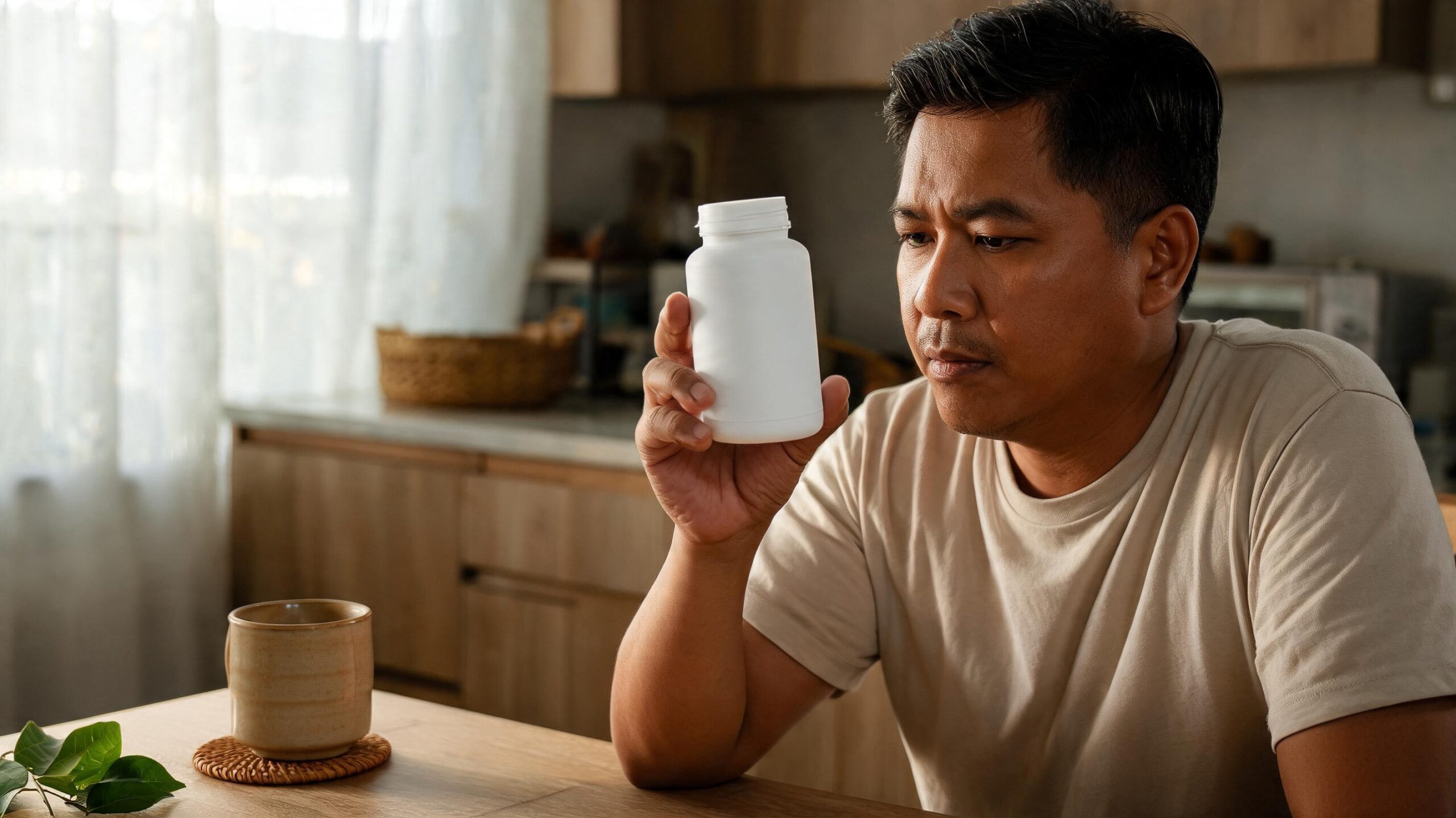
Run any men’s health supplement — yours or a competitor’s — through these six checks. If a product cannot answer all six from the label itself, that is your first signal.
1. The active ingredient and its form. ‘Tongkat Ali’ on a front label means nothing on its own. You want to know whether it is a root powder or an extract, and if it is an extract, what the extraction ratio was. A 10:1 extract and a 1:1 powder containing the same botanical are not comparable products at any price.
2. The standardised marker and its percentage. This is the number that makes a botanical label checkable. Tongkat Ali is judged by eurycomanone content, and good extract is typically standardised to roughly 0.8–1.5% eurycomanone; KSM-66™ ashwagandha is standardised to at least 5% withanolides. If the label does not name a marker and a percentage, you cannot compare it to the trials that used it — and the research on these ingredients is almost entirely conducted on standardised extracts.
3. The dose per serving, and the serving size. Compare doses per day, not per capsule, and check how many capsules make up a serving. The published work on ashwagandha in resistance-trained men used 300 mg twice daily; a 250 mg capsule taken once is not the same regimen, whatever the front of the pack says.
4. Whether the ingredient is single or part of a blend. A blend is cheaper per label, but the dose of each ingredient is proportionally lower, and a proprietary blend gives you no per-ingredient dose at all. This matters most in the energy-and-stress and recovery categories, where two or three ingredients at sub-clinical doses are common.
5. Third-party testing. Look for independent batch testing, and check whether it covers potency, heavy metals and microbial contamination. This is the one checklist item where the absence of a claim is genuinely informative: a product that is not tested does not say so loudly, it simply does not say it.
6. The Malaysian registration or notification number. Health supplements in Malaysia are administered through the National Pharmaceutical Regulatory Agency’s product registration and notification process, and the number is printed on the label or pack.6 Read the number and the product name off the pack and check them against the official register yourself. A registration number is a record that the product was submitted and accepted into the regulatory system — it is not an efficacy approval, and it says nothing about whether the product does what the label claims. Verifying it still matters, because it confirms you are holding the registered product rather than a marketplace copy.
How to Compare Two Products Fairly
Once the label checklist has narrowed a shelf down to two or three candidates, comparing them fairly comes down to four questions, and none of them involve the price.
Are the underlying ingredients the same form? A standardised extract against a raw powder is not a like-for-like comparison at any price point.
Do the doses land in the range the research used? Compare per-day dose of each active ingredient against the dose in the trial, not against the dose in a competitor’s marketing copy.
Is the marker disclosed for every botanical? Two products can both list ‘Tongkat Ali’ while delivering very different amounts of eurycomanone.
How many capsules does a day actually take? A three-capsule regimen and a one-capsule regimen are different products with the same label, and adherence is a real part of whether anything works.
The Four Claims Worth Skipping
‘Testosterone booster.’ This is the single most common claim on men’s supplement packaging in this market, and the least supported as a category. The trial evidence on the relevant botanicals is measured, moderate in size and modest in effect; the packaging language is neither. A product that leads with ‘testosterone booster’ is making a claim you should not be able to verify on the label.
‘Clinically proven.’ Every manufacturer has a clinically proven something. The question is always clinically proven for what, at what dose, in whom, against what comparator. Without those four qualifiers, the phrase carries no information, and if the pack does not name the trial, treat it as marketing copy.
‘Instant results.’ Almost every ingredient in this category works on a timescale of weeks, not hours. The eight-week ashwagandha trial is a reasonable reference point for how long these things take. A product promising an effect you can feel in a day is describing something other than a botanical, and that something is usually a stimulant.
‘Proprietary blend.’ This is the phrase that ends the comparison entirely. A proprietary blend tells you the ingredients exist and hides how much of each is in the capsule. You cannot assess it, cannot compare it against a trial dose, and cannot verify whether the blend is the reason the product works or whether one ingredient at a meaningful dose is doing all of it. Treat a proprietary blend as the absence of information, and price it accordingly.
A Note on Scope
This guide compares categories and label information only. It does not evaluate any specific product’s efficacy, make a treatment recommendation, or replace the advice of your own clinician. Anyone on medication, or with blood-pressure, liver, kidney or sleep conditions, should speak to a doctor before starting anything — including anything whose label looks unremarkable.
References
- Wankhede S, Langade D, Joshi K, Sinha SR, Bhattacharyya S. Examining the effect of Withania somnifera supplementation on muscle strength and recovery: a randomized controlled trial. Journal of the International Society of Sports Nutrition. 2015;12:43 — https://doi.org/10.1186/s12970-015-0104-9
- National Institutes of Health, Office of Dietary Supplements. Ashwagandha: Is it helpful for stress, anxiety, or sleep? Fact Sheet for Health Professionals. Updated May 2025 — https://ods.od.nih.gov/factsheets/Ashwagandha-HealthProfessional/
- Henkel R, Wang R, Bassett SH, Chen T, Liu N, Zhu Y, Tambaro MA, et al. Tongkat Ali as a potential herbal supplement for physically active male and female seniors — a pilot study. Phytotherapy Research. 2014;28(4):544-550 — https://doi.org/10.1002/ptr.5017
- Gonzales GF, Cordova A, Vega K, Chung A, Villena A, Gómez C. Effect of Lepidium meyenii (Maca), a root with aphrodisiac and fertility-enhancing properties, on serum reproductive hormone levels in adult healthy men. Journal of Endocrinology. 2003;176(1):163-168 — https://doi.org/10.1677/joe.0.1760163
- Harman SM, Metter EJ, Tobin JD, Pearson J, Blackman MR. Longitudinal effects of aging on serum total and free testosterone levels in healthy men. Journal of Clinical Endocrinology & Metabolism. 2001;86(2):724-731 — https://doi.org/10.1210/jcem.86.2.7219
- National Pharmaceutical Regulatory Agency, Ministry of Health Malaysia. Product Registration FAQ and Health Supplement registration process — https://www.npra.gov.my/index.php/en/health-supplement-main-page.html
Also available in Bahasa Malaysia and 中文.
Product you may be interested in