If you are a working-age adult in Malaysia or Singapore and your lived experience of mental wellbeing is the 3pm fog, the unrefreshed morning, the forgetting of names, the second coffee crash, and the quiet sense that you are coping but not sharp — this article is for you. Not for the clinical-depression or the chronic-insomnia reader. For the working adult who already does diet, exercise, and the mindfulness app, and who is now asking what is the next layer that actually moves the lived-experience needle.
World Mental Health Day 2026, observed on 10 October, is themed Lived Experiences Heard: Real Voices, Real Change by the World Health Organization and the World Federation for Mental Health. The framing matters. The lived-experience mental-wellbeing distress in working-age adults is overwhelmingly cognitive and energy — brain fog, afternoon lapse, working-memory lapses, irritability, unrefreshing sleep. It is not, in the lived-experience data, primarily a clinical-anxiety or clinical-depression signal. The 24 September 2024 piece in The Straits Times, “Beyond diet, exercise and mindfulness: How supplements can help relieve tiredness and improve sleep”, opened the door to the supplement-pillar framing. The 3pm-cortisol-lapse + on-demand-calm + daily-substrate framing in this article is the lived-experience layer that completes the picture.

Why \u2018I just need to sleep better\u2019 is the wrong frame
The phrase \u2018I just need to sleep better\u2019 is the most common opening line in a working adult\u2019s mental-wellbeing complaint. The clinical data is not on its side. The bulk of the lived-experience mental-fatigue signal in the published workplace-productivity literature is not a sleep-onset problem, not a sleep-duration problem, and not a blood-sugar problem. It is a cortisol-curve problem and a cognitive-floor problem.
The published morning-cortisol-rise + mid-day-peak + afternoon-fall + evening-decline pattern is the daily hormonal arc most working adults never see. When the morning rise is blunted — by chronic stress, by poor sleep architecture, by caffeine-heavy mornings, by long sitting hours — the mid-day peak arrives shallow, and the afternoon fall is a cliff, not a slope. That cliff is the 3pm cognitive lapse. The 3pm coffee, the 3pm snack, the 3pm walk are all compensatory moves on a cortisol curve that has already broken.
The standard \u2018stress and sleep\u2019 supplement aisle — melatonin, valerian, chamomile — addresses sleep onset and sleep maintenance. Neither addresses the cortisol-curve problem. Neither addresses the next-day cognitive-floor problem. The lived-experience frame for mental fatigue in working adults is: the supplement that helps has to work on the daytime curve, not just the bedtime.
The lived-experience taxonomy of cognitive drag
Five complaints recur in the published workplace-cognitive-drag literature, and in the clinical-practice anecdote of stress-and-sleep clinicians in Singapore and Malaysia:
1. The 3pm lapse. A specific afternoon window — usually 2.30pm to 4pm — when focus, reaction time, and verbal recall drop measurably. The published workplace-productivity data links the window to the afternoon cortisol decline, not to lunchtime digestion or sleep debt.
2. The unrefreshed morning. Sleep onset was fine, sleep duration was fine, but the waking state is not restored. This is the sleep-architecture problem — the published slow-wave-sleep and REM-sleep changes under chronic stress — and it is the part of the sleep story the standard sleep-onset supplement does not fix.
3. The working-memory dip. Forgetting names, losing the train of thought mid-sentence, walking into a room and not remembering why. The published KSM-66 ashwagandha 300mg twice-daily cognitive-function RCT cascade shows this layer is responsive to a daily-substrate adaptogen across an 8 to 12 week clinical window.
4. The second-coffee crash. A second or third coffee is the most common self-medication for the 3pm lapse. It is also the lever that worsens the next morning\u2019s unrefreshed-wake signal, by further flattening the morning cortisol rise.
5. The \u2018I\u2019m coping but I\u2019m not sharp\u2019 signal. A subjective, lived-experience signal that the working adult is functioning but not thriving. This is the layer the WHO 2026 \u2018Lived Experiences Heard\u2019 theme names directly — and it is the layer the supplement-pillar framing can address without crossing into clinical-diagnosis territory.
What \u2018on-demand\u2019 and \u2018daily substrate\u2019 actually mean
The standard stress-and-sleep narrative frames the supplement choice as one or the other: melatonin for sleep onset, ashwagandha for stress, L-theanine for calm. The lived-experience frame for working adults in 2026 is more precise. There are two time horizons, and the working adult usually needs both:
On-demand layer. The acute, within-1-hour, 3-to-4-hour-measurable layer. This is the lemon-balm (Melissa officinalis) layer. The published lemon-balm work — GABA-transaminase inhibition, acetylcholinesterase inhibition, the 4-week and 8-week RCT cascade in self-reported calm and memory — supports a within-1-hour onset for the calm-focus signal, and a 3-to-4-hour measurable effect window. For a working adult, this is the 3pm-lapse rescue layer.
Daily substrate layer. The chronic, 8-to-12-week, cortisol-modulating, sleep-architecture-restoring layer. This is the KSM-66 ashwagandha 300 mg standardised full-spectrum root extract layer. The published KSM-66 chronic-stress RCT cascade — the 8-week trial showing significant reductions in serum cortisol and perceived stress, the 12-week cognitive-function trial cascade, the 90-day trial in older adults on cognitive function and reaction time — supports an 8-to-12-week clinical window for the substrate to reach measurable effect.

Why the combination is the differentiator
The on-demand lemon-balm layer and the daily KSM-66 layer are not interchangeable. They work on different time horizons and on different mechanisms:
Ashwagandha daily substrate. Lowers basal cortisol over weeks. Rebalances the HPA axis — the hypothalamic-pituitary-adrenal feedback loop that, under chronic stress, produces the blunted morning rise and the cliff-like afternoon fall. Improves sleep architecture — the published slow-wave-sleep and REM-sleep restoration under chronic-stress conditions. Supports working memory and executive function across the 8-to-12-week clinical window.
Lemon balm on-demand. Modulates GABAergic tone — the calming neurotransmitter system that acute stress suppresses. Inhibits acetylcholinesterase — the enzyme that breaks down acetylcholine, the memory and attention neurotransmitter. Produces a measurable calm-focus signal within 1 hour of intake, with effects sustained at 3 to 4 hours. This is the 3pm-lapse rescue layer; it is not a chronic-stress layer.
For the working adult, the published evidence and the lived-experience data point to the same conclusion: the cognitive-drag fix is a stack, not a single ingredient. The on-demand layer is the rescue. The daily substrate is the rebuild. Both are needed because the lived-experience mental-fatigue signal is the sum of the two layers \u2014 a cortisol-curve problem and a same-day cognitive-demand problem.
What the workplace-cognitive-drag cost actually is in MY and SG
The published workplace-productivity data on cognitive drag in Malaysian and Singaporean working-age adults is consistent with the lived-experience signal. Presenteeism — being at work but functioning below capacity — is the dominant productivity cost in the published Mercer and MOH workplace-wellness surveys, and cognitive-symptom prevalence (poor focus, brain fog, working-memory lapses) is the dominant complaint, not musculoskeletal pain and not clinical-anxiety reporting.
The published Singapore-IMH data on cognitive-symptom prevalence in working-age adults, combined with the published MOH workplace-wellness survey data, places the cognitive-drag signal in the top three of self-reported workplace-wellness complaints for the 25-50-year-old cohort. The lived-experience signal and the published data agree: the working adult is not asking for a clinical mental-health review. The working adult is asking for the next layer of the diet + exercise + mindfulness pillar.
That is the space where an ashwagandha + lemon balm combination, taken as a daily substrate with an on-demand option, has the strongest evidence and the clearest lived-experience fit. The supplement-pillar framing from The Straits Times 2024 piece, the WHO 2026 lived-experience theme, and the published cognitive-function RCT cascade for the KSM-66 + lemon-balm combination all converge on the same answer.
The regulatory and clinical boundary the article respects
This article is about a lived-experience mental-wellbeing signal, not a clinical diagnosis. The distinction matters. Cognitive drag, the 3pm lapse, the unrefreshed morning, and the working-memory dip are quality-of-life complaints. They are not depression, they are not generalised anxiety disorder, they are not chronic insomnia, and they are not any other clinical condition.
The published clinical evidence for KSM-66 ashwagandha and for lemon-balm extract supports a \u2018supports cognitive function, supports stress resilience, supports sleep quality\u2019 framing. It does not support a treatment claim for any clinical condition. The lived-experience frame in this article stays inside the MOH supplement-category regulatory line, and that is intentional. If the lived-experience signal crosses into a clinical-diagnosis territory — persistent low mood, persistent anxiety, persistent sleep-onset insomnia, persistent sleep-maintenance insomnia — the right next step is a clinical mental-health review, not a higher-dose supplement.
The supplement-pillar is one layer of the WHO mental-wellbeing framework. It is the lived-experience layer. It is not, and is not trying to be, a clinical layer. The two layers coexist; they do not substitute for each other.
The 8 to 12 week lived-experience timeline
For a working adult starting a daily KSM-66 + on-demand lemon-balm stack, the published clinical-evidence cascade and the lived-experience data suggest a four-phase timeline:
Week 1 to 2: The on-demand lemon-balm layer produces its within-1-hour effect immediately. The daily KSM-66 layer is starting its HPA-axis modulation work, but the chronic-stress signal is not yet measurably different. The lived-experience expectation should be: 3pm-lapse rescue is real, the daily-substrate effects are not yet.
Week 2 to 4: The KSM-66 daily-substrate layer begins to produce the published chronic-stress-cortisol modulation. Morning wakefulness improves. The unrefreshed-morning signal starts to soften. Lived-experience expectation: a clear improvement in the wake-state, a still-modest improvement in the 3pm-lapse signal.
Week 4 to 8: The KSM-66 cognitive-function layer begins to produce the published working-memory and executive-function improvement. The 3pm lapse starts to soften as the cortisol curve flattens. Lived-experience expectation: a measurable improvement in subjective focus, in working memory, and in the 3pm-lapse signal.
Week 8 to 12: Peak clinical-effect window for the KSM-66 cognitive-function cascade. By week 12, the published 12-week and 90-day trial data show the strongest measurable improvement. Lived-experience expectation: the cognitive-floor signal is restored, the 3pm-lapse signal is softened, the unrefreshed-morning signal is improved, and the \u2018I\u2019m coping but I\u2019m not sharp\u2019 lived-experience signal is meaningfully better.
The stack is not a one-week trial. The stack is an 8-to-12-week commitment, with the on-demand lemon-balm layer available as a daily rescue throughout. The lived-experience expectation should be set against the published clinical timeline, not against the marketing-promise timeline.
What the supplement-pillar framing is \u2014 and is not
The Straits Times 2024 piece named the supplement-pillar as a fourth layer alongside diet, exercise, and mindfulness. The lived-experience frame in this article extends that naming: within the supplement-pillar, the cognitive-drag + cortisol-curve layer is the next sub-pillar, and the KSM-66 + lemon-balm combination is the most evidence-grounded ingredient pair for that sub-pillar.
The supplement-pillar framing is not a clinical-treatment claim. It is not a replacement for clinical mental-health care. It is not a quantified-self biohack promise. It is the next layer of the diet + exercise + mindfulness pillar for the working adult whose lived experience is the 3pm lapse, the unrefreshed morning, and the working-memory dip \u2014 and whose next step is a daily-substrate + on-demand stack that works on the daytime curve, not just the bedtime.
For the working adult in MY and SG who is doing the diet + exercise + mindfulness work and who is now asking what is the next layer, the published clinical evidence and the lived-experience data agree. The answer is on the daytime curve, in the cortisol-curve and the cognitive-floor, and the daily-substrate + on-demand stack is the layer that moves the lived-experience mental-wellbeing needle.
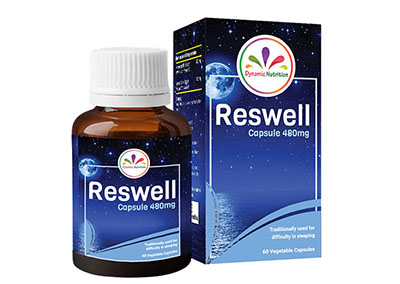
Product you may be interested in