Ashwagandha — the Sanskrit name for Withania somnifera, a small shrub native to India and Southeast Asia — has become one of the world’s best-selling herbal supplements. Search for it and you’ll find claims ranging from “cures anxiety” to “instant calm in minutes”. The clinical literature tells a more nuanced story: several randomized, placebo-controlled trials support real effects on stress, cortisol and sleep quality, while a good share of what’s marketed goes beyond what the data shows. This article sorts the evidence into three tiers — well-supported, moderately supported, and marketing — so you can read an ashwagandha label with the same care you’d bring to any health claim.
What ashwagandha actually is
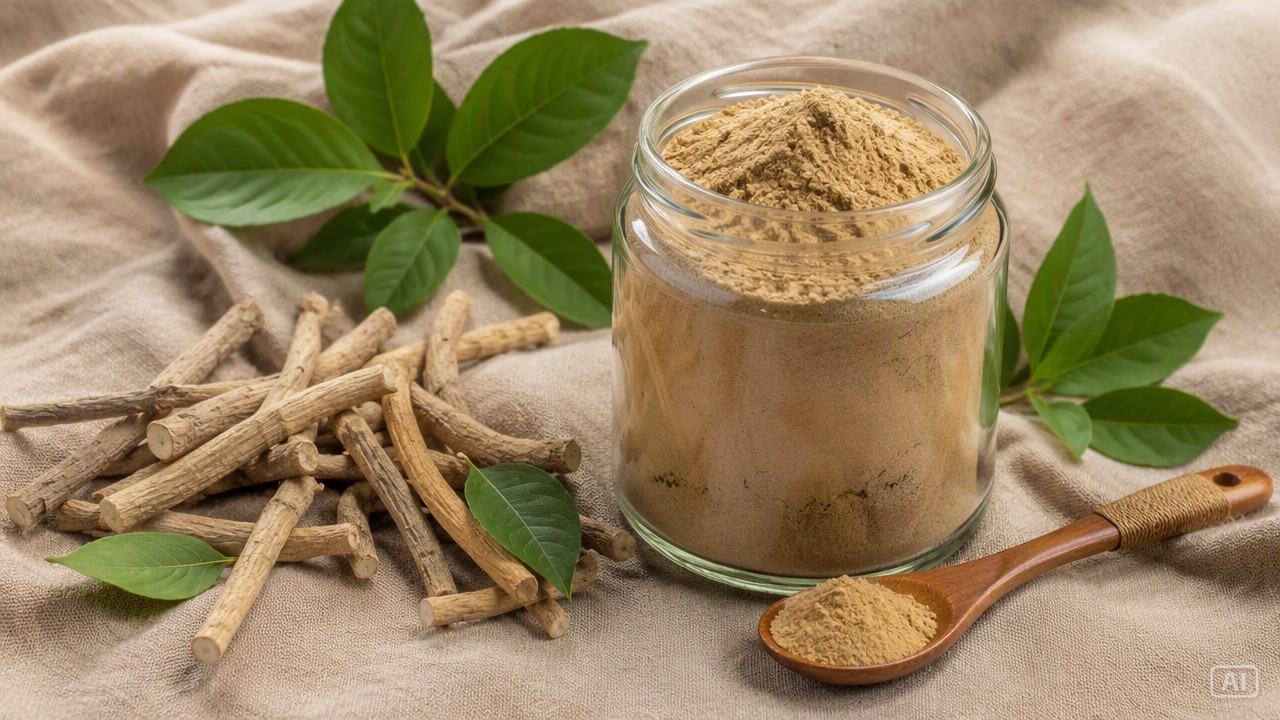
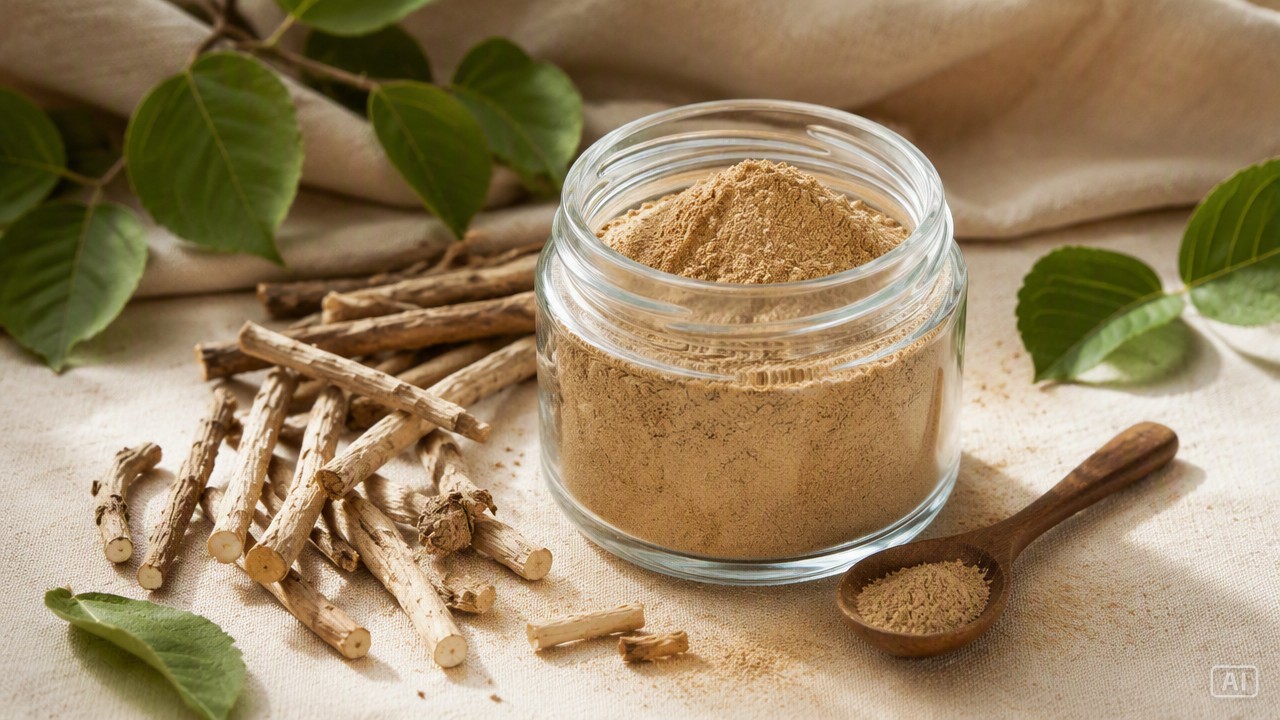
Ashwagandha is an adaptogenic herb: a botanical traditionally used to help the body maintain balance under stress. The clinically studied part of the plant is the root, processed into a full-spectrum extract standardized for a group of active compounds called withanolides. That distinction matters more than most label copy suggests. A root extract with a stated withanolide percentage is not the same product as a leaf powder with no quantification — and almost all of the published clinical data comes from standardized root extracts.
What the evidence well supports: stress and cortisol
The most consistent finding in the ashwagandha literature is on the stress axis. In a randomized, double-blind, placebo-controlled trial of a standardized root extract (KSM-66) in adults with chronic stress, taking 300 mg twice daily for eight weeks significantly lowered serum cortisol and perceived stress scores compared with placebo. Subsequent randomized trials of standardized root extracts have pointed the same direction, and pooled analyses covering hundreds of adults have reported meaningful reductions in perceived stress and cortisol versus placebo.
It’s worth being precise about what this does and doesn’t mean. These trials enrolled adults with elevated stress or anxiety symptoms — not people diagnosed with an anxiety disorder. The measured outcomes are symptom scales and cortisol levels: meaningful, but not the same as “treating anxiety”. For everyday stress, the evidence is genuinely supportive.
What the evidence moderately supports: sleep, mood and memory
Sleep is the second-best-supported area. A 2019 randomized, placebo-controlled study of KSM-66 in adults with insomnia found improvements in sleep quality, time taken to fall asleep and sleep efficiency — findings echoed in other trials of standardized root extracts. The likely mechanism is the same cortisol story: lower evening stress signalling supports the natural overnight drop that deep sleep depends on.
Mood and memory outcomes appear in several trials as secondary measures — better self-rated mood, attention and word recall — but the studies are smaller and the effects less consistent than the stress and sleep data. Treat these as moderately supported rather than proven.
What’s marketing: the inflated tier
Three claims should raise your scepticism:
“Cures anxiety disorders.” No supplement has been shown to treat a diagnosed anxiety disorder. The trials are in stressed adults measuring symptom questionnaires — an important difference.
“Instant results.” The clinical pattern is weeks, not minutes: the stress and sleep trials ran eight to ten weeks. A product promising calm in minutes is describing something other than ashwagandha’s documented effect.
Unstandardized powders with no withanolide claim. If the label can’t tell you how much root extract is inside or what percentage of withanolides it carries, it can’t be compared with the products used in the clinical trials.
How to read an ashwagandha label
Four checks separate a clinical-grade product from a marketing one:
1. Root extract, not leaf powder. The clinical data is on full-spectrum root extracts.
2. Withanolides quantified. Clinical-grade extracts typically state ≥5% withanolides on the label.
3. A named clinical ingredient. Standardized extracts with published trial data — like KSM-66 — are identifiable by name.
4. Trial-style dosage. The studies used roughly 300 mg twice daily (600 mg per day) of standardized extract.
Reswell: a KSM-66 example
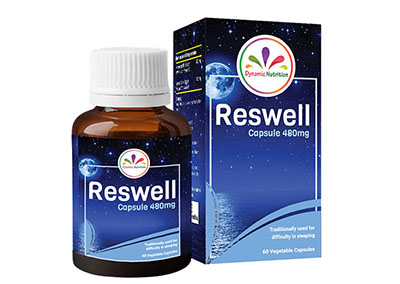
Reswell Capsule is a stress, sleep and memory formula built around the two best-evidenced botanicals in this space. Each capsule pairs 300 mg of KSM-66 — the full-spectrum ashwagandha root extract used in the stress and sleep trials, standardized to ≥5% withanolides — with 180 mg of lemon balm extract (minimum 5% rosmarinic acid), a botanical whose rosmarinic acid supports the GABA pathway associated with acute calming. The combination covers both sides of the calm equation: KSM-66 works on the cortisol axis over weeks, while lemon balm’s calming action is better suited to situational use.
If you’re considering ashwagandha, the evidence supports it best for perceived stress, cortisol and sleep quality when taken as a standardized root extract at trial-style doses — exactly the profile a KSM-66 product offers. For persistent sleep problems, severe anxiety or any health condition, speak to a doctor first; supplements support wellness, they don’t replace medical care.
Product you may be interested in