If you have read an ashwagandha product page promising better memory, sharper focus and improved cognitive function, it is fair to ask what the human trials actually measured — and the honest answer is more interesting than the marketing copy. There is a real signal for memory in the published research. It is also a much smaller, narrower and more fragile body of evidence than the marketing suggests, and the studies most often quoted as “memory proof” never measured memory at all.
This article is for the reader in Malaysia or Singapore who wants to know what the evidence supports, what it does not, and what they can realistically track themselves. It is also for the reader who has noticed a memory complaint and is wondering whether a capsule is the right answer. For that reader the short answer is: sometimes a supplement is a reasonable low-risk experiment, and sometimes a memory complaint is a symptom that needs a clinician — not a bottle. The difference is easier to see once the trials are laid out honestly, including the ones that do not flatter the product.

What “memory” means in these trials — and where the label breaks down
Supplement marketing and clinical research use the word memory for two different things. The marketing sense is the everyday one: remembering names, not losing the thread of a sentence, finding your keys. The research sense is narrower — it is a specific task a participant performs in a test session, scored against a baseline, under controlled conditions.
That gap is the whole story. A research measure of memory is task performance under controlled conditions, usually a digit span, a word-list recall, or a structured scale such as the Mini-Mental State Examination (MMSE) or the Wechsler Memory Scale. A “forgetting my password” complaint is a real-life fluid-attention and sleep-deprived working-memory problem. Moving from the first to the second without an intermediate step is how a trial result becomes a marketing promise.
So when a product page says ashwagandha “improves memory and cognitive function”, the questions to ask are specific: which trial, in which people, measuring which task, and was memory the endpoint the study was designed around? Most marketing copy cannot answer that, because the studies behind it never asked it in that form.
The outcomes the ashwagandha literature actually uses
Across the human trials of ashwagandha root extract, the endpoints cluster into four groups — and only one of them is a memory test:
1. Perceived stress. The Perceived Stress Scale (PSS) is the single most common endpoint in the literature. It asks how stressful the last month felt. It is a subjective questionnaire, not a memory test.
2. Anxiety. The Hamilton Anxiety Rating Scale (HAM-A) and similar clinician-rated scales. Also subjective, also not cognitive testing.
3. Sleep. The Pittsburgh Sleep Quality Index (PSQI), actigraphy-measured sleep onset latency, total sleep time, sleep efficiency and daytime sleepiness. Sleep quality matters enormously for memory — but a trial that measures sleep and reports a memory benefit is still a sleep trial. The memory result is inferred, not measured.
4. Cognition and memory (the minority). Digit span, MMSE, the Wechsler Memory Scale, the Montreal Cognitive Assessment, digit-symbol substitution, digit vigilance and card-sorting tasks. These appear in a minority of trials, often as secondary outcomes, in healthy or mildly stressed adults who were never recruited for a memory complaint in the first place.
That last group is what the memory claims rest on — and it is where the honest reading has to start.
The memory trials: what they measured, and who they enrolled
The most important development in this field is recent. A 2026 systematic review and meta-analysis pooled 20 randomised controlled trials with 1,249 participants and found a statistically significant improvement in memory (standardised mean difference 0.52, 95% CI 0.27–0.78), alongside smaller but significant gains in attention and processing speed (SMD 0.29) and executive function (SMD 0.42).1
Read that result carefully, because it is genuinely encouraging and genuinely limited at the same time. An SMD of 0.52 is a small-to-moderate pooled effect. Only one included study assessed global cognition. The review used GRADE to rate certainty and RoB 2 to assess bias, and the underlying trials remain, in the authors’ framing, mostly short and mostly small.
The strongest memory-specific trials are small pilot studies in people who already have memory impairment. A 2025 randomised, double-blind, placebo-controlled pilot in 40 adults with mild cognitive impairment gave 250 mg/day of a standardised extract for 60 days. The active group improved on the Wechsler Memory Scale across immediate, general and working memory, and gained roughly 15% on the MoCA and 19% on the MMSE at 60 days compared with placebo, alongside a 31.67% rise on the Shepard mental-rotation task.2 The effect was already visible at 30 days. But this is a single-centre pilot with 20 people per arm, a specific branded extract, and a two-month window — it is a promising signal, not a settled result, and it says nothing about the healthy reader who feels foggy.
The trials most often cited as memory proof did not measure memory at all. This is the single most important thing to understand about the category, and it is where marketing copy does the most work:
The 2019 KSM-66 insomnia trial. Sixty adults with insomnia were randomised 2:1 in a single Indian centre to receive 300 mg of KSM-66 twice daily or placebo for 10 weeks. The primary outcome was actigraphy-measured sleep onset latency; secondary outcomes were total sleep time, wake after sleep onset, sleep efficiency, PSQI and anxiety. The paper is excellent on sleep and anxiety, and it contains no memory assessment whatsoever.3 This is the study most product pages reach for, because it is a KSM-66 trial — the same branded extract used in this product. It cannot support a memory claim.
The 2012 KSM-66 stress trial. Sixty-four adults with a history of chronic stress received 300 mg twice daily of a high-concentration full-spectrum root extract or placebo for 60 days. Stress scores fell significantly (P<0.0001) and serum cortisol was substantially reduced (P=0.0006), with mild adverse events comparable to placebo.4 Again: a stress-and-cortisol trial with no memory endpoint.
The 2019 Shoden stress trial. Sixty stressed but healthy adults received 240 mg/day of a standardised extract for 60 days. The between-group difference was significant on one anxiety scale (P=0.040) and only a non-significant trend on the depression-anxiety-stress scale (P=0.096), with morning cortisol and DHEA-S both reduced.5 The authors themselves flag the small sample and short duration as the study’s limits, and note that most trials in this field have been conducted in India.
There is also a small crossover study in 20 healthy men where 1,000 mg/day of a standardised aqueous root-and-leaf extract for 14 days sped up reaction times on digit-symbol, digit-vigilance and card-sorting tasks.6 Note what that is: a speeded-attention effect in 20 young men over two weeks. It is not a memory finding, and it is not a finding about a middle-aged reader’s recall.
Doses, durations and who was actually studied
The practical parameters from the literature are fairly consistent, and they matter for judging any claim:
Dose. Most studies use standardised root extract in the region of 240–600 mg/day, split into one or two doses, with withanolide content standardised (commonly 5%). KSM-66, the branded root extract used in several of the better-known trials, was dosed at 300 mg twice daily in the insomnia and stress studies above. The mild cognitive impairment pilot used 250 mg/day.
Duration. The clearest stress and sleep effects appear after roughly 6–12 weeks of daily use. The strongest stress and sleep studies ran 60 days to 10 weeks. The MCI memory pilot ran 60 days. Shorter-than-4-week studies are generally not informative for anything but tolerability.
Population. This is where the evidence is thinnest, and the asymmetry matters. The overwhelming majority of trials enrolled healthy adults or adults with insomnia or elevated perceived stress, predominantly in India. The trials that actually measured memory enrolled smaller and more specific groups: adults with mild cognitive impairment, adults with bipolar disorder, and adults with obsessive-compulsive symptoms. There is no large, long, multi-site trial in general adult population asking whether a daily ashwagandha extract improves everyday memory. That is the study the product pages imply exists. It does not.
Funding and independence. Several of the most-cited trials were funded by, or supplied with extract by, the company that manufactures the extract under test — the Shoden trial was funded by that extract’s manufacturer, and the KSM-66 trials used extract supplied by its manufacturer, with the papers declaring no competing interests. This does not make the results wrong, but independent replication is what would settle the question. A systematic review of the broader mental-health literature reached the same conclusion from the other direction: pooled anxiety benefits across 14 trials and 713 people with diagnosed mental disorders, with evidence of publication bias that left the reviewers rating certainty as low.7
Grading the evidence, claim by claim
“Ashwagandha helps with stress.” Reasonably supported. Multiple randomised trials and several meta-analyses agree, with effects consistent in direction. A dedicated sleep meta-analysis pooling 5 trials and 400 adults found a small but statistically significant benefit on sleep, larger at 600 mg/day or above and after 8 weeks or more, and in people diagnosed with insomnia.8
“Ashwagandha helps you sleep better.” Supported, with the caveat that the strongest evidence is in people with insomnia or poor sleep quality, and that the effect is on sleep measures — not on memory via sleep.
“Ashwagandha improves memory.” Directionally supported, but narrow and much weaker than the marketing implies. The best current evidence is a 2026 pooled analysis with a small-to-moderate effect across 20 trials, plus two small pilot studies in people who already have memory impairment. The signal is real. What is missing is any large trial in the general population, and what is routinely misrepresented is the identity of the trials being cited: the famous stress and sleep studies measured no memory outcomes at all.
“Ashwagandha improves focus and concentration.” Partly a re-description of the attention findings from the same minority of cognitive studies — digit-symbol substitution, digit vigilance, card sorting, reaction times — in small samples over two weeks to two months. Defensible as a mild, modest statement about attention in adults. Not defensible as a promise about productivity, focus or exam performance.
“Ashwagandha is safe to take.” Mostly, and not unconditionally. The US National Center for Complementary and Integrative Health states that ashwagandha may be safe when taken short-term, up to about three months, but that there is not enough information to draw conclusions about long-term safety.9
What the product page claims, and what the trials support
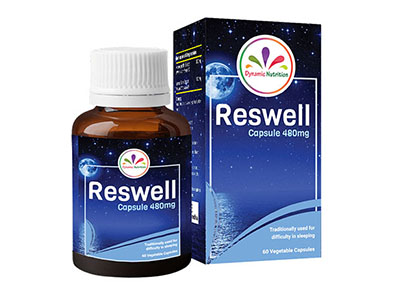
Reswell is a KSM-66 organic ashwagandha extract combined with lemon balm extract, standardised to at least 5% withanolides. The wider category marketing around it uses the language of memory, focus and cognitive function. This article flags that framing rather than repeating it.
Looking at the specific citations behind those claims is instructive. The page cites the 64-adult KSM-66 stress trial — and correctly describes that trial as measuring the Perceived Stress Scale and serum cortisol. It then cites a study in 50 adults with mild cognitive impairment who received 300 mg of ashwagandha root extract twice daily for eight weeks, and a separate study in 53 people with bipolar disorder in which extract augmented working memory. Those two memory citations are small, single-purpose studies in specific clinical populations.
So the honest position on this product is the following. The trial record for a daily KSM-66 ashwagandha capsule supports a stress and sleep framing clearly, and a modest attention framing weakly. The memory framing rests on a small pool of pilot studies in people with existing memory impairment, plus a recent meta-analysis with a small-to-moderate pooled effect. That is a real basis for a trial — it is not a basis for a promise. If a label or landing page implies that taking this capsule will improve your memory or cognitive function, that implication sits at the outer edge of what the human trials actually show, and the specific studies quoted to support it are frequently stress and sleep studies that measured no memory outcome at all.
This is not a safety warning — it is a calibration point. You should be able to tell the difference between a claim a product can evidence and a claim it has borrowed from a neighbouring outcome measure. When a claim sits in the second category, the sensible response is not to write the product off, but to hold it at the strength the evidence supports: an adaptogen with reasonable evidence for perceived stress and sleep quality, and preliminary, modest evidence for memory and attention in adults.
Safety, briefly and seriously. Three things are worth knowing before you buy. Rare cases of liver injury have been linked to ashwagandha supplements, which is why anyone with liver disease, or taking hepatotoxic medication, should ask a pharmacist or doctor first. Thyroid hormone changes have been reported, so anyone with thyroid disease, or on thyroid medication, needs medical advice; the same caution applies to people with autoimmune conditions and to anyone about to have surgery. And it is a sedative-adjacent herb — it is commonly combined with other calming ingredients, which matters if you drive, operate machinery, take medication for anxiety or sleep, or take anticonvulsants, immunosuppressants, or blood-pressure and diabetes medication. If you are pregnant or breastfeeding, the safety data is not there: do not self-start. One further point that gets skipped because it is unflattering to the marketing: because ashwagandha may raise testosterone, people with hormone-sensitive prostate cancer should avoid it. As with any supplement sold in Malaysia, check that the product carries a valid NPRA registration number and that the listed ingredients match what is actually in the capsule.
What you can actually track yourself
Rather than waiting for a supplement to show up as a feeling, four simple trackers will tell you far more, for free, in three to four weeks:
1. Delayed recall, once a week. Learn a list of ten ordinary words — not a memory-test list; grocery items, names of colleagues. At the end of the day, write down how many you can recall. Do the same time of day each week. Ten minutes. A stable upward drift is real signal; a flat line is also real signal.
2. Prospective memory misses. Count how often you forget a commitment made in the last 24 hours — a message you promised to send, an appointment, an errand. Count them; do not try to remember more.
3. Sleep quality, not just sleep duration. Note your sleep-onset latency, any night waking, and how rested you feel on waking. This is the highest-yield tracker, because sleep is both the most plausible mechanism for any memory change and the most common reversible cause of memory complaints.
4. Focus on one task. Record how many times in a working day you lose the thread of a single-task activity and get pulled back. Attention lapses and memory lapses are easy to conflate, and only one of them is a memory signal.
Track all four before you start anything, then track them again after eight to twelve weeks. If you want to test a supplement honestly, this is the only method that produces an answer you can trust — and it is free.
When a memory complaint belongs with a clinician
This is the part of the article that matters most, and it should not be skipped because a capsule seems simpler than a clinic appointment.
See a doctor promptly if the memory change was sudden or came on over weeks rather than years; if it is getting worse rather than stable; if it interferes with work, finances, medication management or driving; if family members notice it when you do not; or if it comes with confusion, trouble speaking or walking, a headache, vision changes, or weakness on one side. Those last features can point to something that needs same-week assessment, not a supplement trial.
Book a routine review if the change has been gradual and you are over 60, if you have a history of high blood pressure, diabetes or a head injury, or if it runs in your family. A clinician can separate the reversible causes from the ones that need imaging or specialist referral.
Also worth checking before you buy anything: sleep apnoea, which is common, treatable, and mimics memory decline; depression, which affects concentration and recall; an underactive thyroid; vitamin B12 or folate deficiency; long-term alcohol use; and medication side effects. Benzodiazepines, sedating antihistamines, older-generation antidepressants and anticholinergic drugs are all associated with memory complaints, and medication adjustment often produces a bigger change than any supplement. A review of your medication list with a pharmacist is a high-value, low-cost step.
None of this means supplements have no role. It means the order matters: rule out the treatable causes first, then decide whether a daily ashwagandha capsule is worth a trial for stress or sleep, and judge it against a tracker you have been running for weeks — not against a promise on a product page.
Bottom line
The published evidence on ashwagandha and memory is better than the sceptics say and weaker than the marketing says, and both of those statements are true of the same literature. A 2026 meta-analysis of 20 trials found a small-to-moderate pooled memory benefit, and two small pilot studies in adults with mild cognitive impairment found measurable gains on standard memory scales over two months. That is a real signal and it supports a cautious trial.
But the studies that most product copy leans on — the KSM-66 sleep trial, the KSM-66 stress trial, the Shoden stress trial — measured stress, cortisol, anxiety and sleep, and measured no memory outcome at all. There is still no large trial showing that a daily ashwagandha extract improves everyday memory in healthy adults. So the honest expectation is modest, gradual, and most likely visible first in how stressed and how rested you feel — not as a sudden jump in recall.
And the line is clear. If a page promises you memory, it is promising you something the trials did not measure. If it promises stress and sleep support at a sensible dose over a couple of months, that is the claim the evidence actually covers. When your memory changes, rule out the treatable causes first — that step is free, and it is the one most likely to change the outcome.
References
- Zhu X, Zeng Q, Lei Y and Xu D (2026). Effects of Withania somnifera (L.) Dunal (Ashwagandha) on cognitive and physical function in adults: a systematic review and meta-analysis. Frontiers in Pharmacology 17:1799467. https://www.frontiersin.org/journals/pharmacology/articles/10.3389/fphar.2026.1799467/full
- Rai HP and Mishra DN (2025). Effect of ashwagandha (Withania somnifera) extract with Sominone (Somin-On™) to improve memory in adults with mild cognitive impairment: A randomized, double-blind, placebo-controlled study. Journal of Psychopharmacology 39(4):350–363. https://pubmed.ncbi.nlm.nih.gov/40099725/
- Langade D, Kanchi S, Salve J, Debnath K and Ambegaokar D (2019). Efficacy and Safety of Ashwagandha (Withania somnifera) Root Extract in Insomnia and Anxiety: A Double-blind, Randomized, Placebo-controlled Study. Cureus 11(9):e5797. https://pmc.ncbi.nlm.nih.gov/articles/PMC6827862/
- Chandrasekhar K, Kapoor J and Anishetty S (2012). A prospective, randomized double-blind, placebo-controlled study of safety and efficacy of a high-concentration full-spectrum extract of ashwagandha root in reducing stress and anxiety in adults. Indian Journal of Psychological Medicine 34(3):255–262. https://pmc.ncbi.nlm.nih.gov/articles/PMC3573577/
- Lopresti AL, Smith SJ, Malvi H and Kodgule R (2019). An investigation into the stress-relieving and pharmacological actions of an ashwagandha (Withania somnifera) extract: A randomized, double-blind, placebo-controlled study. Medicine 98(37):e17186. https://pmc.ncbi.nlm.nih.gov/articles/PMC6750292/
- Raut AA, Rege NN, Tadvi FM, et al. (2012). Effect of standardized aqueous extract of Withania somnifera on tests of cognitive and psychomotor performance in healthy human participants. Journal of Ayurveda and Integrative Medicine 3(2):86–91. https://pmc.ncbi.nlm.nih.gov/articles/PMC3897003/
- Marchi M, Grenzi P and Travascio A (2025). The effect of Withania somnifera (Ashwagandha) on mental health symptoms in individuals with mental disorders: systematic review and meta-analysis. BJPsych Open. https://www.cambridge.org/core/journals/bjpsych-open/article/effect-of-withania-somnifera-ashwagandha-on-mental-health-symptoms-in-individuals-with-mental-disorders-systematic-review-and-metaanalysis/03E125C83F064624A208CF9142A6185D
- Cheah KL, Norhayati MN, Husniati Yaacob L, et al. (2021). Effect of ashwagandha (Withania somnifera) extract on sleep: a systematic review and meta-analysis. PLoS ONE 16(9):e0257843. https://journals.plos.org/plosone/article?id=10.1371/journal.pone.0257843
- National Center for Complementary and Integrative Health. Ashwagandha: Usefulness and Safety. https://www.nccih.nih.gov/health/ashwagandha
Also available in Bahasa Malaysia and 中文.
Product you may be interested in