If you have read an ashwagandha product page promising deep, uninterrupted sleep, the first question that follows is always the same: how much do I actually take, and how do I know that number is the one the research used? The honest answer is that a capsule is not a dose. The figure printed on a label is a serving instruction chosen by a manufacturer, and the figure used in the sleep research is a different thing entirely — a daily amount, split into doses, used for a set number of weeks in a defined population.
Those two numbers usually sit far apart. On this particular product they happen to match, which is unusual enough to be worth explaining properly — and limited enough that it needs its qualifiers attached. This article is for the reader in Malaysia or Singapore who is holding a bottle, or looking at a product page, and wants to know what to do with the number on it. It is also for the reader who has been told a number, from a trial or from a shop, and wants to know whether it is the number that produced the result being quoted.
Why there is no official ashwagandha dose
There is no recommended dietary allowance for ashwagandha, no established daily intake, and no percentage daily value that any ashwagandha label can be measured against. That is not an oversight. Ashwagandha is a botanical, not a vitamin or a mineral, so there is no nutrient-deficiency target for a regulator to set. Singapore’s Recommended Dietary Allowances do not include it, and neither does Malaysia’s.
What exists instead is three different kinds of number, and it matters which one you are looking at. There is the serving instruction on the bottle, which is a regulatory-compliance and marketing decision. There is the dose used in a particular clinical trial, which is a research decision. And there is the traditional-use range in the Ayurvedic Pharmacopoeia of India — a real reference, and the one a recent clinical trial explicitly used to justify its dosing choice7 — but a range derived from traditional practice rather than from trial outcomes. A fourth number circulates in the wild that belongs to none of these: a dose borrowed from a different herb, a different extract, or a different outcome entirely.
One consequence of that structure is worth stating plainly: in most markets a supplement label is not a statement of efficacy. Registration with the Ministry of Health Malaysia (this product carries MAL19116104TC) means the product is on the legal market. It does not mean the sleep claim on the label was tested, because it was not.
What the sleep trials actually used
The core of the ashwagandha sleep literature is small, and the numbers in it are specific.
The insomnia trial. Sixty adults with insomnia and anxiety in India were randomised 2:1 to KSM-66 root extract at 300 mg per capsule, taken twice daily, for ten weeks — a 600 mg daily dose, split in two1. Sleep was measured by actigraphy, not by questionnaire alone: sleep onset latency, total sleep time, sleep efficiency and wake after sleep onset, alongside the Pittsburgh Sleep Quality Index and a Hamilton anxiety scale. At ten weeks, sleep onset latency was significantly shorter than placebo, sleep efficiency rose from about 76 percent to about 83 percent, and the quality and anxiety scores both moved. The dose in that trial is the number to remember: 300 mg twice daily, for ten weeks.
The pooled analysis. A systematic review and meta-analysis of the ashwagandha sleep trials found a small but statistically significant overall effect on sleep, a standardised mean difference of 0.59 across five randomised trials and 400 participants2. That review is where the number that matters most appears. The effect was more pronounced in three specific subgroups: adults diagnosed with insomnia, treatment at 600 mg a day or above, and treatment lasting eight weeks or longer. Sleep quality and total sleep quantity were the outcomes; quality of life was not significantly affected. No serious adverse effects were reported in the pooled data, but the same review flagged that serious-adverse-effect data remains limited and that long-term safety cannot be concluded from it.
Read those two together and the dose answer becomes concrete rather than promotional. The sleep research used 600 mg a day of a standardised root extract, in two doses, for two to three months, mainly in people with insomnia or elevated stress.
How to read a 300 mg KSM-66 capsule label
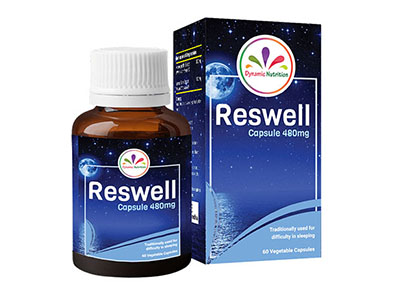
This capsule contains 300 mg of KSM-66 organic ashwagandha extract and 180 mg of lemon balm extract standardised to a minimum of 5 percent rosmarinic acid, and the product page instructs one capsule twice daily, preferably after meals. Sixty capsules per bottle. Here is how to read that, line by line.
Per capsule is not per day. The single most common misreading of an ashwagandha label is treating the milligrams on the front as the daily amount. At one capsule twice daily, this product delivers 600 mg of ashwagandha extract a day — exactly the dose that the insomnia trial used, and exactly the threshold the meta-analysis flagged as where the effect was most pronounced. It also means 60 capsules is 30 days, not 60. Work out the days of supply before you work out anything else.
Extract is not powder. The trials used standardised extracts. KSM-66 is a root-only extract with withanolides standardised above 5 percent. A label reading “ashwagandha root powder 300 mg” is a different material and cannot be compared to it. The distinction is not academic: the most recent large trial of ashwagandha for stress used a 670 mg caplet that combined root powder, root extract and a supercritical CO₂ extract to reach 2.96 mg of total withanolides7, and its authors stated plainly that results cannot be directly compared across preparations to decide which withanolide concentration was responsible for the effect.
Check whether the percentage is printed. If the label does not state a withanolide percentage, it cannot be compared with any of the extract trials, no matter how impressive the milligram figure looks. A named branded extract with a published percentage is the difference between a product you can evaluate and one you can only take on trust.
Check what the number is standardised to. “300 mg” of “ashwagandha” can mean 300 mg of extract, or 300 mg of a blend that is mostly powder with a little extract in it. The trials that produced the 600 mg figure used extract, and the trial that used a blended caplet used 670 mg to deliver far less withanolide than 600 mg of a 5 percent extract does. Milligrams of plant are not the same quantity as milligrams of the studied compound.
Where 600 mg a day sits against the studies
It is worth being precise about the match, because the label line and the trial line are genuinely the same number here: 300 mg of a standardised root extract twice a day is what the insomnia trial gave its participants, and it is what the meta-analysis identified as the dose subgroup with the strongest signal. The product also matches the schedule, not just the amount — the trial dosed twice daily, and the label says one capsule twice daily.
Three things stop that from being the end of the answer.
The evidence base is modest. Five trials, 400 participants, a pooled effect of 0.59, and moderate statistical heterogeneity in the pooled estimate (an I-squared of 62 percent)2. That is a real signal and it supports a cautious trial. It is not a strong guarantee, and it is not a licence to expect a specific outcome on a specific night. The insomnia trial itself states that its sample was too small to draw a general conclusion about the supplement1, and it also notes that the extract was supplied by the company that manufactures KSM-66 — a common pattern in this literature, worth knowing when you weigh the result.
The dose has a population attached. The pooled effect was more pronounced in adults diagnosed with insomnia2. Someone with normal sleep who takes it hoping to sleep slightly better is not the population the number was derived from, and the trials in this field enrol people with insomnia or elevated stress, not general volunteers. Separately, the stress trials used lower daily amounts than the sleep trials — 240 mg once daily of a different standardised extract for sixty days produced measurable cortisol and anxiety changes6. So even within this one ingredient, the studied amount depends on the outcome being measured.
Duration is not on the label. The sleep trial ran ten weeks and the meta-analysis found the signal concentrated at eight weeks or longer. Nothing in the published literature supports expecting a visible result in two weeks, and nothing supports indefinite use without re-evaluation.
The lemon balm half: 180 mg and the timing window
Each capsule also carries 180 mg of lemon balm extract standardised to a minimum of 5 percent rosmarinic acid, so a two-capsule day is 360 mg. The evidence behind this ingredient is a different kind of evidence from the ashwagandha evidence, and the difference matters.
The ashwagandha sleep trials ran for weeks and measured sleep outcomes. The lemon balm studies are acute: single doses, measured in the hours afterwards, in laboratory stress batteries, in small numbers of healthy volunteers. In one, twenty healthy young adults took single doses of 300, 600 or 900 mg of standardised lemon balm extract or placebo, and performance and mood were tracked at one, two-and-a-half, four and six hours3. In another, eighteen volunteers took 300 mg or 600 mg, and the 600 mg dose reduced the negative mood effects of an acute stressor while raising self-rated calmness and lowering self-rated alertness; the 300 mg dose sped up mental arithmetic without reducing accuracy4. A third study, on a lemon balm and valerian combination, found that the lowest tested dose of 600 mg blunted anxiety ratings while the highest dose of 1,800 mg actually increased anxiety in one testing session5 — which is the clearest published warning in this literature that more is not better.
The product page’s timing claim for this ingredient — effects seen within an hour of intake and still measurable after three to four hours — is a reasonable reading of how these studies were built, since they measured exactly those windows. It is not, however, a dose claim that any trial supports: no published trial has tested this capsule, at this dose, with this extract, for sleep. And the amount per capsule, 180 mg, sits below the 300 to 600 mg single doses used in the acute studies.
So the two halves of this capsule rest on different bodies of evidence with different shapes: a multi-week extract with a small pooled effect on sleep, and an acute herb with laboratory stress findings at doses above what one capsule delivers. Both are worth understanding separately rather than as a single “sleep formula”.
What the dose question cannot tell you
Getting the number right is useful, and it is not sufficient. There are things the dose question cannot answer for you.
Whether your sleep problem is a supplement problem. Insomnia with an identifiable cause — sleep apnoea, a medication effect, an untreated mood disorder, chronic pain, a shift-work schedule — will not be fixed by adjusting a dose. A dose question assumes the answer is a product; for a significant proportion of people with poor sleep it is not, and that is a clinician question.
Whether it is safe for you to take. The US National Center for Complementary and Integrative Health notes that ashwagandha may cause drowsiness, stomach upset, diarrhoea and vomiting; that rare cases of liver injury have been linked to ashwagandha supplements; and that safety data covers short-term use of up to three months only, which is not enough to draw conclusions about long-term use8. It advises avoiding ashwagandha in pregnancy and breastfeeding, and not using it before surgery or in people with autoimmune or thyroid disorders. It also flags interactions with diabetes and blood-pressure medicines, immunosuppressants, anticonvulsants and thyroid hormone medications. For a sleep article, one interaction deserves particular attention: sedatives. Anyone already taking a sedative or a prescribed sleep medicine, and anyone with a thyroid condition or thyroid medication, should ask a clinician or pharmacist before adding this capsule.
What you will notice, and when. The trials measured group averages over weeks. An individual response — including no response — is entirely compatible with the published findings, and a smaller trial found a mix of good responders and non-responders rather than a uniform effect1.
That the label has been tested. No clinical trial has tested this product as sold. The evidence discussed here comes from trials of KSM-66, of other standardised extracts, of blended caplets, and of lemon balm in isolation. Matching a label to that evidence is a reasonable inference. It is not a trial result.
The bottom line
If one number has to do the work, it is this. The ashwagandha sleep research used 300 mg of a standardised root extract twice daily — a 600 mg daily dose — for eight to ten weeks, in people with insomnia or elevated stress, and the pooled analysis of those trials found the effect concentrated at exactly that dose and that duration. This product’s serving instruction of one capsule twice daily delivers 600 mg a day of a named, standardised, 5 percent withanolide extract, so the label line and the trial line genuinely agree. That is the good news, and it is a match to a modest evidence base rather than a guarantee of a result.
The second half of the label is a separate story: 180 mg of lemon balm per capsule, supported by small acute studies of single doses at 300 mg and above that measured mood and stress response over hours, not sleep over weeks. Read it as an acute calming ingredient with a short window, not as a second half of a sleep protocol.
What to check on the label, then: whether it is extract or powder, whether the withanolide percentage is printed, whether the milligrams are per capsule or per day, how many days the bottle actually covers, and whether the registration number is present. What to ask a clinician: whether it interacts with anything you take, particularly a sedative, a thyroid medication or diabetes or blood-pressure drugs, and whether your sleep complaint has been looked at properly. The dose question gives you a way to read a label honestly. It does not replace either of those.
References
- Langade D, Kanchi S, Salve J, Debnath K and Ambegaokar D (2019). Efficacy and Safety of Ashwagandha (Withania somnifera) Root Extract in Insomnia and Anxiety: A Double-blind, Randomized, Placebo-controlled Study. Cureus 11(9):e5797. https://pmc.ncbi.nlm.nih.gov/articles/PMC6827862/
- Cheah KL, Norhayati MN, Husniati Yaacob L and Abdul Rahman R (2021). Effect of Ashwagandha (Withania somnifera) extract on sleep: a systematic review and meta-analysis. PLoS ONE 16(9):e0257843. https://journals.plos.org/plosone/article?id=10.1371/journal.pone.0257843
- Kennedy DO, Scholey AB, Tildesley NT, Perry EK and Wesnes KA (2002). Modulation of mood and cognitive performance following acute administration of Melissa officinalis (lemon balm). Pharmacology, Biochemistry and Behavior 72(4):953–964. https://doi.org/10.1016/s0091-3057(02)00777-3
- Kennedy DO, Little W and Scholey AB (2004). Attenuation of laboratory-induced stress in humans after acute administration of Melissa officinalis (Lemon Balm). Psychosomatic Medicine 66(4):607–613. https://doi.org/10.1097/01.psy.0000132877.72833.71
- Kennedy DO, Little W, Haskell CF and Scholey AB (2006). Anxiolytic effects of a combination of Melissa officinalis and Valeriana officinalis during laboratory induced stress. Phytotherapy Research 20(2):96–102. https://doi.org/10.1002/ptr.1787
- Lopresti AL, Smith SJ, Malvi H and Kodgule R (2019). An investigation into the stress-relieving and pharmacological actions of an ashwagandha (Withania somnifera) extract: A randomized, double-blind, placebo-controlled study. Medicine 98(37):e17186. https://pmc.ncbi.nlm.nih.gov/articles/PMC6750292/
- Gajwani P, J S, Guru Prasad C and colleagues (2026). Evaluation of the Efficacy and Safety of Ashwagandha Caplet in Patients Suffering from Mild to Moderate Stress and Anxiety Disorders: A Multicentric, Double-Blind, Randomized, Placebo-Controlled, Clinical Trial. Neuropsychiatric Disease and Treatment 22:633019. https://pmc.ncbi.nlm.nih.gov/articles/PMC13715648/
- National Center for Complementary and Integrative Health. Ashwagandha: Usefulness and Safety. https://www.nccih.nih.gov/health/ashwagandha
Product you may be interested in