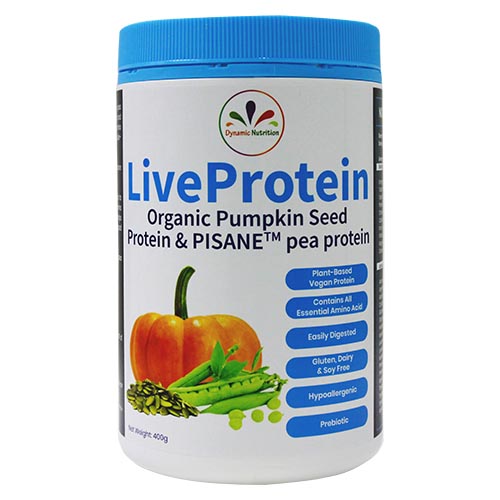
The label “easy to digest” gets printed on more protein tubs every quarter, but for the reader with a sensitive stomach the phrase is doing real work — it is short for “won’t send me to the bathroom in an hour, won’t leave me with the bloat-cramp cycle for the rest of the day, and won’t undo the workout I’m trying to recover from”. Most of what sits on the shelf was not designed with that reader in mind, and the gap shows up in the ingredients panel long before the first scoop lands in the shaker. The point of this article is to give the reader a clean framework for what “easy to digest” actually requires on a label — and which combinations of features a peptide-driven plant blend needs to clear to qualify as one. LiveProtein is named in the pea + pumpkin-seed slot because that is the design it ships with, but the checklist works for any reader deciding between the four or five tubs they have open on the kitchen counter.
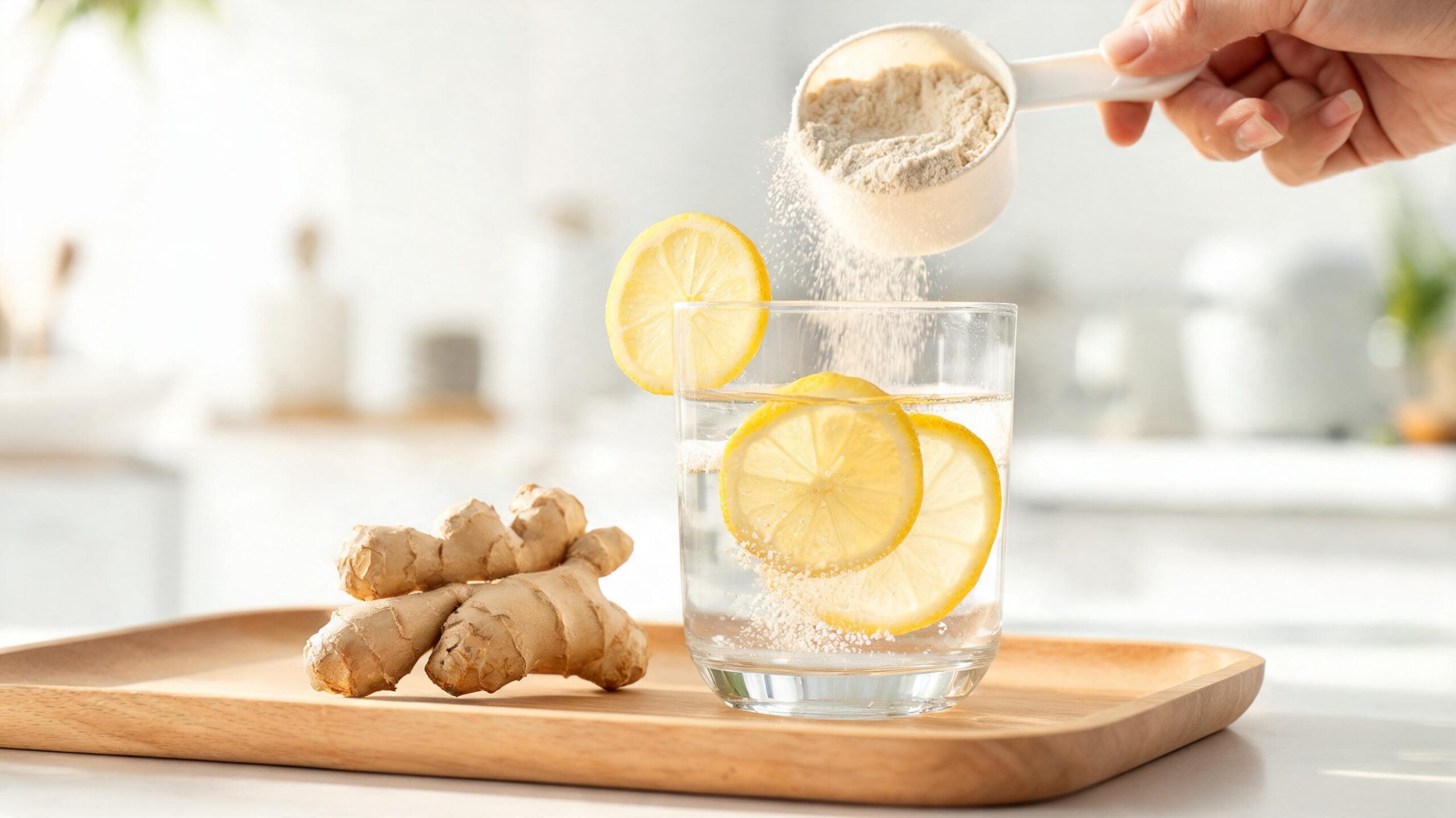
The four drivers of gut trouble in a typical protein powder are well documented in the IBS-FODMAP literature and in the sports-nutrition review papers that pick up where the FODMAP dietitians leave off: dairy and lactose, soy and isoflavone intolerance, legume and seed fibre (the FODMAP load), and added inulin or FOS — the fructan-class fibres the low-FODMAP diet specifically tells sensitive-gut readers to limit. A “gentle” protein blend has to navigate all four, not just one. Reading the panel for the four together is what separates the marketing shelf from the genuinely-easy-to-digest option.
The Four Drivers of Protein-Powder Digestion Problems
Before getting into the workaround layers — peptide size, titration, meal-pairing — it is worth spending a minute on the four root causes, because every “easy to digest” claim in a marketing brochure is a response to at least one of them. The reader who knows which of the four is biting them can cut straight to the relevant section; the reader who is not sure should walk through all four because the overlap is common. A tub that clears three drivers and misses the fourth is the tub that returns in two weeks.
1 — Dairy and Lactose (Whey Concentrate, Casein)
Whey concentrate and casein are the two dairy proteins most likely to trigger bloating, gas and the cramping that follows in adults over 30, because lactase enzyme activity drops steadily from childhood through middle age and a meaningful share of the population in Malaysia and Singapore carry the lactase-non-persistence gene (estimates for adults of Chinese, Malay and Indian descent range from 60 to 90 per cent, depending on the cohort). Whey isolate reduces the lactose load significantly but does not eliminate it, and casein carries its own casein-peptide intolerance spectrum that is independent of lactose. If the panel lists “whey”, “whey concentrate”, “milk protein”, “casein” or “sodium caseinate” in the first three ingredients, that is where the dairy problem starts. The two cleanest workarounds are a whey-isolate tub with a verified low-lactose spec, or a fully plant-based tub that does not contain any dairy-derived ingredients at all.
2 — Soy and Isoflavone Intolerance
Soy protein isolate is the second most common plant protein on the shelf after pea, and the digestibility story is more complicated than most readers are told. The high-isoflavone load in soy concentrate interacts with the gut microbiome in ways that produce gas and bloating in a subset of sensitive readers — the same isoflavones that give soy its cardioprotective profile also feed specific bacterial populations whose fermentation byproducts build up faster than the gut clears them. For readers with a known thyroid condition the goitrogenic conversation adds a separate dimension. The cleanest workaround where soy is the trigger is a soy-free plant blend built around pea, pumpkin seed, rice or a combination.
3 — Pea-Isolate Fibre and FODMAP Load
Pea protein isolate is the workhorse of the plant-protein category precisely because of its leucine content and amino-acid completeness — but it carries a fibre-side cost on the very first use, when the gut microbiome has not yet had time to adapt to the starch and oligosaccharide fractions. The mechanical effect is what most readers feel as the “first three days bloating”, and the workaround is dose titration rather than product swap: half a scoop for seven to ten days, then full serving once the gut has caught up. The longer-term picture is good — pea-adapted microbiomes process pea protein with far less gas — but the first-week window is precisely the window that decides whether a reader keeps the tub or returns it.
4 — Inulin, FOS and Fructans (The Hidden Trigger)
The fourth driver is the one most readers — and most marketing copy — miss, because inulin and FOS (fructo-oligosaccharides) are added to many plant-based protein blends as a prebiotic boost and are a documented high-FODMAP fructan that the Monash University low-FODMAP diet explicitly tells sensitive-gut readers to limit. The fermentation curve for inulin is significantly faster than for the pea fibre, which is why two readers whose “easy to digest” checklist only screened for dairy and soy can still get bloated within twenty minutes of the same drink. The label cue is “inulin”, “chicory root fibre”, “FOS” or “fructo-oligosaccharides” anywhere on the ingredient list, and the workaround — where gut sensitivity is established — is a low-inulin or no-inulin blend; where inulin is the desired prebiotic, the workaround is dose-controlled (1–2 g per serve, not 5–8 g).
The “Easy to Digest” Checklist (What to Look For)
Once the four drivers are clear, the checklist becomes mechanical. A reader who is vetting a new tub should be able to answer “yes” to all six items below — or to know which one they are trading off, because no single tub in the category clears all six at once. The list is intentionally specific so the reader can run it against the actual ingredients panel in the shop, not the marketing claim on the lid.
1. Peptide Size (A Proxy for Speed of Absorption)
Smaller peptide chains are absorbed faster and put less mechanical load on the gut — they bypass some of the digestion steps that larger intact proteins require. Whey hydrolysate is the gold standard on this axis, but peptide-sized plant isolates are increasingly available (pea isolate at < 10 kDa, hydrolysed pumpkin-seed protein). For sensitive-stomach readers the practical effect is the difference between a shake that clears in 90 minutes and one that hangs around the upper gut for four hours, and that gap shows up in how the next meal feels.
2. Additive Inventory (What Else Is In the Tub)
Sugar alcohols (erythritol, sorbitol, xylitol) and artificial sweeteners (sucralose, acesulfame-K) carry their own FODMAP-load conversations, and several cheaper plant blends add them at levels high enough to land in the same sensitive-gut lane as inulin. A short, recognisable ingredient list — protein source, flavour, sweetener, thickener — is the easier-to-digest baseline. If the reader cannot pronounce or recognise an ingredient, that is the ingredient that deserves a closer look.
3. Titration and Meal-Pairing (How to Take It)
The single most effective sensitive-stomach workaround is also the cheapest: half a scoop for the first seven to ten days, taken with a meal (not on an empty stomach), and built up to a full serving once the gut has adapted. Many readers who “tried plant protein and it didn’t agree with them” tried one full scoop on an empty stomach at 6am after a fasting protocol; that is a worst-case path for the gut and a representative test for nothing. The combination of half-scoop + meal-pairing + 200 mL of still water covers roughly 80 per cent of the gut-adaptation curve.
The Honest “No Bloating” Boundary
No protein powder on the shelf today is sold with a defensible “will not cause bloating” claim, and any reader who relies on one will be disappointed when they hit the real-world variation between their gut and the test subject. What can be said honestly is that some blends are gentler than others on average, and the four drivers + checklist above are the inputs to that probability. A pea + pumpkin-seed blend that is also low-inulin and dairy- and soy-free sits at the gentler end of that distribution; it is not a guarantee. The right way to read a label that says “easy to digest” is “designed to be gentler than the dairy-and-inulin alternative for most readers, not promised to be gut-neutral for every reader”.
Where a Pea + Pumpkin-Seed Blend Actually Fits
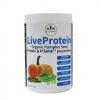
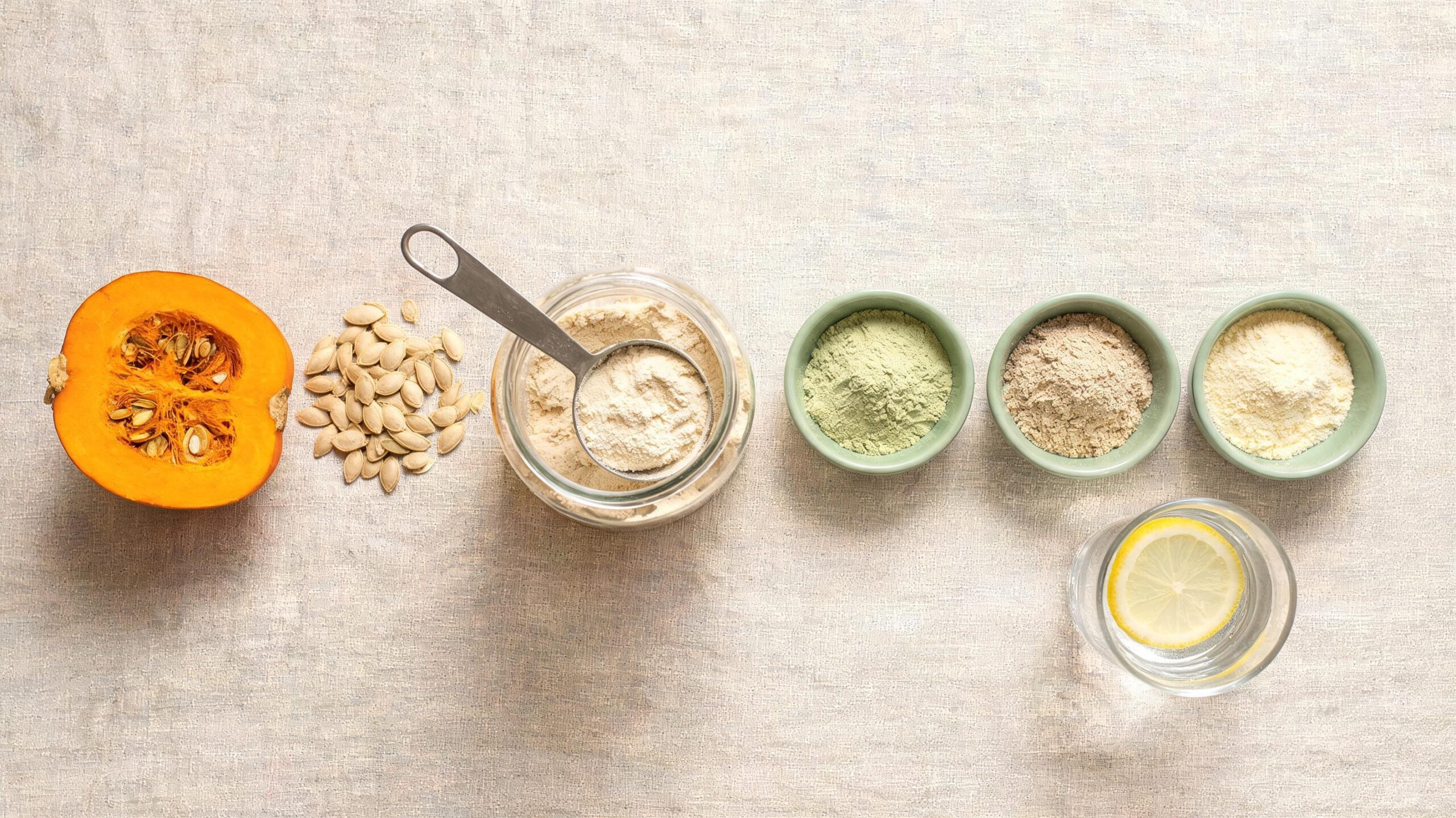
The reason plant blends built around pumpkin-seed protein and pea isolate have become a common answer to the “best protein powder for sensitive stomach” question is that they clear the soy driver (no isoflavone load), clear the dairy driver (no whey or casein), carry a moderate legume-fibre load that titrates quickly with half-scoop dosing, and can be formulated with low or no added inulin. Pumpkin-seed protein in particular adds the tryptophan, tyrosine, magnesium and zinc layers that round out the amino-acid and mineral picture without adding FODMAP load. LiveProtein’s formula is one of the cleaner implementations of this design — pea isolate plus organic pumpkin-seed protein, a low-dose inulin at the prebiotic end of the spectrum, no dairy or soy in the ingredient list — and it earns its place on the gentler-end list on that basis, not on a “guaranteed no-bloating” basis. The honest version of “this is the gentler option” is the version a reader can verify on the panel.
Common Questions (Quick Reference)
Does plant protein always cause bloating? No — but the first-week window on a full dose is more likely to produce gas and bloat than the second-week window, which is why titration matters.
Is whey isolate easier to digest than whey concentrate? Yes on lactose; the casein-peptide intolerance path is the same in both.
Is inulin actually a problem? At 5–8 g per serve (typical in older “high-fibre” formulas), yes for readers on a low-FODMAP framework. At 1–2 g per serve, much less so — that is the dose-titration answer, not the cut-it-out answer.
What about pumpkin seed protein on its own? It works for many readers, but the amino-acid profile is best paired with a complementary plant protein (pea isolate is the common choice) for leucine and the full EAA spectrum.
How long should I titrate? Seven to ten days of half-scoop, taken with a meal, is the consistent answer from the IBS-FODMAP and sports-nutrition literatures.
Product you may be interested in