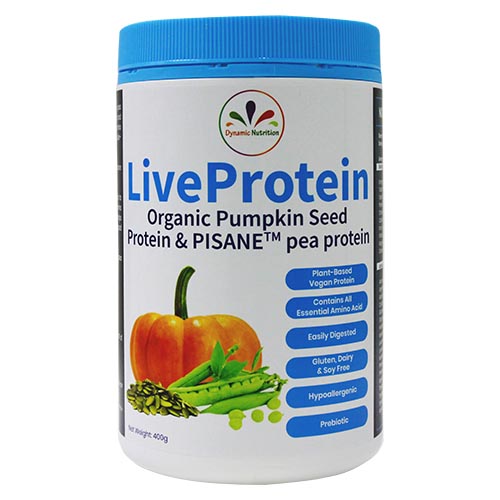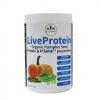
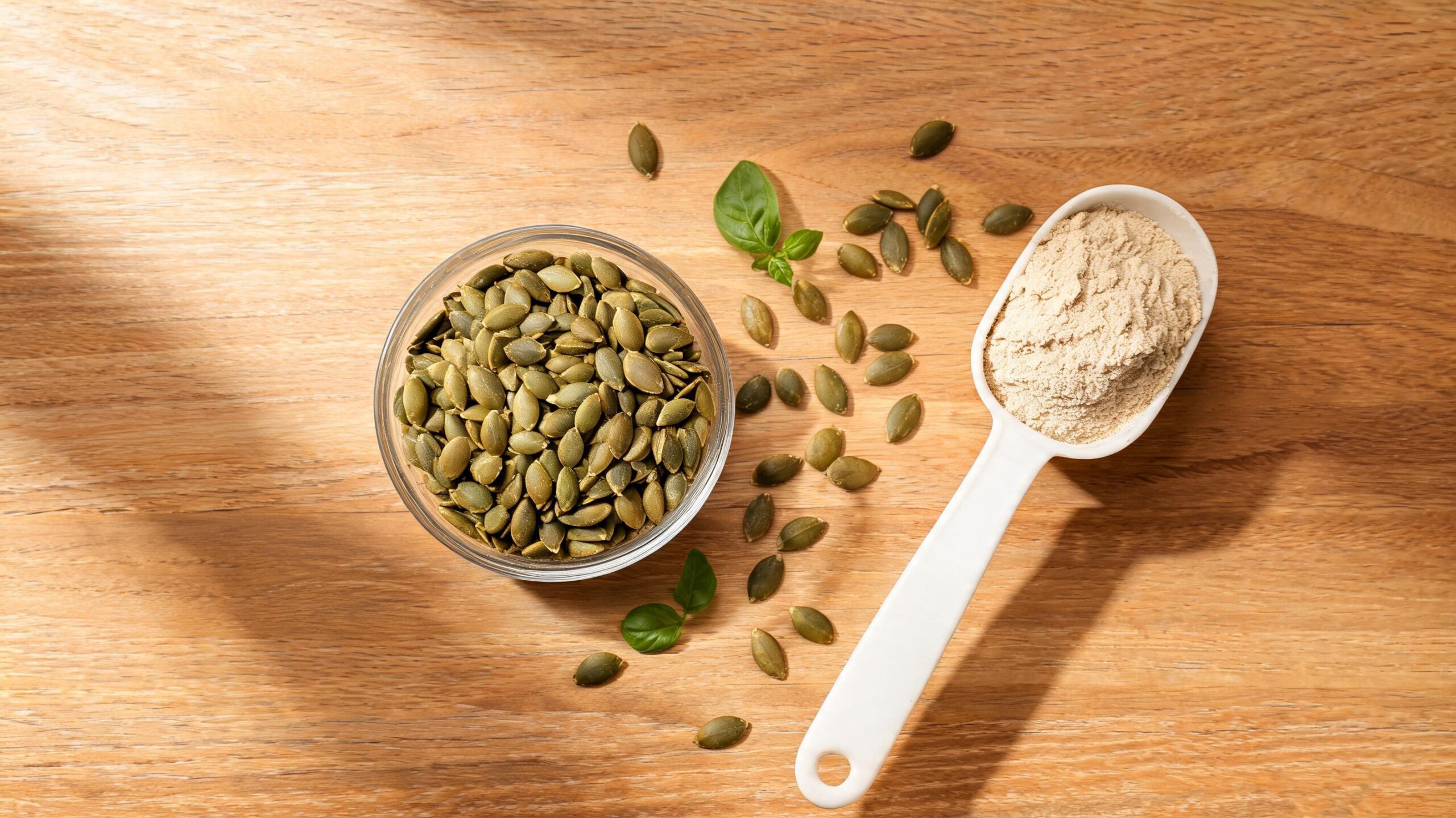
Pumpkin-seed protein is starting to get the shelf space it deserves in 2026 — but the reason it deserves more than a quick scan of the nutrition panel is the four layers most generic plant-protein comparisons leave open. The headline is the complete amino-acid profile, but the layers underneath — tryptophan for sleep and mood, tyrosine for dopamine and thyroid function, the zinc and magnesium cofactor matrix, and the digestibility profile that makes it tolerable every day — are what put pumpkin-seed protein in its own category rather than as just another plant option next to pea, soy, rice and whey.
Why Pumpkin-Seed Protein Deserves Its Own Category
Most plant-protein powders sit somewhere on a spectrum between pea, soy, rice and the older dairy-derived options. The problem is that the spectrum is not actually a single dimension. The four questions a serious reader should ask of any plant protein are: (1) does it have a complete essential-amino-acid profile, (2) does it carry the cofactor mineral stack the protein matrix was originally packed with, (3) is it tolerable for everyday digestion, and (4) does the form it ships in actually preserve what the source food provides. Pumpkin-seed protein answers all four more cleanly than any of the other common plant options. The reason matters more in 2026 than it did five years ago: the over-40 protein-check conversation has moved from total daily grams to per-meal leucine-threshold dosing and amino-acid completeness, and the under-40 fitness-recovery conversation has moved from total protein to per-serving leucine content and timing. Both demand a matrix, not a single source.
Layer 1 — The Amino-Acid Profile Most Plant Proteins Skip
Pumpkin-seed protein is one of only a handful of plant proteins with a complete essential-amino-acid profile — it contains all nine EAAs at meaningful levels, which is unusual because most plant proteins are limiting in one or more. Pea protein is low in methionine; rice protein is low in lysine; soy is low in methionine and cysteine. Pumpkin-seed protein’s distinctive EAA layers:
Tryptophan. The serotonin-and-melatonin precursor. Most plant-protein shakes deliver only marginal tryptophan per serving, which is why many readers who use plant protein report flat mood and disrupted sleep even when total daily protein is fine. Pumpkin seeds are among the highest whole-food dietary sources of tryptophan, and a pumpkin-seed protein concentrate preserves that.
Tyrosine. The dopamine-and-thyroid-hormone precursor. Most fitness-oriented readers care about focus and motivation, but most plant-protein powders are middling on tyrosine. Pumpkin-seed protein is unusually rich in it — relevant for the focus-plus-recovery stack the over-40 and the athlete both end up shopping for.
Branched-chain amino acids. Leucine, isoleucine and valine drive the muscle-protein-synthesis pathway via the mTORC1 signal. The per-serving leucine content matters more than total daily leucine for triggering each MPS episode; the leucine-threshold concept (you need roughly 2.5–3 g of leucine in a single serving to maximally trigger MPS) was developed with whey at the centre but applies cleanly to any complete protein. Pumpkin-seed protein contributes around 7–8% leucine by weight; at a 25–30 g serving it clears the threshold without the dairy allergen load.
Layer 2 — The Cofactor Mineral Matrix Most Powders Strip Out
The second layer is the one most generic plant-protein reviews leave wide open. Pumpkin seeds are among the highest whole-food dietary sources of four minerals that are essential cofactors for the very processes the protein is being bought for:
Zinc. Essential for testosterone synthesis, immune function, wound healing, and the activity of more than 300 zinc-dependent enzymes. Most adults, especially the over-40 cohort, are functionally low in zinc — and most generic plant-protein powders are stripped of the mineral matrix during processing.
Magnesium. Essential for muscle contraction and relaxation, sleep quality, blood-pressure regulation, and the activity of more than 600 enzymatic reactions. Magnesium deficiency is the most common micronutrient gap in MY and SG adults; the average local diet provides well below the recommended daily intake.
Phosphorus. Essential for bone mineralisation and ATP energy production. Pumpkin seeds are an unusually rich source.
Copper. Essential for collagen synthesis, iron metabolism, and the antioxidant enzyme copper/zinc superoxide dismutase (Cu/Zn SOD). Often overlooked in the protein-and-recovery conversation, but central to the connective-tissue-repair side of the same stack.
The point is not that a protein powder should be a mineral supplement. The point is that a whole-food protein concentrate that retains its cofactor matrix delivers more per serving than a stripped, fractionated powder — and that is the difference between pumpkin-seed protein that has been minimally processed and the cheaper options on the shelf.
Layer 3 — Digestibility and the Allergy Question
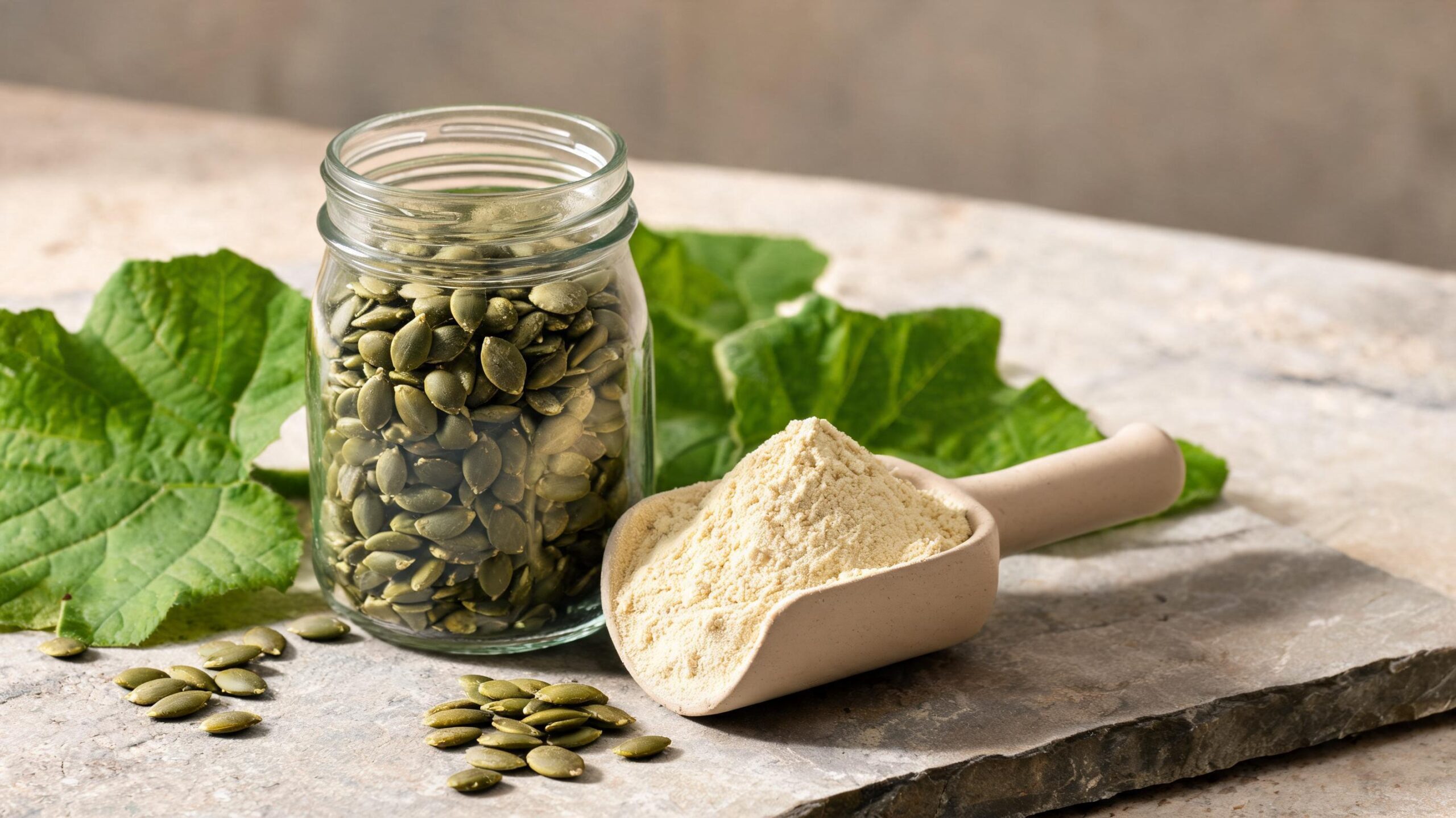
Pumpkin-seed protein has a published digestibility score in the same range as whey (around 95%) and is well tolerated by people with sensitive digestion, dairy intolerance, or soy allergy. The absence of the major allergens — dairy, soy, gluten — makes it the broadest-spectrum plant protein for the 15–20% of MY/SG adults with food sensitivities.
This is the layer that often decides the actual purchase. Many readers who try a generic plant protein and report “bloating” or “doesn’t sit right” are reporting a soy or dairy cross-contamination or a fractionation process that left anti-nutritional factors in the final product. A clean pumpkin-seed protein concentrate, processed without chemical fractionation, is tolerated by most readers who bounce off the standard options.
Layer 4 — Form, Food System, and Shelf Stability
The fourth layer is the supply-chain and form question. Pumpkin is widely grown in tropical climates, including Malaysia and Indonesia. The raw material is shelf-stable. The protein extract has a two-year shelf life without refrigeration. The cold-water-soluble physical-extraction process preserves heat-labile nutrients that chemical fractionation strips out. None of this matters for the headline nutrition panel, but all of it matters for what actually arrives in the jar.
How Pumpkin-Seed Protein Compares to the Other Plant Options
Side-by-side with the other common plant proteins on the four layers:
vs pea protein. Pea protein is high in lysine and BCAAs but lower in tryptophan, tyrosine, and the mineral cofactor stack. A clean blend (pumpkin-seed + pea) fills each protein’s individual gap while delivering a complete EAA profile that matches whey without the dairy allergen load.
vs soy protein. Soy is the lowest-cost plant protein and has the most published clinical research base, including the FDA 25 g/day heart-health claim. But soy is a known allergen for a small but real share of MY/SG adults, and its phytoestrogen profile creates consumer hesitation despite the published safety data. For readers who want a plant protein without the soy question, pumpkin-seed wins.
vs rice protein. Rice protein is low in lysine and needs to be blended with pea or lysine-fortified to hit the leucine-threshold. It is rarely sufficient solo for the muscle-demand use case.
vs whey protein. Whey is the gold-standard per-serving MPS trigger (around 11% leucine by weight, hitting the threshold at 20–25 g) but carries the dairy allergen load, the lactose load for the roughly 65% of MY/SG adults with some degree of lactose maldigestion, the methane-emission footprint of industrial dairy, and the gut-cramping some over-40 readers report from whey-only. Pumpkin-seed protein is the cleanest plant option for readers who want a complete protein without dairy.
The Decision Frame for Choosing a Plant Protein
Four questions, in this order:
What is the amino-acid bottleneck for your goal? Recovery and muscle: any complete protein with adequate per-serving leucine. Sleep and serotonin pathway: tryptophan-rich pumpkin-seed out front. Collagen and connective tissue: glycine/proline/lysine-rich with the cofactor mineral stack from a whole-food matrix.
Does it carry the cofactor mineral stack? A whole-food pumpkin-seed protein concentrate preserves zinc, magnesium, phosphorus, and copper from the original seed. A fractionated, stripped powder does not.
Is it tolerable for your digestion? Pumpkin-seed and pea win on the hypoallergenic claim. Soy loses if you have soy intolerance. Whey loses if you have dairy intolerance.
What form is it in? Powder matrix, blend versus solo, per-serving leucine target of 2.5–3 g, daily leucine target around 5–8 g across two to three doses, plus any prebiotic or synbiotic layer that supports the gut-side absorption of the protein.
The Bottom Line
Pumpkin-seed protein is not a niche option. It is the broadest-spectrum plant protein on the shelf — a complete essential-amino-acid profile that includes tryptophan and tyrosine at meaningful levels, a cofactor mineral matrix most powders strip out, a digestibility profile that matches whey, and a clean form that survives the supply chain intact. For the reader who wants one plant protein that covers muscle recovery, sleep quality, mood support, and connective-tissue repair without the dairy, soy or gluten question, it is the most complete answer the plant-protein shelf currently offers.
Related Topics
Do Vegetarians Get Enough Protein?
How To Prevent Muscle Loss As You Age?
Protein Calculator: How Much Protein Do You Need?
How Protein Powder Helps You Lose Weight & Gain Muscles?
Gradual Loss Of Muscle Mass After Middle Age (Sarcopenia)
Nutrition For Elderly People: A Complete Guide To Healthy Aging
Product you may be interested in