But there’s a layer the headlines skip: the timing only delivers the metabolic benefit if your body has the hormonal substrate to actually oxidise the fat (not just delay its storage). Two hormones sit at the centre of that substrate — adiponectin (often called the “slim hormone” because it switches fat cells from storing to burning) and endogenous GLP-1 (your gut’s own satiety + insulin-sensitising signal, the very receptor GLP-1 agonist drugs like semaglutide activate). Both decline with age, with visceral-fat accumulation, and with poor sleep. You can eat at 6pm on the dot, but if those hormones are blunted, the metabolic benefit is muted.

Why “earlier dinner” works — and what it actually does
The circadian rhythm of insulin sensitivity is highest in the morning and drops roughly 30–50% by evening — meaning the same meal eaten at 8pm produces a meaningfully higher glucose spike than the same meal eaten at 6pm. That’s the first mechanism behind the “earlier is better” advice. The second is the sleep-time growth-hormone + fat-oxidation pulse: deep sleep is when the body mobilises stored fat for energy, and that pulse is sharper when the liver and pancreas aren’t still processing a late meal. In cohort data, late eaters (dinner after 8pm) consistently show ~20–30% higher fasting glucose and ~10–15% higher long-term weight-gain risk than early eaters.
None of that is controversial. What most “dinner timing” pieces skip is the second half of the story.
The hormonal-substrate layer most pieces miss
Eating earlier is the trigger. Whether the trigger fires depends on the hormonal system that has to carry the response. Two hormones do most of that work:
Adiponectin — the “slim hormone” that switches fat cells from storing to burning
Adiponectin is an adipokine (a hormone secreted by fat cells themselves) that tells neighbouring fat cells to release stored lipids for energy instead of holding onto them. Higher adiponectin is independently associated with lower visceral-fat area, better insulin sensitivity, and lower cardiometabolic risk. The problem: adiponectin declines with age, with visceral-fat accumulation (the very fat it’s meant to mobilise), and with chronic sleep disruption — exactly the cluster that pushes MY/SG adults in their 40s and 50s toward metabolic-syndrome territory.
Endogenous GLP-1 — your gut’s own satiety + insulin-sensitising hormone
GLP-1 (glucagon-like peptide-1) is released by your gut after every meal. It slows how quickly food leaves your stomach, blunts the appetite signal in your brain, and helps your pancreas release the right amount of insulin. The injectable peptide drugs (semaglutide, liraglutide) work by mimicking this hormone at supra-physiological doses. But your body can produce more of its own GLP-1 through specific nutritional inputs — and unlike the drugs, the nutritional route has no prescription, no injection, and no “Ozempic face” side effects.
Both hormones — adiponectin and endogenous GLP-1 — are what the dinner-time timing needs in order to actually deliver its metabolic benefit. When they’re blunted, the timing alone is necessary but not sufficient.
What the timing can’t do for you
Here’s the asymmetry the headlines miss. Dinner-timing advice works at the level of *when* you eat. It assumes the metabolic machinery is ready to fire on cue. For most MY/SG adults in their 40s and 50s — juggling careers, family, late dinners, irregular sleep, and the slow creep of visceral fat — that machinery is partially worn down. Adiponectin is lower than it was 15 years ago. Endogenous GLP-1 signalling is less responsive. The 6pm dinner lands, the metabolic system tries to respond, but the substrate is thinner than it used to be.
That doesn’t mean the timing advice is wrong. It means the timing is one half of a two-part intervention. The other half is rebuilding the hormonal substrate so the timing has something to act on.
Three evidence-graded ways to rebuild the substrate
The research points to three distinct levers for raising adiponectin and endogenous GLP-1 activity — each backed by a different tier of evidence.
1. Organic Ashitaba chalcones (xanthoangelol + 4-hydroxyderricin)
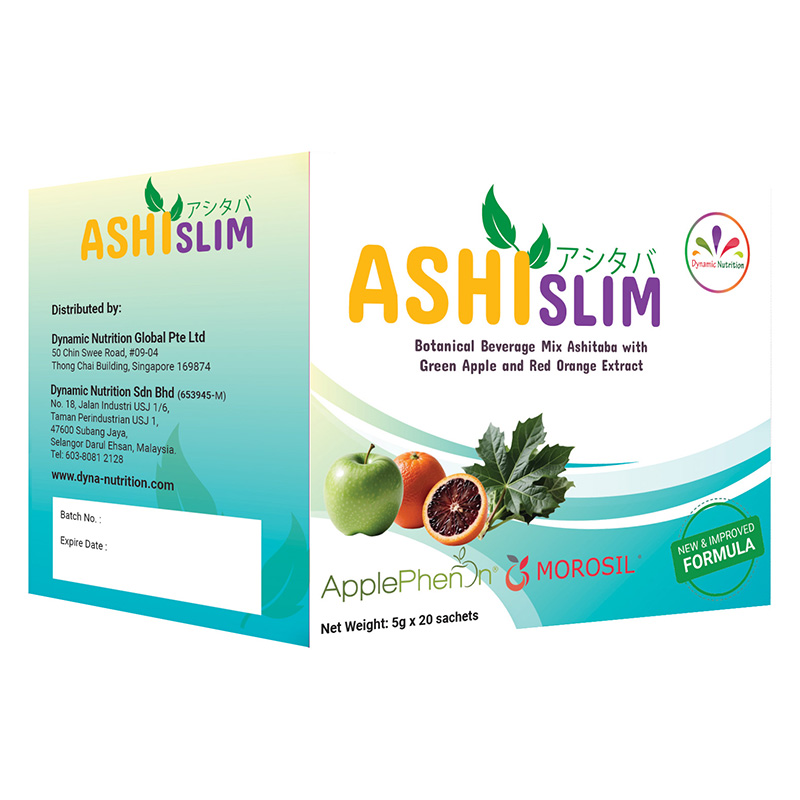
Organic Ashitaba (Angelica keiskei, the Japanese “tomorrow-leaf” so named for its legendary rapid regrowth) contains two unique chalcones — xanthoangelol and 4-hydroxyderricin — found in the yellow sap that exudes when the stem is cut. Published in vitro and animal work shows these chalcones upregulate adiponectin gene expression in adipocytes (the “slim hormone” that switches fat cells from storing to burning), activate AMPK (the cellular energy sensor that mirrors the exercise-effect at the metabolic level), and inhibit adipogenesis (the formation of new fat cells). Small-to-medium human Japanese cohort studies have shown waist-circumference reduction and improved liver-enzyme markers in subjects taking Ashitaba chalcone extracts over 8–12 weeks.
2. ApplePhenon® apple polyphenols (procyanidins)
ApplePhenon® is a standardised apple-polyphenol extract with uniquely high procyanidin content. Published research shows it raises endogenous GLP-1 activity (the same receptor GLP-1 agonist drugs target, but through natural polyphenols), boosts fat oxidation at rest and during sleep, and in a published RCT reduced abdominal fat area over 12 weeks. The mechanism is the hormonal-substrate + daily-fat-oxidation layer — the one most “dinner timing” advice skips entirely.
3. Morosil® Moro blood-orange anthocyanins
Morosil® is a standardised extract of Moro blood-orange (Citrus sinensis), rich in anthocyanins and hydroxycinnamic acids. A 12-week RCT at 400 mg/day showed measurable reduction in waist circumference and visceral-fat area that outperformed placebo, plus inhibition of new fat-cell formation. Morosil® is the anthocyanin + antioxidant lever — the one that targets the deep visceral-fat layer specifically rather than the subcutaneous pinch-an-inch layer.
Putting it all together: timing + substrate
The cleanest way to read the CNA piece is as a one-line summary: earlier dinner timing matters, and so does the hormonal substrate the timing works on. For most MY/SG adults already eating earlier but not seeing waist-circumference or fasting-glucose markers move, the missing piece is usually the substrate — adiponectin and endogenous GLP-1 — rather than the timing.
A practical daily frame:
The 6pm-to-9pm dinner window
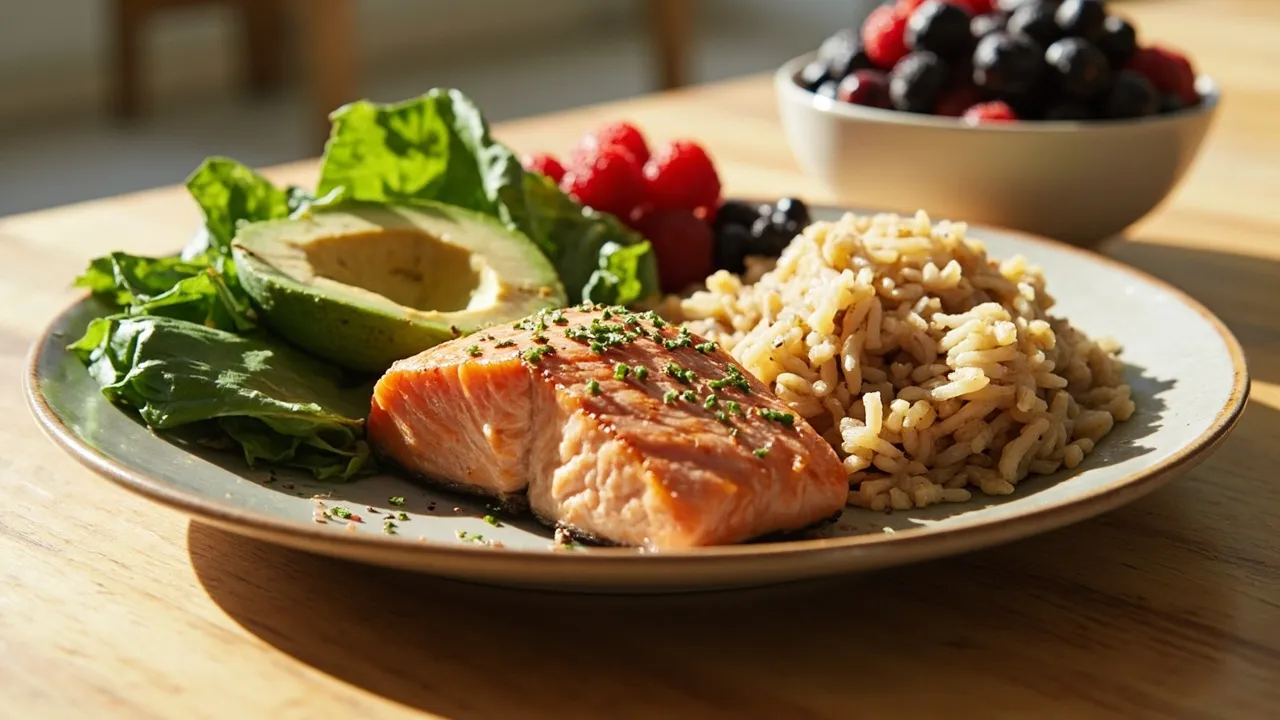
Aim for dinner before 8pm, ideally with at least 3 hours between finishing the meal and sleep. This aligns with the circadian drop in insulin sensitivity and protects the sleep-time growth-hormone + fat-oxidation pulse.
The hormonal-substrate layer
A daily nutritional stack that combines the three levers — Organic Ashitaba chalcones for adiponectin, ApplePhenon® procyanidins for endogenous GLP-1 and rest-time fat oxidation, Morosil® anthocyanins for visceral-fat-area reduction — gives the timing something to act on. None of these is a drug; all three are food-derived compounds with published clinical evidence behind them.
The 8–12 week horizon
Most of the published clinical work on these ingredients measures outcomes over 8–12 weeks. ApplePhenon® at 12 weeks. Morosil® at 12 weeks. Ashitaba chalcone extracts at 8–12 weeks. So the meaningful test is a 3-month daily commitment, not a 30-day trial. The hormonal-substrate rebuild doesn’t happen overnight — but it does happen, and it stacks with the dinner-timing benefit rather than competing with it.
The timing is the trigger. The substrate is what carries the response. Together, they’re the full picture the dinner-time headline was reaching for.
References
- What’s the best time to eat dinner for weight loss and blood sugar control? — https://cnalifestyle.channelnewsasia.com/wellness/best-time-eat-dinner-weight-loss-blood-sugar-588981
- From SG61 to every day: How 6,100 steps can inspire healthier habits — https://www.straitstimes.com/singapore/how-6100-steps-can-inspire-healthier-habits-samsung-health
Related Topics
5 Dangerous Ways Visceral Fat Is Destroying Your Health
It’s OK To Gain Weight As I Get Older? Not Really
Calculate Your BMI – BMI calculator explained
Metabolic syndrome leads to cardiovascular diseases
Here’s Exactly How Much You Should Walk Per Week to Burn Belly Fat — and See Results
Asians with excess visceral fat tend to have poorer memory & learning ability
The Silent Threat: Understanding the Dangers of Visceral Fat
How ApplePhenon™ Targets Stubborn Visceral Fat
Morosil® Moro Orange Extract: The Citrus Secret to Support Healthy Weight Management
The “Tomorrow’s Leaf”: Organic Ashitaba for Aging Well
AshiSlim: Increase GLP‑1 Naturally for Easier Weight Management
Product you may be interested in