Ask a supplement shop how much cordyceps to take a day and you will usually get one of two things: a number with no source attached, or a number lifted from a study that used a completely different material. The honest version of this question has three parts. What did the human studies actually hand their participants? What does a 450 mg capsule label legally mean? And how far apart do those two numbers sit? For this product the gap is wide, and knowing that before you buy is more useful than any single figure on the front of the bottle.
Why there is no official cordyceps dose
Cordyceps has no recommended dietary allowance and no established daily intake, and that is not an oversight. It is a fungus, not a vitamin or a mineral, so there is no nutrient-deficiency target for a regulator to set and no percentage daily value that any cordyceps label can be measured against. Singapore’s Recommended Dietary Allowances do not include it. What exists instead is a set of product-specific decisions: the serving instruction printed on a bottle, the dose used in a particular clinical trial, and the traditional use the fungus carries in Chinese medicine. None of those is a dose that has been shown to produce a particular result in a human being.
That last point matters for reading the pack. The wording used on this product’s page is that cordyceps is “traditionally used for health and strengthening the body.” Traditional use is a description of a long history, not a measured outcome. It is worth separating as you read any cordyceps page, including the one that lists a capsule strength.
What the human studies actually used
Five or six trials carry most of the weight here, and they used between roughly 1 g and 4.5 g of cordyceps material a day. None of them set out to find the optimal dose, and none of them tested this product.
- Cs-4 at about 1 g a day, for 12 weeks. In a double-blind placebo-controlled trial, 20 healthy adults aged 50 to 75 took 333 mg of Cs-4 three times daily for 12 weeks. Their metabolic threshold rose 10.5% and their ventilatory threshold rose 8.5%, but VO2 max did not change in either the treatment or the placebo group. It was a pilot with 20 people in it.
- A commercial formula at about 1 g of CS-4 a day, for 14 days. In 17 competitive amateur cyclists, a formula whose three capsules carried 1,000 mg of CS-4 plus 300 mg of rhodiola was taken as a loading phase of six capsules a day for four days, then three a day for eleven days — so roughly 2 g of CS-4 a day during the loading week and 1 g a day for the rest of the two weeks. The authors concluded that two weeks of this schema was not long enough to change cycling performance, and that whether a longer period would work was left open.
- A combined cordyceps and rhodiola formula, eight participants. A smaller trial in male cyclists found no significant difference between formula and placebo in muscle tissue oxygen saturation, VO2 max, ventilatory threshold or time to exhaustion.
- A C. militaris mushroom blend at 4 g a day. In 28 healthy adults, one week of a 4 g daily blend containing C. militaris changed nothing measurable. A three-week arm showed an improvement in VO2 max of 4.8 ml per kg per minute, which the authors themselves describe as exploratory given the sample size that stayed in the study.
- Cordyceps sinensis at 2 g a day, for 12 weeks. In 30 amateur marathoners, 2 g a day lowered heart rate at the same submaximal intensity by week 8 and improved 5 km run performance at week 12, while the cardiopulmonary test showed no significant difference between groups at any measured point.
- The wider range across the recent literature. A 2026 narrative review of the human exercise studies found five intervention trials published between 2017 and 2024, involving 321 participants aged 16 to 35, using daily doses from 1 g to 12 g over interventions of 1 to 16 weeks, and concluded that the findings were inconsistent and the certainty of the evidence limited by small samples, varied participants and exercise protocols, and preparations that were never standardised or chemically characterised.
Read that list and notice what it does and does not say. It says that the studied amounts are measured in grams, that the dose needed for a measurable change in one small trial was about 1 g a day sustained for 12 weeks, and that several trials at those and higher doses found nothing. It does not say that more is better, because nobody ran the trial that would let anyone say that.
How to read a 450 mg capsule label
Under the US rules that govern how a supplement is presented, a serving size for a dietary supplement equals the maximum amount recommended on the label for one eating occasion, or, in the absence of a recommendation, one unit — a tablet, a capsule, a packet. If the directions say to take one to three tablets with breakfast, the serving size is three tablets. This is the first number to look for, because a capsule count on the front of a bottle tells you nothing about how much is meant to be taken at a time.
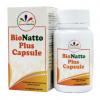
Applied to this label, the directions are “take 1 capsule twice daily, or 2 capsules daily.” One eating occasion is one capsule, so one serving is one capsule and one serving is 450 mg of organic Cordyceps sinensis. Two servings in a day is 900 mg. The alternative wording — two capsules once a day — lands on the same number. A bottle of 60 capsules is therefore a 30-day supply at two a day, or a 60-day supply at one a day, and reading the count without the serving instruction is how people end up either running out too soon or taking half of what they meant to.
Three more things on this label deserve to be read carefully rather than skimmed.
- 450 mg is the weight of the fungal material, not of any single active compound. The panel specifies full spectrum cordyceps containing mycelium, primordia, fruiting bodies, spores and extracellular compounds. That is a description of what the powder is made of, not a potency figure, and there is no published conversion that turns 450 mg of it into a number of milligrams of anything in particular.
- There is no percentage daily value to check it against. Because no daily value exists for cordyceps, no meaningful percentage can appear next to the 450 mg, and the absence of one is normal rather than a warning sign. It also means the number cannot be compared with a vitamin on the same panel — a milligram of one is not a milligram of the other.
- The registration number is a market authorisation, not an efficacy claim. This product is listed with the Ministry of Health Malaysia under MAL19086059TC. Registration means it has been through the registration process; it does not mean the product has been tested for any outcome at 900 mg a day, and no regulatory registration anywhere turns a serving instruction into evidence.
Where 900 mg a day sits against the studies
Now put the two numbers next to each other. The daily amount on this label is 900 mg of cordyceps material. The studied amounts in the human exercise work run from about 1 g a day, through 2 g and 4 g, up to 4.5 g, with the recent review finding 1 g to 12 g across the trials it included. On a purely numerical comparison, 900 mg sits at or just below the bottom of that range.
That comparison has to be handled carefully, in both directions. It is not a reason to take two or three times what the label says. The studies used different preparations from this one — fermented extracts such as Cs-4, C. militaris blends, and whole-fungus material are not interchangeable, and comparing a gram of one with a gram of another is exactly the kind of arithmetic that makes a dosage argument look tidier than the evidence is. And the higher doses that produced results in the literature were tested in preparations that this product is not.
What can be said plainly is this: nobody has run a trial of this material at 900 mg a day, or at any other dose, measuring any outcome. There is no study here that shows a 450 mg capsule does or does not do anything. The studied doses describe what was given to people in past experiments, not what is required, and they should never be read as a target.
What the dose question cannot tell you
Even setting the dose aside, the underlying evidence is thinner than the marketing around it. In trained cyclists, the cordyceps and rhodiola formulas produced no significant performance change in either the 17-person trial or the eight-person one. The 4 g blend changed nothing after one week and improved VO2 max only in an exploratory three-week arm of 28 people. The 1 g Cs-4 pilot found a shift in two exercise thresholds in 20 adults over 12 weeks, with no change in VO2 max and a group of 20 in a single centre. The marathoner trial improved a 5 km run time at week 12 without producing a significant difference on the cardiopulmonary test. And the 2026 review of the whole exercise literature, having looked at five trials and 321 participants in total, called the findings inconsistent and the certainty of the evidence limited.
The same caution applies outside exercise. A Cochrane review of cordyceps preparations in 1,746 people with chronic kidney disease found promising signals on serum creatinine, creatinine clearance and proteinuria, but assessed the risk of bias as high in four studies and unclear in eighteen, and concluded that definitive conclusions could not be made because of the low quality of the evidence. That is the honest shape of the field: a small number of signals, mostly in specific populations, underpowered or at high risk of bias, and no established dose anywhere in it.
On safety, the human safety data is reassuring in the way that a short record can be. Memorial Sloan Kettering’s herb reference reports no major side effects in the studies it reviewed, and the standard advice from HealthHub in Singapore and the NHS is the same: read the label, do not assume a wellness claim on the front of a pack has been through a regulatory review, and talk to a doctor or pharmacist before starting anything if you take prescription medicine, are pregnant or breastfeeding, or are managing a condition. Two cordyceps-specific points are worth raising with a clinician first: cordyceps may lower blood sugar, which matters if you take diabetes medication, and it may increase bleeding risk, which matters if you take a blood thinner such as warfarin.
The bottom line
If one number has to do the work, it is this: the label on this product is a serving instruction, not a research finding. One serving is one capsule of 450 mg of full spectrum organic Cordyceps sinensis, two servings is 900 mg a day, and a 60-capsule bottle is 30 days at that rate. The published human amounts, stated as ranges rather than prescriptions, run from about 1 g a day in a 20-person pilot, through 2 g and 4 g in the exercise trials, to 1 g to 12 g across the recent review — which is to say that this product’s own serving sits at the low end of the studied range, using a material no trial has examined. The most useful thing the dose question gives you is not a number to take but a way to read the one you have: serving size and servings per day, not capsule count, not milligrams of a named compound, and never a number borrowed from somebody else’s trial. And if you take diabetes medication or a blood thinner, or you are pregnant, breastfeeding or managing a condition, ask your clinician first — not because a capsule of cordyceps powder is dangerous, but because nobody has run the study that would tell you what it does for you.
References
- Steve Chen, Zhaoping Li, Robert Krochmal, Marlon Abrazado, Woosong Kim and Christopher B. Cooper — Effect of Cs-4 (Cordyceps sinensis) on exercise performance in healthy older subjects: a double-blind, placebo-controlled trial (Journal of Alternative and Complementary Medicine, Vol. 16 No. 5, 2010) — https://pubmed.ncbi.nlm.nih.gov/20804368/
- Charles P. Earnest, Gary M. Morss, Frank Wyatt, and colleagues — Effects of a commercial herbal-based formula on exercise performance in cyclists (Medicine & Science in Sports & Exercise, Vol. 36 No. 3, 2004) — https://pubmed.ncbi.nlm.nih.gov/15076794/
- Shane N. Colson, Frank B. Wyatt, David L. Johnston, and colleagues — Cordyceps sinensis- and Rhodiola rosea-based supplementation in male cyclists and its effect on muscle tissue oxygen saturation (Journal of Strength and Conditioning Research, Vol. 19 No. 2, 2005) — https://pubmed.ncbi.nlm.nih.gov/15903375/
- Katie R. Hirsch, Abbie E. Smith-Ryan, Erica J. Roelofs, Eric T. Trexler and Meredith G. Mock — Cordyceps militaris improves tolerance to high intensity exercise after acute and chronic supplementation (Journal of Dietary Supplements, 2017) — https://pmc.ncbi.nlm.nih.gov/articles/PMC5236007/
- Fellipe Pinheiro Savioli, Paulo Zogaib, Eduardo Franco, and colleagues — Effects of cordyceps sinensis supplementation during 12 weeks in amateur marathoners: a randomized, double-blind placebo-controlled trial (Journal of Herbal Medicine, Vol. 34, 2022) — https://www.sciencedirect.com/science/article/pii/S2210803322000392
- Medical University of Warsaw and Jagiellonian University research group — Current Evidence of Ergogenic and Post-Exercise Recovery Effects of Dietary Supplementation with Cordyceps militaris in Humans — A Narrative Review (Nutrients, Vol. 18 No. 5, 2026) — https://pubmed.ncbi.nlm.nih.gov/41829950/
- Hui-Wen Zhang, Zhi-Xin Lin, Yuk-Shan Tung, and colleagues — Cordyceps sinensis (a traditional Chinese medicine) for treating chronic kidney disease (Cochrane Database of Systematic Reviews, 2014) — https://pubmed.ncbi.nlm.nih.gov/25519252/
- Memorial Sloan Kettering Cancer Center — Cordyceps (About Herbs, Botanicals & Other Products, last updated 18 January 2023) — https://www.mskcc.org/cancer-care/integrative-medicine/herbs/cordyceps
- US Food and Drug Administration — Dietary Supplement Labeling Guide: Chapter IV. Nutrition Labeling (April 2005) — https://www.fda.gov/food/dietary-supplements-guidance-documents-regulatory-information/dietary-supplement-labeling-guide-chapter-iv-nutrition-labeling
- HealthHub, Ministry of Health (Singapore) — Understanding Health Supplements — https://www.healthhub.sg/well-being-and-lifestyle/personal-care/understandinghealthsupplements_hsa
- NHS — Vitamins and minerals — https://www.nhs.uk/conditions/vitamins-and-minerals/
Also available in 中文.
Product you may be interested in