Singapore is quietly changing how it measures a life well lived — from how many years you add to how much life you add to those years. In “Rethinking ageing: Why function matters more than years”, part of The Straits Times’ year-long “The New Age” healthy-ageing series, clinicians and researchers argue that the real metric of healthy ageing is not a birth date but function — mobility, independence and strength.1

Why Function Is Replacing Years as the Health Metric
The shift is practical: grip strength, gait speed and how quickly you rise from a chair are the functional markers clinicians now track because they predict how long you can keep living independently.1 You cannot see muscle loss on a birthday cake — but you can feel it when the stairs get steeper, the grocery bags get heavier and the tennis match you used to win now takes three days to recover from.
Behind that creeping difficulty is a biological process most people never think about until it starts costing them their favourite activities.
The Muscle-Loss Timeline Nobody Tells You About
Age-related muscle loss begins around age 30 and accelerates sharply after 60. The gradual loss of muscle mass and strength after middle age is called sarcopenia, and it is one of the most under-appreciated drivers of frailty, falls and lost independence in later life. The good news: unlike many age-related changes, muscle loss responds well to two things you control — resistance training and protein. Our guide to gradual loss of muscle mass after middle age (sarcopenia) walks through the full picture.2
The Protein Check: Three Questions for Every Over-40
If you are over 40, protein is no longer optional. It is the raw material your body uses to maintain the muscle that keeps you functional. Here is the simple three-question check we recommend every over-40 reader run on their own diet.
Q1. How much protein do you actually need?
The standard baseline of about 0.8 g per kilogram of body weight per day was designed to prevent deficiency in young adults — and it is likely too low as you age. Protein needs rise with age: research and clinical guidelines commonly recommend 1.2–1.6 g per kilogram per day for older adults, roughly 50–100% above the young-adult baseline, to preserve muscle while appetite and digestion often decline.34
For a 65 kg person, that works out to roughly 80–105 g of protein a day — an amount that is genuinely hard to reach from food alone, which is exactly why the “how much” question matters more after 40 than at 25. Use our protein calculator to work out your personal number.3
Q2. How often should you eat it?
Frequency matters as much as the total. Spreading protein across meals — roughly 20–30 g per meal — beats one giant serving at dinner, because muscle protein synthesis is stimulated per meal and older muscles need a higher per-meal trigger to respond. A breakfast of eggs or a protein shake, a lunch with fish or legumes, and a protein-rich dinner covers the day far better than a single steak.
Q3. What kind of protein fits an over-40 body?
Three things matter more than the whey-versus-plant debate: a complete amino acid profile (all nine essential amino acids in adequate amounts), easy digestibility, and no allergens you cannot tolerate. Many older adults quietly struggle with dairy or soy without connecting it to bloating and digestive discomfort. That is why we compared the options in Plant Protein vs Whey vs Egg White Protein: which is easier on your gut — digestibility is not a footnote, it is the deciding factor.
If You Can’t Face Another Whey Shake
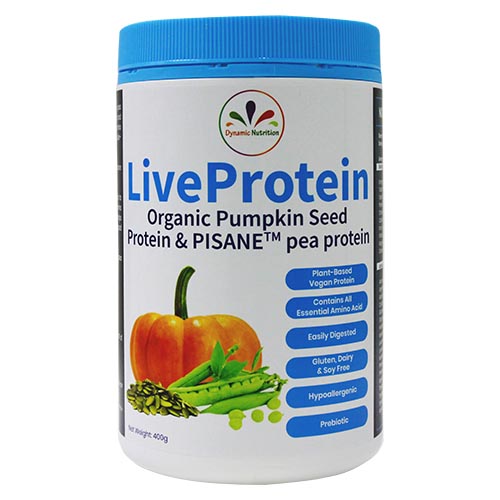
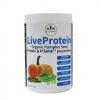
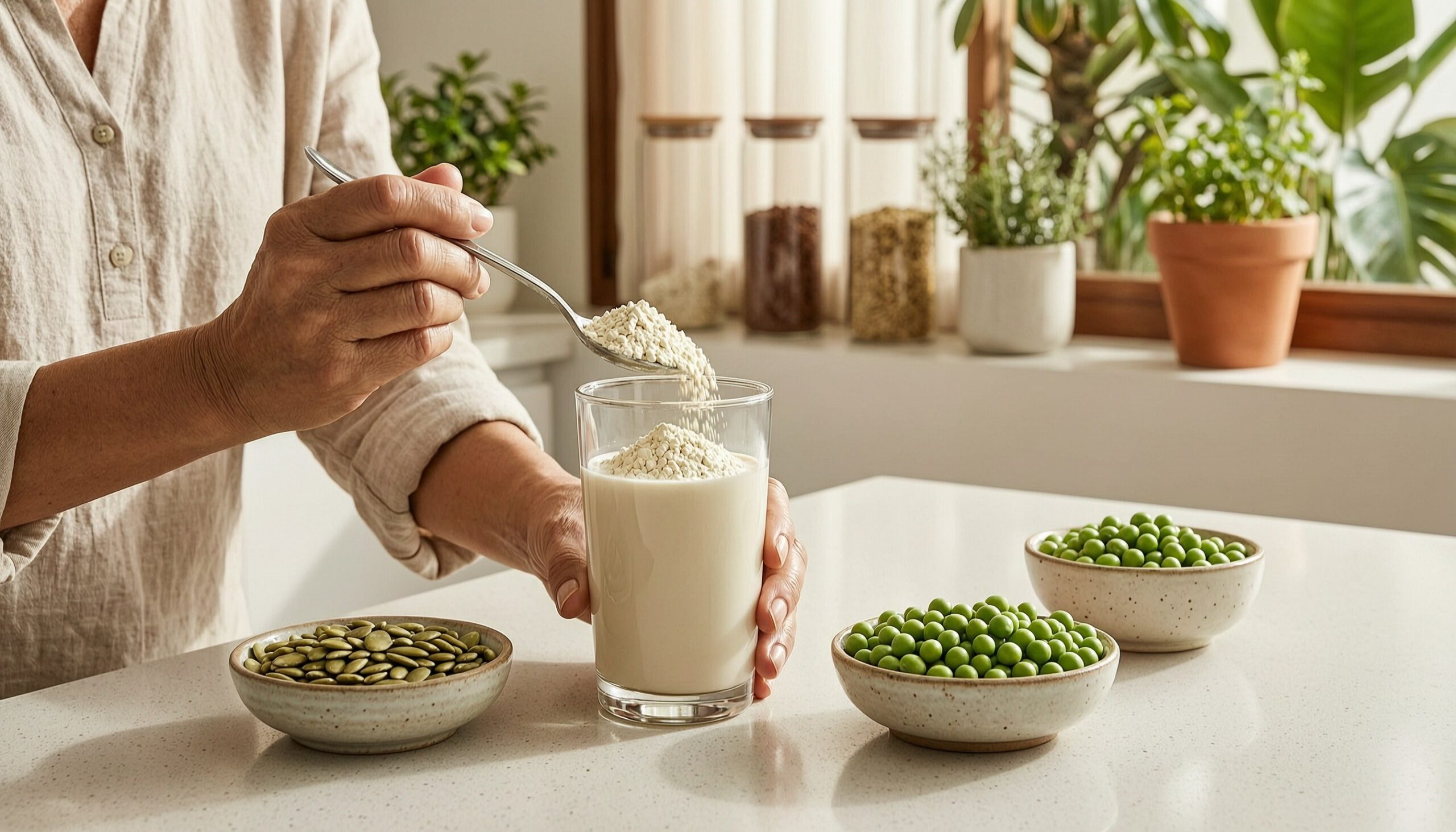
For adults who want the complete amino acid profile of an animal protein but cannot tolerate dairy, soy or heavy shakes, a complete plant protein is the practical answer. The modern solution pairs two plant sources so their amino acid profiles complete each other — pea protein delivers the essential amino acids, while pumpkin seed protein adds density of arginine plus zinc, magnesium and fibre that most powders do not touch. Add a prebiotic like inulin and you get a protein that feeds your muscles and your gut microbiome at the same time.
LiveProtein — organic pumpkin seed protein blended with PISANE pea protein and inulin — fits exactly this brief: vegan, with a complete amino acid profile, and free of gluten, dairy and soy. Two scoops with 200 ml of water deliver 20 g of protein, which slots neatly into the 20–30 g per meal target from Q2. It is the “if you can’t face another whey shake” option that actually does the job.
The Bottom Line
Muscle loss starts earlier than you think — but so does the window in which you can do something about it. The protein check for every over-40 reader: hit 1.2–1.6 g per kilogram per day, spread it across meals, and choose a complete, easily digested protein you can tolerate every day. Function is the new metric of ageing; protein is one of the cheapest ways to keep scoring well on it.
References
- The Straits Times — “Rethinking ageing: Why function matters more than years” — https://www.straitstimes.com/singapore/health/rethinking-ageing-its-not-about-just-adding-years-to-life-but-adding-life-to-years
- Dyna Nutrition — “Gradual Loss Of Muscle Mass After Middle Age (Sarcopenia)” — https://www.dyna-nutrition.com/gradual-loss-of-muscle-mass-after-middle-age-sarcopenia/
- Dyna Nutrition — “Protein Calculator: How Much Protein Do You Need?” — https://www.dyna-nutrition.com/protein-calculator-how-much-protein-do-you-need/
- Harvard T.H. Chan School of Public Health — “Protein: The Nutrition Source” — https://www.hsph.harvard.edu/nutritionsource/what-should-you-eat/protein/
Related Topics
Do Vegetarians Get Enough Protein?
How To Prevent Muscle Loss As You Age?
Protein Calculator: How Much Protein Do You Need?
How Protein Powder Helps You Lose Weight & Gain Muscles?
Gradual Loss Of Muscle Mass After Middle Age (Sarcopenia)
Nutrition For Elderly People: A Complete Guide To Healthy Aging
Product you may be interested in