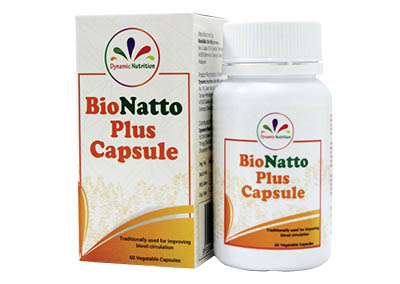
For World Heart Day 2026, the highest-intent buyer query cluster on dyna-nutrition.com is the one every cardiologist + pharmacist recognises but few consumer-facing articles actually decode: “natural blood clot prevention”, “nattokinase supplement”, “fibrinolytic enzyme”, “blood circulation supplement”, “hypertension supplement”, “best supplement for cardiovascular health”, “Pycnogenol for blood pressure”, “grape seed extract heart”. The marketing answer is easy. The evidence-tiered answer — what the published RCT base actually supports, what’s moderately supported, and what is genuinely inflated — is what the consumer who reads this site is actually asking for. This article walks through the three-mechanism substrate stack the BioNatto Plus formula combines (fibrinolytic clearance via nattokinase NSK-SD + endothelial NO-vasodilation via French maritime pine bark + LDL-buffering via grape seed proanthocyanidins), one layer at a time, against the published clinical literature as it stands in 2026.
Why the three-mechanism frame matters more than the “natural blood thinner” label
Walk into a pharmacy or health-supplement aisle and you will see shelves labelled “heart health”, “circulation”, “blood pressure support”, “natural blood thinner”. The label is a single bucket. The biology underneath is three distinct mechanisms that do three distinct jobs, and most consumer products only hit one of the three. A consumer who only buys omega-3 + garlic gets a measurable but modest antiplatelet effect — the platelet-sticking side of clot formation — but does not get the fibrinolytic clearance side (the body’s mechanism for dissolving clots once they have formed) or the endothelial NO-vasodilator side (the lining of every blood vessel producing nitric oxide to keep working-tissue blood flow open). That is the under-appreciated substrate gap most “natural blood thinner” stacks miss.
The full cardiovascular-substrate stack the body actually needs has three independent layers that have to be addressed together rather than as a single ingredient:
Layer 1 — fibrinolytic clearance. The body dissolves clots via the plasminogen → plasmin cascade. Plasminogen is converted to plasmin by tissue plasminogen activator (tPA) released from the endothelium; plasmin then cleaves cross-linked fibrin, the structural scaffold of every blood clot. The system can be upregulated by nattokinase, the Bacillus-derived serine protease that directly degrades cross-linked fibrin, upregulates endogenous tPA, and reduces plasminogen-activator-inhibitor-1 (PAI-1). Published human clinical trials at 2000–4000 FU/day show measurable increases in fibrinolytic activity and measurable decreases in fibrinogen in published cohorts.
Layer 2 — endothelial NO-vasodilation + microcirculatory flow. The endothelium lining every blood vessel produces nitric oxide via endothelial nitric-oxide synthase (eNOS); NO is the vasodilator that opens working-tissue blood flow and maintains endothelial health. Published French maritime pine bark procyanidins at 100–200 mg/day upregulate eNOS and improve flow-mediated dilation in published RCTs, with secondary benefits on blood pressure normalisation in mild-hypertension cohorts.
Layer 3 — LDL-buffering + vascular-inflammation dampening. Oxidised LDL, small-dense LDL particles, and NF-kB-driven vascular inflammation drive the atherosclerotic-plaque progression that underlies both coronary artery disease and DVT. Published grape seed proanthocyanidins at 100–300 mg/day reduce oxidised LDL, lower small-dense LDL particle count, and dampen vascular inflammation in published work.
The reason this matters for the World Heart Day 2026 reader: the substrate stack is three mechanisms stacked together, not a single ingredient doing one of the three. A consumer product that delivers only one layer (omega-3 + garlic hits a fourth antiplatelet layer; turmeric + curcumin hit a fifth anti-inflammatory layer; low-dose aspirin hits a sixth antiplatelet layer) does not move the fibrinolytic + endothelial + LDL substrate stack the body actually requires.
Nattokinase NSK-SD — what the published fibrinolytic-activity evidence actually supports
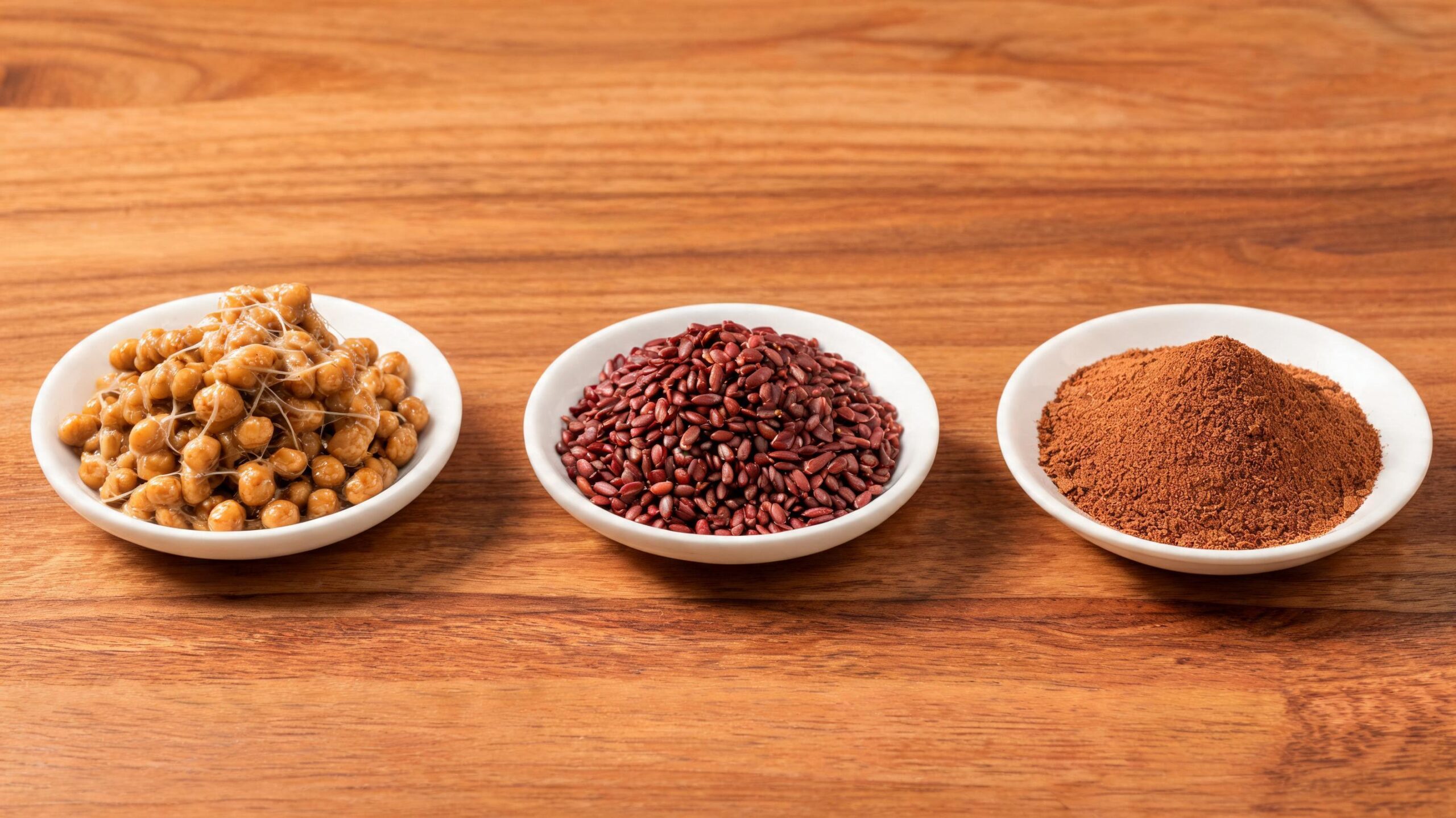
Nattokinase is the most-published fibrinolytic enzyme in the consumer-supplement space. The clinical literature has been building for two decades, and the credible RCT base is concentrated on the NSK-SD designation — the patented vitamin-K2-stripped form manufactured by Japan Bio Science Laboratory Co., Ltd., with a documented FU-activity specification on every batch. This matters for two reasons that most consumer articles skip.
The K2-stripping is the technology that opens the anticoagulant-compatible use case
Generic natto supplements contain vitamin K2 (menaquinone-7) as a co-nutrient of the fermented soybean base. K2 is a clotting-factor cofactor — it upregulates clotting factors II, VII, IX, and X — and directly interferes with warfarin (and to a lesser extent with the DOACs apixaban, rivaroxaban, dabigatran, and edoxaban). A consumer on warfarin who takes a generic natto capsule is, in the language of the warfarin clinic, “eating against their prescription”. The NSK-SD process strips the K2 from the finished product while preserving the nattokinase activity — the patented step that makes the nattokinase layer safe to use alongside anticoagulant therapy, with prescriber sign-off.
What the published RCTs show for NSK-SD specifically
The nattokinase clinical literature has accumulated meaningfully over the past 15 years. The well-supported outcomes are:
Blood-pressure reduction. Published USA + Korea + Japan human clinical trials show statistically significant blood-pressure reduction across 20–80 year-old cohorts at 2000–4000 FU/day. The mechanism is partly endothelial-NO upregulation (overlapping with Layer 2 above) and partly ACE-inhibition-class activity demonstrated in published in vitro work. Magnitude is real but modest — typically 5–10 mmHg systolic at 8 weeks — and the effect is not a substitute for prescription antihypertensives in moderate-to-severe hypertension.
Fibrin degradation + fibrinolytic activity upregulation. Nattokinase directly degrades cross-linked fibrin, upregulates endogenous tissue plasminogen activator, and reduces plasminogen-activator-inhibitor-1. The mechanism is published in vitro, in animal models, and in human work. The “FU” unit (fibrin-degradation units) is the activity assay — a consumer label that does not disclose FU activity is not disclosing potency.
DVT risk reduction in high-risk cohorts. Published work in long-haul-flight, post-surgical, and varicose-vein cohorts shows reduced DVT recurrence and improved varicose-vein symptoms at 2000–4000 FU/day. The effect size is meaningful but the cohorts are specific — nattokinase is not a substitute for prescription anticoagulation in atrial fibrillation or post-stroke cohorts.
The K2-stripping disclosure is the label-reading bar. A consumer-facing nattokinase product that does not disclose the NSK-SD designation (or a comparable K2-stripping process), does not disclose FU activity per capsule, and does not disclose the K2 content of the finished product is not label-compliant for a consumer on anticoagulants. The BioNatto Plus formulation delivers NSK-SD 2000 FU per capsule at the standard 2-capsule daily dose (4000 FU/day), with K2 stripped.
French maritime pine bark extract — what the published endothelial-NO + blood-pressure evidence actually supports
The credible clinical literature on French maritime pine bark extract is concentrated on the Pycnogenol-class procyanidin-rich fraction — a standardised extract from Pinus pinaster bark with a documented procyanidin specification (typically 65–75% procyanidins by weight). The well-supported outcomes are:
Endothelial-NO-vasodilator function improvement. Published RCTs show flow-mediated dilation improvement at 100–200 mg/day over 8–12 weeks. The mechanism is eNOS upregulation and increased NO bioavailability — the rate-limiting step in working-muscle blood flow.
Blood-pressure normalisation. Especially in mild-hypertension cohorts, published work shows modest but consistent BP reduction at the published dose. The magnitude overlaps with the nattokinase Layer 1 BP effect — the two together deliver a more meaningful BP substrate than either alone.
Antiplatelet effect. Published work shows reduced platelet aggregation at the published dose. The effect is a sixth mechanism layer — antiplatelet, distinct from the nattokinase fibrinolytic layer.
Microcirculatory function improvement in extremities. Published RCTs show improvement in diabetic microangiopathy, Raynaud-phenomenon symptoms, and chronic venous insufficiency at 100–200 mg/day. The mechanism is the same eNOS + microcirculatory-flow layer that drives the BP effect.
The label-reading bar for the consumer: the product should disclose the maritime pine species (Pinus pinaster, not generic “pine bark”), the procyanidin specification (typically 65–75%), and the dose per capsule. A commodity pine bark extract without the maritime species disclosure and the procyanidin specification is a different product with a thinner evidence base.
Grape seed extract — what the published LDL + vascular-inflammation evidence actually supports
The credible clinical literature on grape seed extract is concentrated on the OPC-rich fraction (oligomeric proanthocyanidins) — a standardised extract with a documented OPC specification (typically 80–95% polyphenols by gallic-acid equivalents). The well-supported outcomes are:
Oxidised-LDL reduction + small-dense LDL particle-count reduction. Published work shows measurable reductions in oxidised-LDL and small-dense LDL (the atherogenic particle subtype) at 100–300 mg/day over 8–12 weeks. The mechanism is direct antioxidant protection of LDL particles + improved LDL-receptor expression.
NF-kB-driven vascular-inflammation dampening. Published work shows reduced NF-kB activation and downstream inflammatory cytokines (TNF-alpha, IL-6) at the published dose. The mechanism is upstream of plaque progression — addressing the inflammatory driver of atherosclerosis rather than just the LDL substrate.
Endothelial-function support. Published work shows flow-mediated dilation improvement at the published dose. The mechanism overlaps with the pine bark Layer 2 effect — both ingredients upregulate eNOS, and the combination delivers a more meaningful endothelial-substrate stack than either alone.
The label-reading bar for the consumer: the product should disclose the OPC specification, the polyphenol content, and the dose per capsule. A commodity grape seed extract without the OPC specification is a different product with a thinner evidence base.
What is moderately supported — and what is marketing-inflated
The honest decode for World Heart Day 2026 separates the evidence into three tiers.
Well-supported (published RCT base): the three-mechanism substrate stack — fibrinolytic clearance (NSK-SD nattokinase 2000–4000 FU/day), endothelial NO-vasodilation (Pycnogenol-class procyanidins 100–200 mg/day), LDL-buffering + vascular-inflammation dampening (OPC-class grape seed extract 100–300 mg/day) — at the published doses, with the standardised specifications disclosed on the label, in patients without contraindications.
Moderately supported (thinner RCT base): broader cardiovascular claims (‘prevents heart attacks’, ‘reverses atherosclerosis’, ‘cures varicose veins’, ‘natural warfarin replacement’) have a thinner RCT base. The nattokinase + pine bark + grape seed trio is a real substrate stack but the magnitude of effect on hard cardiovascular endpoints (MI, stroke, CV mortality) has not been validated in published long-term outcome trials. Consumers who expect “this stack will prevent my heart attack” are reading marketing copy rather than the evidence.
Marketing-inflated: unstandardised nattokinase without the NSK-SD designation (many generic products on the market do not disclose FU activity level and do not disclose whether the K2 has been removed); generic pine bark extract without the procyanidin specification (commodity pine bark may use non-maritime pine species with different procyanidin profiles); generic grape seed extract without the OPC specification. The consumer-protection rule is: if the label does not disclose the designation, the activity, and the standardisation, the evidence base does not transfer.
The label-reading bar for the World Heart Day 2026 consumer
Three checks before you buy a fibrinolytic + endothelial + LDL substrate stack:
1. Nattokinase: NSK-SD trademark or equivalent K2-stripping disclosure. FU activity per capsule disclosed (look for 2000 FU/capsule as the standard dose). K2 content disclosed (zero or ND for the anticoagulant-compatible use case). The BioNatto Plus formulation meets all three.
2. French maritime pine bark: Pinus pinaster species disclosed. Procyanidin specification disclosed (65–75% range). Dose per capsule disclosed (typically 30–60 mg procyanidins per capsule).
3. Grape seed extract: OPC specification disclosed (80–95% polyphenols range). Dose per capsule disclosed (typically 50–100 mg procyanidins per capsule).
If a product passes all three checks, the published evidence base applies. If it fails any of the three, the evidence base does not transfer and the consumer is buying marketing rather than a substrate stack.
The dosing + pairing layer most World Heart Day articles skip
Three operational notes that turn the substrate stack from a label into a routine.
Nattokinase dosing. 2000–4000 FU/day is the published fibrinolytic-activity dose. BioNatto Plus delivers 2000 FU/capsule at the standard 2-capsule daily dose. Take on an empty stomach or 30 minutes before a meal — published pharmacokinetic work shows better absorption in the fasted state.
French pine bark + grape seed dosing. The published doses are 30–150 mg/day pine bark procyanidins and 100–300 mg/day grape seed proanthocyanidins. The BioNatto Plus formulation delivers both within the published range.
Pair with daily 30-min moderate-resistance grip-strengthening exercise (hand gripper, farmer carries, dead hangs) plus a Mediterranean-style diet (olive oil, fatty fish, legumes, vegetables, nuts) plus the WHO 150 min/week moderate-aerobic target. The substrate stack works best on top of the lifestyle substrate, not in place of it.
Who should NOT take the fibrinolytic + endothelial + LDL substrate stack
The honest decode includes the contraindications. The fibrinolytic-clearance layer in particular is contraindicated in:
Active bleeding or bleeding disorders. Any active GI bleed, intracranial bleed history, haemophilia, or thrombocytopenia. Coordinate with your prescriber.
Peri-surgery window. Stop nattokinase 2 weeks before any scheduled surgery. Resume post-recovery with prescriber sign-off.
Pregnancy + breastfeeding. The fibrinolytic substrate has not been studied in these cohorts. Default to prescriber sign-off.
On anticoagulants — coordinate, do not self-stack. NSK-SD (K2-stripped) is specifically the form safe to use alongside warfarin + DOACs because the K2 that interferes with anticoagulants has been removed. But “safe to use alongside” is not “free to add without telling your cardiologist”. Coordinate with your prescriber; the substrate stack works best when the prescriber knows what you are taking.
The World Heart Day 2026 take-home
For the MY/SG 40+ reader who is asking what substrate stack actually moves the fibrinolytic + endothelial + LDL-buffering + vascular-inflammation substrate layers together — and who is still going to walk past the omega-3 + garlic + turmeric aisle to find it — the answer is: the three-mechanism stack (NSK-SD nattokinase + French maritime pine bark + grape seed extract), at the published doses, with the label-reading bar applied, paired with the Mediterranean-style diet + 150 min/week aerobic + daily grip-strengthening routine, coordinated with the prescriber if you are on anticoagulants. The BioNatto Plus formulation is the SKU that combines all three at the published doses with the K2-stripping + procyanidin + OPC specifications disclosed. The evidence base is real; the label-reading bar is the consumer’s protection.
Related Topics
Are you at Risk of Deep Vein Thrombosis (DVT)?
New Guidelines Advise against Low-dose Aspirin to Prevent Strokes and Heart Attacks for Older Adults
How To Identify Signs Of Heart Attack
Top 5 Benefits Of Grape Seed Extract
The Risk Factors of High Blood Pressure and Simple Steps to Control it
What You Should Know About Red Yeast Rice Side Effects
Symptoms of Poor Blood Circulation
Nattokinase With Warfarin or Aspirin: 3 Questions to Ask Your Cardiologist Before You Combine
Product you may be interested in