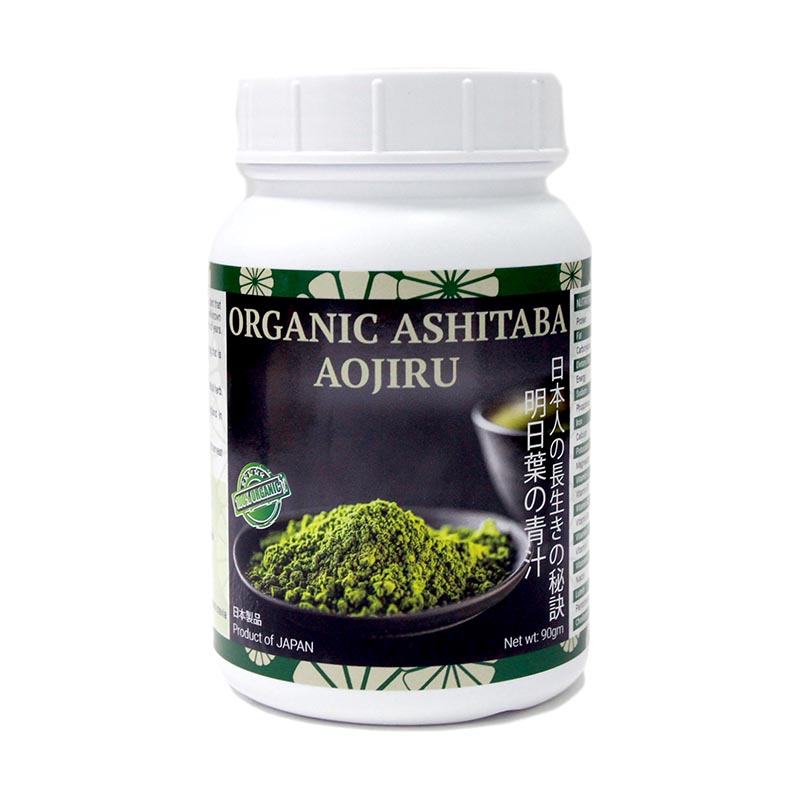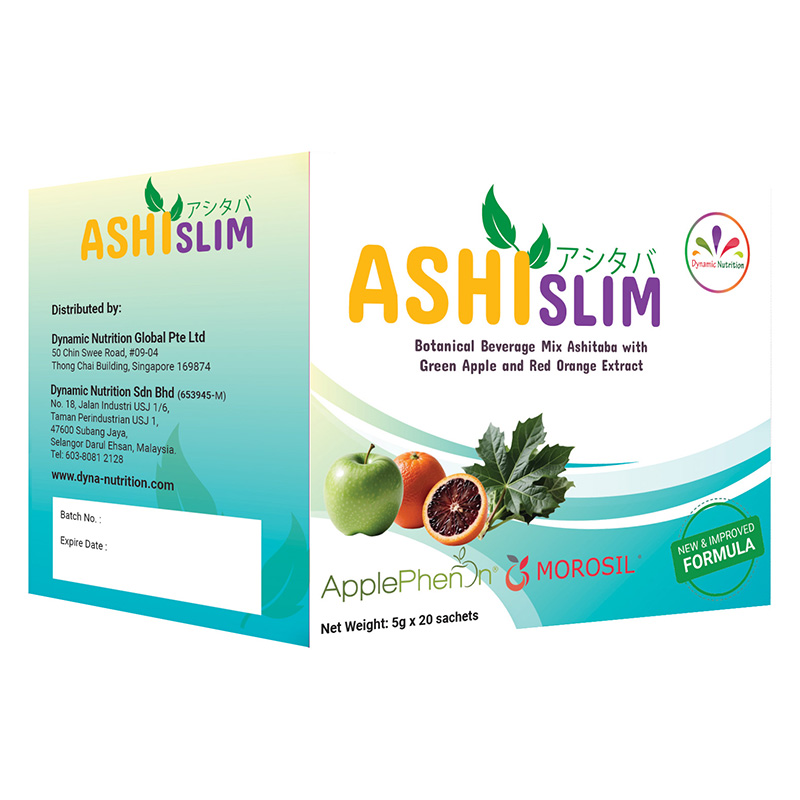
When women cross 40, the conversation around health quietly shifts. It’s no longer just about looking good or feeling energetic today — it’s about staying sharp, mobile, and metabolically healthy for the decades ahead. The supplements, foods, and habits you invest in now start compounding. And one of the most researched green superfoods for this exact life stage is **organic Ashitaba** (*Angelica keiskei*).
But here’s the catch: not all Ashitaba is created equal. The difference between a randomly sourced powder and a **certified organic** one isn’t marketing fluff — it directly affects the concentration of the plant’s most valuable compounds: the chalcones, and especially **4-hydroxyderricin** and **xanthoangelol**, which are the molecules driving most of the longevity research.
In this article, we’ll walk through what the current research actually shows about organic Ashitaba for women over 40 — from chalcone content and aging to glucose metabolism, inflammation, and cellular health — and how to evaluate quality when you buy.
Why “Over 40” Changes the Conversation
Aging in your 40s isn’t a single switch that flips — it’s a slow, layered shift across multiple systems:
– Cellular cleanup slows down. Autophagy — the body’s recycling of damaged cell parts — becomes less efficient, allowing oxidative damage to accumulate.
– Inflammation ticks up. Low-grade chronic inflammation (sometimes called “inflammaging”) gradually becomes a baseline, influencing joint comfort, skin, and energy.
– Glucose metabolism gets less forgiving. Post-meal blood sugar spikes tend to run higher and last longer, especially during perimenopause and menopause.
– Hormonal shifts cascade. Declining estrogen affects bone density, skin elasticity, cardiovascular markers, and even how the liver handles sugars.
This is exactly where Ashitaba’s research profile is most relevant — because its compounds touch all four of those systems.
What Makes Ashitaba “Organic” — And Why It Matters
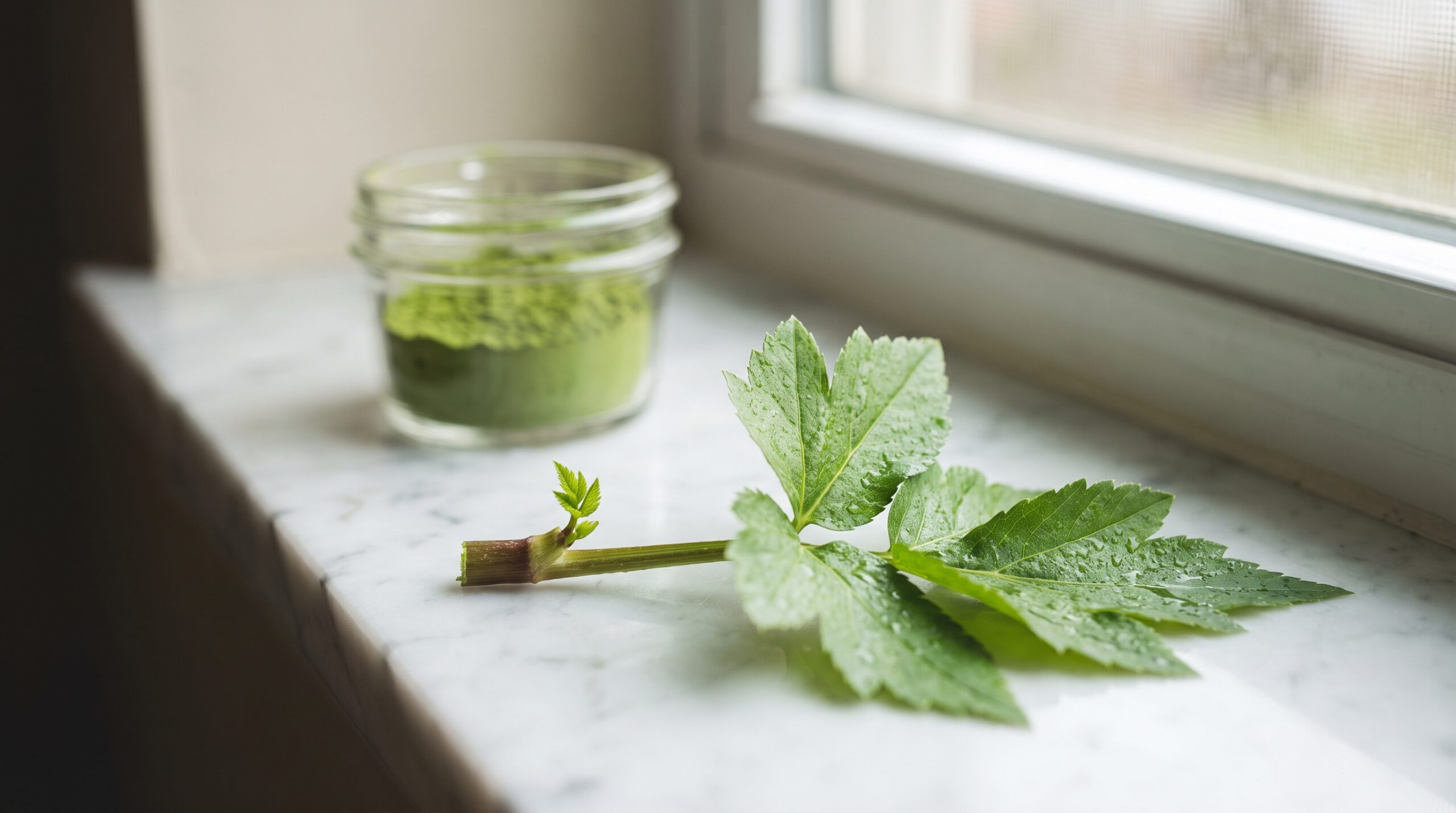
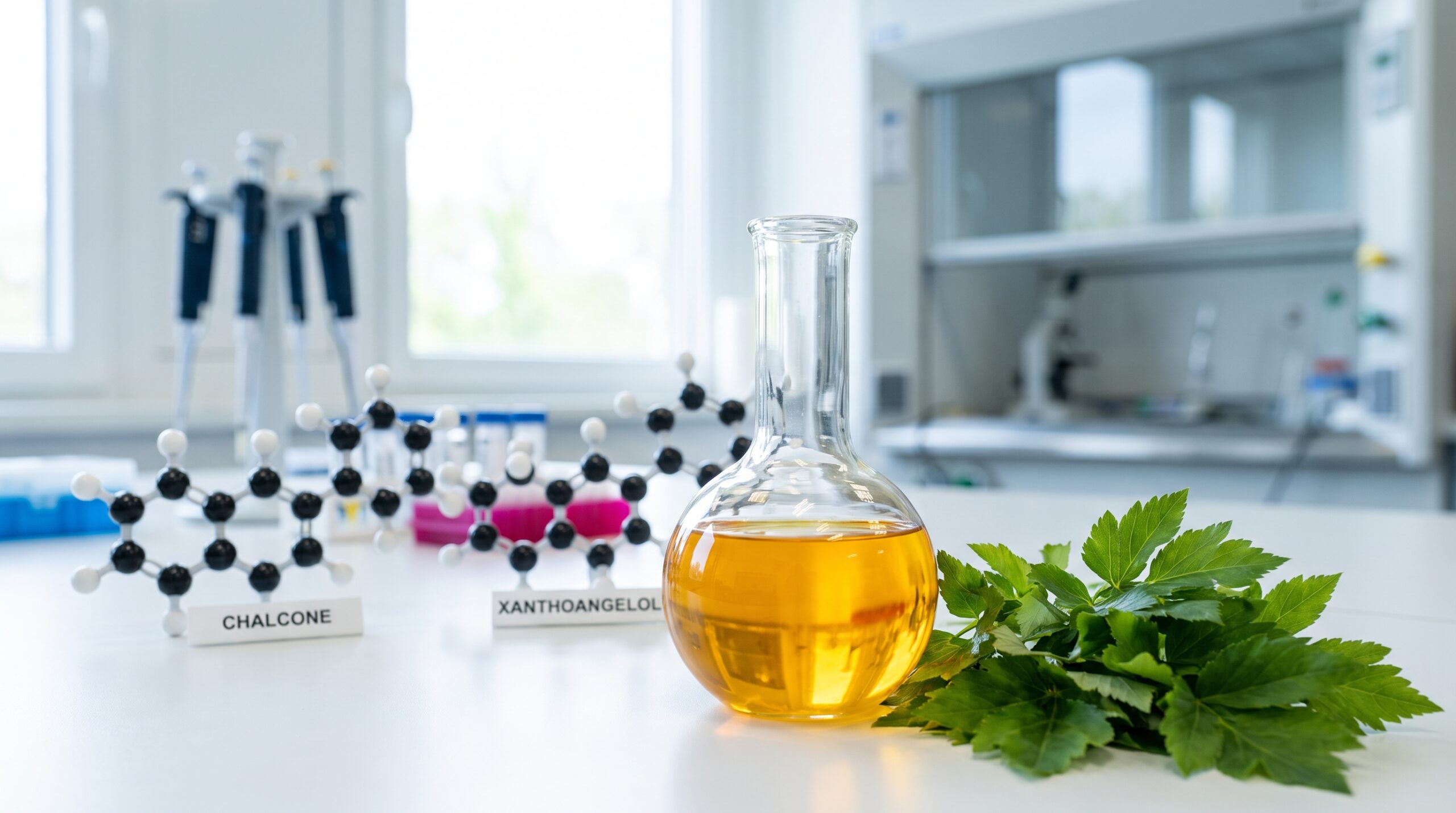
Ashitaba is a fast-growing perennial native to Japan’s Izu Islands. The fresh leaves and stems contain a yellow sap that’s unusually rich in a class of molecules called chalcones. The two most studied are:
– 4-hydroxyderricin (4HD)
– Xanthoangelol (XAG)
These chalcones are not found in meaningful amounts in most other green superfoods. They’re ashitaba’s signature compounds, and they’re what most of the longevity, metabolic, and cellular research is built on.
So where does “organic” come in?
1. Chalcone content is concentrated in stressed, well-tended plants. Research suggests the chalcone levels in Ashitaba respond to growing conditions — soil quality, sun exposure, and the absence of pesticide/herbicide stress. Plants grown in JAS-certified (Japanese Agricultural Standard) organic farms in mineral-rich volcanic highlands tend to deliver more consistent and higher chalcone content than conventionally grown crops.
2. No pesticide residue in the final product. Ashitaba leaves are typically air-dried at low temperature and ground into powder. If the source crop was sprayed, residues concentrate in the powder. For a daily-use longevity supplement, that matters.
3. Cleaner chlorophyll and micronutrient profile. Organic cultivation is associated with higher antioxidant activity in many plant studies. Combined with ashitaba’s already-rich chlorophyll, vitamin B12 (rare in plants), potassium, and B vitamins, the organic version offers a more concentrated, cleaner nutrient package.
The Research: Chalcones, Aging, and Cellular Health
Let’s get specific. Here are the mechanisms with the strongest evidence behind them — and the ones most relevant to women in their 40s and beyond.
1. Autophagy and Cellular Renewal
The big buzzword in longevity research over the last decade is autophagy — the process by which cells identify, break down, and recycle damaged components. When autophagy is robust, cells stay efficient and resilient. When it slows, damage piles up, and aging accelerates.
A landmark 2019 study published in Nature Communications showed that 4,4′-dimethoxychalcone (DMC), a chalcone abundant in Ashitaba, significantly extended both healthspan and lifespan in multiple model organisms by stimulating autophagy. This is the same autophagy pathway that intermittent fasting and caloric restriction are famous for activating — except here it’s coming from a plant compound.
For women over 40, this matters because cellular cleanup is one of the rate-limiting steps in how gracefully you age. Skin, joints, brain, and metabolism all benefit when autophagy is humming.
2. Inflammation and “Inflammaging”
Chronic low-grade inflammation is now recognized as one of the primary drivers of age-related decline. Ashitaba’s chalcones — especially xanthoangelol — have been shown in multiple cell and animal studies to:
– Inhibit NF-κB, a master regulator of inflammatory genes
– Reduce TNF-α and IL-6, two key inflammatory cytokines
– Suppress COX-2 expression, the same enzyme targeted by many anti-inflammatory drugs — but through a gentler plant-based pathway
For women 40+, this translates to potential benefits in joint comfort, skin clarity, cardiovascular markers, and overall energy.
3. Glucose Metabolism and Insulin Sensitivity
This is where Ashitaba is particularly relevant to women navigating perimenopause and menopause, when insulin resistance tends to creep up.
A 12-week randomized clinical trial in overweight adults found that daily Ashitaba chalcone extract significantly reduced visceral fat area and waist circumference. Visceral fat — the deep abdominal fat that wraps around organs — is highly inflammatory and is closely tied to insulin resistance.
Other studies have shown that Ashitaba extract can:
– Improve post-meal blood glucose response
– Enhance adiponectin levels (a hormone that improves insulin sensitivity)
– Reduce triglyceride accumulation in the liver
For women 40+, where hormonal shifts make glucose control harder, this is a meaningful lever.
4. Mitochondrial Function and Energy
Ashitaba’s chalcones have been shown to support mitochondrial biogenesis — the creation of new, healthy mitochondria. Mitochondria are the energy factories in your cells, and their decline is one of the core hallmarks of aging. Better mitochondrial function = steadier energy, less afternoon fatigue, and better resilience under stress.
5. Cardiovascular Markers
Research has found that Ashitaba extract can help:
– Reduce LDL cholesterol oxidation (the actual damaging form of LDL)
– Improve blood pressure markers in hypertensive models
– Support endothelial function (the lining of blood vessels)
Heart disease risk rises sharply after menopause, so these effects are particularly relevant for women 40+.
Organic Ashitaba vs. Other Green Superfoods
Women in their 40s are often already taking spirulina, matcha, moringa, or wheatgrass. How does organic Ashitaba compare?
| Compound / Benefit | Organic Ashitaba | Matcha | Spirulina | Wheatgrass |
|---|---|---|---|---|
| Chalcones (4HD, XAG) | High — ashitaba-specific | None | None | None |
| Autophagy activation | Strong (DMC research) | Mild (EGCG) | Mild | Mild |
| Chlorophyll | High | High | High (but blue-green, different molecule) | High |
| Vitamin B12 | Yes (rare in plants) | No | No (pseudo-B12) | No |
| Visceral fat reduction | Clinical evidence | Some evidence | Limited | Limited |
| Blood sugar support | Clinical evidence | Some evidence | Limited | Limited |
The short version: matcha and spirulina are great for general antioxidant support, but if you’re specifically targeting cellular renewal, glucose metabolism, and the inflammation-aging axis, organic Ashitaba is in a different category.
How to Evaluate Organic Ashitaba Quality
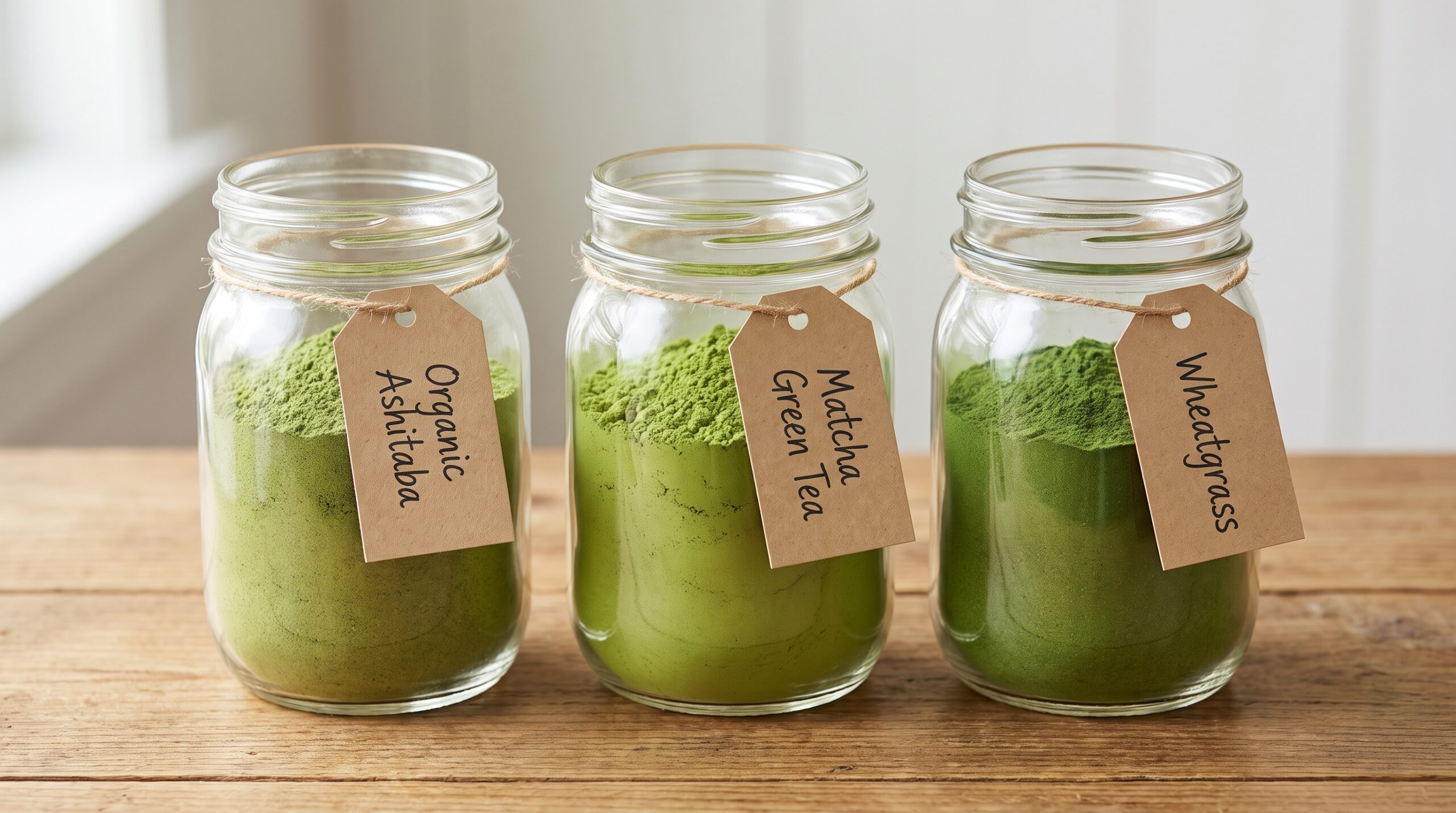
Not every “organic Ashitaba” on the market is the same. Here’s what to look for:
1. JAS or equivalent organic certification. Japan’s JAS standard is the strictest benchmark for organic Ashitaba. Look for it on the label, along with the country of origin (Japan, ideally from Honshu or the Izu Islands).
2. Whole-plant powder (leaves and stems). The yellow chalcone-rich sap is concentrated in the stems, not just the leaves. Powders made from leaves-only will have lower chalcone content. Whole-plant powders give you the full spectrum.
3. Low-temperature drying. Chalcones are heat-sensitive. Hot-air drying destroys a significant portion. Quality producers use low-temperature dehydration to preserve the bioactive compounds.
4. No fillers or sweeteners. Pure organic Ashitaba powder has a naturally earthy, slightly bitter, green taste. If the product is heavily sweetened or has maltodextrin fillers, you’re diluting the active compounds.
5. Lab-tested chalcone content. Premium producers publish chalcone content (e.g., “standardized to X% 4-hydroxyderricin”). This is the equivalent of seeing curcumin percentage on a turmeric label.
6. Vegetarian / vegan verification. A genuine plant-based Ashitaba powder should be suitable for vegetarians and vegans. Some capsules use animal-derived gelatin — for a longevity-focused routine, this matters.
How to Use Organic Ashitaba in Your 40s Routine
The powder form is the most versatile. Here’s a simple daily protocol:
| Time of Day | How to Take It |
|---|---|
| Morning (empty stomach) | 1 tsp (3 g) mixed in warm water below 40°C, with a squeeze of lemon — supports glucose metabolism before breakfast |
| Pre-workout | 1 tsp in a banana + berries smoothie — steady, non-caffeinated energy |
| Afternoon | 1 tsp in matcha or a green tea — stacks antioxidants |
| Evening | Optional second serving before dinner, especially on heavier-carb days |
Suggested daily serving: 3–6 grams (about 1–2 teaspoons), split across the day.
Important: Mix with water below 40°C. Hot water degrades the heat-sensitive chalcones. If you’re adding it to a hot tea, let the tea cool slightly first.
Pair with: Healthy fats (avocado, nuts, olive oil) — chalcones are fat-soluble and absorb better with a small amount of fat in the meal.

Who Should Be Especially Cautious
Organic Ashitaba is well-tolerated by most people, but a few groups should check with a healthcare provider first:
– Pregnant or breastfeeding — safety data is limited
– On blood-thinning medication — some chalcones can have mild antiplatelet effects
– On diabetes medication — Ashitaba can lower blood sugar, so doses may need adjusting
– Scheduled for surgery — stop 2 weeks before due to potential blood-thinning effects
The Bottom Line
For women over 40, organic Ashitaba is one of the few green superfoods with a research profile that directly targets the systems most affected by midlife aging: cellular cleanup, inflammation, glucose metabolism, and mitochondrial function. The organic certification isn’t a marketing line — it correlates with cleaner cultivation, higher chalcone content, and a more concentrated active compound profile.
If you’re already investing in quality sleep, resistance training, and a balanced diet, adding a daily serving of organic Ashitaba is a small, well-evidenced step that compounds over the decades ahead.