Search for “ashitaba side effects” and the honest answer is that almost everything written about them is either a guess, a claim copied from a marketing page, or a warning that is really an admission that nobody has checked. Here is what is actually documented, and it is worth being precise about that, because the safety picture for ashitaba is unusually well examined in animals and unusually thin in people. Two regulators have assessed ashitaba sap as a food ingredient, a toxicology programme has run the standard battery of tests, and a small number of human trials reported adverse-event monitoring. That is a real evidence base. It is also almost entirely made up of rat studies and short human pilots, and it leaves several large questions unanswered. This article walks through what the safety data covers, what it does not, and which groups of people have a specific reason to raise it with a clinician first.
What “side effects” actually means for a food ingredient
Before going further it is worth clearing up a category error, because it is the source of most of the confusion. Ashitaba (Angelica keiskei) is a plant used as a vegetable in Japan and sold as a food supplement elsewhere. It is not a pharmaceutical, and no regulatory body has approved it to treat any disease. That means the phrase “side effects” in the way people usually use it — the unwanted consequences of a drug — does not quite fit. The correct question is narrower and more useful: at what intake level, and in which populations, has ashitaba actually been shown to cause harm?
That framing matters because the two worst answers in this category are both common. The first is the reassurance without evidence: “ashitaba is a traditional vegetable, so it is obviously safe.” Traditional use is a genuine input to safety assessment, but it is not a substitute for one, and in this case the traditional-use history covers a culinary ingredient in a food culture, not the concentrated powders and extracts sold as supplements. The second is the alarm without evidence: pages that list “possible side effects” for ashitaba without naming a single study, a dose or a symptom are not describing evidence. They are padding a list to look thorough.
What the animal safety data actually covers
This is the strongest part of the picture, and it is genuinely reassuring in the narrow sense that the tested materials showed no toxicological red flags at tested doses. A Japanese research group ran a full safety evaluation on ashitaba powder: a bacterial reverse mutation test on five bacterial strains with and without metabolic activation found no reverse-mutation-inducing activity, a single-dose oral toxicity test in rats at 3,500 mg/kg/day showed no adverse effects in either sex, and a 13-week repeated-dose study at 875 and 1,750 mg/kg/day showed no adverse effects across body weight, food consumption, blood biochemistry, haematology, urinalysis, ophthalmoscopy, organ weights or histopathology. The authors described ashitaba as a very safe foodstuff under the conditions of that study.1
A separate toxicological assessment of ashitaba chalcone powder ran the modern regulatory battery in a GLP-accredited laboratory: bacterial reverse mutation, a chromosome aberration assay and an in vivo micronucleus assay, all negative for genotoxicity. Its 90-day rat study reported the NOAEL — the no-observed-adverse-effect level — at 300 mg/kg body weight in both males and females.2 Two findings in that study are worth flagging rather than glossing over, because they are the closest thing in the ashitaba literature to a real safety signal:
The first was that the 300 and 1,000 mg/kg/day groups showed changes in coagulation parameters and plasma lipids, which the assessors described as expected known physiological effects rather than as toxicity. The second was a type of kidney lesion seen only in male rats, which the assessors classified as alpha 2-urinary globulin nephropathy — a finding that is specific to male rats and is not directly translatable to humans. Neither of these is an alarm. Both are reasons a reader who is on a blood-thinning medication, or who has kidney disease, should get individual advice rather than read a generic safety summary.2
It is also worth being clear about what animal toxicology can and cannot do for you. It tells you about a material at a dose, over a fixed window, in one species. It cannot tell you what happens when a person takes it for five years, what happens at the specific point where their other medications start interacting with it, or what happens in pregnancy — none of which are questions a rat study was designed to answer.
What the regulators concluded
Two regulatory assessments cover ashitaba, and they are worth reading side by side because they draw their safe-intake figure differently and land in different places.
The European Food Safety Authority’s Panel on Nutrition, Novel Foods and Food Allergens assessed ashitaba sap as a novel food in 2024. It noted the principal constituents relevant to safety as chalcones at 1%–2.25% and furanocoumarins below 0.01%, found no concerns regarding genotoxicity, and used a 90-day oral toxicity study to establish a safe dose of 0.5 mg/kg body weight per day. For the target population — adults, explicitly excluding pregnant and lactating women — that works out at 137 mg per day of the novel food, which the Panel noted is lower than the use level the applicant had proposed. That is the kind of tightening that tells you a regulator took the safety question seriously rather than rubber-stamping it.3
In the United States, ashitaba chalcone powder containing 8% chalcones was submitted under the FDA’s GRAS notification process, which closes with a no-questions-asked letter rather than an approval. The notifier was Japan Bio Science Laboratory-USA, and the notice closed on 7 April 2022 — after which the FDA ceased evaluating it at the notifier’s request, the standard way a GRAS conclusion is brought to a close.4 The EU’s own novel food summary for the same ingredient records a NOAEL of 300 mg/kg body weight per day for ashitaba sap powder, derived from the same 90-day study, based on an increased incidence of dilated lacteals in the jejunum of rats given 1,000 mg/kg/day.5
Here is the part that is easy to misread. A GRAS conclusion and a novel food authorisation are both statements about food safety. Neither is a statement that the ingredient is effective, and neither is a claim that it is safe at any dose a person might decide to take. The EFSA figure in particular is a ceiling for a specific product form in supplement use, not a recommendation about how much anyone should take.
What the human safety data actually covers
This is where the evidence thins out, and it is important to be clear about the scale of what exists rather than presenting a handful of trials as a body of evidence.
The earliest and most-cited human safety data comes from a 2012 pilot study in which nine adult subjects with metabolic syndrome ingested ashitaba green juice powder at 6.2 g per day, containing 12.3 mg of chalcones, for eight weeks. Safety was assessed with blood chemistry, haematology and urinalysis; the reported result was no adverse clinical changes in blood or urinary analysis and no serious symptom observed. Note the two numbers that constrain everything that follows: nine participants, and eight weeks.6
A 2022 two-part randomised, placebo-controlled, double-blind pilot study on ashitaba chalcone powder looked at body weight and visceral fat in slightly obese adults, and a 2024 randomised, double-blind, parallel-group comparison looked at visceral fat area and waist circumference in overweight people. Both are pilot-scale studies of a dietary ingredient with monitoring of clinical measurements; neither was designed as a long-term safety trial, and neither can speak to rare or delayed harms.78
The most useful single framing comes from a 2016 review of ashitaba’s medicinal uses and pharmacology, which catalogued the plant’s constituents and concluded that while in vitro results show promise, the in vivo efficacy and clinical relevance of the plant has yet to be confirmed for most of the activities claimed — and that in vivo and clinical trials on the less abundant bioactive compounds are warranted. The same review catalogued the toxicology work already described. It is a fair summary of the whole field: a well-characterised chemistry, a clean toxicology file, and a human literature that has not yet caught up with either.9
What has never actually been measured
This is the part of the question that search results usually skip, and it is where the useful information for a reader actually lives. Each of the following is a genuine gap in the ashitaba safety record, not a rhetorical flourish:
Long-term use. The longest human exposure in the literature cited here is weeks, not months or years. A supplement that is harmless over three months tells you very little about a product intended to be taken daily for a decade. The 90-day rat studies are the longest-duration evidence that exists for any sustained exposure, and even those cannot model a decade.
Pregnancy and breastfeeding. The EFSA assessment set its target population as adults excluding pregnant and lactating women, and no human pregnancy safety data exists in this literature. This is not a hint that something bad happens; it is simply a boundary of what has been studied, and it is the clearest example of a group for whom the answer is “ask a clinician” rather than “probably fine”.
Drug interactions. There is no human interaction study for ashitaba with anticoagulants, antiplatelet drugs, antihypertensives or antidiabetic medicines. The animal coagulation findings described earlier are the closest thing to a signal, and they were seen in rats at doses far above typical supplement intake. That combination — a plausible mechanism, no human data — is exactly the situation in which general advice stops being useful.
Children, older adults and people with existing conditions. Almost none of the human work was done in these groups, and the rat toxicology used healthy adult animals. Kidney disease, liver disease and blood-thrombosis risk are all areas where the animal findings would matter most and the human data is thinnest.
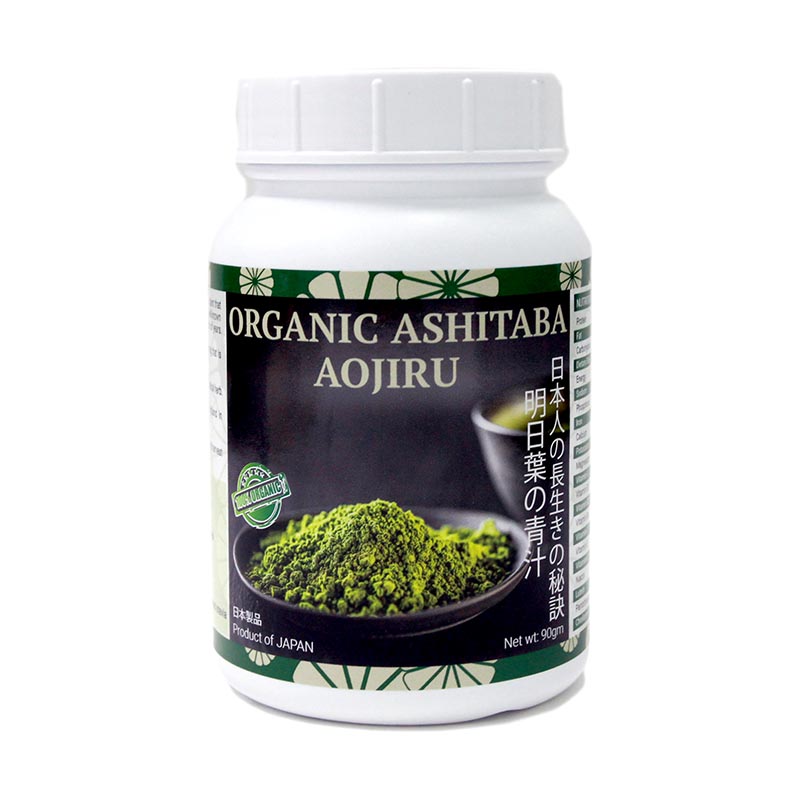
Product-to-product variation. A cup of ashitaba leaf powder in food, a standardised sap powder standardised to a stated chalcone percentage, and a purified chalcone capsule are different materials with different dose exposures. The safety assessments cover specific forms — sap powder, and sap powder standardised to 8% chalcones — so a safety conclusion for one of them does not automatically transfer to a jar on a shelf that says something else on the label.
Who should talk to a doctor first
Putting the evidence above into practical shape, the people for whom this is a conversation to have before starting rather than a search to run afterwards are:
Anyone who is pregnant, breastfeeding or planning either. The regulatory assessments exclude this group outright, and there is no human data to reason from.
Anyone taking a blood-thinning medication, including warfarin, or an antiplatelet drug such as aspirin or clopidogrel, or anyone with a clotting disorder. The 90-day rat study documented changes in platelet counts and clotting times at the higher dose groups. There is no human interaction study either way, so this is a gap rather than a finding — and gaps are exactly what a prescriber is positioned to reason about.
Anyone on medication for blood pressure or blood sugar, or anyone with a history of low blood pressure or hypoglycaemia. A substantial part of the published ashitaba literature is about metabolic markers, which means the ingredient has plausibly been taken alongside these drug classes by study participants without the interactions being specifically studied.
Anyone with kidney or liver disease, and anyone who has had an unexpected reaction to a supplement before. The rat nephropathy finding, while rat-specific, is the reason this group warrants individual advice.
Anyone scheduled for surgery. This is a standard precaution for any supplement rather than a specific ashitaba finding, and it is a question worth asking because it is quick to ask and awkward to answer in a pharmacy queue.
And anyone who is pregnant-adjacent in another sense — a person who wants to start a new supplement and simply wants the interaction check done properly — which is a reasonable use of a pharmacist’s time and should not feel like an overreaction to a vegetable.
How to read the safety information on a jar
Two practical points close the loop between the evidence and the shelf. First, look for the plant part and the standardised percentage: the safety assessments apply to sap powder, and a label that states a chalcone percentage is telling you which of the studied materials you are actually buying. Second, treat any “no side effects” claim on a label as a marketing statement rather than a safety conclusion, because the same body of evidence that regulators relied on contains open questions that nobody has closed.
For readers in Singapore and Malaysia, HealthHub’s guidance on health supplements is the practical regulatory reference for what a supplement claim should and should not say, and it is worth reading alongside any product page. It is also the reminder that a supplement sold as food carries a different standard of evidence from a registered medicine, which is precisely why the safety question needs to be asked more carefully rather than less.10
The bottom line
The safety data on ashitaba is better than its reputation in either direction. On the measured questions — does it cause cancer in laboratory testing, does it damage organs over three months in animals, has anything been reported in short human trials — the record is clean, and two major regulators have assessed the ingredient on the basis of that record. What the record does not contain is any long-term human data, any data in pregnancy, any drug-interaction study, and any data in the specific populations whose existing conditions and medications make those gaps matter most.
So the accurate summary is not that ashitaba is proven safe and not that it is dangerous. It is that it is a food ingredient with a well-run toxicology file and a thin human safety file, and that the groups for whom the thinness is consequential are identifiable in advance. If you fall into one of them, that is a five-minute conversation with a doctor or pharmacist rather than a research project — and it is worth having before you start, not after something makes you wonder.
This article does not promise any health outcome from ashitaba, and nothing in it should be read as medical advice. It reports what has been measured, what has not, and where the sensible next step is individual rather than general.
References
- Hiromu Ohnogi, Shoko Hayami, Yoko Kudo, Shigetoshi Mizutani and Tatsuji Enoki — Safety Evaluation of Ashitaba (Angelica Keiskei) on Mutagenic Test, Single and 13-Weeks Oral Toxicity Tests (Journal of Clinical Medicine, Vol. 9 No. 1, Article 75, 2012) — https://doi.org/10.1625/jcam.9.75
- Robert R. Maronpot and colleagues — Toxicological assessment of Ashitaba Chalcone (Food and Chemical Toxicology, Vol. 77, 2015, pp. 111-119) — https://pubmed.ncbi.nlm.nih.gov/25576957/
- European Food Safety Authority, Panel on Nutrition, Novel Foods and Food Allergens (NDA) — Safety of ashitaba sap as a Novel food pursuant to Regulation (EU) 2015/2283 (EFSA Journal, Vol. 22 No. 3, 2024) — https://www.efsa.europa.eu/en/efsajournal/pub/8645
- US Food and Drug Administration — GRAS Notice GRN 1012: Powdered sap from Angelica keiskei (ashitaba) containing 8% chalcones (closed 7 April 2022) — https://hfpappexternal.fda.gov/scripts/fdcc/index.cfm?set=GRASNotices&id=1012&sort=GRN_No&order=ASC&startrow=1&type=basic&search=22
- European Commission, Directorate-General for Health and Food Safety — Novel food summary: Ashitaba sap powder (Japan Bio Science Laboratory) (2019) — https://food.ec.europa.eu/document/download/db4eb0cc-ab3d-444a-badc-1af0f82c5c85_en
- Hiromu Ohnogi, Shoko Hayami, Yoko Kudo and Tatsuji Enoki — Efficacy and Safety of Ashitaba (Angelica keiskei) on the Patients and Candidates with Metabolic Syndrome: A Pilot Study (Journal of Clinical Medicine, Vol. 9 No. 1, 2012) — https://www.jstage.jst.go.jp/article/jcam/9/1/9_1_49/_article/-char/en
- Hashimoto, Nakata and colleagues — A two part randomized, placebo controlled double blind pilot study to determine the effect of ashitaba (Angelica keiskei) chalcone powder (ChalCurbR) on body weight and visceral fat in slightly obese adults (Journal of Medical Science and Research, 2022) — https://medcraveonline.com/AOWMC/a-two-part-randomized-placebo-controlled-double-blind-pilot-study-to-determine-the-effect-of-ashitaba-angelica-keiskei-chalcone-powder-chalcurbr-on-body-weight-and-visceral-fat-in-slightly-obese-adults.html
- Naoki Watanabe and colleagues — Randomised, double-blind, parallel group comparison of Ashitaba (Angelica Keiskei) chalcone effects on visceral fat areas and waist circumference of overweight persons (International Journal of Food Sciences and Nutrition, Vol. 75 No. 4, 2024) — https://www.tandfonline.com/doi/10.1080/09637486.2024.2334070
- Lindsay K. Caesar and Nadja B. Cech — A Review of the Medicinal Uses and Pharmacology of Ashitaba (Planta Medica, Vol. 82 No. 14, 2016, pp. 1236-1245) — https://pubmed.ncbi.nlm.nih.gov/27399234/
- HealthHub, Ministry of Health (Singapore) — Understanding Health Supplements — https://www.healthhub.sg/well-being-and-lifestyle/personal-care/understandinghealthsupplements_hsa
Product you may be interested in