You have probably heard the phrase “ashitaba” in passing — on a supplement label, in a wellness thread, or in a longevity documentary. It is one of those ingredients that everyone vaguely associates with “the longevity plant from Japan” but few articles actually decode. What is it? What does it do? And what is the difference between the marketing claim and what the research actually supports?
This guide walks you through the ashitaba story from the ground up — the plant itself, the bioactive compounds inside it, the honest state of the science, and the under-discussed reason volcanic soil changes the nutritional profile. By the end you will know exactly what ashitaba does, what it does not, and why it pairs so well with wheatgrass and barley grass in a daily-nutrition stack.
What is ashitaba?
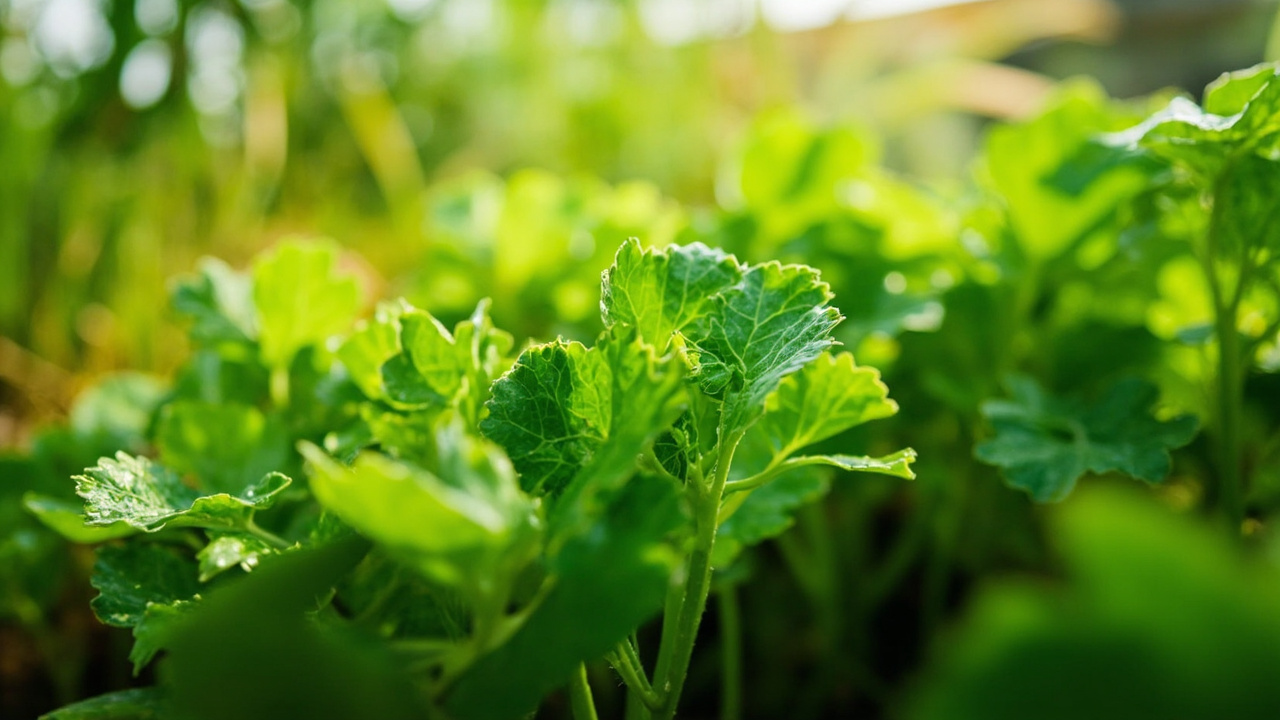
Ashitaba (Angelica keiskei) is a perennial plant in the celery family (Apiaceae), native to the volcanic coastal cliffs of Japan’s Izu Islands — most famously Hachijo Island. It has been used in Japanese folk medicine for centuries, and its name literally means “tomorrow leaf.”
Modern English-language wellness writing tends to drop the cultural context and jump straight to the bioactives. But the plant itself is worth a moment: ashitaba grows as a bushy clump of deeply serrated, bright-green leaves on a thick central stalk. The leaves are glossy and roughly the size of an open hand. Cut a stalk and you will see a vivid yellow sap ooze out — this sap is where the most-studied compounds in ashitaba live.
Today ashitaba is cultivated in Japan, Taiwan, China, Korea, Indonesia, and a handful of tropical and subtropical farms outside East Asia. It is sold as fresh leaves for cooking, dried leaf powder, stem powder, and standardized chalcone extracts.
Why is it called the “tomorrow leaf”?
There are two folk stories. The first: ashitaba grows so vigorously that if you pick a leaf today, a new one is in its place by tomorrow. The second, more poetic: people who drink ashitaba tea every day wake up “tomorrow” with renewed vitality.
The real-world observation behind both stories is simply that ashitaba is unusually fast-growing for a perennial herb — a useful trait for sustainable cultivation. The longevity associations come from the observation that Hachijo Island, where ashitaba has been a daily food for centuries, historically had one of Japan’s highest concentrations of centenarians. Whether ashitaba causes that is a different (and much less clear) question, which we will return to.
The bioactive compounds inside ashitaba
Ashitaba’s yellow sap contains a class of compounds called chalcones — specifically 4-hydroxyderricin and xanthoangelol. These are the molecules most of the in-vitro and animal research has focused on.
The broader nutrient profile of ashitaba leaves includes:
- Chalcones (4-hydroxyderricin, xanthoangelol) — the signature compounds, studied for anti-inflammatory, blood-glucose-modulating, and lipid-metabolism effects in cell and animal models.
- Chlorophyll and carotenoids — the green-leaf basics, including beta-carotene and lutein.
- Coumarins — a smaller but studied class (furocoumarins in particular) that give some celery-family plants their UV-protective character.
- Dietary fibre and minerals — potassium, calcium, magnesium, iron, and (in volcanic-soil ashitaba) a wider spectrum of trace minerals, which we will come to.
- Vitamin K1, vitamin C, B-vitamins — in modest but useful amounts for a leafy green.
The takeaway: ashitaba is nutritionally a leafy green plus a chalcone-rich yellow sap. The chalcones are what make ashitaba distinctive; the green-leaf side is what makes it a sustainable daily food rather than a pharmaceutical.
What the science actually says (and what it does not)
Here is the honest summary, broken into tiers.
Tier 1 — Supported in cell and animal studies: Ashitaba chalcones (4-hydroxyderricin, xanthoangelol) show anti-inflammatory activity, blood-glucose modulation, and lipid-metabolism effects in cell culture and rodent studies. These are real biochemical observations in controlled conditions.
Tier 2 — Supported in small human pilot studies: A handful of small human trials (typically a few dozen participants, short duration) have reported changes in markers like waist circumference, fasting blood glucose, and liver-enzyme levels with ashitaba extract. These are suggestive but far from conclusive.
Tier 3 — Not supported: There are no large, long-duration, placebo-controlled human clinical trials showing that ashitaba reverses aging, prevents specific diseases, or extends lifespan in the way some marketing implies. Anyone claiming that is overstating the evidence.
So the realistic positioning of ashitaba today is this: a leafy green with an unusually well-studied chalcone fraction. Worth including in a varied daily-nutrition pattern; not a substitute for medical care, sleep, or movement.
The volcanic-soil factor most articles skip
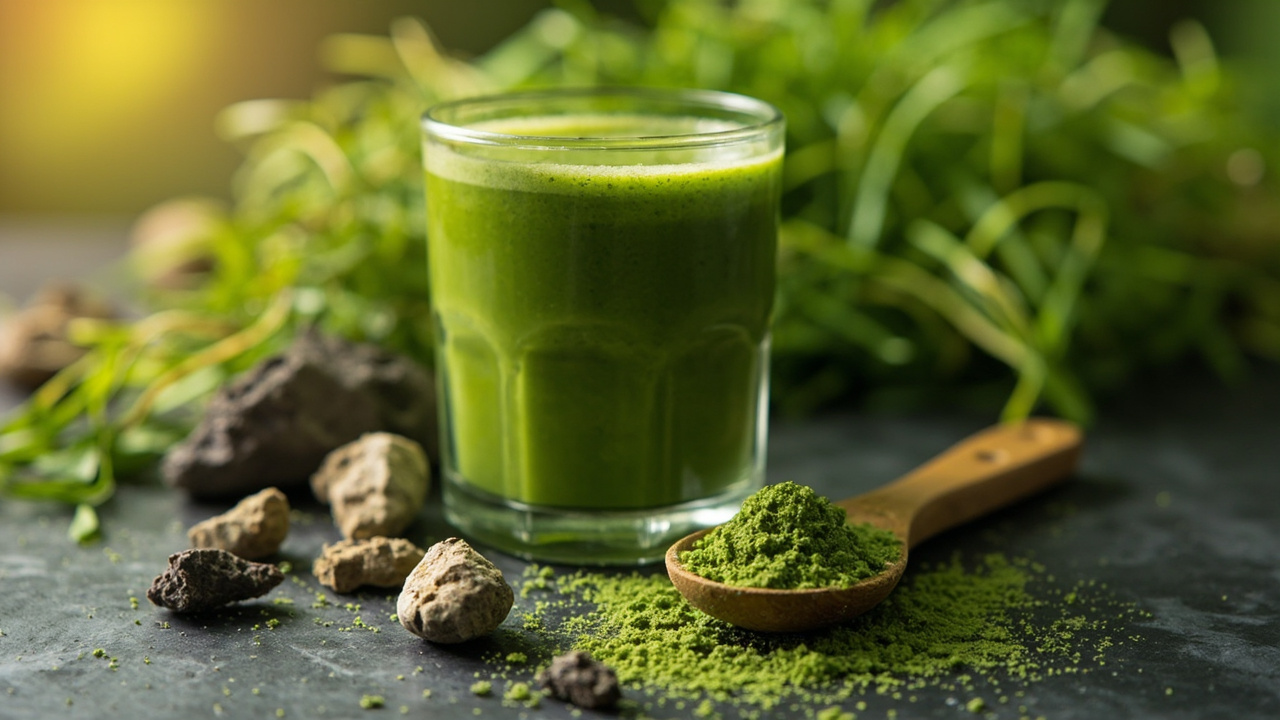
Here is the under-discussed angle. Ashitaba grows wild on volcanic islands. Volcanic soil is rich in trace minerals — manganese, selenium, zinc, chromium, and dozens more — many of which act as cofactors for the body’s own antioxidant enzymes.
- Manganese — cofactor for superoxide dismutase (SOD), the enzyme that neutralises one of the most common reactive oxygen species in cells.
- Selenium — cofactor for glutathione peroxidase, another core antioxidant enzyme.
- Zinc — cofactor for over 300 enzymes, including several in the immune system.
An ashitaba plant grown in mineral-dense volcanic soil is, in a very literal sense, packaging those minerals into its leaves and sap. The chalcones get the marketing attention, but the trace-mineral profile may matter more for everyday dietary use than the headline compounds.
This is also the reason the Hachijo-Island longevity observation is hard to dismiss out of hand. It is unlikely to be “ashitaba alone” — the islanders’ diet also includes wheatgrass, barley grass, sweet potatoes, fish, and a low-stress rural lifestyle — but the dietary pillar (ashitaba plus other volcanic-soil greens grown on the same cliffs) is genuinely distinctive.
Why the wheatgrass + barley grass pairing matters
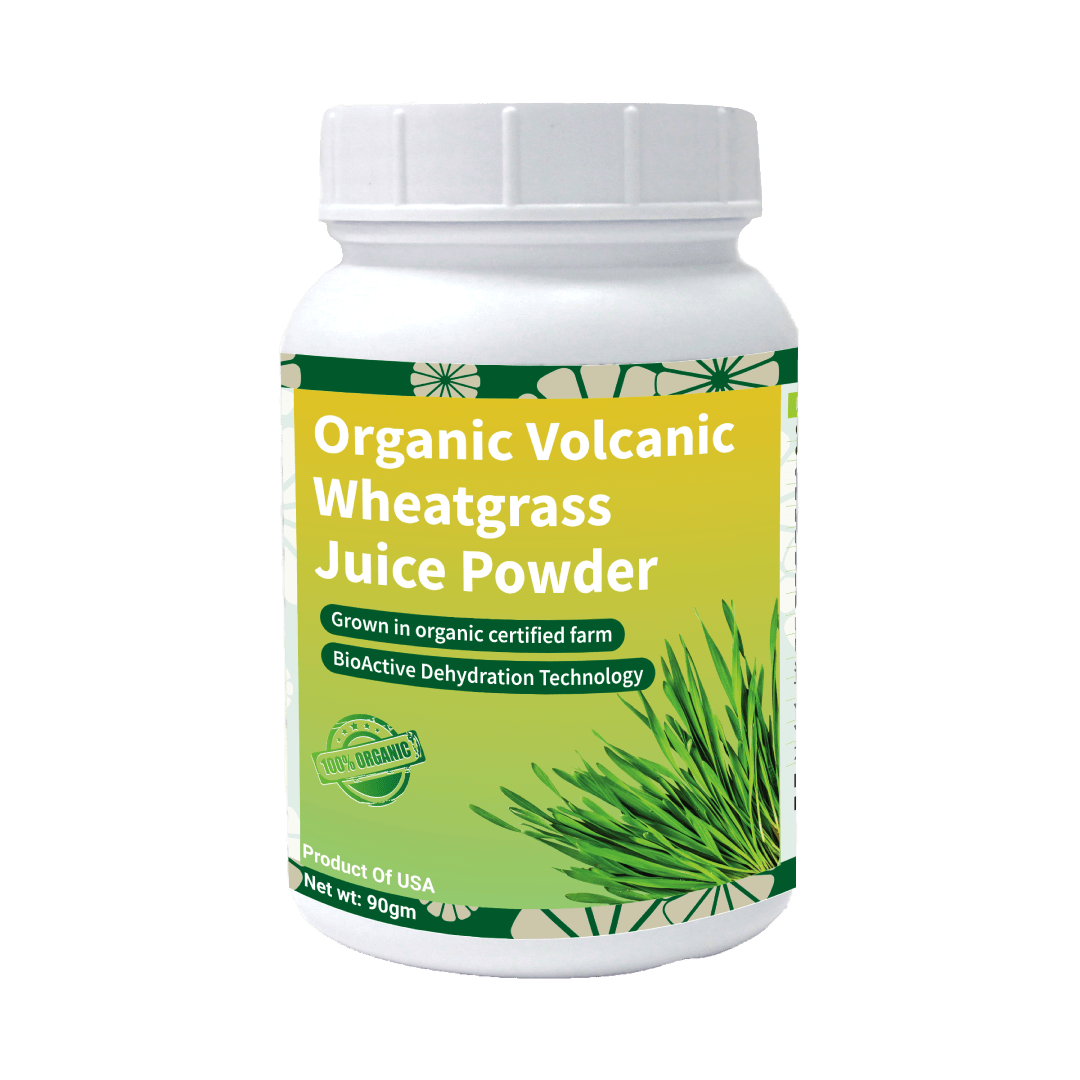
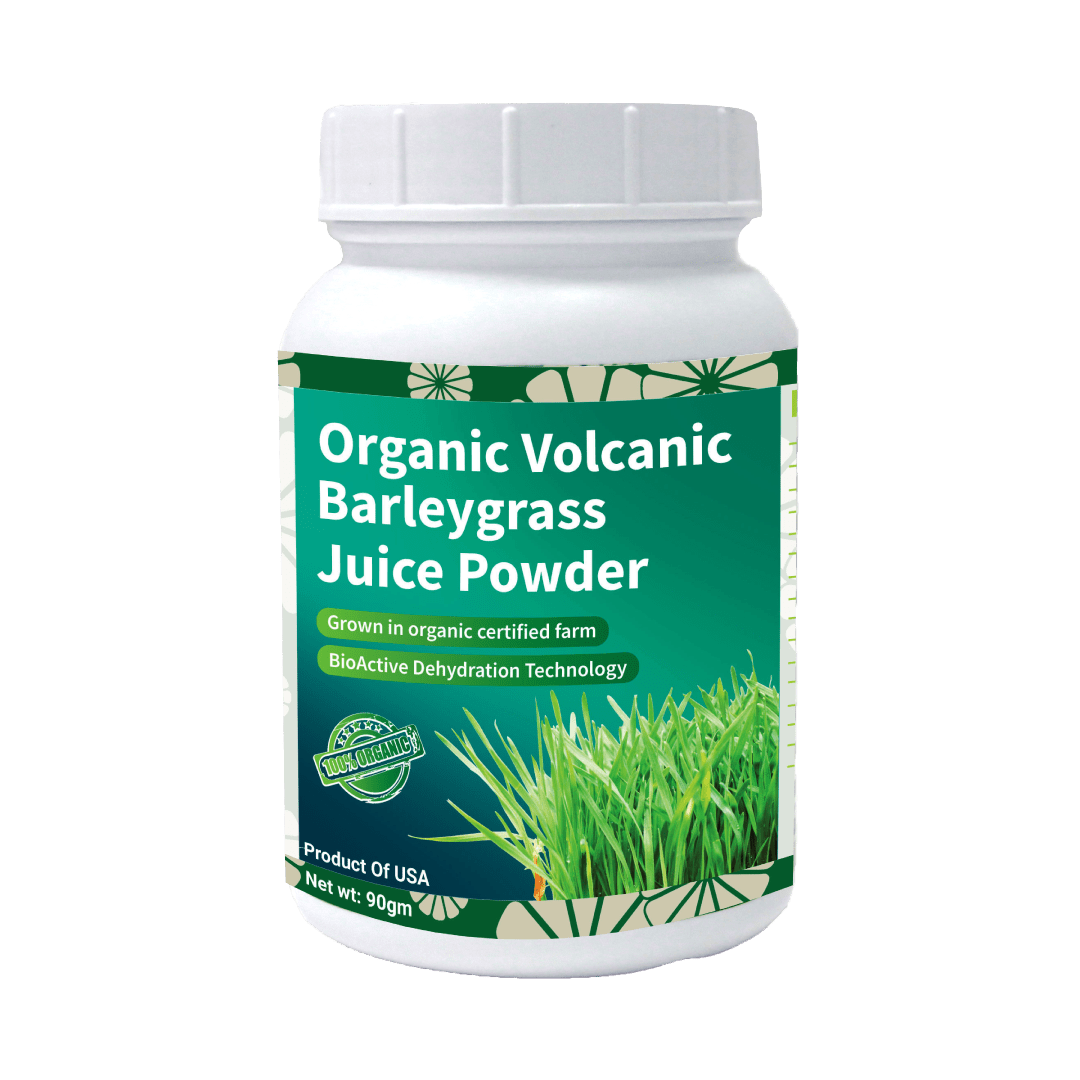
Wheatgrass and barley grass are two of the closest nutritional siblings to ashitaba. Both are cereal-leaf grasses, both grown easily in mineral-rich soil, both delivering chlorophyll, SOD, and a similar trace-mineral profile to ashitaba. They differ in their signature bioactives — wheatgrass leans on chlorophyll and enzyme activity; barley grass on chlorophyll and the saponin-like compound hordenine.
Three reasons the trio works well together:
- Different antioxidants hit different parts of the system. Chalcones, chlorophyll-derived antioxidants, hordenine, and the trace-mineral cofactors above are not redundant — they support overlapping but distinct pathways in the body’s antioxidant network.
- You get a fuller mineral profile from grass-family plants than from any single one. Wheatgrass and barley grass both carry their own mineral profile; together with ashitaba they round out the spectrum.
- The “volcanic-soil” cultivation method applies to all three. A genuine organic volcanic-soil product (e.g. JAS-certified, BioActive Dehydration below 41°C) preserves chlorophyll and heat-labile SOD activity that conventional heat-drying destroys.
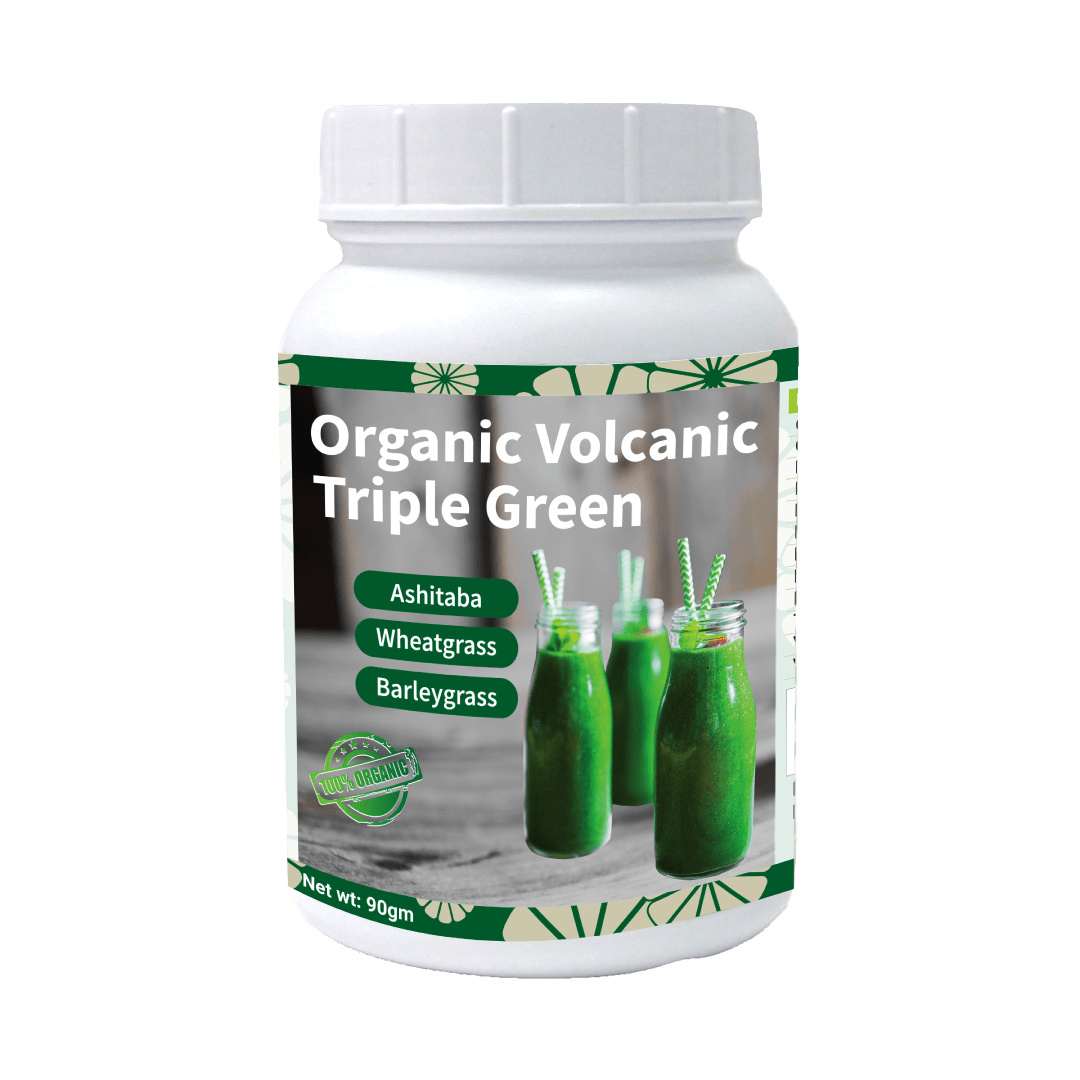
This is the logic behind formulations like Organic Volcanic Triple Green: ashitaba + wheatgrass + barley grass from volcanic soil, ambient-temperature dehydrated to preserve the chlorophyll, SOD, and chalcone fractions.
How to read a label for an ashitaba product
Five questions worth asking before you buy any ashitaba supplement or powder:
- Leaf, stem, or whole-plant? The yellow-sap chalcones are concentrated in the stem; the green-leaf chlorophyll and minerals are in the leaves. Whole-plant products contain both.
- How was it dried? Heat above 60°C destroys chlorophyll (converting it to pheophytin) and damages SOD and other heat-labile enzymes. Ambient-temperature methods (freeze-drying, low-temperature spray drying) preserve more of the active fraction.
- Is the chalcone content standardised? The most informative labels state the 4-hydroxyderricin or xanthoangelol content per gram.
- Where was it grown? Volcanic-soil origin (Japan, parts of Indonesia) is associated with the fuller trace-mineral profile. Greenhouse cultivation in standard soil produces a less mineral-dense plant.
- Is it organic-certified? For an everyday dietary green, a recognised organic certification (JAS, USDA, EU) reduces the pesticide-residue question.
The bottom line
Ashitaba is a leafy green with an unusually well-studied chalcone fraction and a trace-mineral profile that comes from growing in volcanic soil. The marketing claims that frame it as a pharmaceutical anti-ageing drug overreach the evidence; the claims that dismiss it as just another obscure Japanese plant also miss what makes it distinctive.
The most accurate framing: a real, traditional dietary green that pairs well with other volcanic-soil greens like wheatgrass and barley grass, and that delivers chalcones + chlorophyll + trace minerals as a daily-nutrition stack. Useful. Not magic. Worth including if you enjoy Japanese longevity lore and want a varied green-foods rotation — not worth chasing if you are looking for a single silver bullet.
Related Topics
The “Tomorrow’s Leaf”: Organic Ashitaba for Aging Well
The Ultimate Guide to Body Detox: How Superfood Greens Support Natural Cleansing
Wheatgrass vs Barley Grass – Are They Heaty Or Cooling?
Wheatgrass vs Barleygrass – Which One Should You Take?
Dark Green Leafy Vegetables Detox Heavy Metal
Top 10 Benefits of Eating Dark Green Leafy Greens
Liquadry’s Organic Volcanic Wheatgrass & Barley Grass
Is All the Green Foods Same? Why We Should Consume a Different Variety of Green Foods?
Products you may be interested in