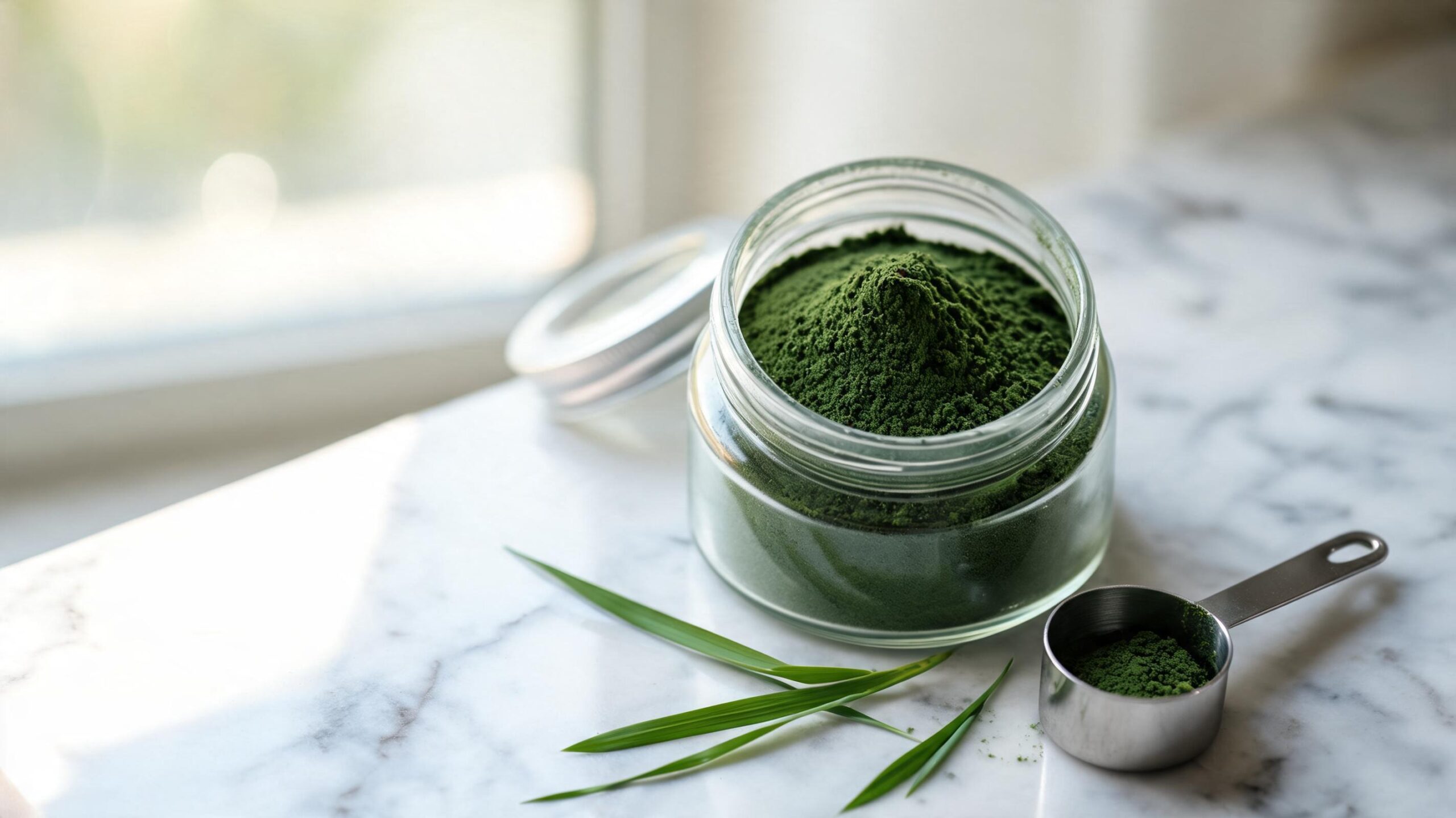
If you have ever typed green powder for energy into a search box, you were probably looking for an honest answer to a simple question: will a daily scoop of a wheatgrass, barley grass and ashitaba blend actually make you feel less tired? The short answer, which almost no pack tells you, is that the honest answer is it depends what you were expecting. There is no stimulant in a green powder, and nobody has ever run a good trial showing that a scoop of one raises your energy the way caffeine does. What there is, is a real body of small and mostly preliminary work on chlorophyll and wheatgrass, a much clearer picture of what actually causes tiredness, and a set of label rules in Singapore that tell you exactly how to read a product like this. This piece walks through all three. It makes no promise of increased energy for the reader, and it does not need to: the honest version is more useful than the promise.
What ‘energy’ actually means on a green powder label
Start with the word itself. In supplement copy, ‘energy’ is doing two jobs at once, and the honest one is easier to defend than the marketing one. The defensible job is micronutrient density and routine: a green powder is a concentrated food, it fits into a daily slot, and if you are the sort of person who does not reliably eat six or more portions of vegetables a day, replacing a skipped salad with a scoop is not nothing. The marketing job is the one on the front of the pack, where ‘energy’ is used to imply a stimulant effect that the product does not contain and has not been shown to deliver.
The distinction matters because Singapore’s health regulator is explicit about how these claims should be read. Health supplements are not subject to approvals, licensing, and evaluation for effectiveness before they reach the market; the onus sits with the dealers, and advertisements are not pre-screened by the HSA1. The same guidance names the specific phrases worth discounting: there is no scientific evidence behind ‘detoxify your body’, because such products work by promoting water loss or stimulating bowel movements; ‘HSA approved’ is not something the authority grants, because it does not assess or approve supplements for efficacy; and supplements should never replace prescribed treatment1.
What the chlorophyll and wheatgrass evidence does and does not show
The most persistent idea in green powder marketing is that chlorophyll ‘works like the iron in your blood’, so more of it means more oxygen to the cells and therefore more energy. The structure comparison is real — chlorophyll and haemoglobin do have a similar molecular shape. The inference that follows from it is not. Memorial Sloan Kettering Cancer Center, which reviews wheat grass for its clinical use, states plainly that the claims that chlorophyll can augment haemoglobin production, and that wheat grass can ‘detoxify’ the body, are not supported by scientific evidence, and that none of the other commonly claimed uses are backed by scientific studies either2. The same review notes that the small studies which do exist point at narrow clinical questions rather than at everyday energy: ulcerative colitis symptoms, where one small study found some relief; a chemotherapy-support setting; and iron chelation in a specific blood disorder2.
A recent narrative review of wheatgrass juice reaches a similar conclusion from the other direction, and is useful precisely because it is not a supplement advertisement. Its assessment is that most of the evidence supporting wheatgrass juice’s benefits comes from limited studies, that there are no large-scale clinical trials validating its efficacy, and that preparation methods vary enough to make results hard to compare3. In plain terms: the green powder category is promising enough to keep being studied and not yet proven enough to make promises on your behalf.
Why ‘energy’ in this category usually means routine, not stimulation
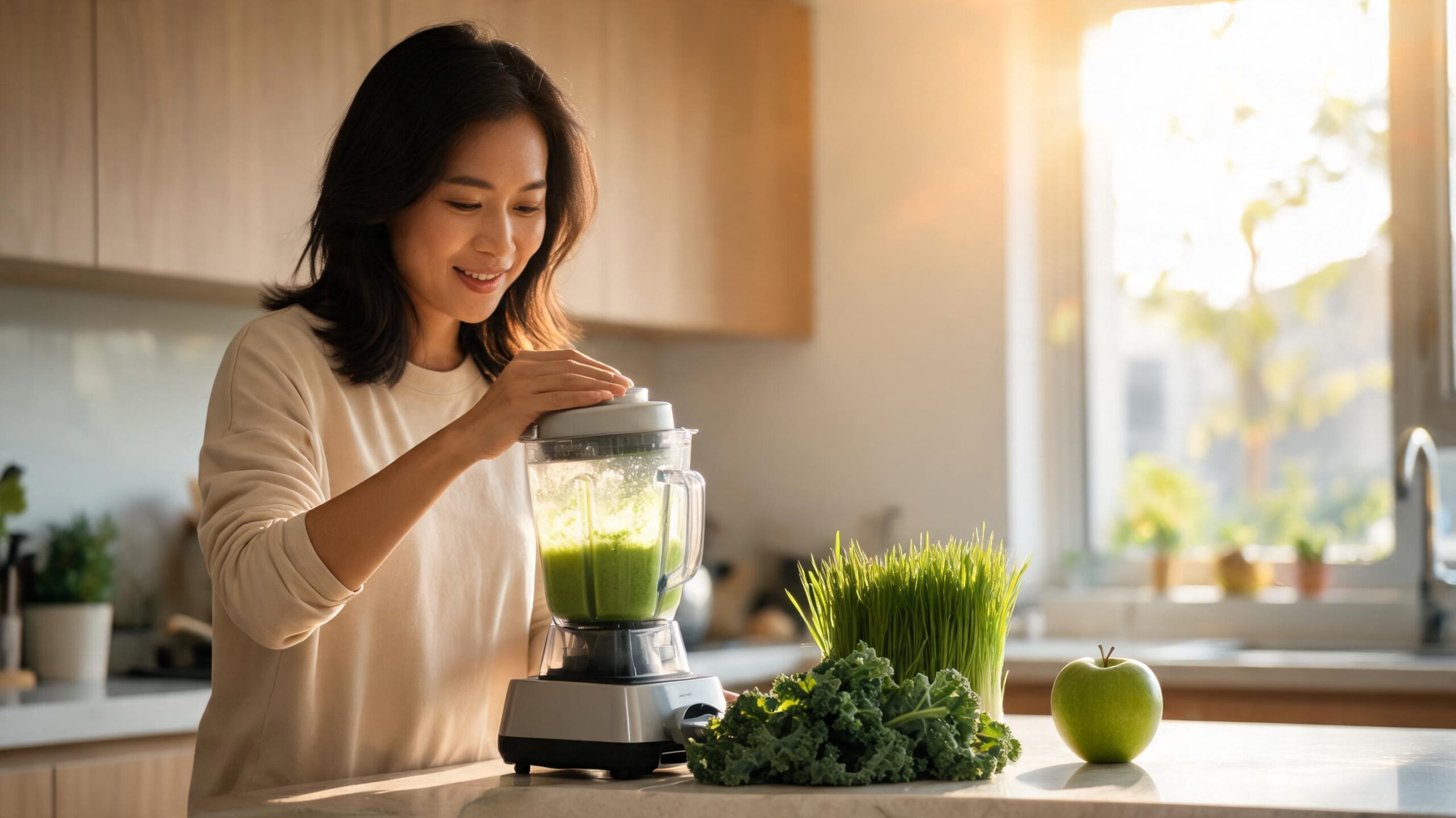
Compare two products on the same shelf. One contains a standardised dose of caffeine and the other contains dried grass. The mechanism people imagine for the first — a molecule that blocks a receptor and takes the edge off sleepiness — has no equivalent in the second, and no green powder is going to give you one. So when a green powder is described as an energy product, the defensible reading is that it is being sold as the food half of a routine: something you can take daily, that adds micronutrient density, and that makes eating vegetables slightly easier on a bad morning. That is a smaller claim than the pack makes, and it is also the one that survives a careful reading.
There is a second, less obvious point here, and it is about the ‘energy’ that comes from eating properly at all. Most dietary guidance starts from the same place the NHS does: most people should get all the nutrients they need from a varied and balanced diet, though some people do need extra supplements4. A green powder sits on the food side of that line, which means the routine around it — not the powder — is doing most of the work. Anyone selling you a scoop as a shortcut around eating vegetables is selling you the wrong end of the deal.
Where tiredness actually comes from, and what is worth checking first
If the word ‘energy’ is the reason you are considering a green powder, it is worth spending five minutes on what causes tiredness, because the causes are well documented and they are not all nutritional. The NHS lists the common causes of tiredness and fatigue as not getting enough sleep or finding it hard to get to sleep, an unhealthy lifestyle such as an unhealthy diet and not much exercise, stress and depression and the demands of life, hormonal changes such as during pregnancy or the menopause, and a set of medical conditions — among them iron deficiency anaemia, an overactive thyroid, diabetes, sleep apnoea and myalgic encephalomyelitis or chronic fatigue syndrome5. Four of those are not fixed by a scoop of anything.
The iron one deserves a specific note, because it is both common and commonly missed. Iron deficiency anaemia is caused by a lack of iron, often from blood loss or pregnancy, and its symptoms include tiredness and a lack of energy, shortness of breath, noticeable heartbeats and paler than usual skin. It is treated with iron tablets and iron-rich food6 — an intervention with a number attached to it, not a green powder. Singapore’s own recommended dietary allowances set iron at 8 milligrams a day for adult men and 18 milligrams for adult women, with vitamin A at 750 micrograms, thiamin at 1.18 milligrams, riboflavin at 1.77 milligrams, niacin equivalent at 19.5 milligrams and vitamin D at 2.5 micrograms rising to 10 micrograms from age 607. Those are the numbers a measured gap is measured against.
So the practical order of operations is worth stating plainly. If your tiredness is new, constant, or comes with the other symptoms listed above, get it checked rather than supplemented. If your diet is genuinely thin on vegetables and you want a low-friction way to add some, a green powder is a reasonable food-format choice — and it should be chosen on the label, not on the promise.
How to read a green powder label in five minutes
Take the pack and work through these five questions in order. First, what is actually in it, and in what proportion? A blend that names its plants and the grams of each per scoop is telling you something checkable. Second, does the pack give you a number you can compare to a recommended allowance? If it does, it is quantified and you can add it up across everything you take. If it gives you grams of plant instead, it is a food and no one has standardised its vitamin content. Third, check the lines a green powder is usually silent on — vitamin D, B12, folate, iodine and the omega-3 fats are where the well-documented dietary shortfalls live. Fourth, read the claims for what they are: provenance and processing claims are checkable on the pack, while ‘detox’, ‘cleanse’ and ‘clinically proven’ are not1. Fifth, and last, take the label to a pharmacist or doctor if you take any medication, are pregnant, or are over 60.
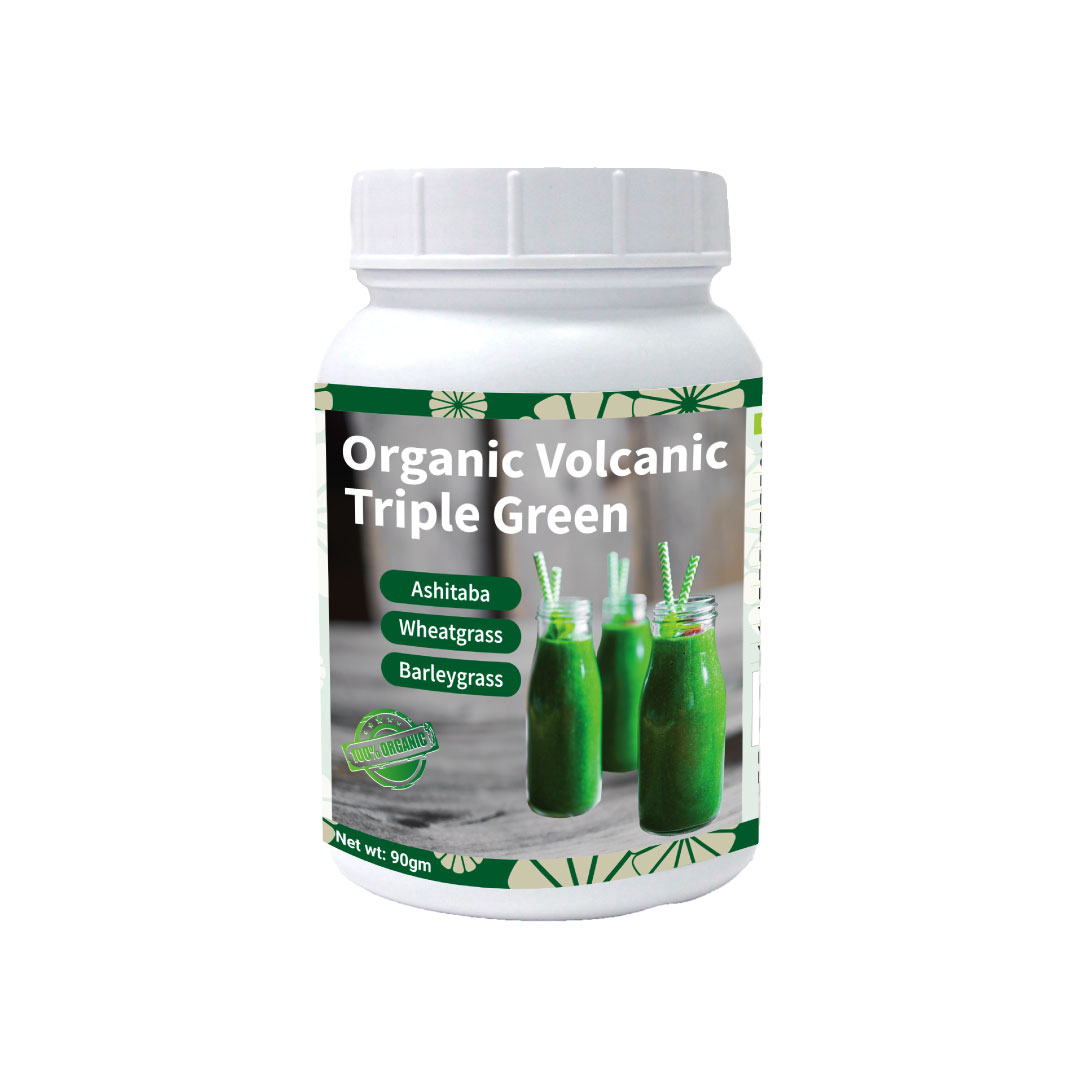
Worked through on a real pack, that looks like this. Triple Green’s label names the blend and the method: organic ashitaba (Angelica keiskei) cultivated on a JAS-certified organic farm in the Indonesian highlands by Japan Bio Science Laboratory, alongside organic wheatgrass and barley grass, all dried by a BioActive Dehydration ambient spray-drying process at under 41°C that the maker states preserves colour, flavour, aroma and nutrients with virtually no thermal degradation. That is a real and checkable description of provenance and processing — and note what it is not: it is not a percentage of any recommended allowance, and it is not an efficacy claim. Those are different questions, and a label that answers the first one honestly is worth paying attention to.
Two safety notes worth knowing before you start
The first is vitamin K, and it matters specifically if you take a blood thinner. The NHS advises that foods high in vitamin K, such as broccoli, spinach and other green leafy vegetables, can affect how warfarin works; you can still eat them, but you should talk to your warfarin clinic for advice before making big changes to your diet, and you should not take vitamin K supplements while on warfarin8. Dried green powder concentrates what a plate of greens carries, so consistency of intake is the practical guidance: keep it steady, and tell the clinic what you are taking rather than working around it.
The second is that green powders are food products, and food products have their own quality questions. The HSA’s guidance is that dealers are responsible for the safety and quality of the products and must ensure that label claims are not false or misleading1. The wheat grass review makes the related point that grasses are grown for seven to ten days before the leaves are harvested, which means microbial contamination is possible, and that nausea and difficulty swallowing a strong-tasting juice are known adverse effects2. Anyone pregnant or breastfeeding, and anyone managing a condition or taking medication, should ask a clinician first rather than assuming a green powder is interchangeable with vegetables.
The bottom line
A daily scoop of wheatgrass, barley grass and ashitaba is not a stimulant, and no good evidence says it raises your energy. What the evidence does support is narrower and still worth having: a green powder is a concentrated food that adds micronutrient density, fits the food-first default that most dietary guidance already starts from, and is a lower-friction way to get some greens in on a difficult day than a plate of vegetables. What it is not is a fix for tiredness — because tiredness usually comes from sleep, stress, iron deficiency, thyroid problems or diabetes, and the last three need a test rather than a scoop.
So if you buy one, buy it on the label: named plants, stated quantities, a processing method you can check, and no percentage claims you have to take on trust. Read the ‘energy’ claim for what it is — a marketing word on a food product — and if you were looking for a stimulant, that is a different category of product with different rules and different evidence. The honest version of the green powder pitch is not that you will feel more energised. It is that it makes eating your greens easier. For most people, that is the whole of it — and it is a reasonable thing to buy.
References
- HealthHub, Ministry of Health (Singapore) — ‘Understanding Health Supplements’ — https://www.healthhub.sg/well-being-and-lifestyle/personal-care/understandinghealthsupplements_hsa
- Memorial Sloan Kettering Cancer Center — ‘Wheat grass’ — https://www.mskcc.org/cancer-care/integrative-medicine/herbs/wheat-grass
- ‘Therapeutic Potential of Wheatgrass Juice: A Comprehensive Narrative Review’ (PMC) — https://pmc.ncbi.nlm.nih.gov/articles/PMC12156747/
- NHS ‘Overview – Vitamins and minerals’ — https://www.nhs.uk/conditions/vitamins-and-minerals/
- NHS ‘Tiredness and fatigue’ — https://www.nhs.uk/conditions/tiredness-and-fatigue/
- NHS ‘Iron deficiency anaemia’ — https://www.nhs.uk/conditions/iron-deficiency-anaemia/
- HealthHub, Ministry of Health (Singapore) — ‘Recommended Dietary Allowances’ — https://www.healthhub.sg/well-being-and-lifestyle/food-diet-and-nutrition/recommended_dietary_allowances
- NHS ‘Warfarin: medicine used to prevent and treat blood clots’ — https://www.nhs.uk/medicines/warfarin/
Related Topics
The “Tomorrow’s Leaf”: Organic Ashitaba for Aging Well
The Ultimate Guide to Body Detox: How Superfood Greens Support Natural Cleansing
Wheatgrass vs Barley Grass – Are They Heaty Or Cooling?
Wheatgrass vs Barleygrass – Which One Should You Take?
Dark Green Leafy Vegetables Detox Heavy Metal
Top 10 Benefits of Eating Dark Green Leafy Greens
Liquadry’s Organic Volcanic Wheatgrass & Barley Grass
Is All the Green Foods Same? Why We Should Consume a Different Variety of Green Foods?
Product you may be interested in