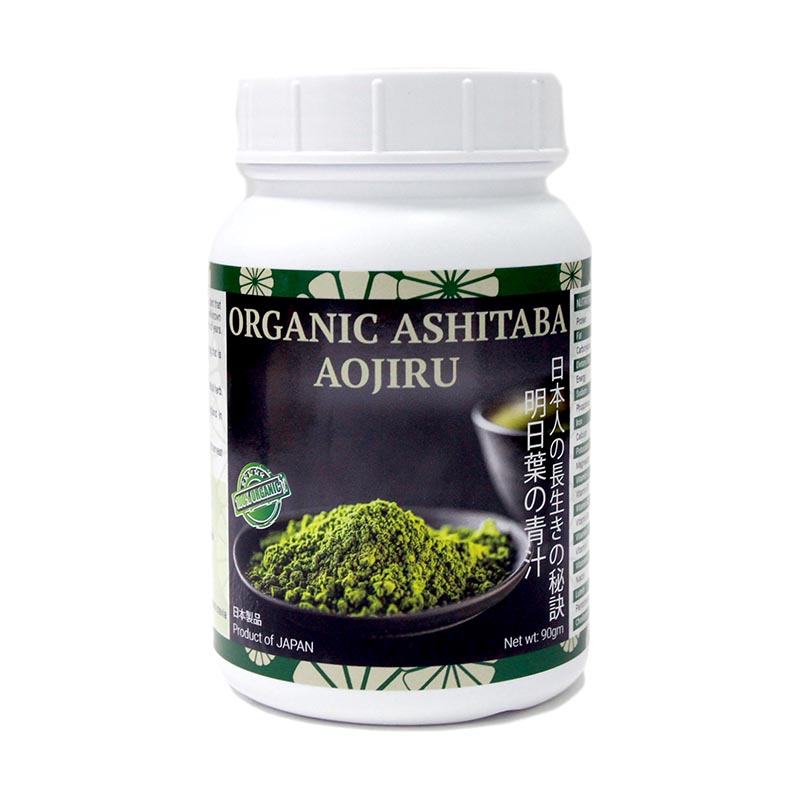
If you’ve been anywhere near the longevity corner of the internet in 2026, you’ve seen the word ashitaba appear next to green tea, reishi, and turmeric. Most of what gets written about it skips past what makes the plant unusual: a yellow sap full of chalcones (xanthoangelol and 4-hydroxyderricin) that almost no other edible plant contains at meaningful levels, plus a near-haemoglobin load of green pigment and a meaningful amount of vitamin B12 — rare for anything green. This article decodes the five bioactive compounds ashitaba actually delivers, ranks the evidence behind each claim, and shows what to look for on the label so you don’t end up buying a powder that has had most of what makes ashitaba special cooked out of it.
Ashitaba (Angelica keiskei) is a perennial in the apiaceous (carrot/celery/parsley) family, native to Japan’s Izu Islands — most famously Hachijo-jima, where residents have historically lived unusually long lives and incorporated the plant into daily food for centuries. The name literally means “tomorrow’s leaf,” because the plant’s vigorous regrowth after picking produces a new shoot overnight. Organic Ashitaba from Hachijo-style volcanic-soil cultivation is the version most longevity-curious buyers end up researching, and the rest of this article unpacks what the science actually says about each bioactive in the leaf and sap.
The 5 bioactives in ashitaba — and what each one does
Most ashitaba articles lump “the good stuff” together as chalcones, antioxidants, or “phytonutrients.” That glosses past the actual mechanism. Five compounds are doing the work, and they each have a different evidence tier:
1. Chalcones (xanthoangelol + 4-hydroxyderricin)
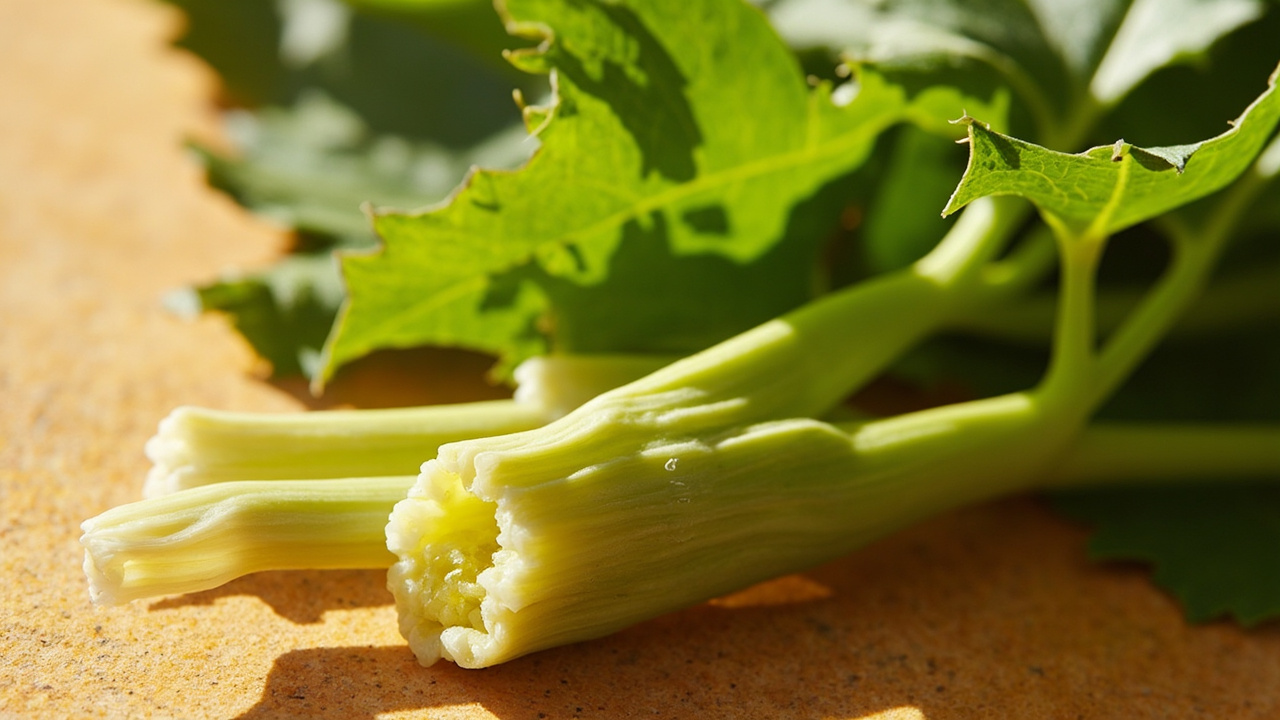
These two yellow polyphenols are unique to Angelica keiskei — almost no other edible plant contains them at meaningful concentrations. Chalcones are concentrated in the sticky yellow sap that leaks when you break an ashitaba stem, which is why you see that golden liquid in fresh-cut ashitaba and why high-quality ashitaba powder is yellow-green (not the dull grey-green of spinach powder). The 2002 Nutraceutical World antioxidant benchmarking study compared ashitaba’s chalcone fraction against green tea, dandelion, fennel, black tea, chamomile, St John’s Wort and sage; ashitaba outperformed every comparator on the antioxidant assays used. Subsequent in-vitro and animal studies have reported activity on lipid metabolism, hepatic enzymes, and antibacterial action, though human RCT data is still thin.
2. Germanium (Ge-132)
Ashitaba accumulates more germanium than most plants because it is grown on volcanic-soil parent material. Germanium has a long history in Japanese complementary medicine (Sanum-Kehlbeck’s Ge-132 line) as an immune-modulating trace mineral linked to interferon production and natural-killer-cell activity in older in-vitro work. The evidence here is older and not RCT-grade — germanium is one of the ashitaba compounds where the literature is suggestive rather than conclusive. Worth knowing it is present; not worth treating it as a standalone reason to buy.
3. Chlorophyll
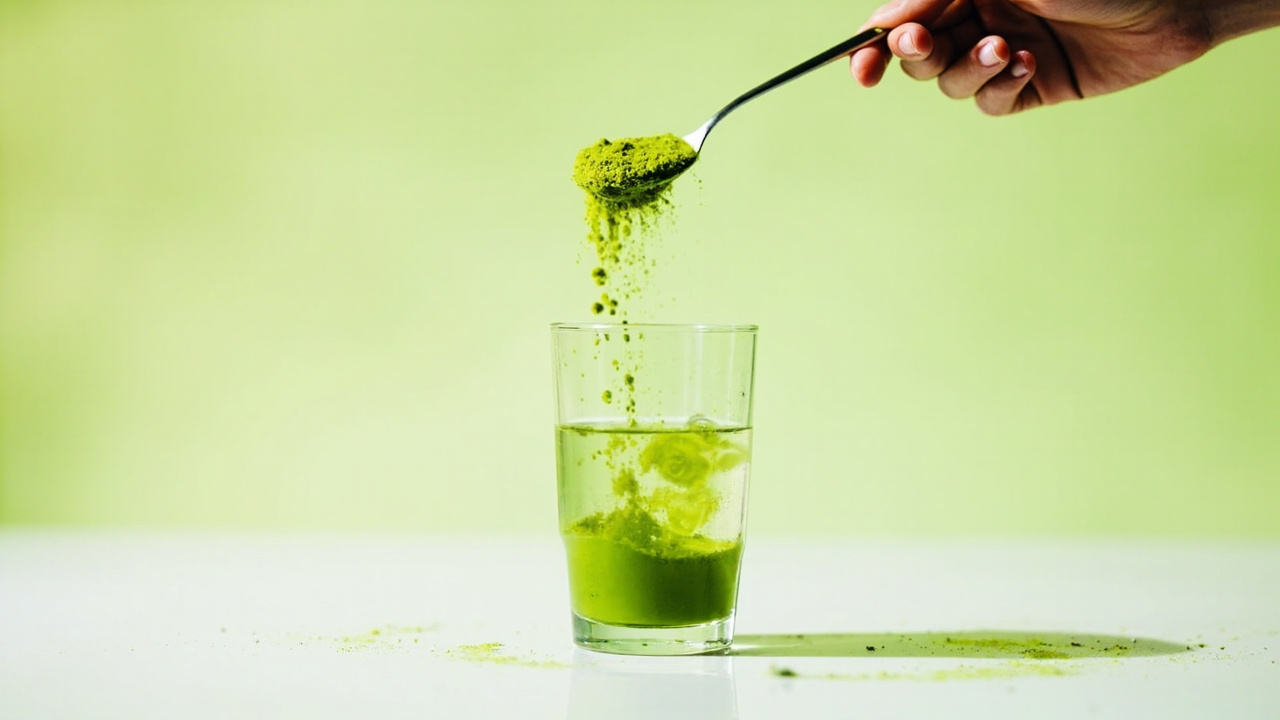
Ashitaba leaves are deep green and have a chlorophyll concentration comparable to other leafy greens. Chlorophyll’s molecular structure is nearly identical to the haem ring in haemoglobin (the difference is magnesium at the centre instead of iron), which is why the older nutrition literature framed dietary chlorophyll as a “blood builder” — a simplification, but not a wrong one at the mechanism level. Chlorophyll supports red blood cell turnover and is the molecule that gives ashitaba powder its visual signature. The green-powder category often markets on this compound; ashitaba delivers it alongside the chalcones the other greens do not.
4. Vitamin B12 (and other B vitamins)
Ashitaba is one of the few plant foods with meaningful vitamin B12 content — relevant for vegans and vegetarians who otherwise rely on fortified foods or supplements to cover B12. The B12 in ashitaba is in the active methylcobalamin form, not the cyanocobalamin form used in most cheap supplements. B12 status drives energy, nerve myelin integrity, methylation (the same homocysteine-lowering pathway beetroot’s betaine uses), and red blood cell formation. If you’re plant-based and you’ve been looking for a whole-food B12 source that isn’t marmite or nutritional yeast, ashitaba is one of the few options backed by published compositional data.
5. Fibre + trace minerals + carotenoids
The fifth tier is the supporting cast: ashitaba’s fibre (a mix of soluble and insoluble, supporting the same gut microbiome lever the psyllium-husk trend is built on), trace minerals (potassium, calcium, magnesium, iron — modest but consistent), and carotenoids (beta-carotene and lutein, the same molecules kale and spinach deliver). These are not ashitaba-specific; they matter for the “is this a credible daily green?” question, but they are not the reason to choose ashitaba over wheatgrass, barley grass, or matcha.
Evidence tiers — well-supported, moderately supported, marketing-inflated
Sorting ashitaba’s claims into evidence tiers helps a skeptical reader decide what to trust:
Well-supported: the chalcone antioxidant and lipid-metabolism data (2002 Nutraceutical World benchmark + subsequent in-vitro work); the B12 content (compositional data, consistent across multiple published analyses); the chlorophyll content (visual and compositional, reproducible across batches); the fibre and trace-mineral content (standard leafy-green nutritional profile).
Moderately supported: the longevity associations (Hachijo-jima’s population statistics are correlational, not causal — long-lived residents eat ashitaba but also walk, fish, eat small portions, and live in a low-stress island community); the germanium-mediated immune-modulation claims (older in-vitro work, no recent RCTs).
Marketing-inflated: “miracle leaf” framing, ashitaba-as-detox, ashitaba-as-cancer-cure, and any language that positions the plant as a substitute for prescribed medication. The published evidence does not support these framings, and they are the strongest signal that a brand’s marketing is doing the talking instead of the label.
How to read an ashitaba label — what to look for
Most ashitaba powders on the market vary enormously in chalcone content, B12 retention, and processing damage. Four checks tell you whether you’re getting the documented part of the plant or a cheap green filler:
1. Country and soil of origin. Japanese ashitaba (especially Hachijo-jima) and select Chinese and Korean cultivars grown on volcanic-soil parent material accumulate more germanium and more chalcones than plants grown on mineral-depleted soil. If the label says only “China” without naming the region, treat it as an unspecified commodity.
2. JAS-certified organic. Japan’s Agricultural Standard (JAS) organic certification is the strictest publicly-audited organic regime for ashitaba specifically — it covers soil, water, and processing. “Organic” without JAS usually means a less-rigorous regional standard.
3. Low-heat dehydration. Chalcones degrade above ~60°C, and vitamin B12 is heat-labile. Spray-drying (common for cheap green powders) routinely exceeds 150°C and destroys both. Low-heat dehydrators cap at 40–55°C and retain the documented compounds. If the label says “freeze-dried” or “low-heat dried,” that is the right signal; if it doesn’t say, assume spray-dried.
4. Single-ingredient list. Real ashitaba powder is just ashitaba. If the ingredient list has maltodextrin, silicon dioxide, “natural flavour,” or a colourant, the bag is mostly filler. Organic Ashitaba from Dynamic Nutrition is JAS-certified organic, single-ingredient, volcanic-soil Hachijo-style cultivation, and low-heat dehydrated — the label-decoding boxes that the published evidence says matter.
Bottom line
Ashitaba is one of the few “ancient green” plants whose published compositional data justifies its current longevity-blogger attention: the chalcones are unique, the chlorophyll and B12 are real, and the germanium and trace-mineral profile is consistent with volcanic-soil origin. The literature does not support miracle-cure framings — what it does support is “a daily green powder that delivers compounds most other greens don’t.” Read the label, prefer JAS-certified low-heat single-ingredient versions from volcanic-soil cultivation, and treat ashitaba as one daily layer in a broader evidence-based nutrition routine rather than a substitute for medical care.
Educational content only; consult a qualified clinician for any persistent health condition. Ashitaba is not a substitute for vaccination, prescribed medication, or a varied whole-food diet.
Product you may be interested in