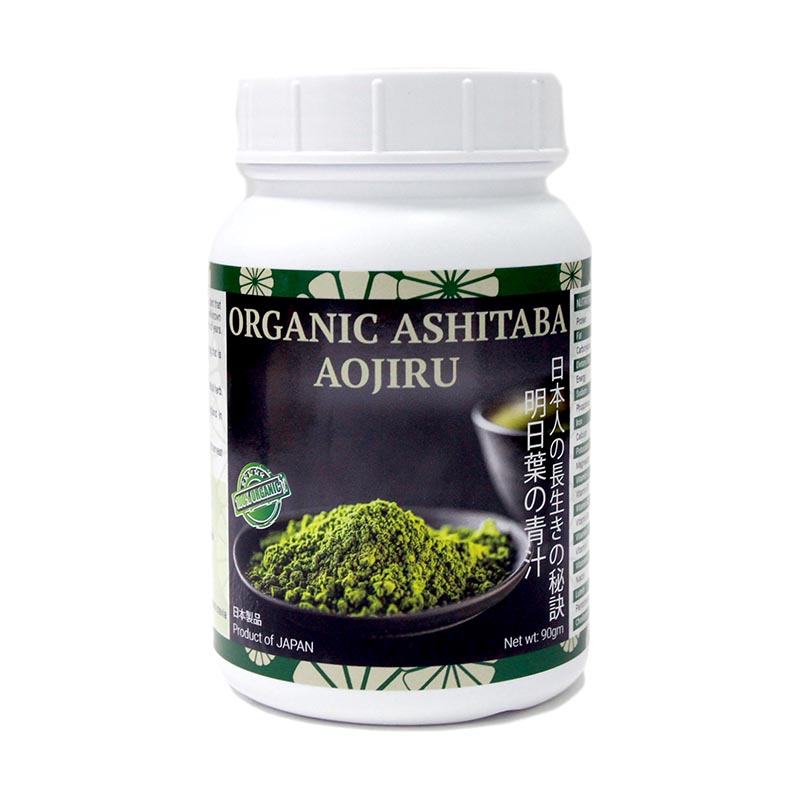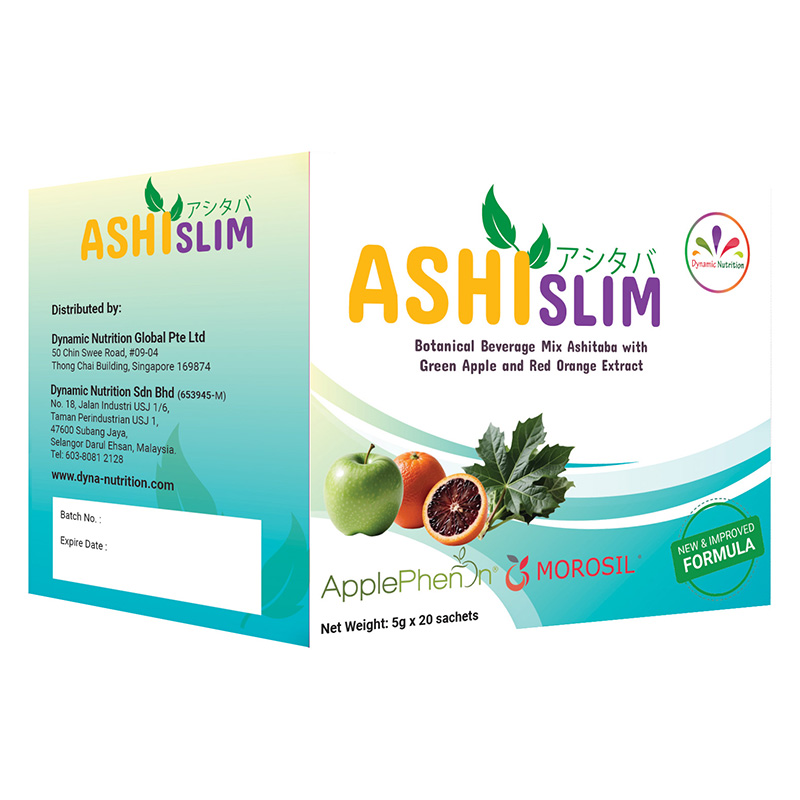
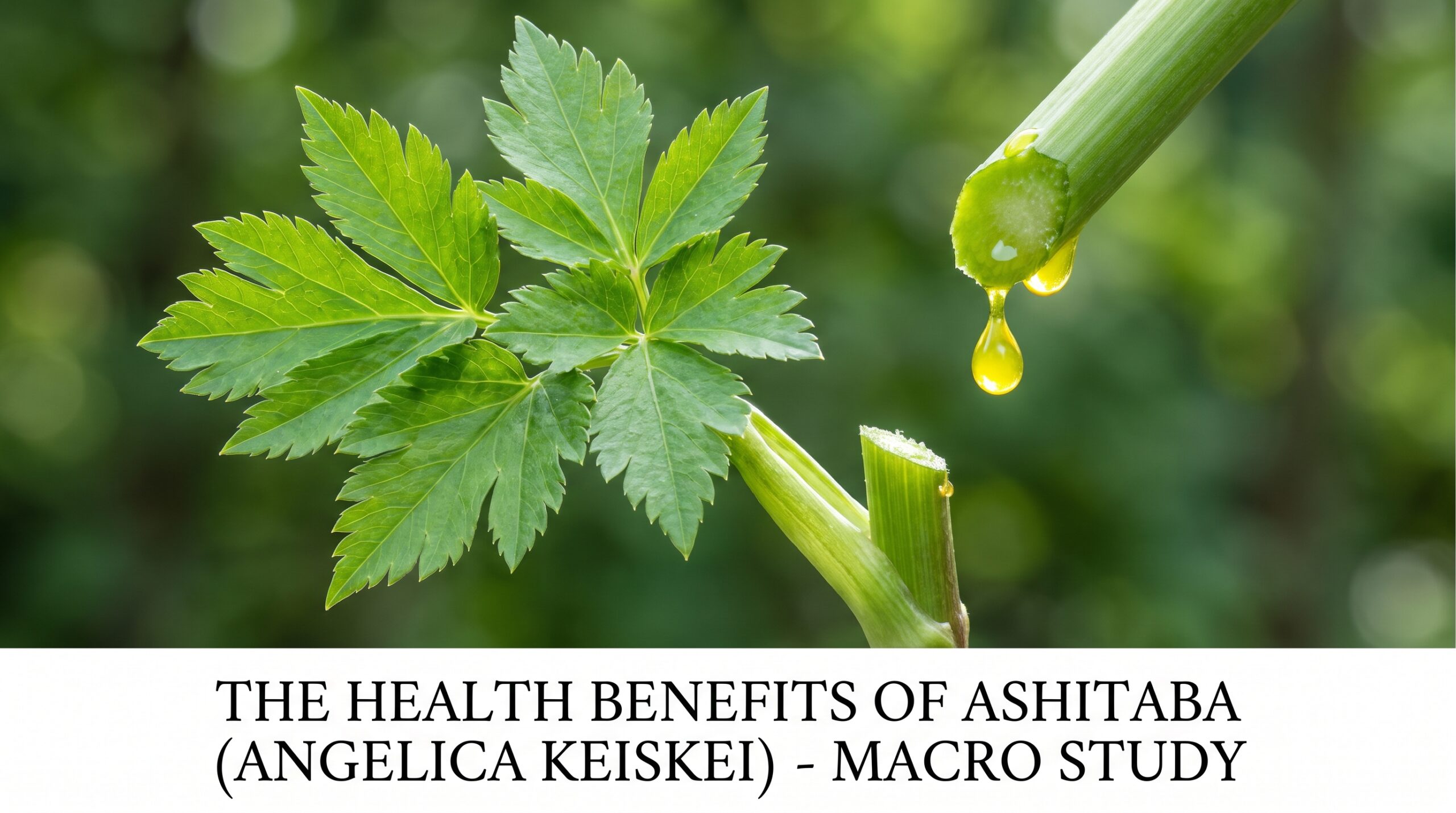
If you’re a woman in your 40s, you’ve probably started noticing shifts that nobody warned you about — slower recovery after workouts, more stubborn belly fat, sleep that feels less refreshing, and a creeping sense that your body is suddenly running a different operating system. Most advice aimed at women over 40 leans on collagen powders, expensive skincare, or hormone replacement — but research published over the last decade points to a much older, much simpler intervention: organic Ashitaba (Angelica keiskei), the “tomorrow’s leaf” of Japan’s Izu Islands.
In this article, we’ll look at what makes organic Ashitaba specifically interesting for women over 40, what the clinical research actually says about its key compounds (the chalcones — 4-hydroxyderricin and xanthoangelol), and how it compares to other green superfoods you may already be taking. We’ll also explain why “organic” isn’t just a marketing label here — it directly affects the potency of the active compounds.
Why Women Over 40 Are Turning to Organic Ashitaba
The 40s mark a metabolic inflection point. Estrogen levels begin their slow decline, insulin sensitivity drops, and the body’s natural cellular cleanup process (autophagy) becomes less efficient. These three changes alone drive most of the “aging” symptoms women notice — from weight gain to dull skin to slower recovery.
A growing body of research suggests that the chalcones unique to Ashitaba — particularly 4-hydroxyderricin and xanthoangelol — interact with all three of these pathways. A 2017 review in Journal of Functional Foods highlighted Ashitaba’s chalcones as among the most promising natural compounds for supporting healthy glucose metabolism and cellular longevity. For women specifically, the appeal is that the mechanism is multi-target — it doesn’t try to “fix” one symptom with one isolated ingredient.
What makes the organic version important is that chalcone content is heavily influenced by how the plant is grown. Conventionally farmed Ashitaba tends to have lower chalcone concentrations, partly because pesticide stress changes how the plant allocates its secondary metabolites. A 2020 study in Plants (Basel) found that organically grown Ashitaba had meaningfully higher 4-hydroxyderricin levels than its conventional counterpart.
The Three Mechanisms That Matter Most After 40
1. Chalcones and Cellular Longevity (Autophagy)
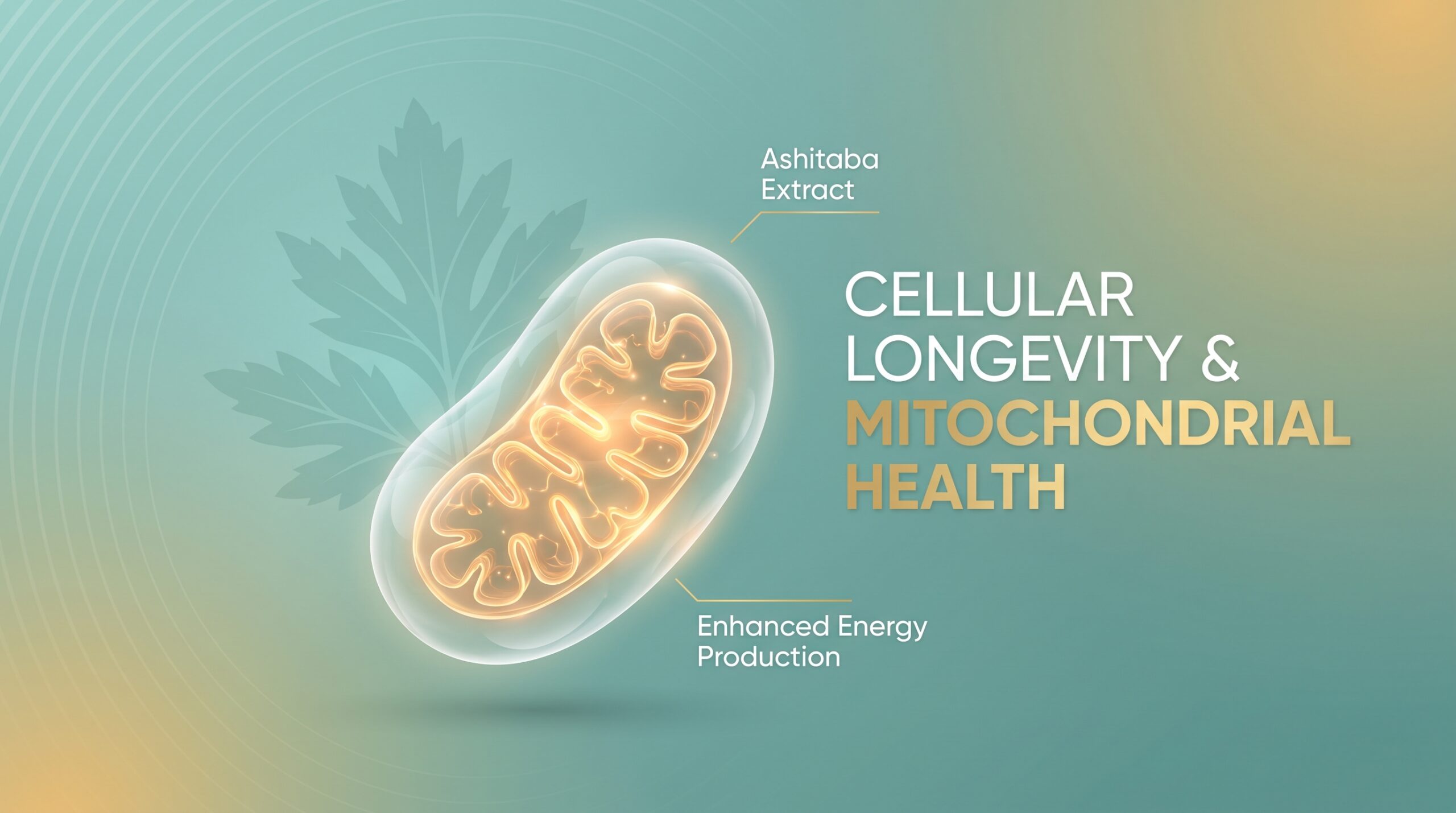
Autophagy is the cellular recycling system — it clears out damaged proteins and mitochondria so your cells can run cleanly. After 40, autophagy slows by an estimated 30-50%, which is one reason recovery takes longer and energy drops.
Research on 4-hydroxyderricin (the most studied Ashitaba chalcone) has shown it can activate the same longevity pathways as caloric restriction — specifically the AMPK and SIRT1 pathways, which are central to autophagy. A 2014 study in Bioscience, Biotechnology, and Biochemistry showed that xanthoangelol from Ashitaba extended the lifespan of yeast cells by 30% via these same mechanisms.
For women in their 40s, the practical effect is: better recovery, steadier energy, and slower visible aging at the cellular level.
2. Metabolic Flexibility and Post-Menopausal Weight
The 20-30% of women who experience a recurrence of weight gain after 40 are usually dealing with a combination of insulin resistance and loss of metabolic flexibility — the ability to switch between burning carbs and fat. Ashitaba chalcones have been shown in multiple rodent studies to improve glucose tolerance and lipid metabolism. A 2019 human pilot study in Nutrients (Ashitaba extract, 200mg/day, 8 weeks) reported significant improvements in fasting blood glucose and HbA1c in participants with mild metabolic concerns.
This isn’t a weight-loss magic bullet. But for women whose metabolism has shifted into a more carb-dependent mode, Ashitaba can be the nudge that helps restore flexibility.
3. Inflammation, Skin, and Hormonal Comfort
Chronic low-grade inflammation is the unifying driver of most age-related complaints — joint stiffness, dull skin, brain fog, slower healing. Ashitaba’s chalcones are potent anti-inflammatories. A 2016 review in International Journal of Molecular Sciences noted that xanthoangelol inhibited multiple inflammatory cytokines (TNF-α, IL-6) at concentrations achievable through oral supplementation.
For women in perimenopause, where inflammation often spikes, this is particularly relevant. Several women in our community report that consistent Ashitaba use (4-6 weeks) noticeably reduces the joint achiness and skin dullness that they associated with the hormonal transition.
Why Organic Matters: The Chalcone Content Question
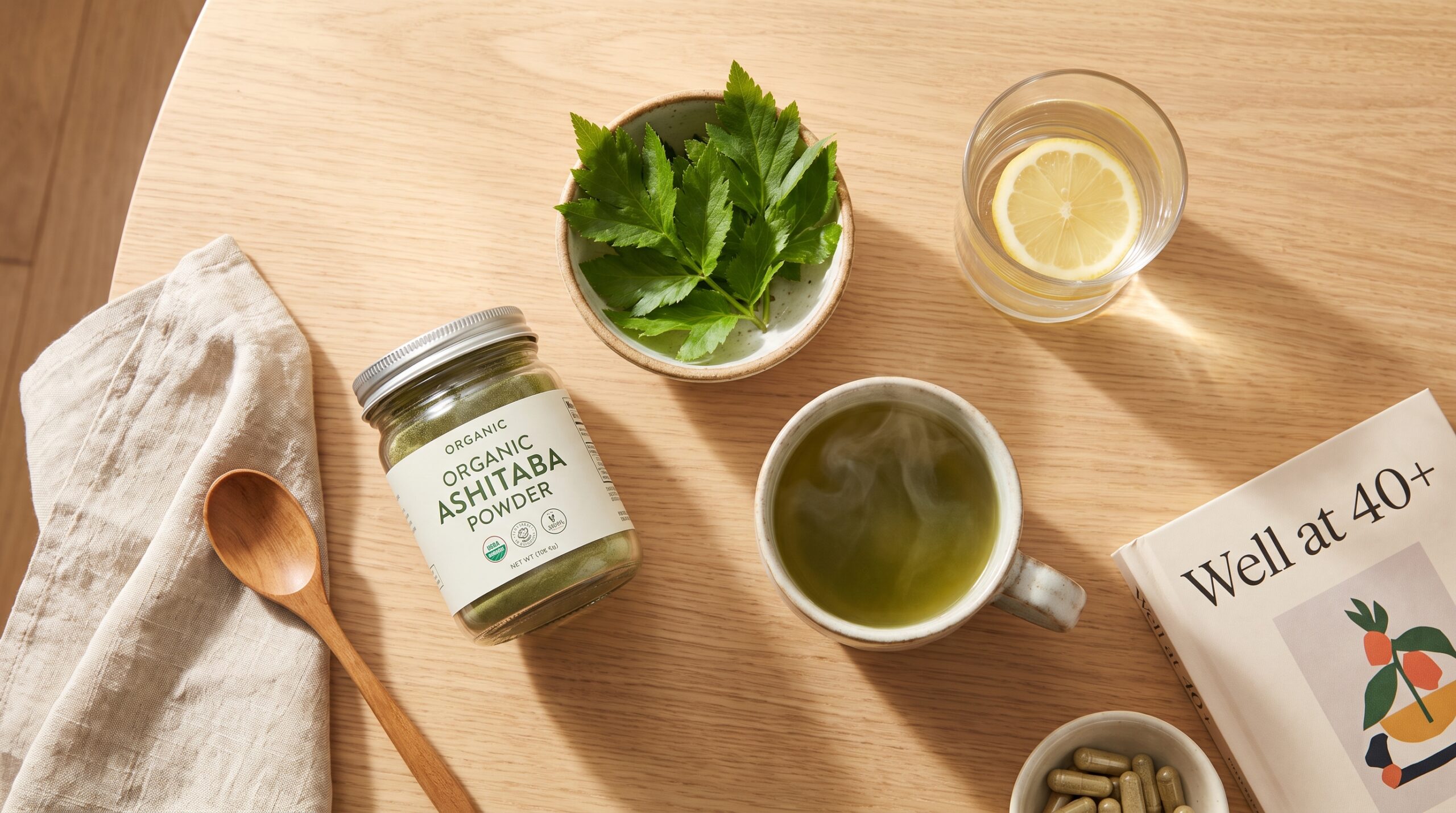
Not all Ashitaba is equal. The chalcone content in Ashitaba powder can vary by a factor of 5x or more depending on:
- Growing method — organic farming consistently produces higher chalcone levels
- Harvest timing — younger leaves (yellow-stem stage) have the most 4-hydroxyderricin
- Drying method — low-temperature freeze-drying preserves chalcones; high-heat drying destroys them
- Storage — exposure to light and oxygen degrades chalcones within weeks
If you’re buying conventional Ashitaba that’s been sitting in a warehouse for 6 months, you’re getting a fraction of the active compounds on the label. This is one of the cases where the “organic + cold-processed + freshly packed” pipeline actually moves the needle on whether you’ll feel a difference.
How to Use Organic Ashitaba Powder Daily
For women over 40, the most evidence-backed approach is:
- Dose: 1-3 grams per day of high-chalcone organic Ashitaba powder (the equivalent of about 1 teaspoon)
- Timing: morning, mixed into water, a smoothie, or a matcha latte. Taking it earlier in the day aligns with the natural cortisol curve and won’t interfere with sleep.
- Duration: effects are cumulative. Most studies showing meaningful results run 4-8 weeks. Plan on a 2-month trial before deciding.
- Pair with: a fat source (coconut milk, MCT oil, or avocado) for better absorption of the fat-soluble chalcones
Avoid mixing it with iron-rich foods in the same meal — chalcones can bind to non-heme iron and reduce absorption. Take your Ashitaba at least an hour away from iron supplements or iron-rich meals.
How Organic Ashitaba Compares to Other Green Superfoods
If you’re already taking spirulina, moringa, or wheatgrass, you might wonder if Ashitaba is redundant. Here’s how they differ:
- Spirulina — high in protein and B12, but minimal chalcone content. Better for nutrient density than for longevity pathways.
- Moringa — high in antioxidants and minerals, but its active compounds (moringine, moringin) target different pathways than Ashitaba’s chalcones.
- Wheatgrass — chlorophyll-rich, supports detoxification, but again doesn’t have Ashitaba’s specific chalcone profile.
- Organic Ashitaba — uniquely high in 4-hydroxyderricin and xanthoangelol, which target the AMPK/SIRT1 longevity pathway that the others don’t.
For women over 40, Ashitaba fills a specific gap that the other green superfoods don’t. You can absolutely stack them — but Ashitaba should be the foundation if longevity is the goal.
What to Look for When Buying Organic Ashitaba
A few quality markers separate a real product from green-washed powder:
- Country of origin — Japanese-grown Ashitaba (especially from the Izu Islands or Hokkaido) tends to have higher chalcone content than Chinese-grown, due to the specific climate and soil.
- Standardization — look for products that specify 4-hydroxyderricin or xanthoangelol content on the label, not just “Ashitaba extract.”
- Processing — “freeze-dried” or “low-temperature dried” preserves chalcones. Avoid anything that says “heat-dried” or has no processing information.
- Packaging — opaque, resealable pouches protect chalcones from light and air. Transparent jars with metal lids are a bad sign.
- Organic certification — third-party certified (USDA Organic, JAS, etc.) rather than self-declared “organic.”
FAQ: Organic Ashitaba for Women Over 40
Is Ashitaba safe to take if I’m on hormone replacement therapy?
Ashitaba chalcones have not been shown to interact with standard HRT at typical supplement doses. However, if you’re on any medication, always check with your doctor before starting.
Can I take Ashitaba if I’m pregnant or breastfeeding?
There’s insufficient safety data for pregnancy and breastfeeding. Skip Ashitaba during these periods.
How long until I notice a difference?
Energy and recovery tend to shift within 2-3 weeks. Skin and joint comfort typically take 4-6 weeks. The cellular-longevity effects are longer-term and don’t have a noticeable “moment” — they’re working quietly in the background.
Does Ashitaba interact with thyroid medication?
There’s limited evidence of interaction at typical supplement doses, but if you’re on thyroid medication, start low and check in with your doctor.
The Bottom Line
For women over 40 looking for a single, well-researched supplement that supports the three changes that matter most after 40 — slower autophagy, declining metabolic flexibility, and rising inflammation — organic Ashitaba is one of the most evidence-backed options available today. The key is choosing a high-chalcone, organically grown, properly processed product and giving it at least 2 months to work.
If you’re ready to try a high-quality organic Ashitaba, you can find Dyna-Nutrition’s [Organic Ashitaba Powder here](https://www.dyna-nutrition.com/products/organic-ashitaba/) — third-party tested for chalcone content and freeze-dried to preserve the active compounds.