
If you have searched for a DHT blocker Malaysia shoppers can trust, you have already hit the problem: the shelf is crowded, the claims are confident, and the evidence is thin. “Blocks DHT” appears on packs containing a plant extract, a mineral, a vitamin or a blend of all three, and the phrase on the front of the box tells you almost nothing about what was actually measured in people. Some of these products have a small amount of human data behind a specific extract. Most of the marketing around them does not.
This guide is written for the buyer, not the shelf. It sets out what DHT actually does in the hair follicle, what a clinic checks before anyone reaches for a supplement, which of the ingredients that show up in these products have genuine human data behind them and how strong that data really is, and how to read a Malaysian label before you buy. Prescription hair-loss medicines sit deliberately outside this article: they have a far larger trial base than any supplement, and they are a consultation, not a shopping decision.
What a “DHT blocker” label is actually claiming
DHT (dihydrotestosterone) is testosterone converted by the enzyme 5-alpha-reductase in scalp skin. In androgenetic alopecia — the pattern thinning that affects both men and women — DHT shortens the growth phase of the follicle and progressively miniaturises it, so each cycle produces a thinner hair than the last. The mechanism is real and well established. Our guide to what DHT does in male and female pattern hair loss covers the biology in more depth.
What a supplement label is claiming is a different matter, and the language gives it away. Three vocabularies appear on Malaysian shelves, and they are not equally honest:
“Blocks DHT” or “inhibits 5-alpha-reductase” — a mechanism claim. It describes what the ingredient is believed to do to an enzyme, not what your hair will do over six months. The mechanism is genuine for at least one class of botanical: saw palmetto extract is described as a competitive, non-selective inhibitor of both 5-alpha-reductase isoforms, and it is mostly fatty acids (70–95%) with phytosterols such as beta-sitosterol, in ratios that vary considerably between preparations.1
“Supports hair density” or “reduces hair fall” — an outcome claim, and the only kind worth paying attention to, provided you can find the trial it came from, on the exact extract at the exact dose in the bottle.
“For hair loss” as a disease claim — the one to walk away from. Malaysian health-supplement registration rules list disease names as a prohibited use in product names under the Medicines (Advertisement and Sale) Act 1956, so a pack that names a condition on the front is not following the rules that apply to the category it is sold in.2
What a clinic checks first — before any supplement
Almost every meaningful hair-loss conversation starts with diagnosis, not with a product. The American Academy of Dermatology sets out the sequence plainly: the dermatologist asks how long the loss has been running and whether it came on quickly, examines the scalp and nails, performs a pull test on the hair, and — if a disease, vitamin deficiency, hormone imbalance or infection is suspected — orders a blood test or scalp biopsy.3
A 2023 review in the Journal of the American Academy of Dermatology sets out the laboratory work-up in more detail: a full blood count and comprehensive metabolic panel as a general health check; ferritin, with iron, total iron-binding capacity and transferrin saturation, to assess shedding driven by iron deficiency; vitamin D, because of its role in follicle cycling; thyroid-stimulating hormone where thyroid symptoms are present; and zinc or vitamin B12 where the diet is restricted. In women with suspected androgenetic alopecia, DHEAS and testosterone are worth checking, particularly with irregular periods, acne or hirsutism.4
The Primary Care Dermatology Society’s hair-loss pathway lists the same core set — FBC, iron status (ferritin), U&Es, vitamin D and thyroid function — with zinc, folic acid and B12 added where there are dietary concerns, and early-morning testosterone, free androgen index and SHBG among the more specialist investigations.5
This matters for a supplement buyer because iron deficiency, thyroid dysfunction and inadequate protein intake are common, treatable, and can produce thinning that looks exactly like pattern loss. A supplement cannot fix a ferritin of 12 micrograms per litre, and no amount of saw palmetto will address a thyroid that needs treating. If you have not had the basics checked, that is the cheapest and highest-yield step available to you, and it is available without a prescription.

Tier 1 — the evidence that is not a supplement
Before reading a supplement label, it is worth knowing what the strongest hair-loss trial data actually looks like, because it sets the bar nothing on the shelf can meet. In the landmark 1998 Journal of the American Academy of Dermatology study, 1,553 men aged 18 to 41 with male pattern hair loss received finasteride 1 mg per day or placebo for one year, with 1,215 continuing into a blinded extension for a second year. Clinically significant increases in hair count were measured in a 1-inch diameter area of balding vertex scalp — 107 and 138 hairs above placebo at one and two years respectively (P<.001) — while the placebo group progressively lost hair.6
The American Hair Loss Association frames the drug’s role as slowing miniaturisation and preserving existing hair, with the 1 mg dose FDA-approved for male pattern hair loss.7 Two caveats a careful reader should keep in view: that trial population was men with male-pattern loss, so reading it across to female pattern loss is an extrapolation, and a prescription medicine with that trial base is not the same category of object as a supplement. This article deliberately does not advise on prescription routes, their dosing or their risks — those are clinician decisions.
Tier 2 — saw palmetto: the best-studied botanical, and what it does not show
Saw palmetto (Serenoa repens) is the most studied botanical in this category, and the honest summary is that it is promising with a real but modest evidence base. A 2020 systematic review in Skin Appendage Disorders identified five randomised clinical trials and two prospective cohort studies of saw-palmetto-containing supplements in androgenetic alopecia and telogen effluvium, using doses in the 100–320 mg range, and reported positive effects on hair count, hair density and disease stabilisation alongside good tolerability. The same review is explicit that robust, high-quality data are still lacking and that larger trials isolating saw palmetto’s own contribution are needed to confirm efficacy.1
The most informative recent trial is a 16-week randomised, placebo-controlled study of a standardised saw palmetto oil containing 2–3% beta-sitosterol, run in 80 adults with mild-to-moderate androgenetic alopecia across four arms (400 mg capsules, 20% topical, and matching placebos). Hair fall fell by up to 29% on the oral arm and 22.19% on the topical arm versus baseline, hair density rose 5.17% and 7.61% respectively, and oral ingestion produced a marked reduction in serum DHT against placebo — though the effect on the anagen-to-telogen ratio was not significant.8
Read that carefully. It is one standardised extract, at one dose, over sixteen weeks, with hair-count and hair-fall endpoints; the trial was authored by employees of the extract manufacturer; and the DHT finding is a serum measurement in that trial, not a general promise that a bottle on a shelf will move your DHT by a measurable amount.
There is also a safety argument that sits underneath the efficacy one, and it is the reason this is not simply a “try it and see” purchase. A review of saw palmetto in androgenetic alopecia notes that there is little evidence to support its efficacy, and that self-medicating with it carries a risk of missing the early detection of prostate cancer.9 A supplement taken indefinitely, without anyone tracking what it is doing to you, is a poor substitute for a diagnosis.
What to look for on the pack: a named, standardised extract rather than “saw palmetto powder”, with liposterolic or free fatty acid content and beta-sitosterol percentage stated, and a per-day dose in or near the studied range of 100–320 mg (400 mg in the 2023 trial).
Tier 3 — beta-sitosterol: strong mechanism, thin standalone evidence
Beta-sitosterol is the phytosterol that does much of the work in saw palmetto extracts, and it is why so many “DHT blocker” formulas lead with plant sterols. Standalone human evidence for it in hair is where the story gets thin. A 2023 review in Dermatology Practical & Conceptual examined the 2020 trial of a six-ingredient supplement containing green tea extract, omega-3 and omega-6, vitamin D, melatonin, beta-sitosterol and soy isoflavones: after 24 weeks in ten participants, terminal hair count rose 5.9% and hair mass index 9.5%, with eight of ten rated improved. That is an open-label, evaluator-blinded case series of ten people with no placebo and six actives at once, so it cannot attribute any of the result to beta-sitosterol.10
Most of the mechanistic beta-sitosterol work is laboratory or animal work. A 2023 study in the International Journal of Pharmaceutics describes beta-sitosterol loaded into cubosomes with dissolving microneedles, noting that its low oral absorption requires high oral doses (up to 3 g per day) and that the route preferred is topical; its hair-growth result was obtained in rats.11
What this means at the shelf: a formula that names beta-sitosterol on the front of the pack looks more evidence-led than one that does not, but the evidence belongs to the extract it comes from, not to the sterol in isolation. Judge the product on the standardised extract and its dose, not on the ingredient headline.
Tier 4 — zinc: a genuine deficiency story, a thin androgenetic one
Zinc is the ingredient in this category with the least glamorous and most solid basis. It is an essential element required for more than 300 metalloenzymes, and established zinc deficiency is a recognised cause of diffuse hair loss, with regrowth reported on repletion.12 The mechanism often cited for DHT is also real at the biochemical level: zinc modulates the activity of both 5-alpha-reductase isoforms and has antiandrogenic activity.12
For androgenetic alopecia specifically, though, the human picture is much weaker than the mechanism suggests. Data correlating zinc levels with androgenetic alopecia and telogen effluvium are described as not homogeneous, and screening for zinc is not recommended in hair-loss assessment; a 1981 double-blind placebo-controlled trial in alopecia areata gave 220 mg of zinc gluconate twice daily for three months with no improvement. The overall review of vitamins and minerals in hair loss concludes that there is insufficient data to recommend zinc, riboflavin, folate or B12 supplementation outside of deficiency.13
The honest framing is this: zinc earns its place in a formula for people who are short of it, and for anyone considering high-dose zinc the reference point is the NIH Office of Dietary Supplements fact sheet, which sets adult upper limits at 40 mg per day of elemental zinc for total intake and notes that sustained high intakes can interfere with copper status.14 An “anti-DHT” framing on a zinc-containing product is a mechanistic extrapolation, not an outcome.
How to read a DHT-blocker label in Malaysia: six checks
1. Is there a MAL registration number, and a local manufacturer or importer? Products registered as health supplements in Malaysia carry a registration number beginning MAL, and the active ingredients of registered products can be checked through the regulator’s product search. A pack with no registration number gives you nothing to verify.15
2. Does the front panel name a disease? Disease names are a prohibited use in health-supplement product names under the Medicines (Advertisement and Sale) Act 1956.2 “Supports hair health” is a nutrition claim; “treats androgenetic alopecia” is not a claim a product in this category is entitled to make.
3. Is the extract named and standardised? “Saw palmetto extract” on its own is not a specification. Look for liposterolic or free fatty acid content and beta-sitosterol percentage, and for the extraction method, because composition varies substantially between preparations and ratios can shift the dose of the active constituents.1
4. Is the dose per day, or per serving? This is the single most common way a label flatters itself. A serving is what you take at a time; the trial dose is what you take across the day. Divide the stated serving content by the number of servings the pack tells you to take, then compare the result with the dose used in the published work — 100–320 mg of standardised saw palmetto per day in the systematic review, 400 mg in the 16-week trial.18
5. Is third-party testing stated, and is a manufacturing standard named? Independent assay and contaminant testing, and a stated GMP standard, tell you something about what is actually in the bottle. The registration framework expects quality and safety documentation for products in this category.15
6. Does “clinically studied” point to a specific trial? A trial on a different extract, on a multi-ingredient formula, on a different dose, or in rats is not evidence about your capsules. Ask which study, which extract, which dose, how many people, how long. If the packaging cannot answer that, the claim is decoration.
What to expect from any supplement, and where the evidence stops
Two honest expectations belong on the same page as the label. First, hair is slow. The primary care pathway sets a 3–6 month window before treatment response is assessed at all, and pattern hair loss is a progressive condition, so a mirror check week to week is measuring nothing.5 Take photographs of the same part line in the same light, and count what you shed rather than judging density by eye.
Second, a supplement is not held to the evidence standard of a medicine, and it never will be — that is a regulatory fact, not a comment on any particular product. The realistic expectation from a well-made, standardised product is modest support for hair-fall and density measures over months, on top of correcting a real deficiency and eating properly. No supplement should be sold to you as reversing a diagnosed pattern loss, and none of the trials cited here supports that promise.
When to skip the shelf entirely
Some presentations need a dermatologist rather than a product, and the pathway guidance is explicit that follicles destroyed by scarring alopecia cannot be salvaged by treatment, only protected.5 Go and be seen, rather than shopping, if you have patchy loss, a shiny or scaly scalp, sudden diffuse shedding two to six months after illness, pregnancy, a major weight change or a new medication, loss with other symptoms, or distress severe enough to be affecting your daily life. Those are all patterns the primary care pathway lists for referral.5
The bottom line
Among the ingredients that appear in products marketed as DHT blockers, saw palmetto has the best human evidence — real but modest, mostly on hair fall and density rather than on a measured hormone shift, and never a substitute for the prescription route that carries the large trial base. Beta-sitosterol looks more evidence-led on the label than it is in isolation. Zinc is a deficiency nutrient with a mechanistic, not an outcome, claim against DHT. And the label-reading discipline matters more than the ingredient list: a standardised extract at a trial-relevant daily dose, registered and independently tested, beats a fashionable blend at a per-serving dose every time. Start with the blood tests, and take the supplement to a dermatologist — not the other way round.
References
- Natural Hair Supplement: Friend or Foe? Saw Palmetto, a Systematic Review in Alopecia, Skin Appendage Disorders, https://pmc.ncbi.nlm.nih.gov/articles/PMC7706486/
- Guideline on Registration of Health Supplements (Appendix 6), National Pharmaceutical Regulatory Division, Ministry of Health Malaysia, https://www.npra.gov.my/easyarticles/images/users/1153/drgd_appendices/APPENDIX-6-Guideline-on-Registration-of-Health-Supplements.pdf
- Hair loss: Diagnosis and treatment, American Academy of Dermatology, https://www.aad.org/public/diseases/hair-loss/treatment/diagnosis-treat/
- Approach to the patient with hair loss, Journal of the American Academy of Dermatology, https://www.jaad.org/article/S0190-9622(23)00979-9/fulltext
- Hair Loss — Primary Care Treatment Pathway, Primary Care Dermatology Society, https://www.pcds.org.uk/files/general/Hair-Loss-Pathway-web.pdf
- Finasteride in the treatment of men with androgenetic alopecia, Journal of the American Academy of Dermatology, https://pubmed.ncbi.nlm.nih.gov/9777765/
- Finasteride, American Hair Loss Association, https://www.americanhairloss.org/hair-loss-treatment/drug-therapy/finasteride/
- Oral and Topical Administration of a Standardized Saw Palmetto Oil Reduces Hair Fall and Improves the Hair Growth in Androgenetic Alopecia Subjects — A 16-Week Randomized, Placebo-Controlled Study, Clinical, Cosmetic and Investigational Dermatology, https://pubmed.ncbi.nlm.nih.gov/38021422/
- Serenoa Repens: Does It have Any Role in the Management of Androgenetic Alopecia?, https://pmc.ncbi.nlm.nih.gov/articles/PMC2840915/
- An Open-Label Evaluator Blinded Study of the Efficacy and Safety of a New Nutritional Supplement in Androgenetic Alopecia: A Pilot Study, Clinical, Cosmetic and Investigational Dermatology, https://pmc.ncbi.nlm.nih.gov/articles/PMC5367873/
- Enhanced Skin Permeation and Controlled Release of β-Sitosterol Using Cubosomes Encrusted with Dissolving Microneedles for the Management of Alopecia, International Journal of Pharmaceutics, https://pubmed.ncbi.nlm.nih.gov/37111320/
- Zinc Therapy in Dermatology: A Review, https://pmc.ncbi.nlm.nih.gov/articles/PMC4120804/
- The Role of Vitamins and Minerals in Hair Loss: A Review, https://pmc.ncbi.nlm.nih.gov/articles/PMC6380979/
- Zinc — Fact Sheet for Health Professionals, NIH Office of Dietary Supplements, https://ods.od.nih.gov/factsheets/zinc-HealthProfessional/
- Guidelines for Health Supplements, National Pharmaceutical Regulatory Division, Ministry of Health Malaysia, https://www.npra.gov.my/index.php/en/guidelines-for-health-supplement.html
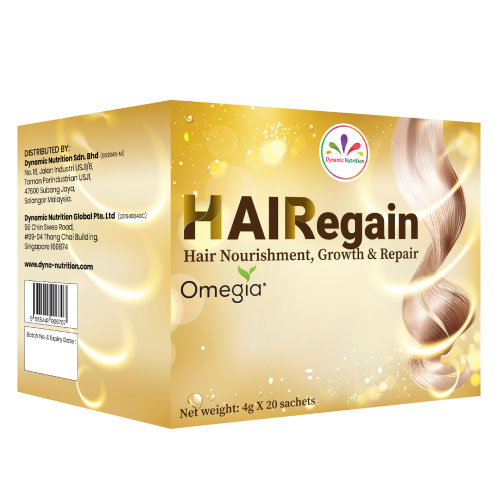
Disclosure: HAIRegain, the daily hair-nutrition sachet referenced above, is our own product. This article is an evidence review: it does not claim that any supplement blocks DHT to a measured degree, regrows hair, or replaces finasteride or medical care. Individual results vary and depend on the formulation, dose, duration and underlying cause of shedding. Anyone with a diagnosed condition, who is pregnant or breastfeeding, or who takes prescription medication should speak to a clinician or pharmacist before starting any new supplement.
Also available in Bahasa Malaysia and 中文.
Related Topics
Stop Hair Loss Naturally with HAIRegain: A DHT-Blocker Approach
The Science of Hair Regrowth: Unlocking Spermidine Polyamines for Thicker Hair
Beyond Shampoo: How Vitamin Deficiencies Affect Your Hair
9 Reasons You Are Losing Your Hair
Top 7 Benefits of Sea Buckthorn
8 Proven Benefits of Sea Buckthorn For Hair
Silica: The Crucial Ingredient for Stronger Bones, Hair and Nails
DHT: A Hormone That Causes Hair Loss in Male, Both and Female
Product you may be interested in