When Singapore’s public hospitals announced in late August that they would expand traditional Chinese medicine — acupuncture among them — alongside conventional painkillers in acute care, the news from Channel NewsAsia1 crystallized something knee-pain sufferers have suspected for years: non-drug pain relief has stopped being the alternative niche and started becoming mainstream practice.
Why Knee Pain Became a Non-Drug Conversation
Chronic knee pain — most of it osteoarthritis wear-and-tear — is one of the most common reasons adults in Singapore and Malaysia see a doctor. The standard reflex has been a non-steroidal anti-inflammatory drug, sometimes for years. But the CNA report documented what clinicians already see: hospitals are now mixing conventional pain management with TCM modalities where clinically indicated, a recognition that pain is rarely served well by a single pill and that long-term NSAID use carries real gastric, kidney and cardiovascular trade-offs.
That shift matters because the graded, non-drug options for knee pain are well established — they just need a doctor’s sign-off to be used properly. Here are the seven that have earned mainstream acceptance, ordered roughly from most- to least-established.
Option 1: Movement Therapy and Quadriceps Strengthening
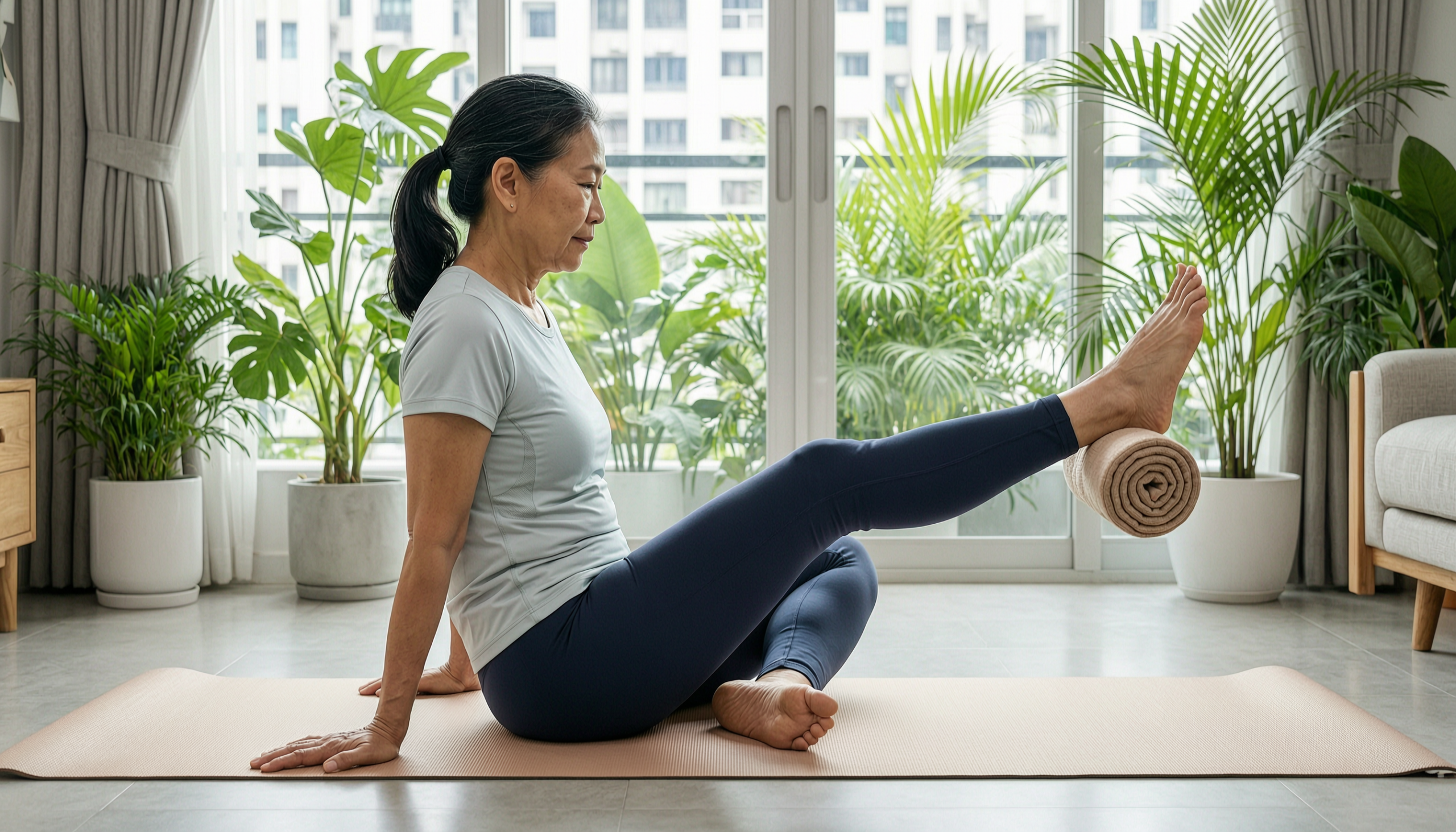
The NHS puts exercise and physical therapy at the top of its knee-pain treatment ladder2 — before injections, before surgery. For osteoarthritis knees, the strongest structure to rebuild is the quadriceps: the four muscles at the front of the thigh that share load with the joint. Strengthening the quads reduces the force the knee joint itself has to absorb with every step.
What this looks like in practice: physiotherapist-guided straight-leg raises, wall sits, step-ups and cycling at low resistance, started gently and progressed slowly. The “too much, too soon” pattern — a sudden jump in pickleball, running or stair-climbing — is exactly how rested knees become injured knees.
Option 2: Heat and Cold Therapy
Simple, cheap and effective. Cold packs applied to an acutely painful or swollen knee for 15–20 minutes constrict blood vessels and damp down local inflammation. Heat, meanwhile, relaxes muscle tension around a stiff knee and increases blood flow to help movement. Many people use cold after activity and heat before it — a rhythm worth confirming with a physiotherapist.
Option 3: Acupuncture, Where Clinically Indicated
The CNA story’s headline example — acupuncture in public hospitals — reflects a growing evidence base for needling as an adjunct in chronic musculoskeletal pain. The mechanism is not fully settled, but clinical guidelines in several countries now accept acupuncture as a reasonable add-on for knee osteoarthritis where a patient prefers to avoid or delay stronger intervention. The key words are “clinically indicated”: it complements, not replaces, structured treatment.
Option 4: Weight Management
Every kilogram of body weight puts roughly three to four kilograms of extra load across the knee during walking. For a patient carrying excess weight, even a 5–10% reduction measurably reduces knee pain and slows progression of cartilage wear. It is the slowest of the seven options to show up on the pain scale and the most durable once it does.
Option 5: The Nutrition Layer — What to Put on Your Plate
Food compounds cannot replace a treatment plan, but they can target the same inflammatory pathways that NSAIDs act on — through diet rather than drugs. Two ingredients with published clinical data stand out for knees.
Turmeric Extract (Turmacin®)
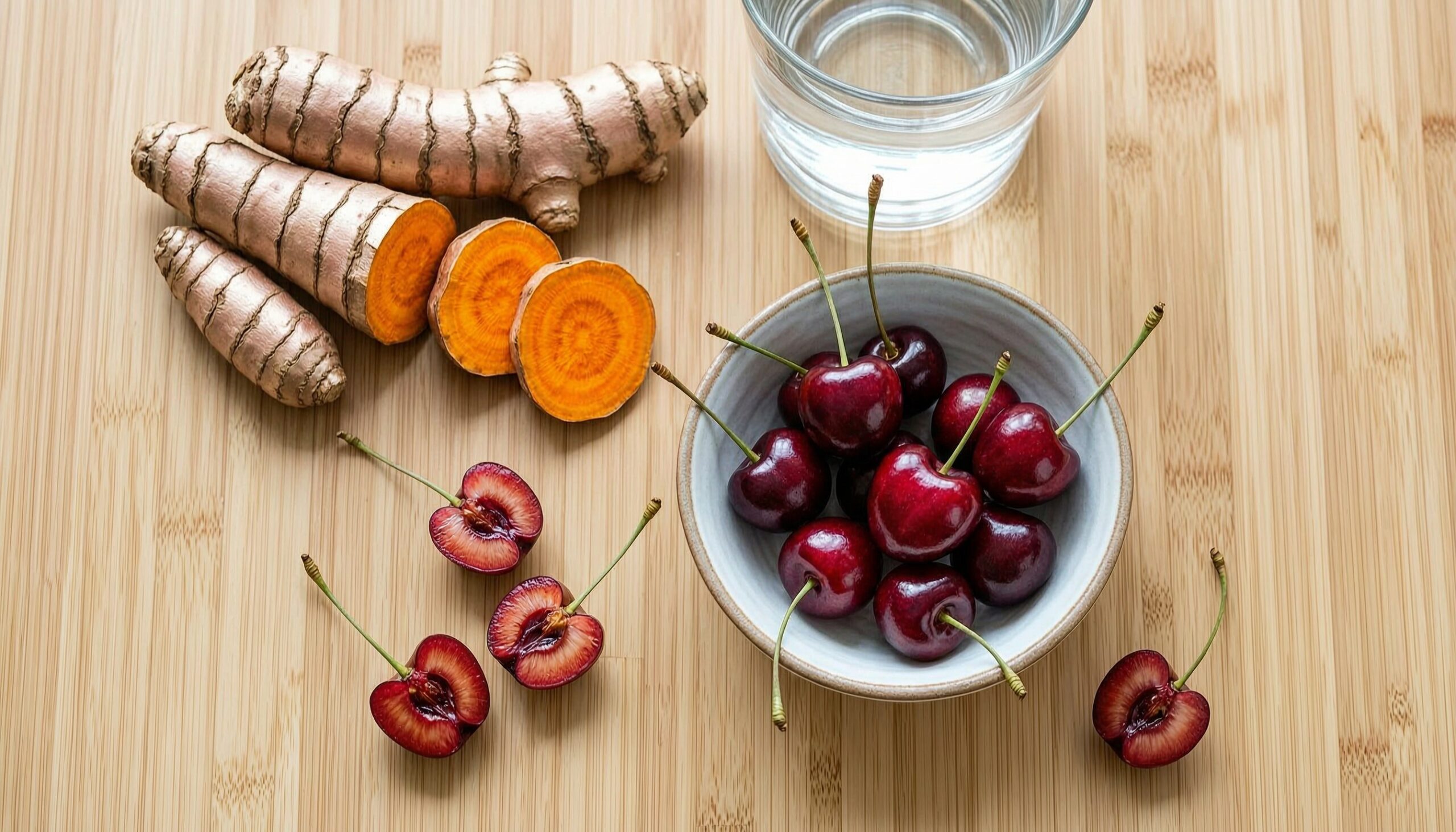
Most turmeric supplements are curcumin-based, and curcumin is notoriously poorly absorbed. Turmacin® is different: a water-soluble turmerosaccharide extract of turmeric — not curcumin — developed specifically to deliver the joint-comfort benefits of turmeric reliably. Clinical work on turmeric extracts in knee osteoarthritis has reported reductions in pain scores and improved joint function; Turmacin® carries its own published trial data, with effects reported from roughly the first week of daily use.
Tart Cherry Extract
Tart cherries are rich in anthocyanins, the pigments that give the fruit its deep red colour. Anthocyanins inhibit the same cyclo-oxygenase (COX) pathways NSAIDs target, and tart cherry has a separate, well-documented effect: lowering plasma uric acid, which makes it relevant for the gout-flavoured knee pain that many people mistake for osteoarthritis.
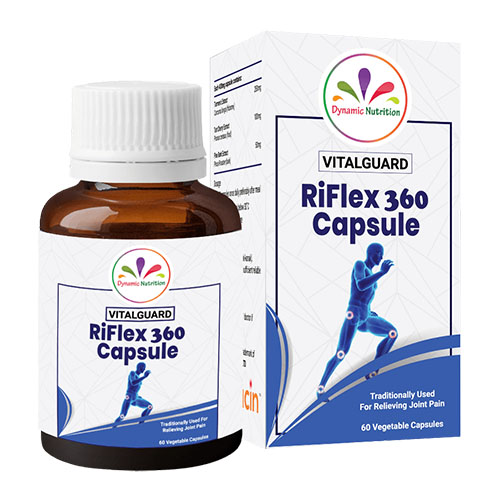
One supplement built around exactly this combination — clinically studied Turmacin® turmeric extract plus tart cherry extract and French maritime pine bark, which adds its own antioxidant and microcirculation support — is RiFlex 360. It is food-grade nutrition, not a drug: it supports the body’s own inflammatory response rather than switching it off.
Option 6: Tactical Use of Topical Counter-Irritants
Menthol and capsicum-based creams and gels are absorbed locally and create counter-irritation that can temporarily reduce pain perception in the knee. They are not a long-term answer on their own, but as a bridge — before exercise, or on bad days — they give many patients a drug-free way to keep moving.
Option 7: Sleep and Activity Pacing
Poor sleep amplifies pain sensitivity: the same knee hurts more after a bad night because the nervous system is less able to damp incoming pain signals. Protecting sleep — consistent timing, and avoiding heavy training late in the evening — plus pacing activity so joints never go from “rested” to “overloaded” in one session, is the least glamorous option on this list and often the one that breaks the pain cycle.
The Bottom Line
None of these seven options is a substitute for a medical diagnosis. Persistent knee pain — especially pain that wakes you at night, is accompanied by swelling or redness, or follows an injury — deserves a proper assessment before any self-treatment. But for the large majority of run-of-the-mill osteoarthritis knee pain, the mainstream has swung firmly towards movement, thermal therapy, weight control, and targeted nutrition before the prescription pad comes out. That is the same direction Singapore’s public hospitals are now moving, one acupuncture referral at a time.
References
- Channel NewsAsia — “From painkillers to acupuncture: Singapore’s public hospitals expand TCM use in acute care” — https://www.channelnewsasia.com/singapore/tcm-acupuncture-hospitals-stroke-cancer-6343971
- NHS — “Knee pain” (treatment overview) — https://www.nhs.uk/conditions/knee-pain/
Product you may be interested in