You wake gasping at 3 a.m. Your partner has nudged you about snoring for years. You mention it to an AI chatbot and the answer comes back reassuring: it is probably just stress, try cutting caffeine and sleeping on your side.
That kind of reassurance is exactly what a new investigation has flagged as dangerous. According to a The Star report on 10 September 2026, AI chatbots are systematically downplaying the warning signs of obstructive sleep apnea (OSA) — including snoring, daytime sleepiness and waking up gasping for air — and telling users they almost certainly do not have it1. For the many people in Malaysia and Singapore who actually do have OSA, that false reassurance has a metabolic cost the chatbots are not warning them about: untreated OSA is one of the most under-diagnosed drivers of insulin resistance, post-meal blood sugar spikes and rising HbA1c.

What the chatbots are getting wrong
Obstructive sleep apnea is not a niche problem. It affects an estimated one in four adult men and one in ten adult women in middle age, and the prevalence climbs steeply past 50, past a certain waist circumference, and among the shift-working population that is so common across Singapore and Malaysia.
The classic symptoms are well known: loud snoring, witnessed pauses in breathing during sleep, waking with a dry mouth or headache, daytime sleepiness, irritability. What is less well known — and what an AI chatbot trained to reassure is unlikely to volunteer — is what those nightly breathing pauses do to your metabolism.
Every apnoeic event temporarily drops your blood oxygen. Your brain responds by jolting you awake just enough to restart breathing. That micro-arousal triggers a cortisol surge and a sympathetic-nervous-system blast. Across a single night you can have dozens to hundreds of these surges. By morning your body has been marinating in stress hormones for hours.
The metabolic price of untreated OSA
That nightly cortisol load is exactly what your blood sugar does not need.
- Cortisol tells the liver to dump glucose into the bloodstream to fuel a fight-or-flight response that never actually happens.
- Repeated sympathetic surges desensitise your cells to insulin — the cellular equivalent of insulin resistance.
- The intermittent oxygen drops directly impair the pancreatic beta cells that produce insulin.
The clinical literature is unambiguous. A 2025 cross-sectional study of OSA patients with type 2 diabetes confirmed that OSA severity correlates strongly with insulin resistance independently of BMI2. A broader state-of-the-art review in the American Journal of Medicine noted that OSA is independently associated with insulin resistance, glucose intolerance and type 2 diabetes — and that treating OSA with CPAP can measurably improve insulin sensitivity and HbA1c3.
For a person watching their HbA1c drift up year over year, or watching their fasting glucose creep from 95 to 105 mg/dL and wondering what changed, untreated OSA is one of the answers the chatbots do not volunteer.

The screening gap most GPs miss
Here is the uncomfortable part: most people with prediabetes have never been asked about their sleep. The standard prediabetes workup is fasting glucose, HbA1c, weight and blood pressure. Sleep quality — snoring, witnessed apnoeas, daytime sleepiness — rarely makes the consultation.
That is starting to change. The American Academy of Sleep Medicine and the International Diabetes Federation have both published statements in recent years recognising the OSA-T2D bidirectional link and recommending that clinicians screen high-risk patients. But the gap between guideline and clinic floor remains wide, particularly in busy primary care.
A simple self-check helps: do you snore loudly enough to be heard through a closed door? Has anyone told you that you stop breathing in your sleep? Do you feel unrefreshed after a full night in bed? Do you fall asleep easily when sitting still in the afternoon? Two or more yeses is a strong prompt to ask your doctor about a sleep study referral or a home sleep apnoea test.
Even without OSA, mild sleep deprivation hits the same pathways
You do not need a formal OSA diagnosis to be paying a metabolic price for poor sleep. Five to six hours a night — the reality for many shift workers, new parents, caregivers and over-50s in our region — raises evening cortisol and impairs next-day insulin sensitivity by roughly 15 to 25 percent in controlled sleep-lab studies.
The mechanism is the same one OSA triggers: cortisol rises, the liver dumps glucose, your cells become less responsive to insulin, and the next time you eat a plate of rice the post-meal spike is meaningfully larger than it would have been after a proper night of sleep.
So even readers who do not snore and who sleep seven hours still feel this on the nights they do not. Sleep is not a luxury for blood sugar control — it is one of the foundational inputs.
What to do alongside an OSA workup
If you suspect OSA, the next step is a clinical one: a sleep study, an ENT evaluation if your anatomy suggests obstruction, weight management if BMI is elevated, and CPAP or a mandibular advancement device if diagnosed. None of those steps are replaceable by a supplement.
But there is a daily layer that works on the metabolic side of the problem — moderating post-meal spikes and supporting fasting glucose stability while you investigate the upstream cause.
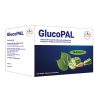
GlucoPal is a triple-action blood-sugar-support formula that combines three clinically studied ingredients to work on different parts of the curve:
- Mulbalance™ Mulberry Leaf Extract (750 mg, standardised on 1-deoxynojirimycin / DNJ) — slows intestinal alpha-glucosidase so sucrose and starches break down more gradually, blunting the 30 to 90 minute post-meal spike.
- Bitter Melon Extract (150 mg) — activates AMPK (the same cellular pathway as metformin), improving cellular glucose uptake and reducing liver glucose production.
- Inulin / Chicory Root Extract (1890 mg) — a prebiotic fibre that slows carbohydrate absorption and supports the gut-metabolism layer linked to better insulin sensitivity.
Taken daily, the three layers together address the post-meal spike (Mulberry DNJ), the fasting and insulin-sensitivity lever (Bitter Melon AMPK) and the gut-metabolism input (Inulin). GlucoPal is a daily nutritional support while you investigate the OSA question through proper medical channels — not a substitute for OSA diagnosis or treatment.
The bottom line
If your AI chatbot has been reassuring you about snoring, gasping or chronic sleepiness, treat that reassurance as a starting point — not a verdict. The metabolic cost of untreated OSA is real, well documented, and almost entirely invisible to the person living with it until blood tests start showing it.
Ask the questions your chatbot did not. If sleep is part of the picture, follow up with a clinician. And while you investigate the upstream cause, give your blood sugar the daily support it deserves from the inside — better sleep, calmer cortisol, and a supplement that works on the curve rather than against it.
This article is for educational purposes only and is not a substitute for medical advice, diagnosis or treatment of obstructive sleep apnea, prediabetes, type 2 diabetes or any related condition. If you suspect you have OSA, speak with a clinician about a sleep study or referral to a sleep specialist.
References
- The Star — “AI is wrongly telling us not to worry about sleep apnea, chats show” (10 September 2026) — https://www.thestar.com.my/tech/tech-news/2026/09/10/ai-is-wrongly-telling-us-not-to-worry-about-sleep-apnea-chats-show
- Wang J et al., “The relationship between obstructive sleep apnea and insulin resistance in patients with type 2 diabetes mellitus: a cross-sectional observational study” — https://pmc.ncbi.nlm.nih.gov/articles/PMC12972757
- Morgenstern M et al., “Obstructive Sleep Apnea and Diabetes: A State of the Art Review” — https://pmc.ncbi.nlm.nih.gov/articles/PMC5812754
Related Topics
Sleep Apnea Is the Missing Piece in Your Blood Sugar Puzzle
Prediabetes IS Reversible – Take Control with GlucoPal
What a Blood Sugar Spike Feels Like and Why It Matters
How Your Daily Choices Quietly Shape Your HbA1c
Mulberry Leaf: Nature’s Brilliant Brake on Blood Sugar Spikes
Nature’s Bitter Gift: Could Bitter Melon Help Steady Your Blood Sugar?
Why fasting blood sugar looks normal but your HbA1c still creeps up
Product you may be interested in