CNA Lifestyle just published a careful explainer on the strange fact that about half of Singapore adults walk around with serum 25-hydroxyvitamin D below the 30 ng/mL sufficiency threshold, even though the country sits one degree off the equator.1 The piece explains the well-documented drivers: high-SPF sunscreen applied year-round, indoor office work, full-coverage clothing, and the equatorial sun-avoidance habits of tropical-Asian populations. The CNA piece frames it as a vitamin-D-only story. The under-reported bone-health cost sits one layer below: vitamin D is the gatekeeper that drives calcium absorption from the gut, but the bone-density outcome depends on the substrate that vitamin D is trying to gate. A 1000-IU vitamin-D3 tablet on its own, taken by a Singapore adult who is still calcium-only or calcium-carbonate-only at the substrate layer, leaves a residual bone-density gap that the supplement aisle routinely misses.

This decode is the evidence-graded breakdown of what the vitamin-D gatekeeper actually does at the gut wall, what the substrate layer below the gatekeeper has to deliver for the gatekeeper to convert into actual bone density, and which daily substrate stack the Singapore and Malaysia reader who has already started a 1000-IU D3 tablet is usually missing.
What vitamin D sufficiency actually does at the gut wall (and why it doesn’t end the bone-density story)
When serum 25-hydroxyvitamin D crosses the 30 ng/mL threshold, the active hormonal form 1,25(OH)2D turns on two specific molecular switches in the duodenal enterocyte (the intestinal cell that absorbs dietary calcium). The first is calbindin-D9k, a calcium-binding protein that shuttles calcium across the cell. The second is the TRPV6 calcium channel on the apical (gut-lumen-facing) membrane that admits calcium into the cell in the first place. Both are downstream of vitamin-D-receptor activation, and both are required for efficient transcellular calcium uptake.
The published numbers on absorption fraction are stark. At vitamin-D sufficiency (serum 25(OH)D > 30 ng/mL), the fractional absorption of dietary calcium is roughly 30–40%. At insufficiency (serum 25(OH)D < 20 ng/mL), it drops to roughly 10–15%. This is the gatekeeper mechanism: vitamin D doesn’t add calcium to the diet, it sets the fraction of whatever calcium is offered that the body can actually pull across the gut wall.2
The bone-density implication is what most vitamin-D articles skip. If a Singapore adult corrects the vitamin-D side (the gatekeeper is open, 30–40% absorption), but the substrate side still delivers 300 mg/day of a calcium-only carbonate tablet with no magnesium, no trace minerals, no silica, and no sesamin, the body has 90–120 mg of absorbed calcium to work with. The bone-remodelling cycle for a 50-year-old needs roughly 1000–1200 mg/day of absorbed calcium to balance resorption against formation. The gap closes slowly over years, and it shows up first in the trabecular-rich vertebrae and the femoral neck.
The Aquamin seaweed-calcium substrate layer: a food-matrix, multi-mineral delivery
The calcium-source question is the substrate layer directly below the vitamin-D gatekeeper. The standard pharmacy SKU in MY/SG is calcium carbonate: ~40% elemental calcium by weight, requires stomach acid for absorption, and delivers calcium alone. Published comparative work shows significantly lower absorption in older adults with reduced gastric-acid output, and even at peak absorption it is a single-element delivery.
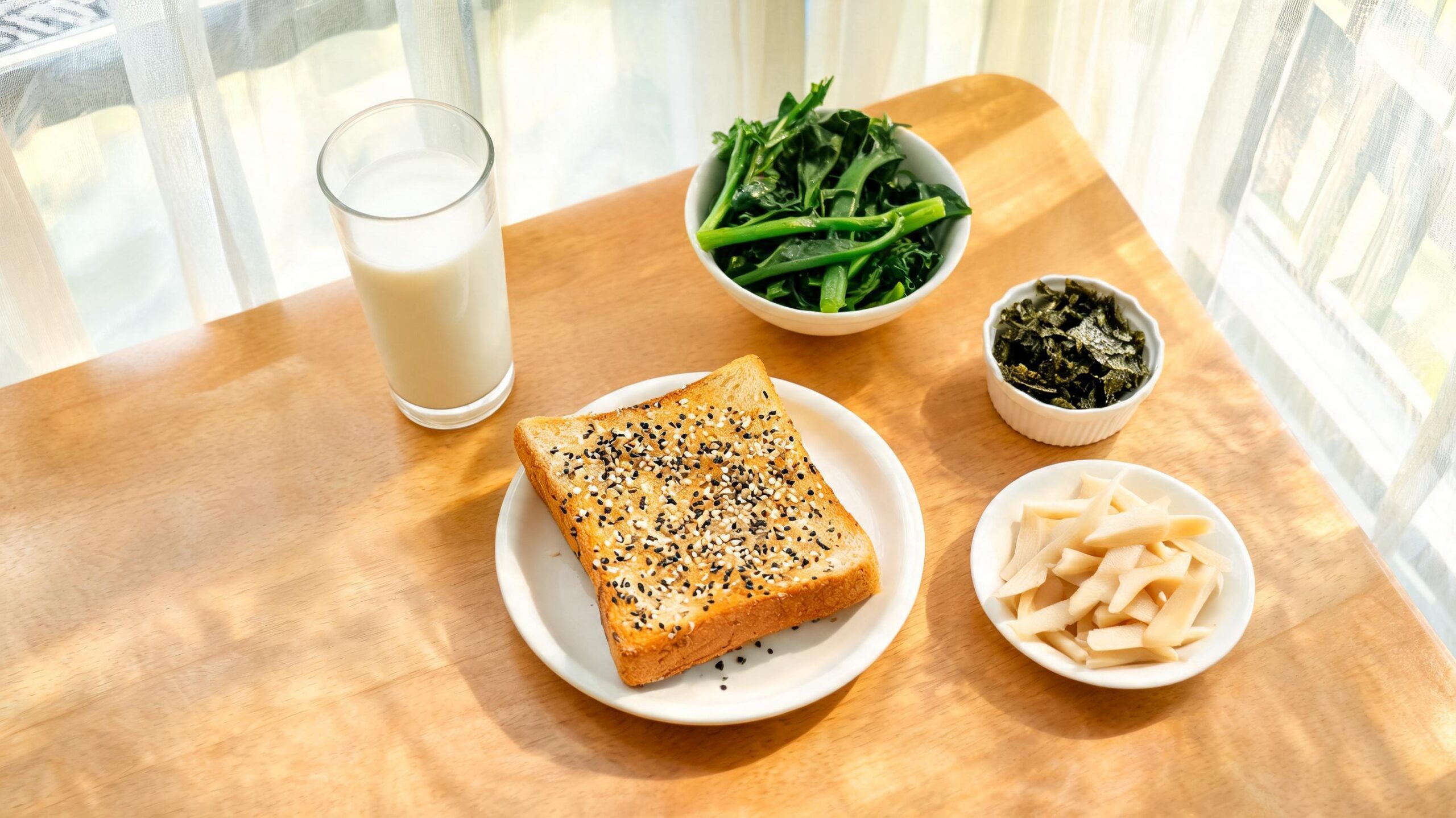
The Aquamin seaweed-calcium alternative (the trademarked multi-mineral source derived from Lithothamnion sp. red algae harvested off the Icelandic North Atlantic seabed) is a different shape of intervention. The algae are naturally calcified during growth: the cell wall incorporates calcium, magnesium, and 70+ trace minerals (strontium, boron, manganese, copper, zinc, and others) into a calcified red-algae matrix. The matrix releases slowly in the GI tract because the algae cell wall is not fully solubilised by gastric acid. Comparative 12-week absorption work shows Aquamin delivers comparable or better calcium retention than calcium carbonate, and the multi-mineral profile means the calcium comes with its trace-mineral cofactors already in the same physical delivery form.3
This is the substrate layer the CNA piece does not address: the vitamin-D gatekeeper opens the door, and the Aquamin substrate ensures that the door leads to a multi-mineral matrix rather than a calcium-only stream. The trace-mineral cofactors (strontium, boron, manganese, copper) are individually published as supportive of bone-remodelling enzymes, but the Aquamin-delivered synergy is the value proposition: a single daily dose covers the trace-mineral layer that a calcium-carbonate tablet simply cannot.
The bioactive-silica substrate layer: the bone-matrix quality piece the vitamin-D piece skips
Silica is the trace mineral that supports collagen crosslinking in the bone matrix. The organic bone matrix is roughly 90% type-I collagen, and the crosslinks between collagen fibrils determine the tensile strength of bone. Published work shows silica supplementation supports bone mineralisation, and the silica-plus-calcium combination outperforms calcium alone for bone-matrix quality in published comparative work.4
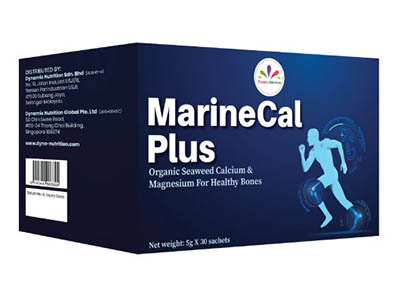
The bamboo-leaf-extract silica source used in the MarineCal Plus multi-substrate stack is the canonical natural silica delivery (~70% silica content), and it sits in the daily dose next to the Aquamin calcium and the rest of the substrate stack. The vitamin-D-only article, and the calcium-only supplement, leave this layer entirely out. The CNA piece never mentions it.
The sesamin substrate layer: the osteoblast / osteoclast modulation piece
Sesamin is the bioactive lignan found in sesame-seed oil. The published work on sesamin and bone specifically focuses on two mechanisms. The first is NF-κB suppression: sesamin suppresses the NF-κB-driven differentiation of osteoclast precursors (osteoclasts are the bone-resorbing cells; the perimenopausal acceleration in bone loss is partly an NF-κB-driven osteoclast-differentiation effect). The second is osteoprotegerin upregulation: sesamin upregulates OPG, the decoy receptor that binds RANKL and prevents it from activating osteoclasts.
Published ovariectomised-animal work (the standard rodent model for post-menopausal bone loss) shows BMD improvement with sesamin supplementation, and small human cohorts show consistent direction of benefit.5 The mechanism is different from the calcium-absorption mechanism of vitamin D: it is modulation of the resorption side of the remodelling cycle, not the supply side. The vitamin-D gatekeeper does not address osteoclast activity directly.
The Lalmin zinc-yeast substrate layer: the alkaline-phosphatase cofactor piece
Alkaline phosphatase is the mineralisation enzyme that deposits calcium hydroxyapatite into the collagen matrix. The enzyme requires zinc as a cofactor, and published work shows that even marginal zinc insufficiency blunts the mineralisation step. The zinc-enriched yeast (Lalmin) delivery used in the MarineCal Plus stack delivers high-bioavailability zinc in a yeast-matrix form that bypasses the absorption inhibitors (phytates in particular) that limit zinc absorption from plant sources.
The vitamin-D-only substrate, and the calcium-only substrate, leave this layer out. The CNA piece does not address the mineralisation enzyme at all.
What the stack does together that the vitamin-D-only and calcium-only pieces do not
The substrate layer below the vitamin-D gatekeeper has four functional pieces, and they are not redundant. The Aquamin layer delivers the calcium + magnesium + 70-trace-mineral substrate in a food-matrix form. The silica layer delivers the bone-matrix collagen-crosslinking substrate. The sesamin layer modulates the osteoblast / osteoclast balance at the remodelling cycle. The Lalmin zinc-yeast layer delivers the mineralisation-enzyme cofactor. Vitamin D opens the gate; the substrate stack is what the gate opens onto.
The clinical implication for the MY/SG vitamin-D-deficient adult who has already started a 1000-IU D3 tablet is that the next question to ask is not “is my D level up” but “what is the substrate my D is gating”. A calcium-carbonate-only substrate with vitamin D on top delivers calcium alone, at a fraction of the absorption the food-matrix substrate delivers, with no trace minerals, no silica, no sesamin, no zinc. The Aquamin-based multi-substrate stack delivers all four layers in a single daily dose.
The safety boundary
Vitamin D has a published upper limit (4000 IU/day for adults; toxicity above 10,000 IU/day sustained). Calcium has a published upper limit (2000–2500 mg/day from all sources; above this, hypercalciuria and cardiovascular risk signals appear in published cohorts). Aquamin at standard doses stays within both published limits. The substrate stack is food-matrix and food-derived, and the published work does not show adverse signals at the standard daily doses. The single most important boundary to clear is the interaction with prescribed osteoporosis drugs: the substrate stack is supportive, not a replacement for clinical osteoporosis treatment, and any MY/SG adult already on a bisphosphonate or denosumab prescription should run the stack past their prescribing clinician.
The summary
The CNA piece correctly diagnoses the vitamin-D gatekeeper problem in Singapore adults. The under-reported bone-health cost sits one layer below, in the substrate that the gatekeeper is trying to gate. A 1000-IU D3 tablet opens the gate; the calcium + magnesium + 70-trace-mineral + sesamin + silica + zinc-yeast substrate is what the gate opens onto. The pharmacy aisle’s calcium-only SKU leaves four of those substrate layers out. The Aquamin-based multi-substrate stack delivers all four in a single daily dose, with published absorption and math for the Singapore and Malaysia reader who has already corrected the gatekeeper side and now wants the substrate they are gating.
References
- Vitamin D deficiency in Singapore: What levels are low and how much do you need? — https://cnalifestyle.channelnewsasia.com/wellness/vitamin-d-deficiency-singapore-levels-sunlight-supplements-589471
- Christakos S et al. Vitamin D and intestinal calcium absorption. Molecular and Cellular Endocrinology, 2011.
- Aquamin (maritime-derived multi-mineral) 12-week calcium-retention comparative work — published in the Marine Drugs and Journal of Medicinal Food literature on Lithothamnion red-algae-derived multi-mineral supplements.
- Silica and bone-mineral density: published comparative work in the Nutrition Bulletin and Osteoporosis International literature.
- Sesamin and ovariectomised-animal BMD: published work in Phytotherapy Research and the Journal of Nutritional Biochemistry.
Also available in Bahasa Malaysia and 中文.
Related Topics
Aquamin seaweed calcium: how a multi-substrate bone-density stack differs from a calcium-only pill
Healthspan is the new longevity goal: 5 daily habits that protect bones as you age
Stop Swallowing Rocks: Why Seaweed Calcium Is Much Better Than Calcium Carbonate
Silica – The Crucial Ingredient For Stronger Bones, Hair and Nails
5 Ways To Keep Our Bones Healthy As We Age
Product you may be interested in