If Malaysia and Singapore readers want to know what an early heart attack looks like in the 30-to-50 cohort, regional news has the answer on the front pages. The Star’s “Eight actions to take for a healthy heart”1 and the New Straits Times’ “When heart attacks strike early”2 — running in the same August 2026 news window — have flagged what cardiovascular and thrombosis specialists increasingly say they are seeing in practice: early-onset coronary events are turning up more often in **adults in their 30s and 40s**, in people whose only obvious risk factor is a stack of everyday habits — long desk hours, take-away meals heavy in sodium, and a stress-load that never really turns off.
That demographic is exactly the one the beetroot product category is historically underserving. The beetroot market has traditionally been sold to athletes, bodybuilders, and endurance hobbyists. But the 30-to-50 professional audience is arguably a bigger, longer-life-window cohort — they are not buying beetroot for a 5K this weekend; they are looking for a daily, low-friction way to support vascular health before anything goes wrong.
Why the early-onset trend matters for MY/SG readers
The Star’s piece is written as an eight-step checklist (sleep, movement, diet, stress), and the NST piece is written as a clinician alert: “don’t assume a heart attack is a post-50 event.” What both articles implicitly agree on — and what the product category can answer — is that vascular health in the 30-to-50 window is built or lost by daily choices, not episodic ones.
The physiology is straightforward: every 24 hours, the body needs a fresh supply of dietary nitrate, which converts to nitric oxide, which dilates blood vessels and keeps arterial walls compliant. The average take-away meal in Kuala Lumpur or Singapore — nasi lemak with fried anchovies, a mee goreng, a chicken rice plate with oily gravy — contains far more sodium than dietary nitrate. Over months and years, the ratio inverts. Vascular tone suffers first; blood pressure follows; then the coronary events.
Dietary nitrate is the ingredient most people skip
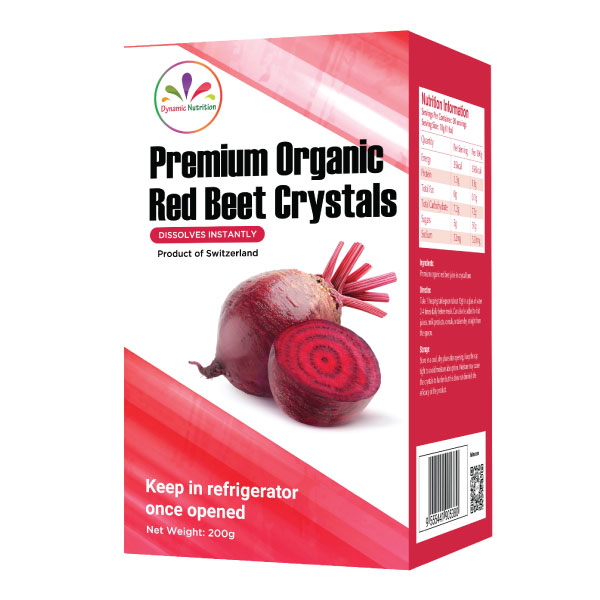
Dietary nitrate is not a trendy supplement. It is a food-derived molecule found in highest concentrations in leafy greens, root vegetables, and — in the most concentrated edible form — organic beetroot. One heaping tablespoon of Premium Organic Red Beet crystals equals the beetroot solids of roughly 2.5 kg of fresh-pressed organic beets, and dissolves instantly in cold water without maltodextrin or anti-caking fillers. For a 35-year-old in a Singapore office who skips the leafy greens but wants to keep nitric oxide on the table, this is a low-friction daily move.
Beyond nitrate: three beetroot moves the articles don’t cover
Both media pieces focus on lifestyle habit shifts. What they do not cover — because they are news articles, not nutrition pieces — is the role of specific beetroot compounds beyond dietary nitrate. Three deserve naming.
Betaine and homocysteine
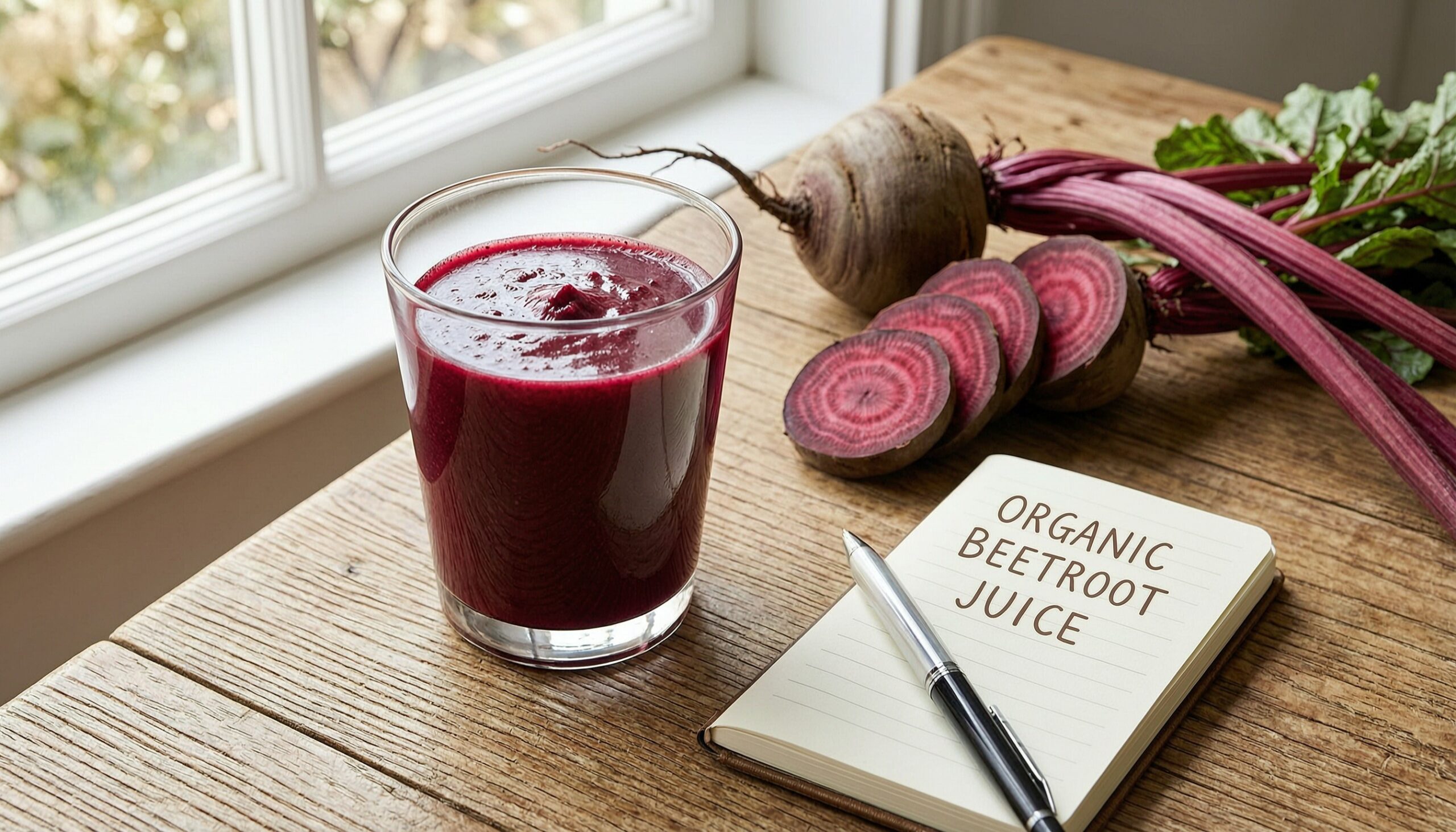
Beetroot is one of the richest dietary sources of betaine, a methyl-donor that the liver uses to metabolise homocysteine. Elevated homocysteine is a well-documented independent cardiovascular risk marker. Reducing homocysteine does not require a prescription; it requires a steady dietary source of methyl donors. Betaine from beetroot is one of the most bioavailable of those sources.
Betalain pigment load
The deep red colour of beetroot comes from betalain pigments — the beetroot equivalent of the anthocyanins that give blueberries their colour. These pigments are the compound class responsible for the beetroot’s antioxidant capacity, including support for endothelial health and free-radical scavenging in the vascular lining.
HDL cholesterol support
Regular beetroot consumption has been associated with improved HDL (the “good cholesterol”) fractions and reductions in total cholesterol and triglycerides. For the 30-to-50 professional who has never sat down with a lipid panel, the point is not that beetroot is a cholesterol drug — it is that beetroot is the rare dietary input that simultaneously supplies nitrate, betaine, and betalains in a single daily serving.
What to add to your plate
If the reader is scanning the eight actions from The Star piece looking for what they can add tomorrow morning, the shortest answer is: a glass of concentrated beetroot in cold water, taken at a consistent time every day. Concentrated organic beetroot crystals serve the 30-to-50 audience better than beetroot powder for three reasons: they contain no maltodextrin or fillers, they dissolve instantly in cold water (a critical advantage for a professional who does not want a shaker bottle on their desk), and they deliver the highest nitrate-per-scoop ratio of any commercially available beetroot format.
The eight-actions framing is not wrong. It is just incomplete. For the professional whose vascular health is being eroded by desk hours and sodium-heavy meals, the ninth action is dietary nitrate — and the beetroot category has the most concentrated, lowest-friction source available.
References
-
- The Star, “Eight actions to take for a healthy heart” (2026-07-23). https://www.thestar.com.my/lifestyle/health/tell-me-about/2026/07/23/eight-actions-to-take-for-a-healthy-heart
- New Straits Times, “#HEALTH: When heart attacks strike early” (2026-08-10). https://www.nst.com.my/lifestyle/heal/2026/08/1507871/health-when-heart-attacks-strike-early

Product You May Be Interested In