Beetroot — the deep-magenta root that has been a folk remedy for blood pressure and stamina for generations — has surged back into search interest over the last year, driven by new attention to dietary nitrates and the nitric-oxide pathway. Yet the form you buy matters more than most label copy suggests. The clinically studied dose is the dose of nitrates in 250–500 ml of fresh beetroot juice a day, but most supermarket “beetroot powder” is largely maltodextrin, and many beetroot juices lose a meaningful share of their nitrates within days of pressing. This article walks the three forms — fresh juice, powder, and freeze-dried crystals — and gives you a label-reading checklist so you can tell which one actually delivers.
Why the form matters: the nitrate dose is the headline effect
The cardiovascular mechanism that the headlines talk about — beetroot “lowers blood pressure” — runs through dietary nitrates: inorganic nitrate (NO₃⁻) from the beet is converted on the tongue by oral bacteria into nitrite, which is then reduced to nitric oxide (NO) in the body. NO is a vasodilator — it relaxes blood-vessel walls and lowers peripheral resistance, the same molecule the endothelium produces from the amino acid L-arginine. In randomized, placebo-controlled trials, 250–500 ml of beetroot juice daily has typically lowered systolic blood pressure by 4–8 mmHg in hypertensive adults over 2–4 weeks — a clinically meaningful reduction. The effect is dose-dependent: smaller nitrate doses produce smaller effects, and zero nitrate produces no effect.
That detail reframes the “is beetroot good for you?” question. The mechanism is real, but it only shows up if you actually ingest the nitrate dose the trials used. Most readers underestimate how much form matters: a 5 g teaspoon of beetroot powder is not the same as a 250 ml glass of juice, and a 200 g jar of crystals is not the same as 200 g of pressed beet. The next three sections walk the forms head-to-head.
Form 1: fresh beetroot juice — the gold-standard dose, with real friction
Fresh-pressed beetroot juice is the form used in most published RCTs, and it is the form whose nitrate content is easiest to reason about: a 250 ml glass of cold-pressed beetroot juice typically contains around 250–400 mg of dietary nitrate, depending on the beet variety and growing conditions. That dose, taken daily for 2–4 weeks, is what produces the blood-pressure reductions in the trial literature. The mechanism is also faster-acting than most other plant-based BP interventions: plasma nitrite rises within 2–3 hours of ingestion, and the BP effect is measurable from week one.
The friction is practical. Juicing fresh beets daily takes time, the nitrate content drops as the juice sits (nitrate is metabolized by bacteria and oxidized over hours), and 250–500 ml a day is a meaningful volume to consume. A 250 g beet yields roughly 80–100 ml of juice, so the daily dose requires two to four beets — plus juicing, washing, and cleanup. For most readers, that is the reason they go looking for a shelf-stable form. Which is where powders and crystals come in.
Form 2: beetroot powder — convenient, but check the label carefully
Beetroot powders are the most commonly bought beetroot supplement, and the most variable in what they actually contain. The product is made by dehydrating beetroot — either juice or whole-root — into a powder. The intent is a shelf-stable, easy-to-spoon format that delivers the same nitrates as fresh juice in a fraction of the volume. In practice, the market splits three ways:
Juice powders (high nitrate). Made from pressed beetroot juice that has been spray-dried or freeze-dried into a powder. These are the closest to fresh juice and can carry meaningful nitrate content. Look for products that state a nitrate or betalain content on the label.
Whole-root powders (moderate nitrate). Made from the whole beet — root and pulp — dried and milled. These contain fibre and some nitrate, but at a lower concentration per gram than a juice powder.
“Beetroot powder” that is mostly maltodextrin (low nitrate). This is the trap. Many supermarket “beetroot powder” products are 50–80% maltodextrin — a filler added for flow, mouthfeel, and capsule-filling convenience. Maltodextrin has no nitrates, no betalains, no beet-specific compounds. A heaping teaspoon of an 80%-maltodextrin powder contains a fraction of the actual beet dose a label with “beetroot” on the front implies. These products are not fraudulent — they often say “with maltodextrin” in the ingredient list — but they are also not the dose the beet-BP research is talking about.
Form 3: freeze-dried beetroot juice crystals — the concentrated dose with no fillers
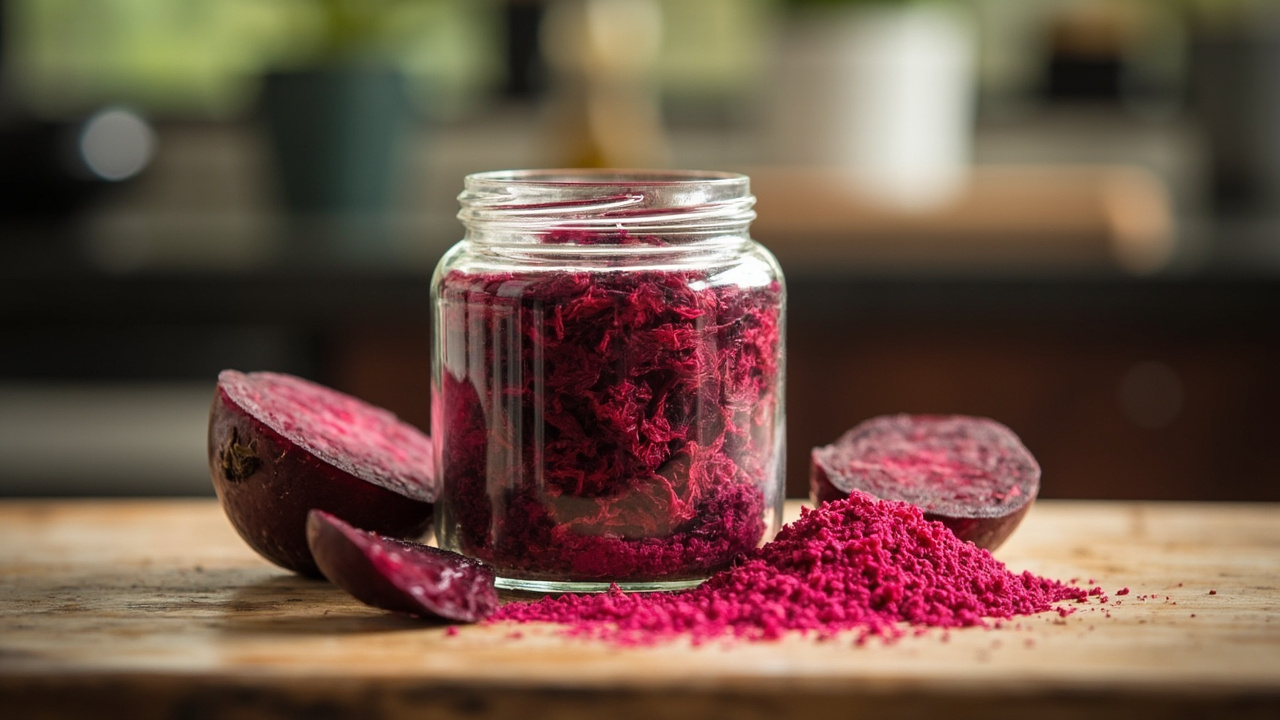
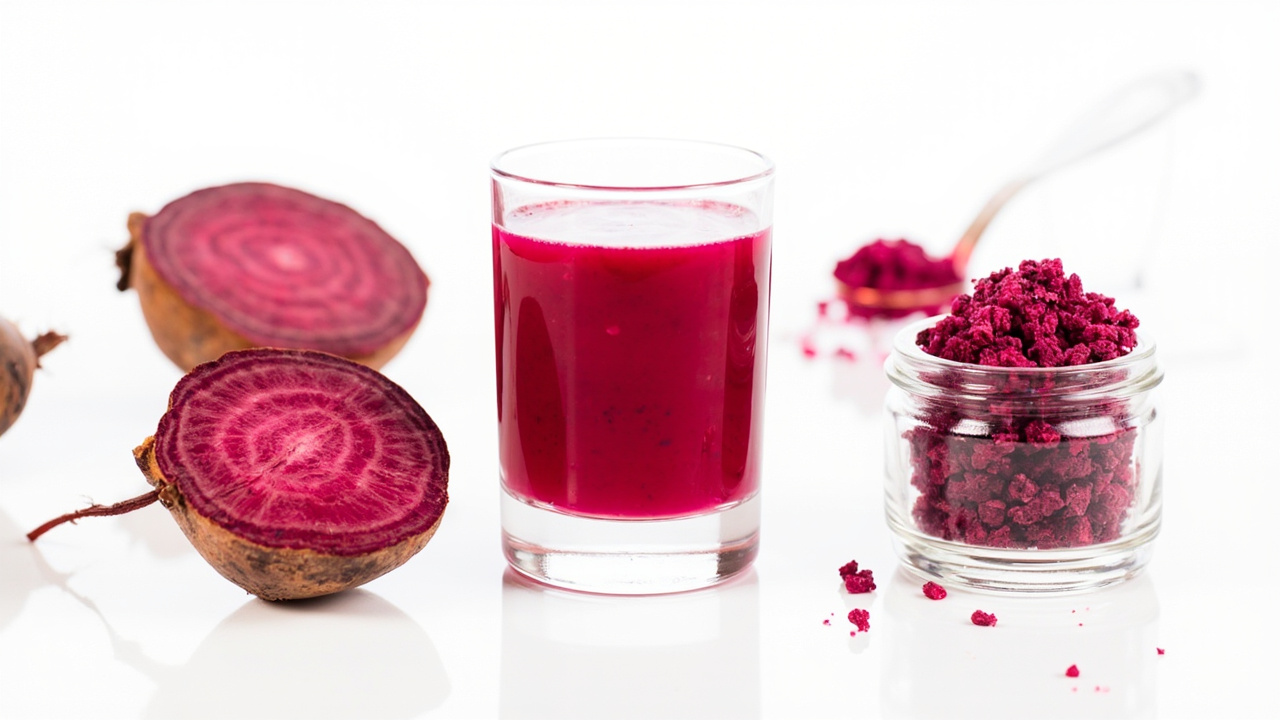
Freeze-dried beetroot juice crystals are what you get when you take pressed beetroot juice and remove only the water — no maltodextrin, no fillers, no anti-caking agents. The juice is frozen and the water is sublimated off under vacuum, leaving the nitrates, betalains (the red pigments), betaine, anthocyanins and fibre in the same proportions as the original juice. A 200 g jar of freeze-dried crystals is the dry-weight equivalent of roughly 2.5 kg of fresh beet — a much higher concentration of beet-specific compounds per gram than either fresh juice or a filler-heavy powder.
This is the form that delivers the trial-style nitrate dose most efficiently. One heaping tablespoon (~10 g) of freeze-dried crystals reconstitutes into roughly 60–80 ml of beet-equivalent juice, which is in the same nitrate range as a clinical dose. The convenience is also closer to a daily supplement than a kitchen project: open the jar, spoon into water or a smoothie, drink. No juicer, no cleanup, no nitrates lost to oxidation during the day.
How to read a beetroot label: 5 checks before you buy
Five checks separate a clinically meaningful beetroot product from a marketing one. Run any beetroot supplement through this list before you decide:
1. Single-ingredient list. The ingredient list should be beetroot — juice or whole-root — and nothing else. If maltodextrin, dextrose, or “natural flavour” is in the first three ingredients, the beet is not.
2. Country and form declared. “Swiss organic”, “US beetroot”, “Italian beetroot” — the country of origin tells you about the agricultural standards. The form (“freeze-dried juice crystals”, “spray-dried juice powder”, “whole-root powder”) tells you what you’re actually getting.
3. Nitrate or betalain content stated. A serious beetroot product states a nitrate mg-per-gram figure or a betalain percentage. If neither is on the label, the manufacturer is not measuring either, and you can’t compare it to the trials.
4. No added sugars or fillers. Maltodextrin, dextrose, fructose, “natural flavours”, anti-caking agents (silicon dioxide), and flow agents (calcium stearate) are all signs the product is optimized for shelf life and capsule-filling, not for nitrate delivery.
5. Real-dose serving size. A 5 g teaspoon of a maltodextrin-heavy powder is not a clinical dose. A 10 g tablespoon of a freeze-dried juice crystal is. The serving size should be the dose the trials used, not the dose that fits in a capsule machine.
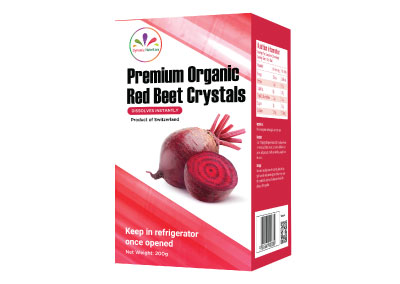
Premium Organic Red Beet: a single-ingredient crystal example
Premium Organic Red Beet is a freeze-dried beetroot juice crystal — a 200 g jar of Swiss-organic red beet crystals with a single-ingredient list (beetroot), no maltodextrin, no fillers. The 200 g jar is the dry-weight equivalent of roughly 2.5 kg of fresh beet, so a single 10 g serving reconstitutes into a clinical-range dose of beet-equivalent juice. The format is designed for daily use: one heaping tablespoon stirred into water, juice, or a smoothie in the morning is the “actually delivers the nitrates” version of the beet habit.
For readers considering a beetroot product for blood-pressure support or pre-workout nitrate dosing, the form-comparison matters more than the brand. The mechanism is dose-dependent, the dose is in nitrates, and the form is what gets the nitrates into your mouth. A single-ingredient freeze-dried crystal at a real serving size is the closest shelf-stable match to the 250–500 ml juice dose the trials used.
If you have a diagnosed hypertension condition, speak to a doctor before adding any supplement — including beetroot — to your routine. Beetroot can interact with certain medications, and the BP-lowering effect of nitrates can add to the effect of prescription antihypertensives.
Product you may be interested in