Most people who search high blood pressure supplement Malaysia end up looking at bottles that promise to “lower blood pressure” on the front label. Most of those promises are not what the published evidence supports. This guide does the opposite: it takes the six supplement categories people in Malaysia actually search for — nattokinase, garlic, hibiscus, beetroot juice, CoQ10 and fish oil — grades each one against the randomised controlled trials and meta-analyses that exist, and tells you which claims to skip when you read a label.
Two things are worth saying before the shortlist, because they frame everything below. First, a supplement is not a blood-pressure treatment. Malaysian clinical practice guidelines define hypertension as a persistent systolic reading of 140 mmHg or above, or diastolic of 90 mmHg or above, and they recommend therapeutic lifestyle change for everyone with hypertension or pre-hypertension.1 Anything you take over the counter sits alongside that plan, not instead of it, and any change to a prescribed antihypertensive belongs with the doctor who prescribed it. Second, the honest scientific answer to “which supplement lowers blood pressure?” is that several of them move the number a little, one of them moves it more than most, and almost none of them are studied in the people most likely to buy them.
How we graded each supplement
Every supplement below is graded the same way, against the same five questions. The grading is deliberately strict, because a search for a blood pressure supplement is a search where the buyer is often, eventually, going to be making a medication decision — and a supplement that looks stronger than it is can push someone toward that decision.
- Does it have randomised controlled trial evidence in humans? Mechanism stories, animal studies and in-vitro work do not count. This single filter removes most of what a supplement label claims.
- How large is the blood pressure effect, in mmHg? This is the only unit that lets you compare two products honestly.
- Who was in the trial? Effects in people with high blood pressure are usually much larger than effects in people with normal blood pressure, and most of these trials are small.
- How long was it, and at what dose? A four-week study at a dose nobody takes daily is not a buying guide.
- Does the effect survive when you measure blood pressure outside the clinic? Several supplements that look impressive in a clinic measurement show much less on a 24-hour ambulatory reading.
The shortlist, graded
Here is the whole shortlist in one place, with the honest number attached to each. The list below is the ranking; the sections after it give you the detail and the caveats.
- Hibiscus tea — the largest effect of the six. A 2022 meta-analysis of 17 randomised trials pooled a 7.1 mmHg drop in systolic blood pressure versus control, with the effect concentrated in people whose blood pressure was already high.2 The catch is that the trials are heterogeneous, the diastolic effect did not reach significance, and the largest single trial deliberately enrolled people not on blood-pressure medication.3
- Garlic — an 8.4 mmHg systolic reduction in people with hypertension in the pooled hypertensive subgroup, but no significant effect in people with normal blood pressure.4 That is the pattern you want from a blood pressure supplement, and it is also why the preparation matters: most of the trials used garlic powder dosed between 600 and 900 mg/day, and different preparations deliver very different amounts of allicin, with aged garlic extract and heat-treated garlic delivering minimal allicin.4
- Nattokinase — the one that needs the most care, because the evidence is genuinely split. One randomised trial of 86 Korean adults with untreated blood pressure of 130–159 mmHg found a net 5.6 mmHg systolic reduction at 2,000 FU per capsule over 8 weeks.5 A later, larger North American multicentre trial found the systolic reduction did not reach statistical significance, while the diastolic reduction did.6 Same ingredient, same general mechanism, different answer — which is exactly the kind of split a buyer should hear about before buying.
- Beetroot juice and dietary nitrate — a pooled 3.6 mmHg systolic reduction across trials, with a larger effect at higher doses (500 mL/day) and longer durations (14 days or more).7 The important caveat is the measurement one: in hypertensive patients, one meta-analysis found a 7.7 mmHg drop on clinic readings but only 2.7 mmHg on 24-hour ambulatory readings — a real difference that tells you how much of the headline number is a white-coat effect.8
- Coenzyme Q10 — a pooled 3.5 mmHg systolic reduction across 43 randomised trials, with the effect mostly at doses under 200 mg/day and over longer durations.9 The diastolic effect was not significant, and the heterogeneity across trials was high.
- Fish oil (omega-3) — the smallest and most dose-dependent of the six. A dose-response meta-analysis of 71 trials found the optimal intake sits around 2 g/day of combined DHA and EPA, giving roughly a 2.6 mmHg systolic reduction, rising to around 4.5 mmHg in people with established hypertension at 3 g/day.10 Below that dose you are getting very little.
Why hibiscus and garlic are at the top, and what still limits them
The hibiscus result is the most interesting number in this whole category, and it deserves the caveat attached to it. The pooled 7.1 mmHg systolic reduction comes from 17 randomised trials, but the heterogeneity between those trials was extreme — an I² of 95% — and the diastolic change did not reach statistical significance on its own.2 When the same analysis compared hibiscus directly against antihypertensive medication, the difference between them was not significant; the researchers were careful to describe that as “not statistically different” rather than as equivalence, because a non-significant difference with wide confidence intervals is not evidence that the two are the same.2 The effect was also concentrated where you would want it to be: meta-regression found the higher the starting systolic pressure, the greater the fall.2
The single most useful hibiscus trial is the one most people never see. Sixty-five pre-hypertensive and mildly hypertensive adults, none of them taking blood-pressure medication, drank either three 240 mL servings of hibiscus tea a day or a placebo beverage for six weeks. Systolic pressure fell 7.2 mmHg with hibiscus against 1.3 mmHg with placebo, and the diastolic difference did not reach significance.3 The authors were explicit that participants were not on blood-pressure medication — which is what makes the trial useful as evidence, and also what limits how far it can be stretched to people who already take a prescribed drug.
Garlic is the mirror image of hibiscus: a small overall effect that becomes a meaningful one when you look only at people with hypertension. In the pooled hypertensive subgroup, systolic pressure fell 8.4 mmHg and diastolic 7.3 mmHg; in the normotensive subgroup, neither effect was significant.4 The practical detail from the same analysis matters for anyone buying: most of the trials used garlic powder dosed between 600 and 900 mg/day, and the authors note that different garlic preparations deliver very different amounts of allicin, the active compound, with aged garlic extract and heat-treated garlic delivering minimal allicin.4 So “garlic” on a label is not a dose, and two products with the same word on the front can behave very differently.
The nattokinase split, and why it matters for BioNatto Plus
Nattokinase is where a buyer’s guide has to be most careful, because it is also the ingredient in the product this article is associated with, and the honest read has to come before the promotional one.
The case for it: a randomised, double-blind, placebo-controlled trial at Yonsei University enrolled 86 adults aged 20 to 80 with untreated systolic blood pressure between 130 and 159 mmHg. After 8 weeks on 2,000 FU per capsule, the net change against placebo was −5.55 mmHg systolic and −2.84 mmHg diastolic, with plasma renin activity also falling significantly.5 The case against: a separate randomised, double-blind, placebo-controlled multicentre trial in a North American population found that while the diastolic reduction was significant, the systolic reduction did not reach statistical significance.6 That trial also found its strongest signal in participants with low baseline plasma renin activity — a subgroup finding, which is a hypothesis for the next trial rather than an established effect.
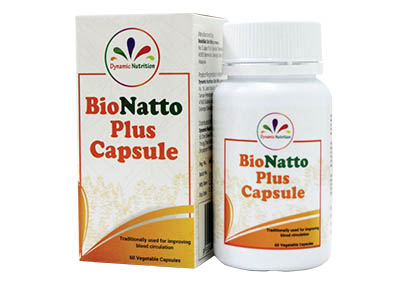
So the defensible summary is that nattokinase has real, published blood-pressure data, and that the data is mixed between trials. BioNatto Plus contains 50 mg of fermented soybean extract (NSK-SD®) alongside 50 mg of French maritime pine bark extract and 50 mg of grape seed extract per capsule, in a 60-capsule bottle, and it is a circulation and fibrinolysis formula first. Anyone buying it for blood pressure specifically should read the nattokinase evidence above as the relevant evidence — and should know that it points to a modest, uncertain systolic effect alongside a more established diastolic signal, not to a replacement for medication. The pine bark and grape seed components have their own evidence for vascular tone, capillary integrity and lipid markers, which is a different question from blood pressure.
There is one more thing about nattokinase that no buyer’s guide should skip, and it is a safety point rather than an efficacy one. Nattokinase is a pharmacologically active enzyme that works on the coagulation cascade. If you take warfarin, a direct oral anticoagulant, or an antiplatelet drug, adding a fibrinolytic without telling your prescriber is a real interaction question, not a theoretical one — and the three questions to ask your cardiologist are laid out in our related article on combining nattokinase with blood thinners.
The claims to skip on the label
Every category above has one version of this problem, so here are the specific phrases to be sceptical of, and what to ask instead.
- “Clinically proven to lower blood pressure.” Ask which trial, in whom, at what dose, and what the comparator was. If the answer is a single small study in people with borderline blood pressure, then a clinically proven claim is a claim about a population that does not include most buyers. Note the contrast with “clinically proven to improve blood circulation”, which is a different and much better supported claim for this ingredient class.
- “Supports healthy blood pressure” without a number. If a product will not state an effect size in mmHg, assume the effect is small or unmeasured. Every entry in the shortlist above has a published number attached to it, and so should the product.
- A single headline figure with no comparator and no duration. A 10 mmHg figure that came from one uncontrolled study is not comparable to a pooled effect from 17 randomised trials, even when the numbers look similar.
- “Works for everyone” or “natural, so no side effects.” Every category in the shortlist has a subgroup pattern — the effect is concentrated in people with elevated blood pressure, and the effect in people with normal blood pressure is frequently not significant. “Natural” also says nothing at all about interactions with prescription drugs, which is the whole subject of the nattokinase point above.
- Anything that skips the registered-product check. In Malaysia, health supplements and traditional products are registered with NPRA and carry a MAL registration number on the label, alongside a Meditag hologram sticker.1112 You can check a product’s registration status directly with NPRA, and the number format tells you the category: the final letter distinguishes controlled medicines, over-the-counter medicines, traditional products, and health supplements. A supplement with no MAL number and no hologram on the pack is not the thing you thought you were buying.
How to use this shortlist
Read the grades as a filter, not a shopping list. If you are in the elevated-baseline-pressure group that the hibiscus, garlic and nattokinase trials favour, those are the categories with evidence behind them. If you have normal blood pressure and are looking for general cardiovascular support, the picture changes — in the trials, several of these ingredients did nothing measurable in that group at all, so you are paying for an effect the data does not show.
Whatever you choose, the sequence is the same: measure your blood pressure properly and consistently, take it to your doctor, treat what needs treating with the plan you are given, and then decide whether a supplement belongs at the end of that plan rather than in place of it. If a supplement label, a shop staff member or an online ad suggests otherwise, that is the claim to skip.
One note on scope: this article compares published evidence for supplement categories only. It does not evaluate any specific product’s efficacy, make a treatment recommendation, or replace the advice of your own clinician, and no medication change should be made on the basis of anything written here.
References
- Ministry of Health Malaysia, Academy of Medicine of Malaysia, Malaysian Society of Hypertension. Clinical Practice Guidelines: Management of Hypertension (4th Edition). 2013. — https://extranet.who.int/ncdccs/Data/MYS_D1_CPG%20Hypertension%202013.pdf
- Ellis LR, Zulfiqar S, Holmes M, Marshall L, Dye L, Boesch C, et al. A systematic review and meta-analysis of the effects of Hibiscus sabdariffa on blood pressure and cardiometabolic markers. Nutrition Reviews. 2022;80(6):1723-1741. PMID 34927694 — https://pmc.ncbi.nlm.nih.gov/articles/PMC9086798
- McKay DL, Chen CYO, Saltzman E, Blumberg JB. Hibiscus sabdariffa L. tea (tisane) lowers blood pressure in prehypertensive and mildly hypertensive adults. Journal of Nutrition. 2010;140(2):298-303. PMID 20018807 — https://pubmed.ncbi.nlm.nih.gov/20018807/
- Ried K, Frank O, Fakler P, Sullivan T. Effect of garlic on blood pressure: a systematic review and meta-analysis. BMC Complementary and Alternative Medicine. 2008;8:13. PMID 18229770 — https://pmc.ncbi.nlm.nih.gov/articles/PMC2442048/
- Kim J, Gum SN, Paik JK, Lim HH, Kim KC, Ogasawara K, et al. Effects of nattokinase on blood pressure: a randomized, controlled trial. Hypertension Research. 2008;31(8):1583-1588. PMID 18971533 — https://pubmed.ncbi.nlm.nih.gov/18971533/
- Jensen GS, Lenninger M, Ero MP, Benson KF. Consumption of nattokinase is associated with reduced blood pressure and von Willebrand factor, a cardiovascular risk marker: results from a randomized, double-blind, placebo-controlled, multicenter North American clinical trial. Integrated Blood Pressure Control. 2016;9:95-104. PMID 27785095 — https://pubmed.ncbi.nlm.nih.gov/27785095/
- Bahadoran Z, Mirmiran P, Kabir A, Azizi F, Ghasemi A. The nitrate-independent blood pressure-lowering effect of beetroot juice: a systematic review and meta-analysis. Advances in Nutrition. 2017;8(6):830-838. PMID 29141968 — https://pmc.ncbi.nlm.nih.gov/articles/PMC5683004/
- Benjamim CJR, Porto AA, Valenti VE, et al. Nitrate derived from beetroot juice lowers blood pressure in patients with arterial hypertension: a systematic review and meta-analysis. Frontiers in Nutrition. 2022;9:823039. PMID 35369064 — https://www.frontiersin.org/journals/nutrition/articles/10.3389/fnut.2022.823039/full
- Karimi M, Pirzad S, Hooshmand F, Shirsalimi N, Pourfaraji SM. Effects of coenzyme Q10 administration on blood pressure and heart rate in adults: a systematic review and meta-analysis of randomized controlled trials. International Journal of Cardiology: Cardiovascular Risk and Prevention. 2025;26:200424. PMID 40495903 — https://pmc.ncbi.nlm.nih.gov/articles/PMC12150111/
- Zhang X, Ritonja JA, Zhou N, Chen BE, et al. Omega-3 polyunsaturated fatty acids intake and blood pressure: a dose-response meta-analysis of randomized controlled trials. Journal of the American Heart Association. 2022;11(11):e025071. PMID 35647665 — https://pmc.ncbi.nlm.nih.gov/articles/PMC9238708/
- National Pharmaceutical Regulatory Agency (NPRA), Ministry of Health Malaysia. FAQ: Product Registration. — https://www.npra.gov.my/index.php/en/component/content/article/37-faq/623-product-registration?Itemid=
- Pharmaceutical Services Programme, Ministry of Health Malaysia. How to identify medicines that are registered with MOH? — https://pharmacy.moh.gov.my/en/faq/how-identify-medicines-are-registered-moh.html
Also available in Bahasa Malaysia and 中文.
Product you may be interested in