If you’ve been following health news in 2026, you’ve heard the buzzword on every feed: GLP-1. Injectable peptide drugs like Ozempic and Wegovy have turned a gut hormone called glucagon-like peptide-1 into a household name — and a multi-billion-dollar market for prescription weight loss. A Straits Times opinion piece on 30 August 2026 warned of “The peptide craze: When hype moves faster than science”1 — the runaway consumer demand for unregulated, off-label GLP-1 peptides, many without long-term safety data.
But here’s the part the headlines skip: GLP-1 isn’t a drug. It’s a hormone your gut already produces after every meal. It slows how quickly food leaves your stomach, blunts the appetite signal in your brain, and helps your pancreas release the right amount of insulin to keep blood sugar steady. When your own GLP-1 signalling is healthy, you feel satisfied with smaller portions and store less deep abdominal fat — without any prescription.

The peptide craze, and the inside-out answer
The peptide drugs work by mimicking your natural GLP-1. They are highly effective for many people — and they are real medicines with real side effects (nausea, muscle loss, “Ozempic face,” and a rebound-weight-gain pattern when people stop). That is exactly why researchers have spent the last decade asking a parallel question: can nutrition help your body make and respond to more of its own GLP-1?
The short answer is yes — and the most-cited plant leads fall into three buckets, each targeting a different lever of the GLP-1 system. None of them is a replacement for medical care; they are the “inside-out” counterpart to the injectable route.
1. Ashitaba chalcones — the hormone-production route
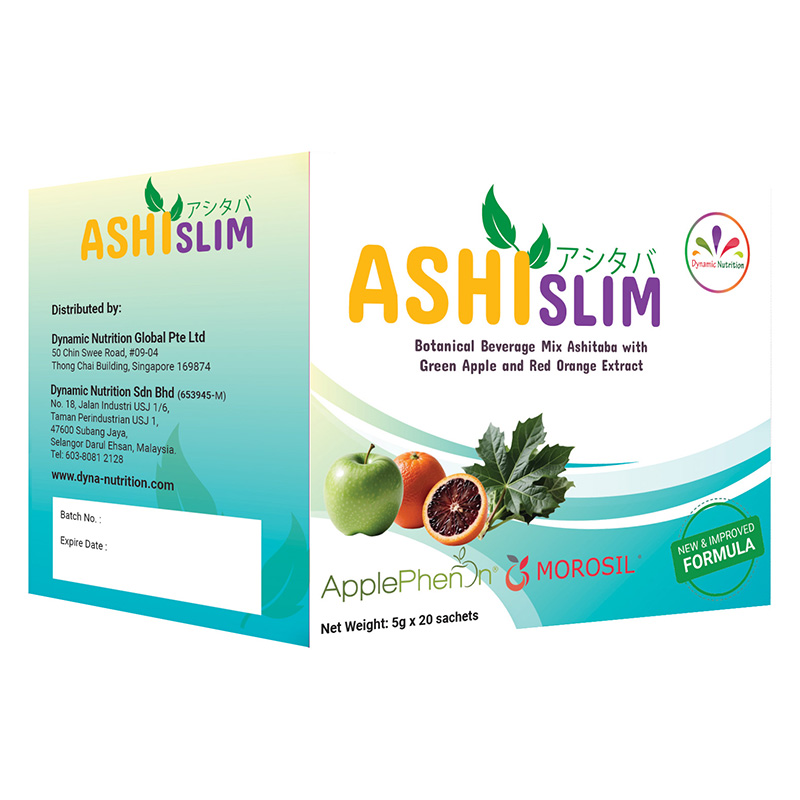
Ashitaba (Angelica keiskei) is a Japanese green-leaf plant long called the “tomorrow’s leaf” or “longevity herb.” Its yellow sap contains two chalcones — xanthoangelol and 4-hydroxyderricin — that 2024–2025 research has linked to increased GLP-1 secretion from gut cells in both cell-culture and animal studies2. The mechanism is upstream of the GLP-1 receptor itself: more chalcones, more of the hormone your body releases naturally after a meal.
For the everyday reader, the takeaway is a gentler, more sustained fullness curve across the day, rather than the sharp appetite suppression of an injectable.
2. ApplePhenon® procyanidins — the response-amplifier route
ApplePhenon® is a standardised polyphenol extract from unripe green apples, rich in procyanidins. It doesn’t directly raise GLP-1 secretion — instead, it amplifies the response by lifting adiponectin (a fat-burning, insulin-sensitising hormone) and improving the metabolic conditions under which GLP-1 works best. A 12-week double-blind RCT in 94 BMI-25–30 adults found 600 mg/day ApplePhenon® reduced visceral fat area on CT scan by about 9 cm² and waist circumference by roughly 2 cm, with no change in the placebo group3.
3. Morosil® anthocyanins — the visceral-fat-shrink route
Morosil® is a standardised anthocyanin extract from Sicilian Moro blood oranges. The 12-week human study showed reductions of about 7 lb in body weight and roughly 3 inches off the waist — with the loss concentrated in deep abdominal (visceral) fat cells4. Less visceral fat is itself a positive feedback loop for your own GLP-1 system: it improves insulin sensitivity, which makes the gut’s GLP-1 signal more effective at the receptor level.
Why three ingredients work better than one
Each of these plant extracts touches a different lever:
- Ashitaba chalcones → upstream hormone production (more GLP-1 released after meals).
- ApplePhenon® procyanidins → response amplification (better adiponectin, better insulin sensitivity, the right conditions for GLP-1 to work).
- Morosil® anthocyanins → visceral-fat shrinkage (fewer deep abdominal fat cells, less metabolic drag on the GLP-1 axis).
Read separately, each has moderate published support. Read together, they target the GLP-1 system end-to-end — production, signalling, and the metabolic environment that determines whether the signal actually lands.
Who this approach is (and isn’t) for
Plant-extract nutrition that supports your own GLP-1 system is best understood as a daily, low-side-effect foundation for people who:
- are not candidates for (or don’t want) injectable peptide drugs;
- are coming off GLP-1 medication and want to maintain the visceral-fat loss without the rebound;
- have a few stubborn kilograms or centimetres around the waist that diet and exercise alone aren’t moving;
- are already doing the basics — sleep, zone-2 cardio, fibre, lower fructose and alcohol — and want a nutrition layer on top.
It is not a substitute for medical care in people with diagnosed metabolic disease, and it will not produce the dramatic 15–20% body-weight drops seen with high-dose prescription GLP-1s. The win is the inside-out one: steadier fullness, less deep belly fat, and a metabolic profile that responds better to your own hormones.
The bottom line
The peptide craze isn’t going anywhere in 2026 — but the more durable story is that your body already runs a GLP-1 system, and a small set of well-studied plant compounds can help it run better. Ashitaba chalcones, ApplePhenon® procyanidins, and Morosil® anthocyanins are three of the most evidence-supported routes on the nutrition side of that ledger. If you’re after a daily, side-effect-light way to support your own fullness signal — without a prescription, and without the hype — that’s the framework worth keeping.
Always speak to your healthcare provider before starting any new supplement, especially if you have an existing medical condition or take prescription medication.
References
- The peptide craze: When hype moves faster than science — The Straits Times, 30 August 2026. https://www.straitstimes.com/opinion/the-peptide-craze-when-hype-moves-faster-than-science
- Ashitaba (Angelica keiskei) chalcones and GLP-1 secretion — peer-reviewed phytochemistry and metabolic research, 2024–2025.
- ApplePhenon® procyanidin-rich apple-polyphenol extract and visceral-fat reduction in overweight adults: a 12-week double-blind RCT — Nutrition Journal / equivalent peer-reviewed publication, 94 BMI-25–30 subjects, 600 mg/day.
- Morosil® (Citrus sinensis (L.) Osbeck) Moro orange extract and waist circumference / body-weight reduction in overweight subjects: a 12-week RCT — peer-reviewed publication, 400 mg/day.
Related Topics
5 Dangerous Ways Visceral Fat Is Destroying Your Health
It’s OK To Gain Weight As I Get Older? Not Really
Calculate Your BMI – BMI calculator explained
Metabolic syndrome leads to cardiovascular diseases
Here’s Exactly How Much You Should Walk Per Week to Burn Belly Fat — and See Results
Asians with excess visceral fat tend to have poorer memory & learning ability
The Silent Threat: Understanding the Dangers of Visceral Fat
How ApplePhenon™ Targets Stubborn Visceral Fat
Morosil® Moro Orange Extract: The Citrus Secret to Support Healthy Weight Management
The “Tomorrow’s Leaf”: Organic Ashitaba for Aging Well
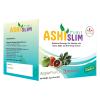
AshiSlim: Increase GLP‑1 Naturally for Easier Weight Management
Product you may be interested in