Walk into an aesthetics clinic anywhere in Singapore this year and you will hear the same three letters: PDRN. Short for polydeoxyribonucleotide — and far better known by its nickname “salmon DNA” — it is the skincare ingredient that has moved from dermatology research papers to premium clinic menus in the space of a few seasons. The Straits Times1 recently ran a full guide to the trend: what it is, what it does, and where to buy it in Singapore. The interest is real — but so is the confusion. Most explainers tell you what PDRN is. Very few tell you what it cannot do. This article covers both sides of the needle.

What exactly is PDRN — and why “salmon DNA”?
PDRN (polydeoxyribonucleotide) is a mixture of DNA fragments derived from the sperm cells of chum salmon. When the fragments are introduced into the skin, they are read as repair signals: they bind to adenosine A2A receptors, which encourages fibroblasts to work harder, supports collagen synthesis, and dampens inflammation. The ingredient has a long paper trail in dermatology — it was approved in Europe in the 1990s for wound healing, and a 2017 review in Frontiers in Pharmacology2 summarised its clinical uses in skin repair and rejuvenation.
The “salmon DNA” nickname is shorthand for exactly that origin story — it is not a gimmick, it is literally where the material comes from. What clinics sell under the name ranges from injectable polynucleotide fillers to serums and ampoules, and the Straits Times guide1 maps where the treatments are available across Singapore today.
What the evidence supports — and what it doesn’t
On the evidence side, PDRN has real support. Reviews of the dermatology literature2 credit it with improving skin texture, reducing wrinkles and sagging, and accelerating wound healing — largely by boosting the skin’s own repair machinery rather than by adding foreign material to it. Practitioners describe the effects as gradual rather than dramatic: improvement typically builds over multiple sessions, and the results need maintenance.
On the limits side, three things are worth knowing. First, PDRN is an in-clinic, intermittent treatment — it is a procedure, not a daily habit. Second, the effects sit on top of your skin’s ongoing structural decline: if collagen is being lost faster than it is being replaced, no monthly procedure changes that background math. Third, the in-clinic price tag means most people treat it as a seasonal top-up rather than a foundation.
The clinic layer vs the daily-from-inside layer
That last point is where “what it cannot replace” matters. Clinic treatments work from the outside in — they stimulate the skin to repair itself on the spot. But skin structure is built from the inside out, and the raw material for that structure is collagen. To make clinic results last, the daily layer matters: giving the body collagen building blocks it can actually use, every day.
This is where the supplement aisle gets confusing, because not all collagen is equal.
The label check: 500Da and Gly-Pro-Hyp
Most ordinary collagen powders are hydrolysed collagen peptides in the 2,000–5,000 Dalton range. They are absorbed, but a large share is broken down for energy and amino acids rather than delivered as intact collagen signals. Collagen tripeptides (CTP) are the minimum collagen unit: at roughly 300–500 Da, with the Gly-Pro-Hyp sequence — the most common triplet in human collagen — they survive digestion well enough to be absorbed intact. A 2021 randomised controlled trial in Nutrients3, testing a collagen tripeptide supplement in middle-aged women, reported significant improvements in skin hydration; the wider literature3 shows intact Gly-Pro-Hyp is detectable in blood shortly after oral intake — which is what “absorbed” actually means on a label.

So the practical label check has three steps: molecular weight (look for the tripeptide range, around 500 Da, rather than 2,000–5,000 Da), sequence (Gly-Pro-Hyp), and absorption evidence. A supplement that passes all three is doing something structurally different from a generic collagen powder.
The bottom line
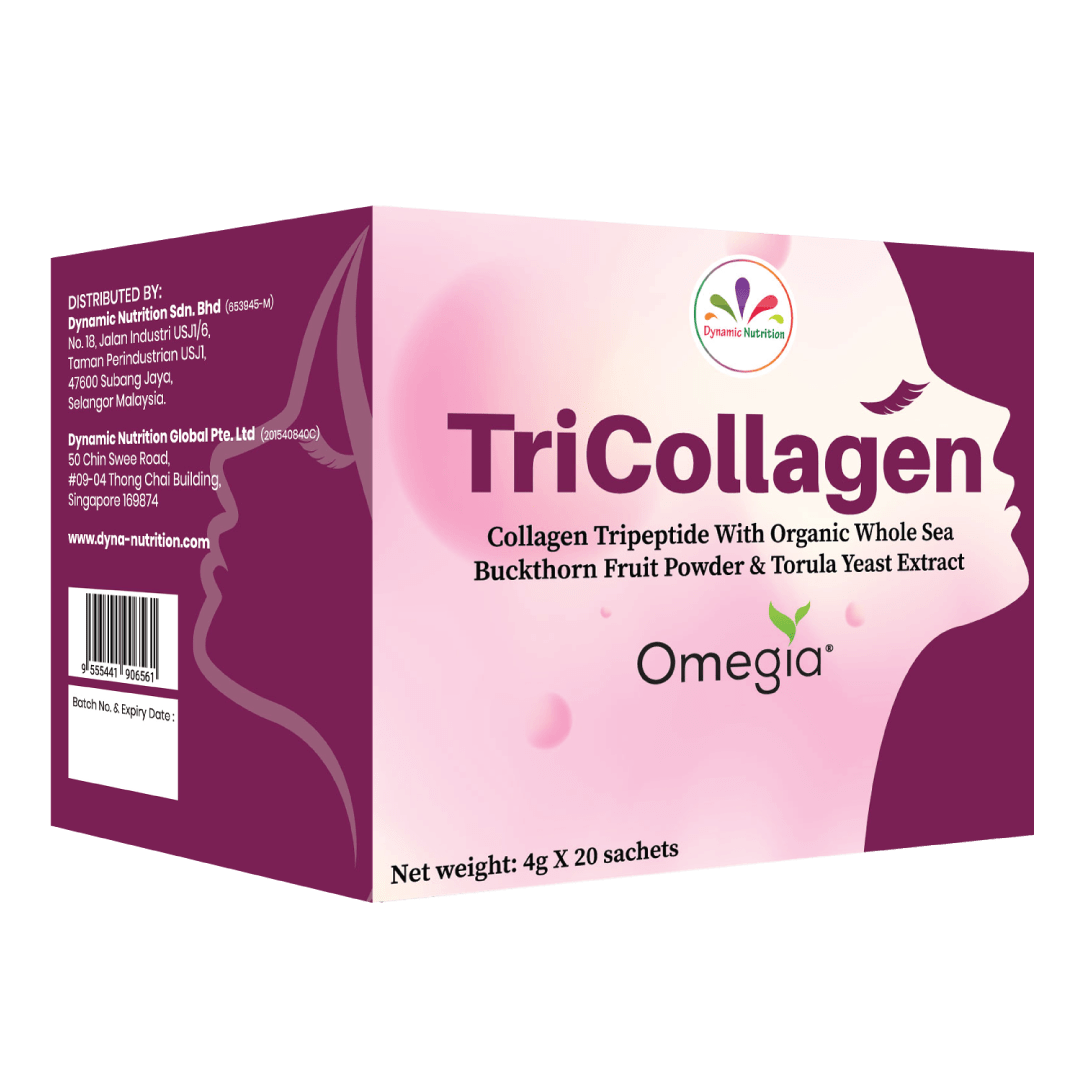
PDRN is a genuinely promising in-clinic tool, and the Singapore hype has a real evidence base behind it. But treat it as what it is: a treatment you book, not a foundation you build on. The foundation is daily, and it is nutritional — low-molecular-weight collagen tripeptides with the Gly-Pro-Hyp sequence that survive digestion and reach the skin’s connective tissue. TriCollagen is formulated around exactly that check: collagen tripeptides at ~500 Da with rapid absorption, paired with OPITAC™ glutathione and sea buckthorn omega-7 for the antioxidant and hydration layers. Book the clinic for the occasion — and keep the daily layer daily.
References
- The Straits Times — “Does PDRN skincare work? A guide to its benefits and where to buy in Singapore” — https://www.straitstimes.com/life/style/pdrn-skincare-is-everywhere-in-singapore-does-it-even-work
- Frontiers in Pharmacology (2017) — “Pharmacological Activity and Clinical Use of PDRN” — https://pmc.ncbi.nlm.nih.gov/articles/PMC5405115/
- Nutrients (2021) — “Effect of Collagen Tripeptide and Adjusting for Climate Change on Skin Hydration in Middle-Aged Women: A Randomized, Double-Blind, Placebo-Controlled Trial” — https://pmc.ncbi.nlm.nih.gov/articles/PMC7839319/
Related Topics
Vegan Omega 3, 6, 7 & 9 – Ultimate Women’s Nutrition
Is There Such Thing As Vegan Collagen?
Why is Collagen Important for Anti-Aging?
Why Is Collagen Tripeptide Superior To Collagen Peptide?
Sea Buckthorn Oil Benefits to the Skin
Top 7 Benefits of Sea Buckthorn
The Benefits Of Glutathione For Your Skin
Top 5 Benefits of Marine Collagen
Why your $200 anti-ageing serum is missing the half of the science that actually keeps skin firm
Product you may be interested in