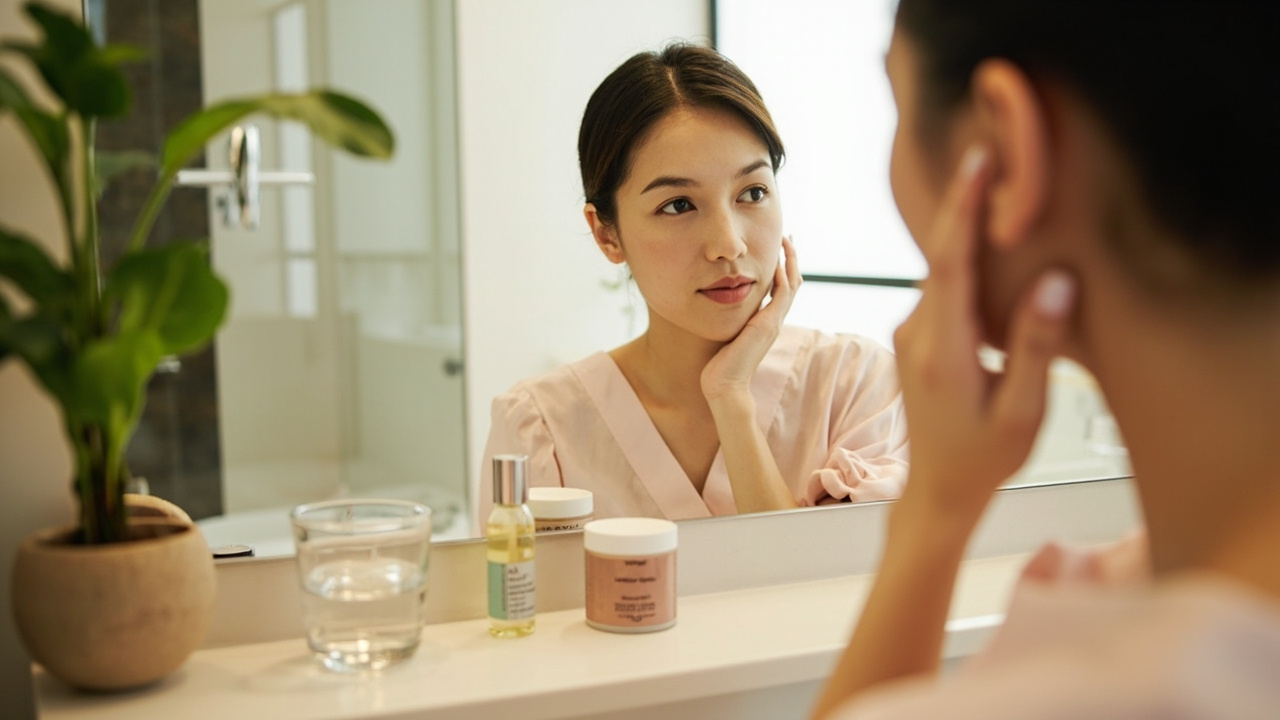
Walk into any department store and you can drop two hundred dollars on a single anti-ageing serum without blinking. The packaging promises miracles: peptides, retinol, vitamin C, growth factors, the alphabet of every buzzy ingredient that has trended through a magazine cover in the last five years. And the serums do work — on the surface.
Here’s the part the beauty counter doesn’t want you to think about: your skin is not a surface. The visible layer you can see and touch — the stratum corneum — is roughly 0.1 millimetres thick. That is the entire battlefield a topical serum operates on. But the structural protein that determines whether your skin looks firm, lifted, and elastic in your forties and fifties lives in a deeper layer called the dermis. The dermis holds the collagen, elastin, and hyaluronic acid scaffolding that gives skin its bounce. It is where 80% of the skin’s collagen content lives. And your $200 serum is not reaching it.
This article is the decode of why your skincare routine is missing half the science — and what an “inside-out” stack that pairs topicals with the right oral ingredients actually looks like.
The Two Halves of the Skin-Ageing Equation
Most anti-ageing articles frame the choice as a contest: topical vitamin C versus oral collagen, retinol versus peptides. That framing is wrong on its face. The two halves of the equation target different tissue, and neither replaces the other.
The surface half: the stratum corneum and the living epidermis just below it. Topical skincare — retinoids, vitamin C, peptides, niacinamide, hyaluronic acid — works here. These ingredients can speed up surface cell turnover, fade pigmentation, smooth fine lines, and improve the skin’s visible texture. The evidence base is mature; retinoids in particular have decades of dermatological data behind them.
The structural half: the dermis, where fibroblasts produce the collagen and elastin that physically hold the skin up. Topical skincare cannot reach the dermis in any meaningful concentration. The molecules are too large; the stratum corneum is a designed barrier. To influence dermal collagen, you need ingredients that are absorbed into the bloodstream and delivered to the fibroblasts from inside. That is what oral collagen peptides, glutathione, omega fatty acids, and certain vitamins and minerals do.
Why “topical collagen” is mostly a marketing claim
If you read the back of a “collagen-infused” moisturiser, the molecule they list is usually hydrolysed collagen — chains of 2,000 to 5,000 Daltons. That is large. Large molecules cannot penetrate the stratum corneum, no matter how the formulation is engineered. The “collagen” stays on top of your skin, where it acts as a humectant — the same job hyaluronic acid or glycerin would do. It does not become your collagen.
The honest comparison is topical skincare handles the surface, oral nutrition handles the structure. Neither one alone is the complete picture.

Why the Dermis Is Where Skin Actually Ages
You can see surface ageing as fine lines, uneven tone, and dryness. But the deeper ageing that drives sagging, jowling, and the loss of facial contour is happening in the dermis. By your mid-thirties, you are losing roughly 1% of your dermal collagen per year. By your fifties, that compounds. The fibroblast cells that manufacture new collagen slow down; the existing collagen fibres cross-link and stiffen; elastin fragments.
Three factors drive most of this:
1. UV exposure. UVA penetrates deep into the dermis and generates reactive oxygen species that damage fibroblast DNA and break down collagen. Daily SPF is the single highest-return skincare habit, full stop. But SPF protects against further loss — it does not rebuild what is already gone.
2. Glycation. Excess sugar in the bloodstream binds to collagen and elastin fibres in a process called advanced glycation end-products (AGEs). Glycated collagen is stiff, discoloured, and brittle. The result: the sallow, slack quality many people first notice in their late thirties. Controlling blood sugar through diet is the lever here; topical skincare has nothing meaningful to contribute.
3. Post-menopause oestrogen decline. Oestrogen is a major regulator of collagen turnover. After menopause, dermal collagen can drop by 30% in the first five years. This is why skin ageing accelerates sharply for many women in their late forties and early fifties, and why perimenopausal skin often feels different almost overnight.
None of these three levers are addressable through a serum. They are addressable through what you put into your body.
The Inside-Out Stack: What the Science Actually Supports
For the surface, your retinoid and vitamin C routine is well-evidenced. Keep it. The question is what to add alongside it — the oral stack that supports the dermis from the inside. There are three mechanisms worth understanding.
1. Low-molecular-weight collagen peptides
This is the most-studied oral category. Hydrolysed collagen breaks into peptides of varying chain length. The form with the strongest absorption data is collagen tripeptide (CTP) at an average molecular weight around 500 Daltons. At that size, the dipeptide and tripeptide fragments (notably Gly-Pro-Hyp) survive digestion and reach the bloodstream within 30 minutes. Once in circulation, they accumulate in the dermis and act as a signal — stimulating fibroblasts to produce more collagen and elastin.
A 2021 meta-analysis of 23 randomised controlled trials (1,474 participants) found that oral collagen supplementation significantly improved skin hydration, elasticity, and wrinkle depth, with the strongest effects in the lower-molecular-weight studies. Subsequent reviews have largely confirmed the direction. The honest framing: collagen supplements are not a fountain of youth, but the evidence for modest, real improvements in dermal function is now substantial — provided the molecular weight is low enough to absorb.
This is also why standard “collagen peptide” powders at 2,000–5,000 Daltons produce mixed results in trials — much of the dose never reaches the dermis intact.
2. Glutathione for the oxidative-stress axis
Glutathione is the body’s master antioxidant — it recycles vitamin C and E, neutralises reactive oxygen species, and supports the cross-linking machinery that holds collagen fibres together. Dermal fibroblasts exposed to oxidative stress produce less collagen and more matrix metalloproteinases (the enzymes that break down existing collagen).
Oral glutathione has a reputation problem, partly because cheap reduced L-glutathione is largely destroyed in the stomach before absorption. Two upgrades matter: a stabilised form (such as torula-yeast glutathione at 98% purity, branded OPITAC) and pairing it with vitamin C, which keeps glutathione in its reduced, active form once it reaches circulation. The combination is meaningfully more effective than either alone.
3. Omega-7 (and the broader omega-3-6-7-9 family)
Omega-7 fatty acids — most commonly palmitoleic acid — are concentrated in skin and mucosal membranes. They support the sebum layer that keeps skin hydrated from the inside, and the evidence base on oral omega-7 for skin hydration and elasticity is small but consistent. The broader omega-3-6-9 family also contributes to maintaining cell membrane fluidity and dampening the chronic inflammation that drives matrix degradation.
Tibetan sea-buckthorn oil is one of the few plant sources of the full omega 3-6-7-9 profile in meaningful ratios; most supplement oils give you only omega-3 or omega-3-and-6.
Reading a Supplement Label for the Inside-Out Stack
If the goal is to pair topicals with an oral stack that targets the dermis, the label matters more than the brand. Three things to check:
Molecular weight on the collagen. Anything above 1,000 Daltons is mostly wasted dose; below 1,000 (especially around 500) is what the absorption studies are based on. “Hydrolysed collagen” alone tells you nothing; the brand should publish the average Dalton weight.
Glutathione form and purity. Look for “reduced L-glutathione” in a stabilised delivery form (set-in-yeast, liposomal, or acetyl forms), at 98% purity or higher, ideally paired with vitamin C. Avoid cheap reduced-glutathione capsules without a delivery technology — most of the dose is destroyed before absorption.
Omega source and ratio. For skin specifically, omega-7 is the under-served angle. Sea-buckthorn oil gives you 3-6-7-9 in the ratios the skin actually uses; standard fish oil gives you mostly omega-3.
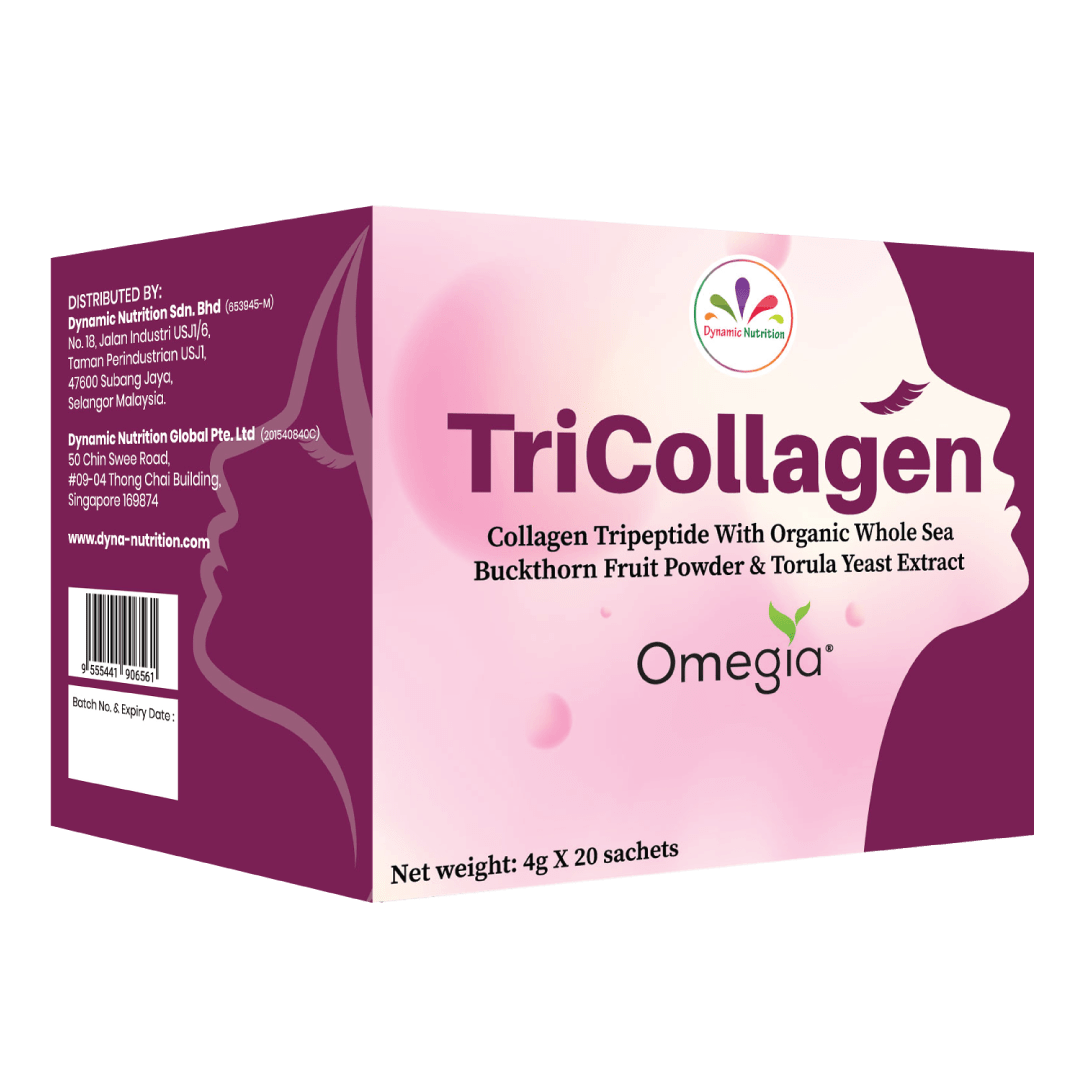
A concrete example of a label that checks all three boxes is TriCollagen — Dynamic Nutrition’s three-ingredient stack built around 500Da collagen tripeptide (CTP), OPITAC torula-yeast glutathione at 98% purity, and Omegia sea-buckthorn omega 3-6-7-9. It is not the only stack that hits these three mechanisms, but it is a clean example of how the three halves line up.
How to Combine Topicals and Oral Stack in Practice
There is no reason to choose between the two halves. The complete routine looks like this:
Morning: gentle cleanser → vitamin C serum → moisturiser → SPF 50. The vitamin C handles oxidative stress from UV exposure during the day; SPF prevents further collagen breakdown.
Evening: cleanser → retinoid (start low — 0.025% to 0.05% tretinoin or 0.3% retinol if you are sensitive) → moisturiser. Retinoids drive surface cell turnover and have the longest evidence base for visible anti-ageing.
Daily, with food: the oral stack — collagen tripeptide at 500Da, stabilised glutathione with vitamin C, omega-7-rich oil. The dermis-targeted work runs in the background every day, independent of what you put on your face that morning.
The point is complementarity. Your serum handles the surface. Your oral stack handles the dermis. The two together cover the full depth of skin.
What About Lifestyle?
The third leg of the stool is the unsexy one — sleep, diet, exercise, stress. Sleep is when growth hormone peaks and dermal repair runs hardest. Chronic sleep deprivation measurably reduces skin barrier function and accelerates visible ageing. A high-glycaemic-load diet fuels the glycation process discussed earlier. Smoking generates the oxidative stress that breaks down collagen faster than any serum can rebuild it.
No supplement, oral or topical, fully compensates for chronic poor sleep, a high-sugar diet, or smoking. These three lifestyle levers are upstream of everything else.
The Honest Take
Your $200 serum is not a waste of money — it is doing real work on the surface, where the stratum corneum lives. But it is also not the whole answer, because the structural half of skin ageing happens in the dermis, where topicals cannot reach.
The complete picture pairs your existing skincare routine with an oral stack that targets the dermis from the inside — low-molecular-weight collagen peptides, stabilised glutathione, and omega-7 — plus the lifestyle levers that protect what you have built. None of the three is a substitute for the others. Together, they cover the full depth of skin ageing in a way that any one alone cannot.
That is the missing half of the science your serum cannot deliver.
Related Topics
PDRN Skincare: Why Salmon DNA Is the New Anti-Ageing Trend in Singapore
TriCollagen: The Anti-Wrinkle Breakthrough for Skin
The Best Collagen Type: Collagen Tripeptide
Why Collagen Tripeptide is Superior to Collagen Peptide
8 Proven Benefits of Sea Buckthorn for Hair
The Benefits of Glutathione for Your Skin
Is There Such Thing As Vegan Collagen?
Vegan Omega 3, 6, 7 & 9 – Ultimate Women’s Nutrition
Product you may be interested in