Move over, face serum. Across Malaysia and Singapore, ingestible beauty — the idea that what you swallow can transform your skin, hair and nails as much as what you smooth on top — has crossed firmly out of the beauty aisle and into pharmacy shelves, supplement counters and clinic consultations. The Star’s 9 September 2026 piece “Not just skin deep? What happens when beauty moves into the health aisle“1 captured the moment: mainstream consumers are now reaching for collagen drinks, hair-and-nail gummies, polyamine sachets and biotin liquids alongside their vitamin C and fish oil, with both enthusiasm and a fresh batch of regulator concerns following close behind.
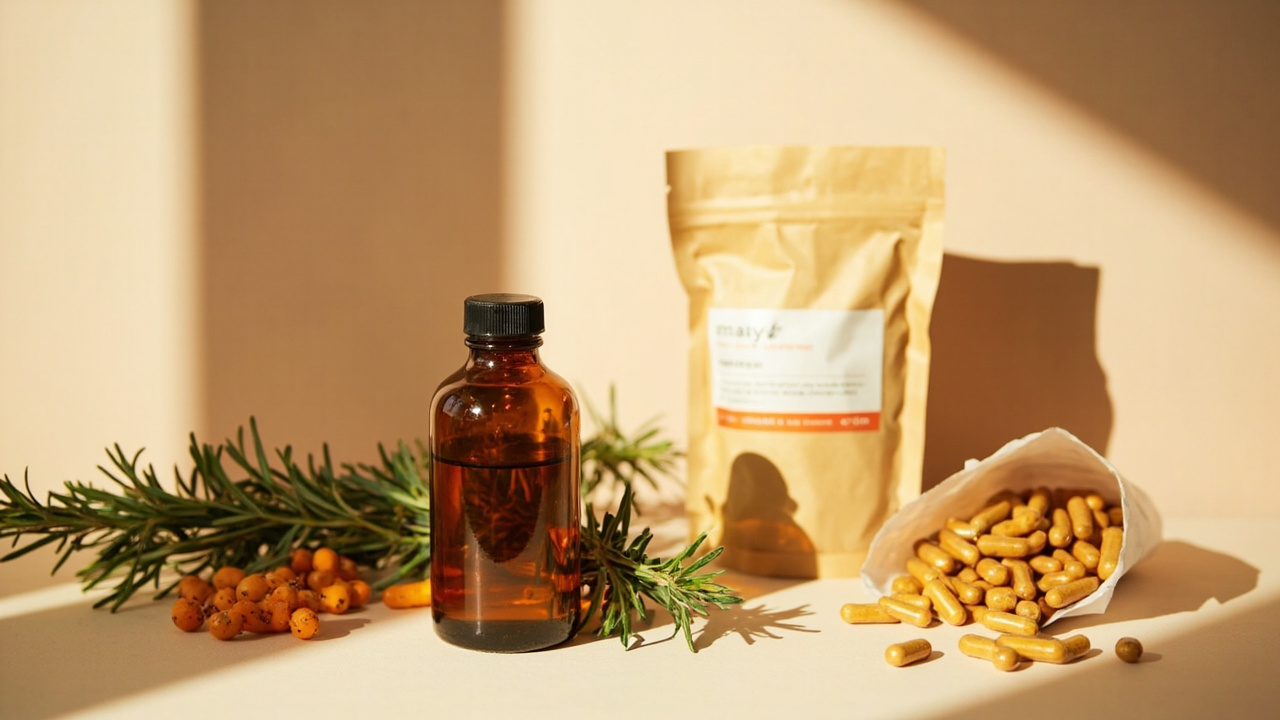
The “beauty-from-within” surge — and where it actually works
There is real biology behind some of these claims, and there is real marketing behind the rest. The difference comes down to which active, at what dose, taken for how long, with the right standardisation. This piece walks through the ingestible-beauty claims most likely to come up in your next MY/SG pharmacy or supplement-store visit, separated into the well-supported, the moderately-supported, and the marketing-inflated — and the formulation-quality filter that lets you tell them apart on the label.
The well-supported layer
Three ingestible-beauty categories currently have meaningful clinical evidence in adults without a diagnosed deficiency:
Marine collagen peptides — for skin elasticity and hydration, at 2.5–10 g daily for 8–12 weeks. The most-cited randomised trials (including a 2021 systematic review and meta-analysis in International Journal of Dermatology covering 805 patients) show measurable improvements in skin elasticity, hydration and the appearance of fine lines after 8–12 weeks of consistent daily intake2. Shorter trials and gummy-format collagen routinely miss these endpoints.
Polyamines (spermidine, spermine, putrescine — small polycations that decline with age in human tissue) — for hair-follicle anagen extension and hair-density improvement over 12-week intake. A 2023 randomised, placebo-controlled, double-blind study in Dermatology Practical & Conceptual showed a standardised spermidine-based nutritional supplement prolonged the anagen phase of hair follicles in healthy adult women3. Hair-skin-nail formulations that include a standardised polyamine source (such as the patented Japanese Oryza Polyamine rice-germ extract) sit in this evidence layer.
Standardised sea-buckthorn omega-7 (palmitoleic acid) — for skin elasticity, mucosal-membrane hydration, and hair-shaft lipid quality. A 2023 randomised trial in Journal of Functional Foods on postmenopausal women showed that oral sea-buckthorn oil improved skin, blood markers, ocular, and vaginal mucosal outcomes over an 8-week intake period4. Generic “berry extract” without omega-7 specification falls outside this layer.
Therapeutic-dose biotin (2.5–5 mg/day) — only meaningfully helps brittle nails in biotin-deficient subjects, which is rare in MY/SG adults with normal diets. Mayo Clinic’s drug-and-supplement reference is explicit: high doses (about 10–300 mg/day) can interfere with laboratory tests, causing falsely high or low results for thyroid-stimulating hormone, vitamin D, and troponin5. Biotin at cosmetic gummy doses (1,000–5,000 mcg) is mostly the marketing layer, not the evidence layer.
The moderately-supported layer
Two further ingestible-beauty ingredients have positive signals but thinner human RCT data for the specific beauty outcome:
Vitamin C at adequate doses (≥75 mg/day) — required for collagen cross-linking in the dermis; deficiency shows up as poor wound healing, gum bleeding, and dull skin. Harvard Health Publishing notes that most MY/SG adults get enough from diet, so supplementation helps mostly where intake is poor6.
Zinc at the DHT-balancing range — meaningful for confirmed low zinc status or for androgen-driven hair thinning (where zinc inhibits 5-alpha-reductase, the enzyme that converts testosterone to DHT). The NIH Office of Dietary Supplements fact sheet on zinc lays out the deficiency signs and therapeutic dosing range7. Cosmetic-dose zinc in a generic multivitamin rarely reaches the relevant blood level.
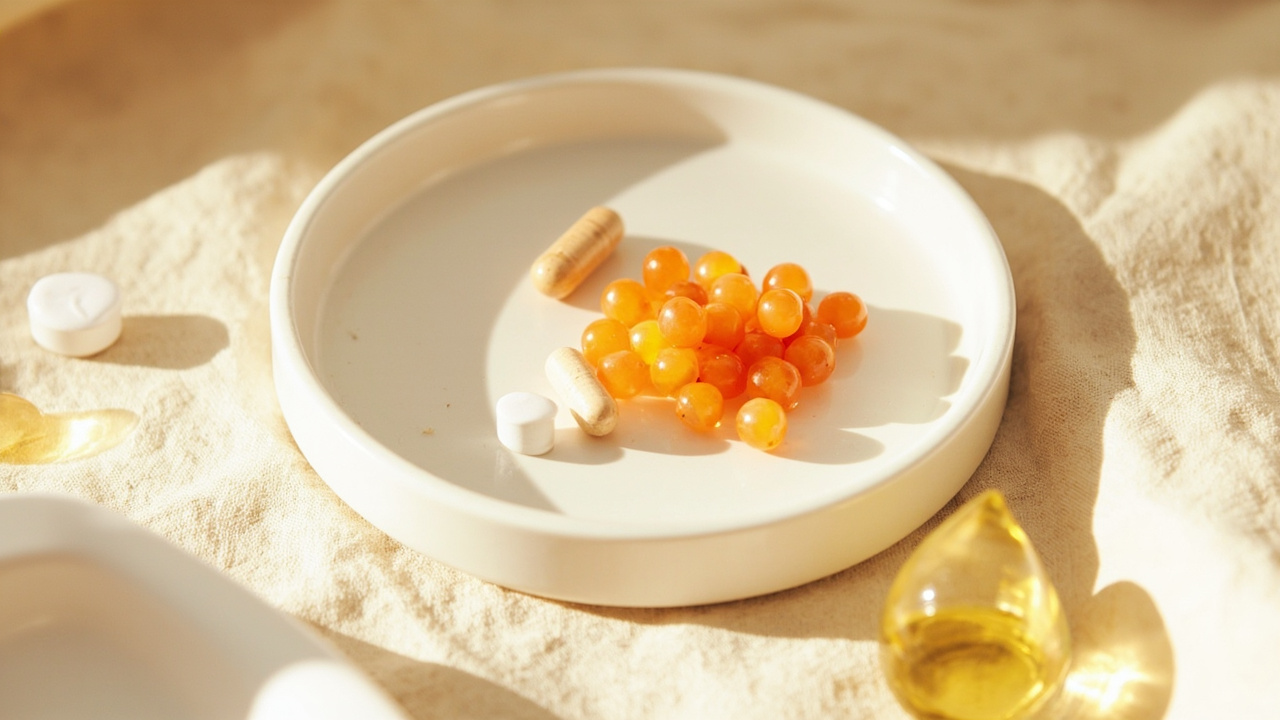
The marketing-inflated layer
Several popular ingestible-beauty formats lean more on packaging than on evidence:
“Multivitamin for hair” stacks at sub-clinical doses (each ingredient present, none at the dose used in the published RCTs). If the label lists zinc at 2 mg and biotin at 30 mcg in a once-daily tablet, the formulation is not delivering a beauty mechanism — it is delivering a marketing claim.
Vaguely-labelled “collagen complex” without peptide specification (molecular weight matters — 2–5 kDa peptides are the bioactive range), without marine-vs-bovine sourcing clarity, and without the 8–12-week duration discipline.
“Hair gummy” rituals — biotin at 5,000–10,000 mcg in a sugary gummy base, often with no polyamine, omega-7, or L-Cystine. The 30-day “try and see” horizon is also far shorter than the 12-week windows the published clinical work actually measures.
Generic “rice germ extract” without polyamine standardisation — the ingredient is 90%+ starch unless it specifies the active polyamine content per dose.
The dose + duration reality check
Most ingestible-beauty claims need 8–12 weeks of consistent daily intake to show measurable change. Collagen’s most-cited RCTs are 8–12 weeks; polyamine hair work is 12 weeks; sea-buckthorn omega-7 skin-elasticity work is 8–12 weeks. A two-week “try and see” test under-estimates the actual effect — and is exactly the duration window most gummy products market to.
If you are testing an ingestible-beauty product, the meaningful test is a 3-month commitment at the label’s recommended dose, with the same photo-and-symptoms baseline you would use to evaluate any skin or hair routine. If you cannot detect a difference at 12 weeks, the product is either under-dosed, under-standardised, or the mechanism is not what the label claims.
The formulation-quality filter — how to read the label
Three label-level checks let you tell a serious ingestible-beauty product from a marketing-led one:
1. Ingredient specification — does the label name the form and the standardisation? Examples that pass: Oryza Polyamine-branded rice-germ extract (with total polyamine content per dose), Omegia®-branded sea buckthorn (with omega-7 content per dose), Lalmin® Zn100 zinc-enriched yeast (with elemental zinc content per dose), L-Cystine as a defined amino acid (mg per dose), horsetail extract standardised on silica. Examples that fail: “hair complex”, “beauty blend”, “collagen peptides” with no molecular weight, “rice germ powder” with no polyamine content.
2. Active-dose check — does each ingredient appear at the dose used in the published clinical work? Polyamine at the 12-week clinical range (and not 1/10th of it), zinc at the DHT-balancing range, L-Cystine at the keratin-substrate range, silica at the horsetail-RCT range. Most generic “hair blends” fail this check.
3. Synergy vs single-ingredient — most hair-supplement formulations either stack everything at low doses (synergy-but-under-dosed) or pick a single over-hyped ingredient (biotin is rarely the cause of thinning in MY/SG adults). The meaningful consumer question is whether each ingredient has clinical evidence AND appears at the dose that evidence was generated at.
A daily sachet that pulls Oryza Polyamine (follicle cycling) + Omegia® sea-buckthorn omega-7 (hair-shaft lipid and shine) + Lalmin® Zn100 zinc (DHT-balancing) + L-Cystine (keratin substrate) + horsetail silica (shaft strength) is an example of a label that survives each check — five distinct mechanisms, one daily sachet, named actives, standardised forms, clinically meaningful doses.
Where this lands for your next MY/SG beauty-and-supplement run
Ingestible beauty is here to stay. The mainstream crossover is real, the consumer enthusiasm is real, and the regulator concerns raised alongside the surge are also real. The reader-side response is the evidence-tiered read: marine collagen peptides at peptide weight and 8–12-week duration, polyamines from a standardised rice-germ source at the 12-week clinical range, sea-buckthorn omega-7 from a defined-source extract, biotin only at therapeutic doses and only in deficiency, and a formulation-quality filter that checks specification, dose, and synergy on every label.
For adults in MY/SG considering a daily hair-and-skin routine, the ingestible-beauty conversation maps directly onto the existing product format in the supplement aisle — sachets, capsules, liquids — and the same evidence-tiered read applies whether you are trialling a new launch or re-evaluating an existing stack.
This article is for education only. “Beauty-from-within” claims refer to general nutritional support of skin, hair and nail structure through daily intake. Individual results vary and depend on the specific formulation, dose, duration, baseline nutritional status and lifestyle. People with diagnosed nutrient deficiencies, pregnant or breastfeeding adults, or those taking prescription medications should consult a clinician or pharmacist before starting any new supplement stack.
Disclosure: TriCollagen, our 500 Da collagen tripeptide is our own collagen supplement.
References
- The Star (2026-09-09) — “Not just skin deep? What happens when beauty moves into the health aisle” — https://www.thestar.com.my/lifestyle/style/2026/09/09/not-just-skin-deep-what-happens-when-beauty-moves-into-the-health-aisle
- International Journal of Dermatology (2021) — “Effects of hydrolyzed collagen supplementation on skin aging: a systematic review and meta-analysis” — https://onlinelibrary.wiley.com/doi/10.1111/ijd.15518
- Dermatology Practical & Conceptual (2023) — “A spermidine-based nutritional supplement prolongs the anagen phase of hair follicles in healthy adult women: a randomised, placebo-controlled, double-blind study” — https://dpcj.org/index.php/dpc/article/view/dermatol-pract-concept-articleid-dp0704a05
- Journal of Functional Foods (2023) — “The impact of oral sea-buckthorn (Hippophae rhamnoides) oil on skin, blood markers, ocular, and vaginal mucosal health in postmenopausal women” — https://doi.org/10.1016/j.jff.2023.105973
- Mayo Clinic Drugs & Supplements (2026-02) — “Biotin (oral route) — Description, dosage, and side-effects information” — https://www.mayoclinic.org/drugs-supplements/biotin-oral-route/description/drg-20062359
- Harvard Health Publishing (2024) — “Myths and truths about vitamin C” — https://www.health.harvard.edu/diet-and-nutrition/myths-and-truths-about-vitamin-c
- NIH Office of Dietary Supplements (2024-09) — “Zinc — Fact sheet for health professionals” — https://ods.od.nih.gov/factsheets/zinc-HealthProfessional/
Related Topics
Stop Hair Loss Naturally with HAIRegain: A DHT-Blocker Approach
The Science of Hair Regrowth: Unlocking Spermidine Polyamines for Thicker Hair
Beyond Shampoo: How Vitamin Deficiencies Affect Your Hair
9 Reasons You Are Losing Your Hair
Top 7 Benefits of Sea Buckthorn
8 Proven Benefits of Sea Buckthorn For Hair
Silica: The Crucial Ingredient for Stronger Bones, Hair and Nails
DHT: A Hormone That Causes Hair Loss in Male, Both and Female
Product you may be interested in
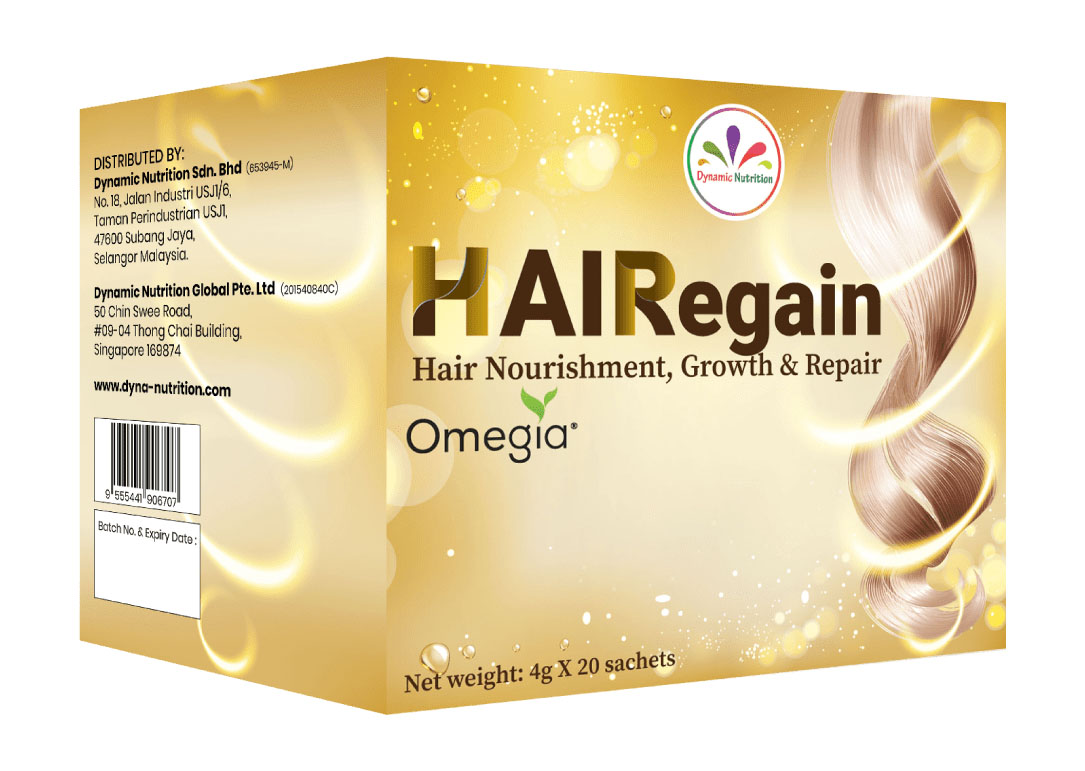
HAIRegain — Hair-targeted daily sachet (Oryza Polyamine + Omegia® Sea Buckthorn + Lalmin® Zn100 + L-Cystine + horsetail extract)