Two green powders end up on the same shelf, and almost everything written about them is written about one of them at a time. Matcha is milled from shaded tea leaves, so it arrives with caffeine and a heavy catechins load. Ashitaba is milled from the leaves and stems of Angelica keiskei, a Japanese leaf vegetable, so it arrives with chalcones — an entirely different family of polyphenols. Both are sold as a daily green drink, and both are sold with the same vague promise attached. This is a comparison of what is actually in the two, measured rather than marketed, so you can work out which one fits your routine instead of which one wins.

What each powder is actually made from
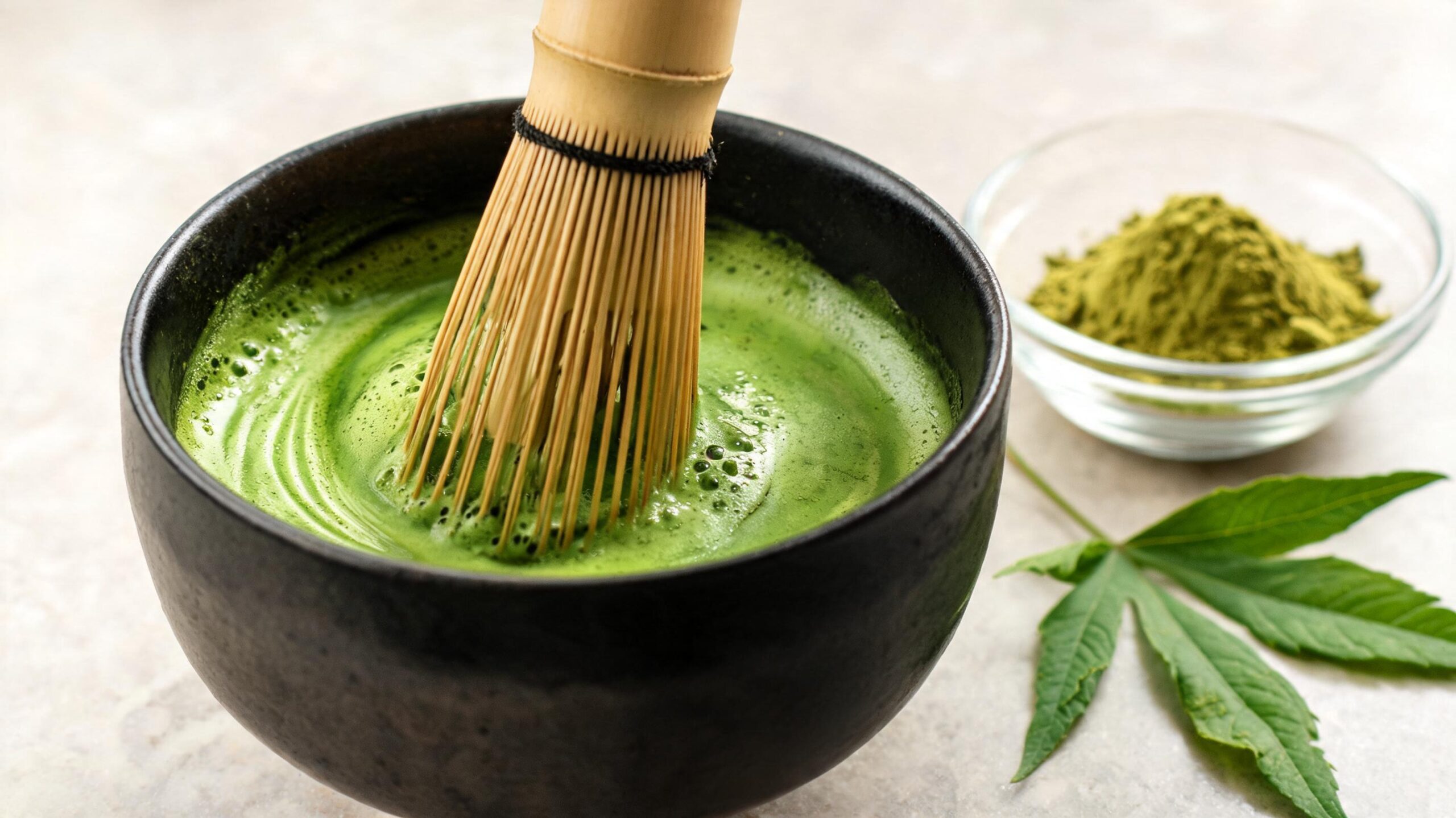
Matcha is not a tea dust or an extract. It is whole leaf, milled. Authentic matcha comes from Tencha: leaves that are grown under shade, steamed, dried without rolling on a Tencha-ro, and then ground in a stone mill. Shade treatment is the part that matters chemically, because it raises the amino acid and caffeine content of the leaf and lowers its catechin content. Nothing is extracted and nothing is left behind, which is exactly why matcha tastes the way it does.
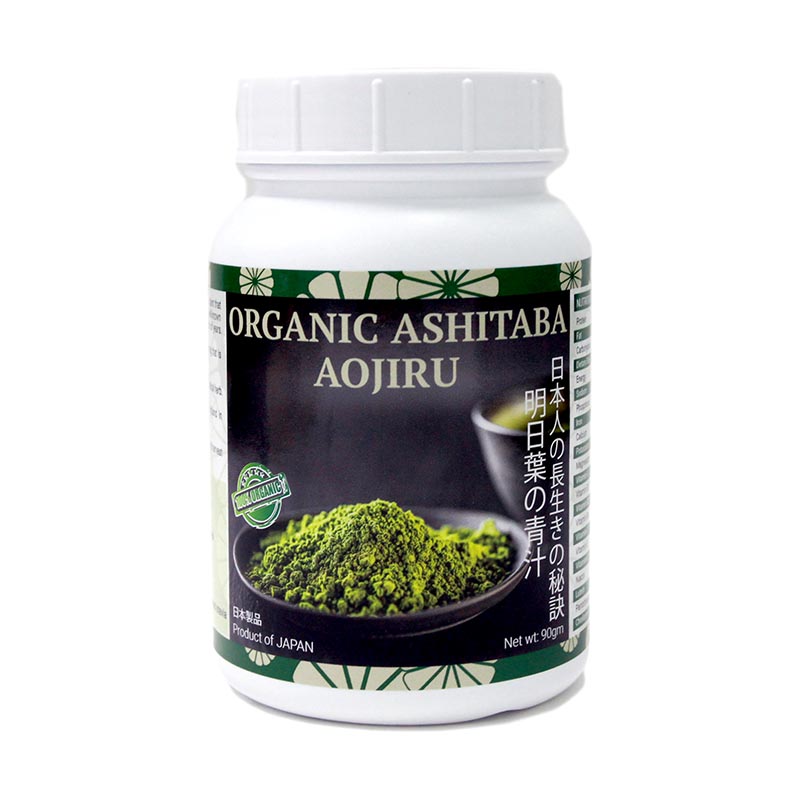
Ashitaba is a different plant doing a different job. Angelica keiskei Koidzumi is a large perennial herb native to Japan, and its leaves, stems and roots carry nutrients and dietary fibre along with distinct natural substances — chalcones, flavanones and coumarins. A commercial ashitaba powder is dried leaf and stem, milled fine. There is also a more concentrated product on the market: the US FDA’s GRAS notice list includes GRN 1012 for powdered sap from Angelica keiskei standardised to 8% chalcones, intended for use in soft drinks, jellies and jams, chocolate candy and butter at levels up to 0.834% per serving. That sap powder is a processed, standardised ingredient, not the same thing as a jar of leaf powder, and it is worth knowing which one a label is describing.
The polyphenols are not the same kind
This is where a matcha-versus-ashitaba comparison usually goes wrong, because the word polyphenol covers several chemically distinct families and the two powders sit in different ones. Matcha’s are flavan-3-ol catechins: EGCG, EGC, EC and ECG. Ashitaba’s signature compounds are chalcones, principally xanthoangelol and 4-hydroxyderricin, alongside flavanones and coumarins.
The practical consequence is that milligrams of one cannot be swapped for milligrams of the other. Comparing an EGCG number against a chalcone number produces a confident-looking figure that means very little. What can be compared honestly is mass per gram and mass per serving, with the class named each time.
How much is actually in a serving
Matcha is the far denser of the two on measured polyphenol mass. In a survey of commercially available teas, EGCG ran 36.70 to 69.73 mg per gram across the matcha samples and 23.29 to 70.22 mg per gram across bagged and gunpowder green teas. Looking at the raw Tencha that matcha is milled from, total catechins ran 8.44 to 12.55 grams per 100 grams of dry weight, with EGCG alone at 5.69 to 7.47 grams.
Ashitaba leaf-and-stem powder is an order of magnitude lighter. One granulated ashitaba product assayed at 198.7 mg of chalcones per 100 grams, split 134.5 mg xanthoangelol and 64.2 mg 4-hydroxyderricin, and a human pilot study ran nine participants on 6.2 grams of that powder a day, which delivered 12.3 mg of chalcones. Set side by side, matcha’s measured polyphenol mass per gram runs roughly twenty to sixty times that of an ashitaba leaf-and-stem granulate, depending on whether EGCG alone or total catechins are set against total chalcones.
One genuinely counter-intuitive detail from the matcha literature is worth carrying into the shop. Higher-grade tea had lower total catechin content than lower-grade tea. What actually marks matcha quality is theanine (above 1.8 g per 100 g dry weight for tea-ceremony grade), the EGCG-to-EGC ratio (above 3.2), and chlorophyll a (above 250 mg per 100 g dry weight). Price and polyphenol load are not the same curve.
Caffeine, sugar and what else is in the jar
Caffeine is the most immediately practical difference between the two. Measured across commercial matcha samples, caffeine ran 17.74 to 35.01 mg per gram, so a standard two-gram teaspoon serving lands around 35 to 70 mg of caffeine — roughly half a cup of coffee, and more than a cup of brewed green tea, because you swallow the whole leaf instead of steeping it and discarding it. Ashitaba is not a tea plant and carries no tea caffeine at all, which is the simplest practical argument for it if you are avoiding caffeine.
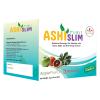
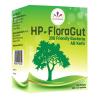
Sugar is a label question rather than a chemistry one. Pure matcha powder is unsweetened; the sugar in a matcha latte is added by whoever makes it. The ashitaba powder sold here is sweetened with stevia rather than sugar, and its directions are one teaspoon mixed into water below 40°C, one to three times a day, preferably before a meal, with a 90 g jar counted as a one-month supply.
Price per serving
Matcha spans a wide price band because the word covers very different products. In one Japanese market survey, tea-ceremony matcha ran 3,250 to 8,100 yen per 100 g, cooking and food-industry grades ran 600 to 1,890 yen, and powdered green tea sold without the matcha name ran 170 to 580 yen. A two-gram serving of ceremony-grade matcha can therefore cost more than ten times the same weight of ordinary powdered green tea — a difference driven by leaf, harvest and ceremony, not by polyphenol weight, given the grade-versus-catechin finding above.
Ashitaba powder is a single commodity product rather than a graded one: S$35.90 for a 90 g jar here. If a label describes an 8% chalcone standardised sap powder instead, that is a more processed and correspondingly more expensive ingredient, and the two should not be priced as if they were interchangeable.
Which one would you actually drink daily
Pulling the measured facts into a routine, rather than a verdict on which is better:
- If you want a caffeinated morning ritual with the largest measured polyphenol load per gram, matcha is the clear choice on the numbers.
- If you want a non-caffeinated green powder you can take before meals, ashitaba does that job with no stimulant in it.
- If you want the polyphenol that has been studied hardest in humans, EGCG has a far larger literature behind it than chalcones do.
- If you want a greens habit that is cheap per serving, powdered green tea and industrial-grade matcha undercut ceremonial matcha by an order of magnitude.
- If you want to know what is in the jar, the label is the only place that answers it, and a jar of leaf powder is a different product from a standardised chalcone concentrate.
What the label can and cannot tell you
Singapore’s position on supplements is worth reading before buying either powder. Health supplements are not subject to approval, licensing or evaluation for effectiveness before they reach the market; responsibility for safety, quality and truthful labelling sits with the dealers, and advertisements are not pre-screened by the authority. There is no scientific evidence behind ‘detoxify your body’, ‘HSA approved’ is not something the authority grants because it does not assess supplements for efficacy, and ‘clinically proven’ or ‘100% safe’ claims carry no regulatory backing. The same guidance reminds buyers that supplements are not meant to replace prescribed treatment.
That sits alongside the general dietary default: most people should get all the nutrients they need from a varied and balanced diet, although some people do need extra supplements, and Singapore’s own recommended dietary allowances are the reference numbers every multivitamin label is measured against. A green powder is not a substitute for either.
So for a green powder specifically, the useful label lines are the ingredient list, the grams per serving, the form of each ingredient and the batch-level numbers if they are printed. Front-of-pack antioxidant claims are marketing.
The bottom line
On measured polyphenol mass, matcha is not close: EGCG at 36.70 to 69.73 mg per gram and total catechins at 8.44 to 12.55 g per 100 g, against roughly 2 mg per gram of chalcones in an ashitaba leaf-and-stem granulate. Matcha also brings 35 to 70 mg of caffeine per two-gram serving and a price that ranges from ordinary powdered green tea to ten times that for ceremony grade. Ashitaba brings a different polyphenol family, no tea caffeine, a single commodity price and a shorter, more checkable ingredient list.
Neither of those sets of numbers makes one powder healthier than the other, and this comparison deliberately stops short of claiming that. Read the two labels, decide which class of compound you are actually after, and match the powder to the hour of the day you are going to drink it.
References
- Hideki Horie, Kaori Ema and Osamu Sumikawa — Chemical Components of Matcha and Powdered Green Tea (Journal of the Cookery Science Japan, Vol. 50 No. 5, 2017) — https://www.jstage.jst.go.jp/article/cookeryscience/50/5/50_182/_pdf
- Nutrients (MDPI) — Catechin Composition, Phenolic Content, and Antioxidant Properties of Commercially-Available Bagged, Gunpowder, and Matcha Green Teas (Foods, 2023) — https://pmc.ncbi.nlm.nih.gov/articles/PMC10665233/
- Hiromu Ohnogi, Shoko Hayami, Yoko Kudo and Tatsuji Enoki — Efficacy and Safety of Ashitaba (Angelica keiskei) on the Patients and Candidates with Metabolic Syndrome: A Pilot Study (Journal of Clinical Medicine, 2012) — https://www.jstage.jst.go.jp/article/jcam/9/1/9_1_49/_article/-char/en
- US Food and Drug Administration — GRAS Notice GRN 1012: Powdered sap from Angelica keiskei (ashitaba) containing 8% chalcones (closed 7 April 2022) — https://hfpappexternal.fda.gov/scripts/fdcc/index.cfm?set=GRASNotices&id=1012&sort=GRN_No&order=ASC&startrow=1&type=basic&search=22
- LIDSEN Publishing — Ashitaba (Angelica keiskei) Exerts Possible Beneficial Effects on Metabolic Syndrome (OBM Integrative and Complementary Medicine, 2019) — https://www.lidsen.com/journals/icm/icm-04-01-005
- HealthHub, Ministry of Health (Singapore) — Understanding Health Supplements — https://www.healthhub.sg/well-being-and-lifestyle/personal-care/understandinghealthsupplements_hsa
- NHS — Vitamins and minerals — https://www.nhs.uk/conditions/vitamins-and-minerals/
- HealthHub, Ministry of Health (Singapore) — Recommended Dietary Allowances — https://www.healthhub.sg/well-being-and-lifestyle/food-diet-and-nutrition/recommended_dietary_allowances
- iki Matcha — How Much Caffeine Is in Matcha? Per Tsp, Gram & vs Coffee (USDA FoodData Central figures) — https://ikimatcha.com.au/blogs/news/does-matcha-have-caffeine
Also available in Bahasa Malaysia and 中文.
Product you may be interested in