Elderberry has been a fixture of European folk medicine for centuries, and in the last decade it has moved from the herbalist’s shelf into the pharmacy aisle — sometimes with the clinical evidence to back it up, and very often without. Haze season in Malaysia and Singapore is approaching fast, and influenza A and B are beginning their annual climb. That overlap is also when “elderberry” marketing explodes, and when it becomes genuinely hard for a buyer to tell a clinically-studied extract from a sugary fruit cordial.
This article walks through what the published clinical evidence actually supports for elderberry, what is supported only weakly, and what is straight marketing. It also gives a four-step framework for reading an elderberry label that takes about thirty seconds and tells you almost everything you need to know about what is in the bottle.
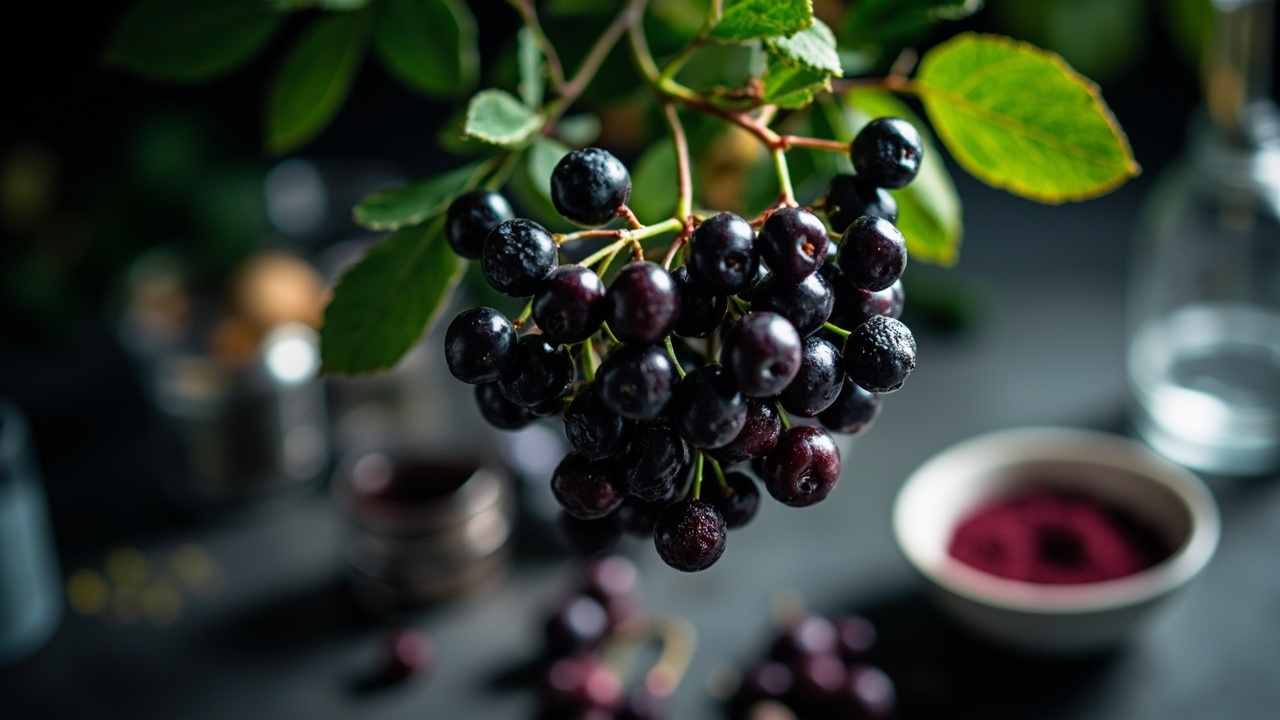
What the clinical evidence actually supports
Elderberry is one of the better-studied botanical ingredients on the supplement shelf — not because the evidence is overwhelming, but because the two anchor studies are real, peer-reviewed, and reproduced. They give a defensible floor; everything else builds on them or falls short of them.
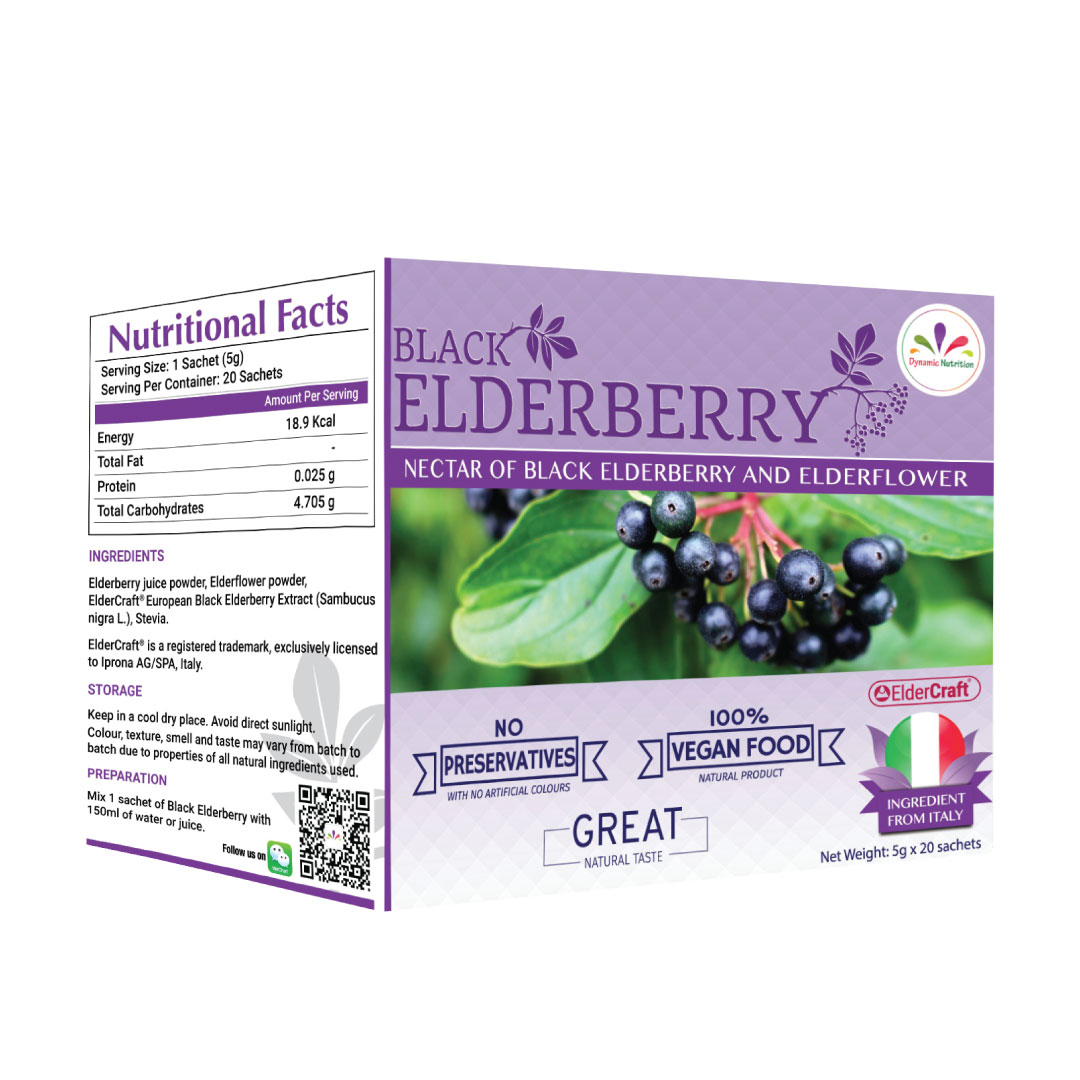
In-vitro inhibition of influenza A/B and key respiratory bacteria (Krawitz 2011). A team at Justus-Liebig-University in Gießen, Germany tested a standardized ElderCraft® European Black Elderberry Extract (Sambucus nigra L., Haschberg variety from Iprona AG, Italy) against a panel of clinically relevant human respiratory pathogens. The 2011 BMC Complementary & Alternative Medicine paper reported that the extract inhibited the replication of influenza A and influenza B viruses and was also active against Streptococcus pyogenes, group C and G streptococci — the most common bacterial causes of post-viral respiratory infections — and Branhamella catarrhalis, a common cause of secondary sinusitis and bronchitis.
This is in-vitro work, not a clinical trial — meaning the experiment was done in cell culture, not in people. In-vitro evidence establishes biological plausibility: it tells you the extract does interact with the pathogens in question, in the right concentration, in the lab. It does not by itself tell you the same effect will happen in the human body at the dose in a capsule.
Reduced cold duration and symptoms in air travellers (Tiralongo 2016). A randomised, double-blind, placebo-controlled clinical trial conducted at Griffith University in Australia followed 312 economy-class passengers on long-haul flights (Australia to overseas destinations). Passengers taking a standardized elderberry extract (the same ElderCraft®/Haschberg formulation used in the Krawitz work) for 10 days before and 4-5 days after travel showed a statistically significant reduction in cold duration and severity compared with placebo. The paper was published in Nutrients in 2016.
This is a clinical trial in actual humans, in a respiratory-stress window — which is exactly the kind of stress that the haze-flu season overlap produces. The effect size was moderate, not dramatic, but it was real, dose-dependent, and observed in a population that mirrors what a working adult in Singapore or Malaysia experiences during a high-AQI week.
Together, the Krawitz 2011 in-vitro study and the Tiralongo 2016 RCT form the two clinical pillars elderberry marketing tends to invoke. Whether the product on the shelf actually uses the same standardized extract tested in those papers is a separate question — and that question takes us straight to the label.
How to read an elderberry label in thirty seconds
Most of the marketing claims on elderberry products cannot be evaluated without checking the label. The good news is that four pieces of information tell you almost everything you need to know. None of them are exotic; all of them should be on the box.
1. Species name: Sambucus nigra L. — or not. “Elderberry” is an umbrella term covering several species. The species used in the published clinical work is Sambucus nigra L. — European Black Elderberry. The North American variety, Sambucus canadensis, has much lower anthocyanin content and a much thinner evidence base. If the label says only “elderberry” or “elderberry extract” without specifying the species, that is a red flag. The European variety has 3-5× higher anthocyanin content than the American one, and the clinical studies used it specifically.
2. Variety: Haschberg — or not. Within Sambucus nigra L., the Haschberg cultivar is the one used in the published clinical trials. Haschberg was selected for cultivation because it delivers consistent anthocyanin and polyphenol content across harvests — which matters because elderberry’s active compounds vary wildly by soil, climate, and harvest year. Varieties such as Sampo, Rubinia, or Haschberg clones are all reasonable; unspecified “elderberry cultivar” is not.
3. Standardization: anthocyanin and/or polyphenol percentage. “Standardized to active compound” is the language that separates a research-grade extract from a generic powder. A standardized elderberry extract typically declares anthocyanin content (often 12-15% or higher) and/or total polyphenol content. If the label has no standardization claim at all, the contents are whatever was cheapest that season.
4. Dose per serving, expressed as fresh-fruit equivalent. A useful labelling trick: check the dose in terms of how many grams of fresh berries that dose represents. A 460 mg ElderCraft® serving corresponds to roughly 19 g of fresh berries — that is the dose used in the Tiralongo 2016 trial. If the label tells you “1000 mg elderberry” with no fresh-fruit equivalent, you cannot compare it to the published dose without doing the math yourself.
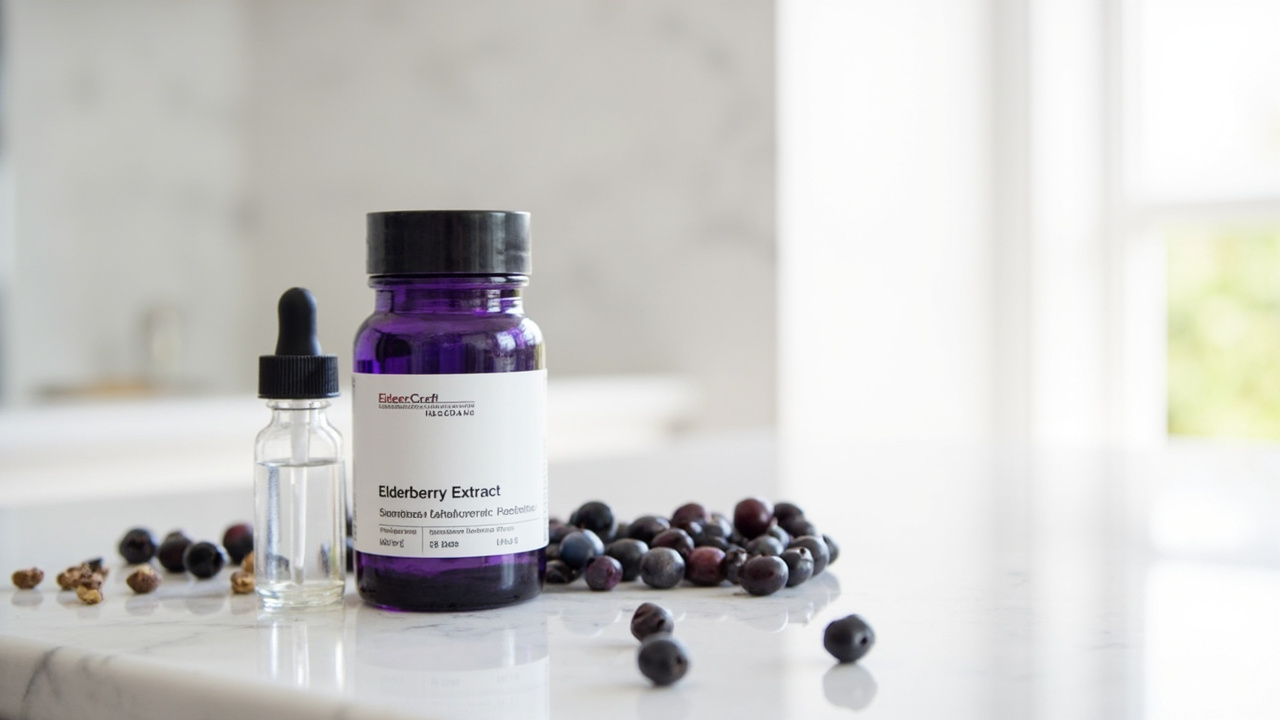
What the marketing tends to inflate
Once the four-step label check is in hand, the marketing claims sort themselves quickly.
“Cures flu overnight.” No clinical trial of any elderberry extract has shown a “cure” of influenza. The Tiralongo 2016 RCT showed a reduction in cold duration and severity, not a cure. Influenza is a serious viral illness and any product claiming to cure it should be treated with suspicion regardless of what botanical ingredient it contains.
“Prevents every cold.” The evidence base does not support universal prevention. The Tiralongo 2016 trial showed benefit in a respiratory-stress window (long-haul flight) — that is a stress-specific scenario, not a year-round prevention claim.
“Concentrated elderberry” with no species or standardization. “Concentrated” without specifying Sambucus nigra L. and a polyphenol/anthocyanin percentage is a near-empty claim. Many “concentrates” are dried juice powders, which lose a substantial fraction of the heat-labile anthocyanins and polyphenols in the drying process.
“Elderberry tea” for daily immune support. A traditional elderberry tea is supportive, but it does not deliver the clinical-research dose. Brewing temperatures destroy a meaningful fraction of the heat-labile anthocyanins; the dried berry used in most teas is Sambucus canadensis, not Sambucus nigra L.; and the resulting cup delivers trace anthocyanins at best. The clinical work used a standardized extract, not a tea.
“Wild-harvested” or “ancient remedy.” Both are aesthetic claims. The relevant question is the species, the variety, the standardization, and the dose — none of which “wild-harvested” or “ancient” answers.
Where elderberry fits in a respiratory-immune routine
Setting aside marketing and looking at the actual evidence, elderberry’s role in a respiratory-immune routine is modest but defensible. The two-anchor pattern — an in-vitro study showing antiviral and antibacterial activity plus a clinical trial showing reduced cold duration in a respiratory-stress window — places it in the “support” tier of respiratory-immune ingredients, alongside vitamin C and zinc, rather than in the “treatment” tier where actual antivirals and antibiotics sit.
For an adult in Singapore or Malaysia, the practical decision is whether to keep a standardized elderberry extract in the daily routine during the August-October haze-flu overlap, and to use the same product for the 10-14 days surrounding a high-stress respiratory window (long-haul flight, conference week, the back-to-school return). The 460 mg ElderCraft® dose that matches the Tiralongo trial is the benchmark; products that do not declare their standardized active content should not be assumed to deliver that dose.
Elderberry’s role is supportive, not therapeutic. The right reason to take it is the same right reason to take vitamin C, zinc, or a probiotic: as one piece of a layered daily routine that includes sleep, hydration, indoor-air quality during haze events, and the discipline to consult a doctor when respiratory symptoms persist or worsen.
Anyone with a known allergy to elderberry, anyone on immunosuppressive medication, and pregnant or breastfeeding women should speak to a clinician before adding any elderberry extract to their routine. For otherwise healthy adults and older children, a standardized Sambucus nigra L. Haschberg extract at the clinical-research dose is a defensible part of a respiratory-immune routine during the haze-flu overlap — provided the label passes the four-step check.
References
1 Krawitz C, Abu Mraheil M, Stein M, Imirzalioglu C, Domann E, Pleschka S, et al. (2011) — Inhibitory activity of a standardized elderberry liquid extract against clinically-relevant human respiratory bacterial pathogens and influenza A and B viruses. BMC Complementary & Alternative Medicine. https://doi.org/10.1186/1472-6882-11-16
2 Tiralongo E, Wee S, Lea RA. (2016) — Elderberry Supplementation Reduces Cold Duration and Symptoms in Air-Travellers: A Randomized, Double-Blind Placebo-Controlled Clinical Trial. Nutrients. https://doi.org/10.3390/nu8040182
Related Topics
Black Elderberry extract inhibits the replication of SARS-CoV2 in vitro
The Difference between a Cold and Flu
5 Natural Treatments of Cold and Flu
People who are Susceptible to Influenza and How to Strengthen Their Immunity
Novel Coronavirus (2019-nCoV) Advice for the Public
Elderberry – Makanan Super yang mengandungi Kepekatan Quercetin Tertinggi
Product you may be interested in