If you are a 50-year-old woman in MY or SG booking your next bone-density screening, the result page will hand you two numbers that most reading guides do not decode: a DEXA T-score and a FRAX 10-year fracture probability. The T-score alone is often misread as a pass/fail (it is not – it is a continuum), and the FRAX result, which is the layer the WHO and International Osteoporosis Foundation explicitly call the “decide whether to start a drug or not” number, is the one most women never see explained. This decode is the evidence-graded breakdown of what those numbers actually mean, what they do not mean, and what to ask before you walk out of the clinic.

The DEXA T-score: a number, a band, and a misuse
A DEXA (dual-energy X-ray absorptiometry) scan measures bone-mineral density at two sites in most reading protocols: the lumbar spine (L1-L4) and the femoral neck. The result is expressed as a T-score – the number of standard deviations your bone density sits above or below the young-adult reference mean. The WHO diagnostic classification has not changed since 1994: T-score at or above -1.0 = normal; T-score between -1.0 and -2.5 = osteopenia (the warning-before-osteoporosis band); T-score at or below -2.5 = osteoporosis. The Z-score, which compares you to your peers rather than to a young-adult reference, is what is used for premenopausal women, children, and men under 50 – and is the score your radiology report will quote if you are under 50.
The T-score is most often misused in two ways. First, it is treated as a single threshold (“anything below -2.5 is osteoporosis, anything above is fine”) – but the -1.0 to -2.5 band is where the clinical decisions actually happen, and where the substrate-supplementation versus drug-lift-watch debate is firmly in a single number. Second, the T-score is treated as a snapshot – but it is a rate. The clinical question is not “what is my T-score?” but “what is the rate of change over the previous scan?” A T-score of -1.2 stable over four years is a different reading than a T-score of -1.2 with a -1.8 four years earlier. The published work shows that the rate of decline is the better predictor of fracture risk than any single measurement.
The FRAX calculator: the “decide whether to start a drug” number
FRAX is the Fracture Risk Assessment Tool, jointly developed by the University of Sheffield and the WHO Collaborating Centre for Metabolic Bone Diseases, and it is the number your clinician actually uses to make the prescription decision. It estimates your 10-year probability of a major osteoporotic fracture (clinical spine, forearm, hip, or shoulder) and your 10-year probability of a hip fracture. The inputs are: age, sex, weight, height, previous fracture, current smoking, glucocorticoid use, rheumatoid arthritis, secondary osteoporosis, parental hip fracture, alcohol intake, and femoral-neck bone-mineral density. The output is two percentages.
The published intervention thresholds vary by country but converge on the same logic. In the US, the National Osteoporosis Foundation guidance sets a 10-year major osteoporotic fracture probability of 20 percent or higher, or a 10-year hip fracture probability of 3 percent or higher, as the treatment threshold – at which point prescription medication (alendronate, risedronate, denosumab, romosozumab) is recommended. In MY and SG, the Malaysian Clinical Guidance on Osteoporosis and the Singapore Ministry of Health Osteoporosis Clinical Practice Guidelines use the same FRAX tool with country-specific epidemiology; the threshold is the same logic. Below the threshold, the WHO/IOF early-intervention frame is dietary-substrate-first – calcium + magnesium + silica + zinc + vitamin D + vitamin K + resistance exercise. Above the threshold, the substrate stack does not replace the prescription; it sits alongside.
FRAX has two known limitations worth knowing about. First, it does not capture dose-response – it does not model “I take 1200 mg calcium versus 600 mg” or “I exercise four times a week versus sedentary.” It models risk factors, not interventions. Second, it under-counts falls risk – falls are a major driver of hip fracture in the over-70 cohort, and the FRAX inputs do not include balance, vision, polypharmacy, or home-hazard assessment. Some clinicians augment FRAX with the Garvan fracture-risk calculator for the falls-driven hip-fracture layer.

The three numbers a 50-year-old MY/SG woman should walk out with
When the radiology report and your clinician consult are done, three numbers should be on the page. First, the T-score at the lumbar spine AND femoral neck – both sites, not just one, because the spine is more responsive to short-term intervention and the femoral neck is the better predictor of hip fracture. Second, the FRAX 10-year major osteoporotic fracture probability (as a percentage). Third, the FRAX 10-year hip fracture probability (also as a percentage). The Z-score should also be in the report if you are under 50 or premenopausal. The clinical-decision question, in plain language: are you above or below the country-specific treatment threshold, and what is the trend versus the previous scan?
For the 50-65 yo postmenopausal band, the clinical workflow has three lanes. Above threshold: prescription medication + substrate support + resistance exercise + falls assessment. Below threshold with a stable or improving T-score: substrate support + resistance exercise + 1-2 yearly T-score monitoring. Below threshold with a declining T-score (-0.3 or more per year): consider a treatment discussion with a bone-health specialist, because the rate of decline itself is a prescription trigger regardless of absolute risk. The “just take calcium and come back next year” advice is the failure pattern most reported in MY/SG clinical practice when the rate-of-decline layer is skipped.
What “osteopenia” actually means (and why the word itself is misleading)
“Osteopenia” is the WHO word for T-score between -1.0 and -2.5, and it is the most-misleading word in the bone-health vocabulary. It sounds like “almost-but-not-quite osteoporosis,” which most readers interpret as “I am fine, do nothing.” That is the opposite of the clinical meaning. The osteopenia band is the warning – the period where the rate-of-decline is the operative variable, where the substrate stack has the largest leverage, and where most published lifestyle-intervention studies report their strongest effect sizes. The 50-65 yo band is where the perimenopausal osteoclast-activation cascade begins; the 5-10 year window from 50 is the one with the fastest absolute bone-density loss in a woman’s life; and the substrate stack – calcium + magnesium + trace minerals + silica + zinc + vitamin D + vitamin K + resistance exercise – is the lever with the best return on investment in that window.
This is also the window where the World Osteoporosis Day editorial frame (the WHO/IOF campaign run on 20 October each year) explicitly calls for “screen early, supplement early, prevent the fracture at 70” – the prevention-anchored frame the over-70 fracture-treatment cohort never benefits from. The 50-65 yo osteopenia band is the audience the WHO/IOF editorial is written for, not the over-70 fracture cohort.
The substrate-first layer that the FRAX threshold does not capture
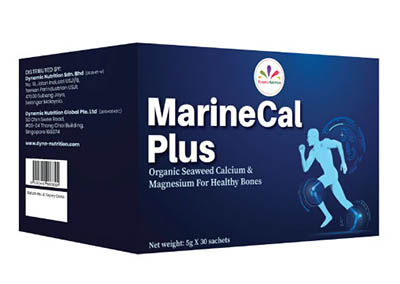
FRAX, by design, does not include dietary-substrate intake as a variable. It does not know whether you take a multi-substrate bone-density stack or a calcium-only pill. The substrate stack – calcium + magnesium + 70 trace minerals + bioactive silica (the collagen-crosslinking cofactor) + zinc-enriched yeast (the alkaline-phosphatase cofactor) + vitamin K + vitamin D + resistance exercise – is the daily substrate layer that bone remodelling needs. The published work shows modest effect sizes (1-3 percent bone-mineral-density gains over 12-24 months in adherent cohorts), but the cumulative effect over a decade is meaningful at the population level.
For the 50-65 yo MY/SG woman below the FRAX treatment threshold, the substrate-first layer is the intervention with the best return on investment. The dietary-substrate axis is also the layer where the FRAX threshold is most often miscommunicated as “you do not need anything” – the published work on the postmenopausal bone-resorption-acceleration window shows that the 50-65 band is the period where substrate supply matters most, not the period where it is optional. The substrate stack is the daily habit that pays the largest dividend in the FRAX-low-probability cohort.
The safety boundary
The FRAX-and-DEXA-decision layer is a clinical decision, not a substrate-only decision. If your FRAX 10-year probability is above the country-specific treatment threshold, prescription medication is recommended – and the substrate stack does not replace the prescription; it sits alongside. If you are on bisphosphonates (alendronate, risedronate, zoledronic acid), denosumab, romosozumab, strontium ranelate, vitamin-D analogues, thyroid medication, or any prescription affecting bone metabolism, the substrate stack can interact – coordinate with your prescribing physician before adding it. Calcium + magnesium + zinc + vitamin-K supplements can affect the absorption and metabolism of these medications. The standard safety bar applies: tell your doctor what you are taking, ask about interactions, and do not stop a prescribed medication in favour of a substrate supplement.
The summary
FRAX and DEXA T-score are two numbers, not one. The T-score tells you where your bone density sits on the WHO diagnostic scale; FRAX tells you the 10-year fracture probability that drives the prescription decision. The three numbers a 50-year-old MY/SG woman should walk out with are: lumbar-spine and femoral-neck T-score, FRAX 10-year major osteoporotic fracture probability, and FRAX 10-year hip fracture probability. The 50-65 yo osteopenia band is the warning-before-osteoporosis window – where substrate support and resistance exercise have the largest leverage, and where the WHO/IOF World Osteoporosis Day “screen early, supplement early, prevent the fracture at 70” frame is written for. The substrate stack does not replace prescription medication above the FRAX threshold; it sits alongside. The clinical-decision question is not “what is my T-score?” – it is “what is the trend, and what is my FRAX probability?”
Also available in Bahasa Malaysia and 中文.
Related Topics
Seaweed Calcium vs Calcium Citrate: Which Is Better?
Aquamin seaweed calcium: how a multi-substrate bone-density stack differs from a calcium-only pill
Why 1000 IU vitamin D alone won’t fix bone density
Healthspan is the new longevity goal: 5 daily habits that protect bones as you age
Stop Swallowing Rocks: Why Seaweed Calcium Is Much Better Than Calcium Carbonate
Silica – The Crucial Ingredient For Stronger Bones, Hair and Nails
5 Ways To Keep Our Bones Healthy As We Age
Product you may be interested in