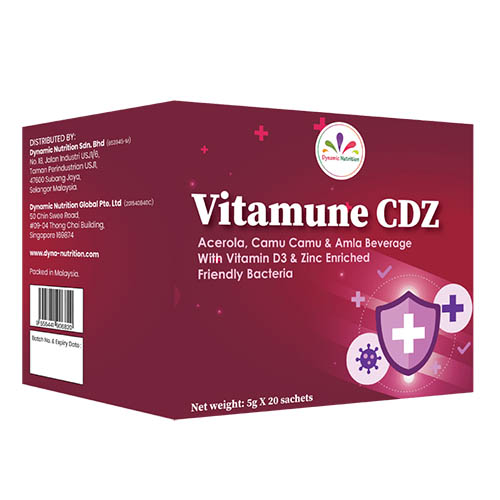
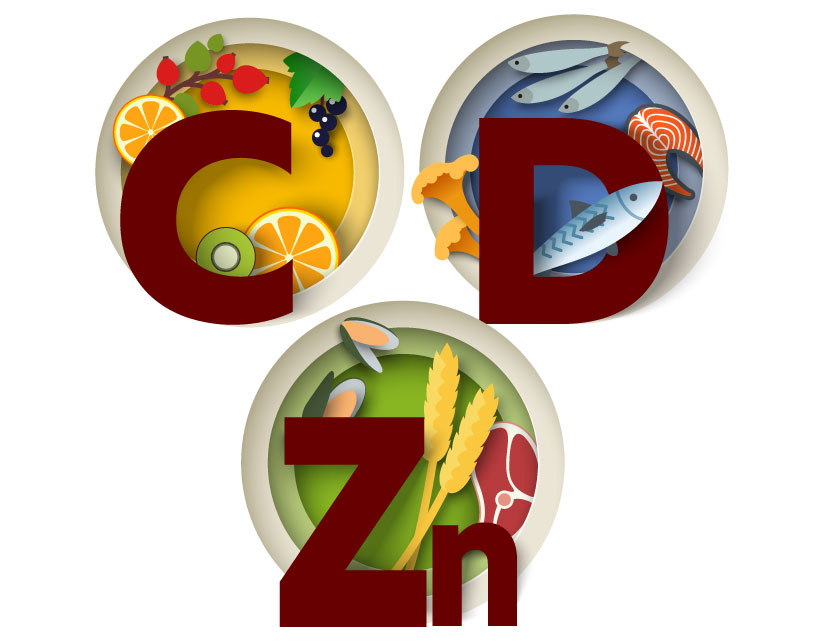
If you’ve ever stared at three separate supplement bottles and wondered whether you should just take them all together — you’re not alone. The vitamin C, D, and zinc combination has become the default immune-support stack across Southeast Asia, but most people don’t realise the three aren’t interchangeable. They work in three distinct biological roles, and there’s growing evidence that the synergy between them — what each one enables the other two to do — is precisely what makes a daily combined formulation more useful than isolated single-nutrient pills.
This article walks through what each of the three nutrients actually does, where the evidence stands, and why the combination — in one daily dose — produces benefits that isolated supplementation doesn’t capture. We’ll also look at the natural-vitamin-C story (acerola, camu camu, amla) and the organic-zinc story (zinc-enriched probiotics), because those delivery forms change the bioavailability picture substantially.
What Vitamin C Actually Does (and Why the Source Matters)
Vitamin C is the body’s primary water-soluble antioxidant. It neutralises reactive oxygen species generated during normal immune activity — particularly the oxidative burst that neutrophils use to kill pathogens — and in doing so protects host cells from collateral damage. Three specific immune functions stand out:
Epithelial-barrier integrity. Vitamin C concentrates in the skin and mucosal surfaces (the linings of your nose, throat, lungs and gut) at concentrations up to 100× higher than in plasma. It’s a cofactor for collagen synthesis, and collagen is the structural protein that holds these barriers together. Weakened barriers let pathogens in more easily; this is partly why severe vitamin-C deficiency (scurvy) presents with bleeding gums and poor wound healing before anything else.
Neutrophil function. Neutrophils — the first-responder white blood cells — accumulate vitamin C at concentrations 10–30× higher than plasma. The vitamin supports chemotaxis (the cells’ ability to migrate toward an infection site) and phagocytosis (their ability to engulf pathogens). When vitamin C is deficient, neutrophils get to the right place but don’t kill as efficiently.
Lymphocyte proliferation. T-cells and B-cells — the adaptive immune system’s specialist cells — need vitamin C to proliferate after they’ve recognised a pathogen. The 2013 Cochrane review by Hemilä and Chalker, updated periodically since, reported modest but consistent reductions in cold duration with regular vitamin C supplementation in people under physical stress (marathon runners, cold-exposed workers, etc.), and a smaller effect on duration in the general population1.
Where the source matters: natural vitamin C — from acerola, camu camu, or amla — delivers the complete vitamin-C complex, not just isolated ascorbic acid. Ascorbic acid is the molecule; the complex includes bioflavonoids (rutin, hesperidin), Factor K, Factor P, Factor J, tyrosinase, and ascorbinogen. These cofactors improve absorption, recycle oxidised vitamin C back to its active form, and contribute their own antioxidant activity. Synthetic ascorbic acid — typically corn-sugar-derived and used in most cheap vitamin-C tablets — delivers the isolated molecule without the cofactor package. If you’ve ever read a supplement label and seen “Vitamin C (as ascorbic acid)” with “rosehip extract” added as an afterthought, that’s a synthetic-base product with marketing garnish, not a true whole-food vitamin-C source.
What Vitamin D3 Actually Does (and Why Status Matters More Than Dose)
Vitamin D isn’t really a vitamin — it’s a prohormone. The body synthesises it from cholesterol when skin is exposed to UVB light, and it then gets converted in the liver and kidneys to its active form, calcitriol, which acts as a signalling molecule on the vitamin D receptor (VDR) expressed by most immune cells. Three specific immune functions stand out:
Cathelicidin and defensin production. When a macrophage or epithelial cell detects a pathogen, the VDR pathway upregulates production of cathelicidin (LL-37) and defensins — antimicrobial peptides that punch holes in bacterial and viral membranes. This is one of the most direct antimicrobial mechanisms the innate immune system has, and it’s vitamin-D-dependent. People with low vitamin-D status (<20 ng/mL 25(OH)D) produce substantially less cathelicidin in response to infection than people with replete status (>30 ng/mL).
T-cell modulation. Naive T-cells express very little VDR; once they recognise a pathogen and start to activate, they upregulate VDR expression dramatically. The vitamin-D signalling pathway then shapes whether the T-cell differentiates into a Th1, Th2, Th17, or regulatory T-cell subtype — shifting the balance of the immune response. Vitamin D modulates the response rather than simply boosting it, which is why severe deficiency is associated with both increased infection risk and increased autoimmune risk.
Dendritic-cell function. Dendritic cells are the immune system’s antigen-presenters — they show T-cells what to attack. Vitamin D keeps dendritic cells in an immature, tolerant state under non-infectious conditions, which prevents inappropriate immune activation (autoimmunity, allergies).
Why status matters more than dose: a person taking 5,000 IU daily but with poor absorption (intestinal disease, obesity, certain medications) may still test as deficient. The clinically useful measure is serum 25(OH)D, and the target is >30 ng/mL for general health and >40 ng/mL for immune resilience. Tropical sunlight in Singapore and Malaysia gives strong UVB exposure most of the year, but indoor office workers and people with darker skin synthesise less — supplementation fills the gap.
What Zinc Actually Does (and Why the Form Matters)
Zinc is a trace mineral involved in over 300 enzyme reactions — more than any other mineral. Its immune roles cluster around three areas:
T-lymphocyte development and function. Zinc is essential for thymic involution… sorry, thymic function. The thymus is where T-cells mature, and zinc deficiency causes thymic atrophy and reduced naive T-cell output. The WHO lists zinc supplementation as one of the few nutrient interventions with evidence for reducing respiratory-infection severity2.
Antioxidant enzyme cofactor. Zinc is a structural component of superoxide dismutase (SOD), the enzyme that converts superoxide radicals (highly reactive by-products of normal metabolism) into hydrogen peroxide, which other enzymes then convert to water. Without adequate zinc, this first-line antioxidant defence weakens.
Wound healing and barrier integrity. Zinc is required for collagen synthesis, cell proliferation, and inflammatory response resolution — the three processes that close a wound. Zinc deficiency classically presents with skin lesions and poor wound healing.
Why the form matters: most cheap zinc supplements use zinc oxide or zinc carbonate — inorganic forms that require stomach acid to break down and are poorly absorbed (bioavailability around 15–30%). Zinc picolinate, zinc citrate, and zinc gluconate are better absorbed (30–60%). The newest delivery form — organic-bound zinc, where zinc is incorporated into a probiotic cell wall during fermentation (as in zinc-enriched Bifidobacterium longum) — improves bioavailability further and delivers the zinc alongside the live probiotic.
The Synergy: Why the Combination Matters
Here’s the part most articles skip. The three nutrients reinforce each other in specific, measurable ways — and that’s why a combined formulation beats three separate bottles:
Vitamin C regenerates oxidised vitamin E and supports glutathione recycling. When vitamin E neutralises a free radical in a cell membrane, it becomes oxidised. Vitamin C — which is water-soluble and lives in the cell’s cytosol — recycles the oxidised vitamin E back to its active form. The same recycling happens with glutathione, the body’s master antioxidant. So vitamin C is doing two jobs: its own antioxidant work, and the maintenance work that keeps vitamin E and glutathione functional.
Vitamin D upregulates the vitamin D receptor pathway, which modulates immune-cell differentiation. This is the modulation step we discussed above. Vitamin D doesn’t just “boost” immunity; it shapes how the immune system responds. Without adequate D status, the T-cell balance shifts toward less-regulated responses.
Zinc supports the enzyme machinery that vitamin D uses for activation. The 1-alpha-hydroxylase enzyme that converts 25(OH)D to active calcitriol in the kidneys is zinc-dependent. So zinc deficiency indirectly impairs vitamin D activation — you can take all the D3 you want and still produce less of the active form if your zinc status is low.
The three together: barrier integrity (C + Zn for collagen), antimicrobial defence (D for cathelicidin), and inflammation resolution (C + Zn for antioxidant recycling, D for cytokine modulation). That’s the trifecta. It’s also why a “vitamin C pill, plus a vitamin D pill, plus a zinc pill” regimen works less well than a single combined formulation — the delivery isn’t synchronised, and you may forget one on any given day. A combined product delivers all three at once, every time.
The Delivery Form: Why Natural Vitamin C and Organic-Bound Zinc Matter
Most cheap “immune support” supplements use synthetic ascorbic acid and inorganic zinc oxide. The dose may look correct on the label, but the bioavailability is poor. The newer generation of formulations addresses this with two innovations:
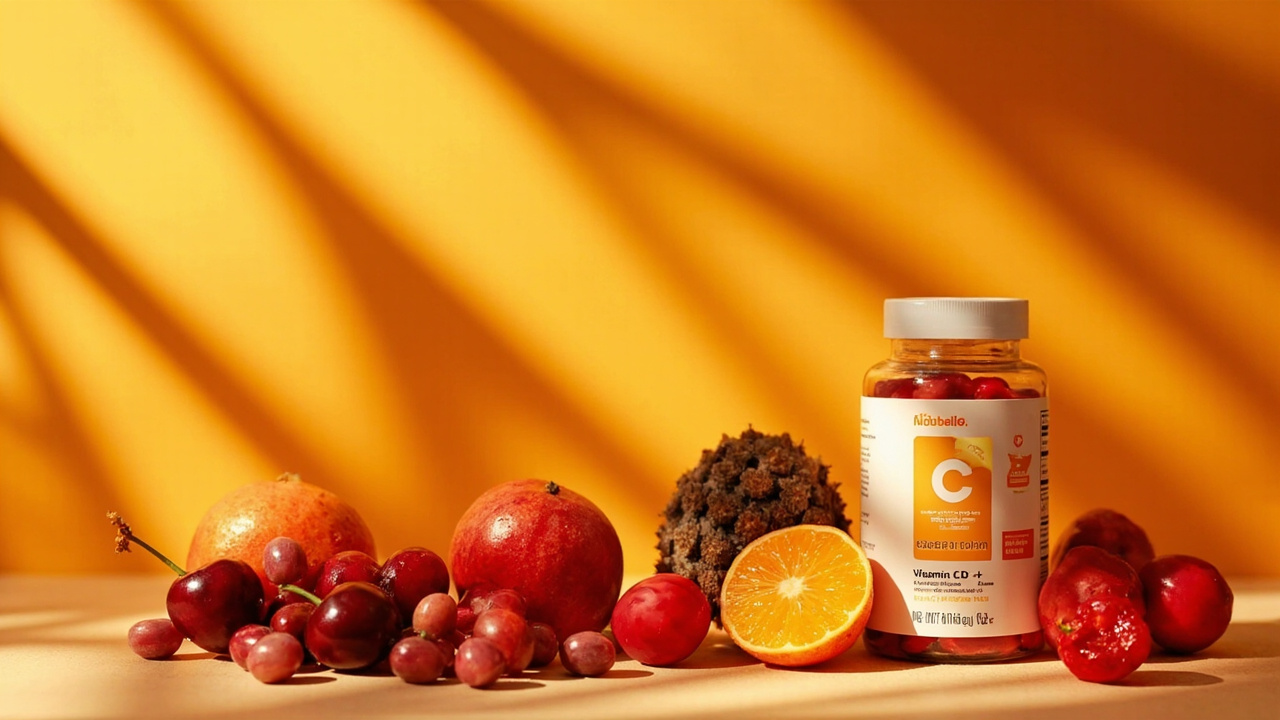
Natural vitamin C from acerola, camu camu, and amla. These three fruits are the world’s richest natural vitamin-C sources — acerola delivers 1,700 mg vitamin C per 100 g (vs ~50 mg in oranges), camu camu delivers 2,000+ mg per 100 g, and amla delivers 600+ mg per 100 g. Critically, they deliver vitamin C as the complete complex — ascorbic acid + bioflavonoids + cofactors — rather than isolated synthetic ascorbic acid. The cofactors improve absorption and contribute their own biological activity.
Organic-bound zinc via zinc-enriched probiotics. Conventional zinc supplements deliver zinc as a salt (oxide, carbonate, gluconate) that dissociates in the stomach. Organic-bound zinc — where zinc is incorporated into a probiotic organism’s cell wall during fermentation — delivers the zinc to the gut already complexed with biological carriers, improving absorption. The zinc-enriched Bifidobacterium longum CCFM1195 strain used in some Southeast Asian formulations reports 96%+ of zinc organically bound to the cell wall.
The delivery form matters because the dose on the label is meaningless if the body can’t absorb it. A 1,000 mg dose of poorly absorbed synthetic vitamin C delivers less usable vitamin C than a 200 mg dose of well-absorbed natural vitamin C from acerola.
Who Benefits Most from a Combined C + D + Zinc Daily
The evidence for daily C + D + zinc combination is strongest in populations with documented gaps:
Indoor office workers in tropical climates. Air-conditioned offices block UVB exposure. Many Singapore and Malaysian office workers test with 25(OH)D levels below 30 ng/mL despite living near the equator. A daily combined formulation closes the gap without requiring a deliberate sun-exposure regimen.
Adults over 40. Stomach-acid production declines with age, reducing absorption of inorganic zinc and synthetic vitamin C. The natural and organic-bound forms partially compensate.
Post-antibiotic recovery. Antibiotics disrupt the gut microbiome and deplete zinc (the antibiotic binds zinc as part of its mechanism in some classes). A 4-12 week combined C + D + zinc + probiotic regimen restores baseline status more efficiently than separate interventions.
Travel and seasonal viral exposure. Travel disrupts sleep, diet, and microbiome stability. A combined formulation covers the main nutritional gaps with one product.
Plant-based and restricted diets. Strict plant-based diets can be low in bioavailable zinc (phytates in grains and legumes bind zinc). Vitamin C helps with non-haem iron absorption and modestly improves zinc absorption in the same meal.
What the Daily Regimen Looks Like
A reasonable daily C + D + zinc combination delivers:
• Vitamin C: 200–500 mg from natural sources (acerola, camu camu, amla). This is well above the 90 mg RDA and within the safe upper range. The Linus Pauling Institute notes that single doses above 1,000 mg have diminishing absorption returns — the kidneys excrete the excess.
• Vitamin D3: 1,000–2,000 IU daily for general maintenance, 4,000 IU if 25(OH)D is known to be low. Take with a fat-containing meal for absorption (D is fat-soluble).
• Zinc: 8–15 mg elemental zinc from an absorbable form (picolinate, citrate, gluconate, or organic-bound via probiotic). Don’t exceed 40 mg daily from supplements long-term — excess zinc impairs copper absorption.
If the formulation also includes a zinc-enriched probiotic, the dose of the probiotic (typically 1–10 billion CFU) is sufficient to deliver gut-immune support without a separate probiotic bottle.
What the Combination Does NOT Do
It’s important to be clear about what a daily C + D + zinc combination doesn’t do:
• It does not treat viral infections. If you have flu symptoms, see a doctor. Antiviral medications work; vitamin C does not cure influenza.
• It does not replace vaccination. Annual flu vaccines remain the gold-standard prevention for seasonal influenza, and the WHO and national health agencies all recommend them.
• It does not prevent infection on its own. Sleep, hand hygiene, ventilation, and avoiding exposure during peak transmission periods remain the primary prevention strategies. The combined formulation supports baseline immune resilience but doesn’t create a force field.
• It does not boost the immune system beyond normal function. The combination removes specific nutritional bottlenecks; it doesn’t amplify immune response to super-normal levels.
The Bottom Line
The vitamin C, D, and zinc combination has a real evidence base behind it — particularly when the delivery forms are natural and well-absorbed. The synergy between the three is the key reason a combined formulation outperforms three separate pills: vitamin C regenerates oxidised vitamin E and supports glutathione recycling; vitamin D modulates T-cell differentiation via the VDR pathway; zinc supports the enzyme machinery that activates vitamin D and is itself essential for T-cell development. None of the three works in isolation as well as the three work together.
If you’re choosing a combined C + D + zinc product, look for three things on the label:
1. Natural vitamin C from acerola, camu camu, or amla — not “ascorbic acid” with rosehip extract added.
2. Vitamin D3 (cholecalciferol) — not D2 (ergocalciferol), which is less effective at raising 25(OH)D.
3. Absorbable zinc — picolinate, citrate, gluconate, or organic-bound (via zinc-enriched probiotic). Not zinc oxide.
A daily combined formulation with these three features covers the main nutritional gaps that affect immune resilience in modern urban life, and does so with one product rather than three. The formulation question is more important than the dose question, because the dose you actually absorb is what matters.
Disclosure: TriCollagen collagen tripeptide supplement is our own collagen supplement.
References
- Hemilä H, Chalker E. Vitamin C for preventing and treating the common cold. Cochrane Database of Systematic Reviews 2013, updated 2024. https://www.cochranelibrary.com/cdsr/doi/10.1002/14651858.CD000980.pub4/full
- World Health Organization. Zinc supplementation in the management of diarrhoea and respiratory infections. WHO/UNICEF joint statement, updated 2023. https://www.who.int/publications/i/item/9789240075675
Related Topics
Is Vitamin C made of corn syrup natural?
Vitamin C, D & Zinc: Science-Backed Synergy for Complete Immune Support
An Incredible Source of Vitamin C – Acerola
Elderberry – a Superfood that contains the Highest Concentrations of Quercetin
5 Natural Treatments of Cold and Flu
People who are Susceptible to Influenza and How to Strengthen Their Immunity
The Difference between a Cold and Flu
6 Main Nutrients for Children for their Optimum Health
Singapore’s Biological-Age Test: Why Vitamin D, C, and Zinc Keep Showing Up
Product you may be interested in